



HOUSTON, TX —
Atomic Answer: Tesla is reallocating a portion of its $25 billion AI investment toward the new Houston Megapack facility, aiming to reach 50 GWh of annual capacity by late 2026. This energy infrastructure is critical for powering the massive AI factories and humanoid robot charging stations required for Tesla’s shift from automaker to AI compute platform.
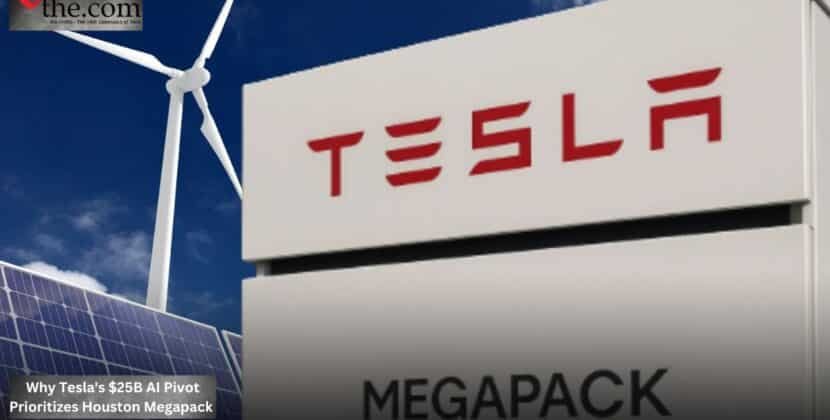
The Tesla Megapack 3 Houston AI factory 2026 investment shows that energy infrastructure now matches computing infrastructure as a critical element for enterprise AI implementation. The $25 billion AI energy storage project from Tesla, with 50 GWh of capacity, demonstrates that the company now operates as an AI compute platform rather than its original identity as an automaker. The organizations that secure early Megapack 3 procurement will define their AI factory power architecture at a time when grid instability and peak-hour energy costs are compressing the ROI of every Blackwell-scale deployment that depends solely on utility power.
Why Energy Infrastructure Is Now an AI Bottleneck
The AI factory deployments at Blackwell run multiple GPU units, which create power needs that the existing utility grid system cannot handle due to its original design. GPU clusters with high-density streaming workloads consume power in three ways, leading to distinct power consumption patterns that require power conditioning systems between the electrical grid and the computing rack.
The Blackwell-scale AI cluster requires storage capacity that matches its power consumption, which varies throughout the day. The AI factory uses a Megapack system that controls peak demand by drawing power from its storage system during periods of high load and recharging it when no work is occurring, resulting in stable power delivery to GPU clusters while reducing utility costs associated with unpredictable usage patterns.
The Megapack 3 AI data center’s off-grid power resilience feature offers advantages beyond cost control, ensuring uninterrupted business operations. AI factory deployments in regions with grid instability frequency fluctuations, brownouts, or capacity-constrained peak periods cannot sustain continuous training throughput on utility power alone. The Megapack 3 system provides storage capacity, helping sustain computing operations during grid outages that would disrupt training activities and damage model checkpoint data. The Houston Facility and 50 GWh Capacity Target
How does Tesla’s Houston Megapack 3 facility, targeting 50 GWh of annual capacity, power AI factories and Optimus humanoid robot charging stations in 2026? This is the infrastructure question that enterprise energy planners need answered alongside their AI compute procurement decisions. The Houston facility’s 50 GWh annual capacity target serves two distinct energy demand profiles simultaneously AI factory power stabilization and Optimus humanoid robot fleet charging.
Tesla demonstrates how its AI platform operates at its Houston facility; at the same time, it is moving into a new phase. Power use from Optimus robots for warehousing & logistics creates a load on the electrical grid similar to that of AI clusters; therefore, both types of systems have peak usage times that cannot be supplied by the grid without incurring significant demand charges, making it economically unfeasible to deploy Optimus robots extensively.
The Houston facility serves as Tesla’s production base for AI energy storage systems with 50 GWh capacity, which Tesla uses for both AI power management and its humanoid robot energy needs. The 50 GWh annual capacity system serves both internal factory operations and external business needs.
The 25% Peak-Hour Energy Cost Reduction
The financial advantage from AI inference peak-hour energy cost reduction, which reaches 25%, creates a CFO-level decision for Megapack 3 procurement and should not be treated as a facilities management choice. The AI inference clusters create power demand profiles that utility companies charge for during peak hours, resulting in ongoing operational expenses that increase throughout the day, as each hour of peak utility usage requires Megapack 3 storage to replace grid energy with off-peak stored energy.
Why should enterprise AI data centers procure Tesla Megapack 3 early to reduce peak-hour inference energy costs by 25% and ensure off-grid power resilience? The cost structure of the alternative is answered. AI data centers running continuous inference workloads on grid-only power in peak-pricing regions absorb demand charges and peak-hour energy premiums, and the Megapack 3 integration converts these into avoided costs from the first billing cycle after installation.
The Tesla Megapack 3 Houston AI factory will begin early procurement for 2026, as supply constraints are expected to tighten, driven by Optimus production line energy needs that will draw more power from the Houston facility. The companies that wait to purchase Megapack 3 until after AI factory construction ends will have to compete with Tesla’s internal deployment needs for product distribution because they will enter a supply competition that does not affect early procurement slots.
Blackwell-Scale Power Architecture and Data Center Integration
The technical specifications that data center power architects need to implement in their AI factory design process require them to meet the power storage requirements of the Blackwell-scale AI cluster while maintaining continuous power supply management through their main power system. The facility’s GPU cluster infrastructure requires Megapack 3 power conditioning units to serve as an active power-delivery component. The system conditions the grid input to deliver power to the compute hardware.
The Blackwell-scale Megapack 3 AI data center off-grid power-resilience configuration requires a power distribution unit design that routes the cluster supply through Megapack integration points. The system about Megapack 3 enables actual voltage stability and demand spike absorption to reach the compute hardware, which benefits from it. Data centers that install Megapack 3 as an isolated backup system rather than an integrated power-delivery component capture resilience benefits without realizing the power conditioning and peak-demand reduction benefits reflected in the 25% cost reduction projection.
Tesla’s $25B AI energy storage, with 50 GWh of capacity and production scale in Houston, enables the volume availability required for data center-scale Megapack 3 procurement. The individual AI factory installations that need multiple Megapack units for adequate capacity coverage need production availability, which only Houston-scale manufacturing can reliably provide.
Grid Stability Audits and Regional Deployment Risk
The site evaluation selection process should determine which areas to assess for regional grid stability. In areas with poor grid reliability, the Megapack 3 AI data center’s off-grid power system becomes most valuable, as grid stability testing becomes essential to determine the return on investment for artificial intelligence factory energy infrastructure expenditures.
The Tesla Megapack Optimus charging hub AI factory power system establishes Megapack 3 return on investment through two effects that operate in unison. The training process fails when training is interrupted by a grid power outage.25% peak-hour energy cost reduction, AI inference savings, and training continuity preservation together produce ROI projections that grid-stable region deployments where only cost avoidance applies cannot match.
Conclusion
The Tesla Megapack 3 Houston AI factory 2026 platform establishes energy storage as a non-optional infrastructure layer for enterprise AI factory deployments, which operate at Blackwell-scale GPU density. The $25 billion Tesla AI energy storage investment in Houston, which includes 50 GWh of storage capacity, demonstrates that essential energy systems must be built because AI compute platform ambitions exceed what utility grids can reliably deliver.
The Megapack 3 AI data center’s off-grid power resilience system enables training and inference operations to continue without interruption during electrical outages, which are becoming more likely as AI factories require power in areas without infrastructure to handle high compute demands. At the Houston site, the Tesla Megapack Optimus charging hub connects AI factory power systems via Megapack 3, which serves as the common energy base for AI factory operations and humanoid fleet charging, creating greater value through early allocation of procurement slots.
Operations savings from recurring peak-hour energy cost reductions of 25% enabled by AI inference are sufficient to ensure the Megapack 3 purchase has a positive ROI, regardless of any value associated with resiliency. High-velocity AI clusters require Volatile Networking Power (VNP) certified power distribution systems of the facility to enable Megapack 3 to transition from backup to an active computing performance enhancement system.
As such, answering the question: Why should enterprise AI Data Centers begin procuring Tesla Megapack 3 as soon as possible to achieve peak hour inference energy cost reductions of 25% and provide off-the-grid resiliency creates urgency to purchase the product based upon 50 GWh annual capacity anticipated for power to AI factories and Optimus humanoid robot charging stations at the Tesla Houston Megapack 3 facility by 2026 will create the framework of what kind of infrastructure will be available for enterprise AI Data Centers when determining whether or not their compute-based capital investments will operate at specification or will throttle due to the power limitations imposed via a grid dependent power distribution architecture.
Enterprise Procurement Checklist
- TSLA Outlook: Secure early procurement slots for Megapack 3 to support localized AI factory power needs.
- Infrastructure Redesign: Data centers must integrate Megapack storage to handle the volatile power draws of Blackwell-scale clusters.
- Procurement Risk: Expect tight supply as Tesla prioritizes internal factory deployments for its Optimus lines.
- ROI Implication: Integrated storage reduces peak-hour energy costs for AI inference by an estimated 25%.
- Operational Action: Audit regional grid stability for new AI factory sites; Megapack 3 is mandatory for “off-grid” resilience.
Primary Source Link: Tesla Q1 2026 Financial Results and Q&A Webcast