



These tiers show Samsung’s goal to improve code, language, and image workloads across settings. Early adoption has led to noticeable productivity gains. Developer use of its assistant grew by 4x after switching to Gauss 2. Many technical details remain undisclosed. Analysts await independent proof.  

This article unpacks Gauss 2’s specifications, strategy benefits, and unanswered questions for enterprise buyers. To set the context, it first situates Samsung’s Live within the wider enterprise Gen.AI model landscape shaping 2025. With this perspective, readers gain concrete data points and applicable considerations for future AI roadmaps. Professionals may also explore certification paths to guide successful project deployment. Let us explore the core developments powering Samsung’s latest AI statement.  

Samsung Gauss 2 Model Overview. 

Building on the introduction, Gauss 2 is Samsung’s second internal formation model following Gauss. This project highlights Samsung researchers’ growth in AI. The enterprise GenAI model comes in three versions: Compact, Balanced, and Supreme, each for different tasks. Compact runs directly on devices for offline help with Galaxy phones and appliances. Balanced operates in Samsung data centers to enable broader consumer services, balancing speed and scale.  

Supreme uses a mixture of experts for complex inference and training. Samsung includes a custom tokenizer that supports 9 to 14 languages, depending on the setup, enabling faster multilingual processing than top open-source options. All versions support multimodal input — text, code, and images making Gauss 2 a flexible corporate content platform. In short, Samsung offers a range of options within a single enterprise Gen AI model family, informing enterprise adoption strategies.  

Strategic Enterprise Gen AI Move 

Samsung’s shift aligns with the world’s goal to use AI across 90% of its business areas. Leaders see Gauss 2 as the main engine for this change. By building its own platform, Samsung can control data location, privacy, and how the model works. It also saves on ongoing API costs to outside providers. Experts note that Samsung’s chip expertise helps it improve both the model and the hardware. It runs on. Competitors rely on third-party hardware and unclear messages. Gauss 2 also gives Samsung more power when working with telecom and cloud partners. These benefits support the company’s investments. Still, keeping funding and top talent is key to achieving long-term success. This context leads to a closer look at multimodal features.  

Multimodal Capabilities in Depth 

Multimodality refers to the ability to use multiple input types (text, code, images, and language translation) within a single system. For example, users can upload screenshots or design drafts and receive code suggestions tailored to the context. Developers can have the model update old scripts while viewing visual layouts. Call center agents get quick language summaries from recorded calls. Samsung says response crafting is now three times faster with those tools. The supreme version also improves knowledge in graphs, meaning it connects answers to real product facts. This reduces errors and improves productivity for support teams. Most open models require separate tools for each input type, but Gauss-2 combines them. These features set the stage for performance analysis.  

Performance And Adoption Data 

HUD numbers remain limited, yet Samsung shared several adoption metrics. According to the firm, usage of the coding assistant increased within months of Gauss 2 integration. Moreover, about 60% of Device-experience developers access the assistant weekly. The enterprise Gen AI model backs these gains by delivering 1.5 to 3 times faster processing. Samsung compared Balanced and Supreme against unnamed open-source baselines on internal benchmarks. However, the company has not released full datasets, tasks, or details on statistical significance as independent topics. Therefore, treat the figures as marketing claims awaiting third-party validation.  

Analysis of these performance data would not be complete without considering transparency and validation. This natural progression leads to broader consideration of benefits and challenges for stakeholders evaluating the platform.  

Benefits For The Samsung Ecosystem. 

The Gauss 2 rollout benefits more than just developers. On-device processing means tasks run directly on devices, reducing cloud latency and improving privacy. Galaxy phones with the compact version can transcribe or capture images offline, offering faster language translation and keeping data on the device. The balance-term and supreme versions help service teams by summarizing information and routing tickets efficiently, reducing support costs. Samsung fine-tunes the enterprise Gen AI model for business needs using its own data (instead of third-party data), which is harder to do on generic platforms. Organizations considering Gauss 2 should keep these key benefits in mind:  

  • Cost control through reduced external API calls.  
  • Unified handling of software, language, and image data.  
  • On-device experiences boosted buyer interest.  
  • Scalable architecture matching workload size.  

Together, these benefits make a strong case for Samsung’s AI platform. However, to provide a balanced view, before adopting Gauss 2, organizations should consider potential challenges and questions.  

Challenges And Open Questions. 

Like any proprietary platform, Gauss 2 comes with some risks. Samsung has not shared specifics such as parameter counts (number of model settings) or training sources (datasets used for learning), making it hard for analysts to compare it to models like GPT-4 or Gemini. There is also limited information on safety testing (risk evaluation), bias controls (methods to reduce bias in outputs), and governance (policies overseeing AI use). The Enterprise Gen AI model does not yet have a public API, meaning external developers cannot easily access its features, and there is no pricing information for planning integrations. By contrast, open-source models on Hugging Face are easier to try out right away. Ongoing maintenance, especially for on-device updates, is another concern. Though Samsung’s hardware expertise may help reduce some costs, professionals can improve oversight by earning the AI Project Manager certification. These problems show there are still important unknowns, so reviewing the roadmap is essential.  

Roadmap and Industry Impact 

Samsung plans to add GALF to most of its products over the coming years. The supreme version targets cloud systems while the compact one powers wearables and home devices. Adding knowledge graphs will make information more precise and customized. Experts, Apple, Google, and Xiaomi are expected to respond with updates. Samsung’s move may also drive demand for better mobile AI chips and push job providers to reveal more about costs and performance. Companies will need to balance vendor independence with ecosystem benefits. The choice of a foundation model will depend on openness, transparency, and cost-effectiveness. Those tools’ roadmap could reset buyer expectations for AI. These points lead us to our final thoughts.  

Gauss 2 shows that Samsung wants to shape its own AI features. The platform brings together software, language, and image processing into a single system. Early results point to real productivity gains and faster service. However, the lack of technical transparency means buyers need to do careful research. Companies should ask for clear benchmarks, safety information, and governance policies. As for the competition, Samsung will likely disclose more details soon. Professionals can help guide these decisions by earning the AI Project Manager certification. Now is the time to align your strategy with the fast-changing world of enterprise Gen.AI.

Source: Samsung Gauss2 Enterprise GenAI Model for Multimodal Workflows 

GPT 5.4 is our most advanced model so far. It enables faster, more accurate results in the API and Codex, helping people and teams make better decisions, increase productivity, and streamline processes.  

In most cases, GPT-5.4 is the default choice for general tasks and coding, chosen to simplify complex workflows, save time on software engineering, enhance reasoning, improve writing quality, and open tools, all with one model.  

This article presents the standard features of the GPT-5 models and shows practical ways to make the most of GPT-5.4.  

Key Improvements 

GPT 5.4 offers several improvements over the previous GPT 5.2 model:  

  • Experience sharper coding, better document understanding, smarter audio, and more reliable instruction following.  
  • Enhanced image perception lets users analyze visuals more accurately. It also helps manage multimodal workflows more easily.  
  • Users can complete long-running tasks faster than before. They can also execute multi-step agent workflows more reliably.  
  • More efficient token use reduces costs and improves end-to-end performance for heavy tool-based workloads.  
  • Faster, smarter web search uncovers hard-to-find information, saving time and simplifying research.  
  • Streamlining the handling of many documents or spreadsheets boosts productivity across customer service, analytics, and finance workflows.  

Developers produce production-ready code and polished interfaces faster and more consistently, with fewer prompts for refinement.  

For agent-based tasks, GPT 5.4 completes multi-step processes faster. It often uses fewer tokens and tool calls. This makes agent-based approaches more responsive and reduces the cost of operating complex workflows at scale in API and Codex.  

New Features in GPT 5.4 

Like its predecessors, GPT 5.4 offers flexible tool options, control over explanation detail, and curated tool lists. Now enjoy new features that make building agent systems easier, help manage more information, and ensure reliable automation.  

  • With the API tool search, you can seamlessly browse tools across vast ecosystems. Only what you need. Work smarter with fewer tokens and on-point choices. Discover more in the tool search guide.  
  • 1M token context window: GPT‑5.4 can handle up to 1M tokens. This makes it easier to analyze entire codebases and large sets of documents, or to run agent processes in a single request. You can read more in the “1M context window” section.  
  • Interact directly with software for the first time. Agents can now complete, check, and fix tasks faster in a complete build, run, and verify. Check out the computer use guide for more.  
  • Power through longer processes. Keep vital content thanks to GPT-5.4’s native compaction support.  

Meet the Models 

For most tasks and coding, GPT-5.4 is your new go-to model. It now replaces GPT-5.2. GPT-5.4 Codex and ChatGPT users get GPT-5 chat (latest) by default. Need better answers? GPT-5.4 Pro Raw hardness offers extra compute for data-fest challenges.  

Prefer a compact model try GPT-5 Mini for streamlined performance.  

Ready to choose and weigh these trade-offs to find your perfect match:  

Variant  Best for  
GPT 5.4  General purpose work including complex reasoning, broad word knowledge and code-heavy or Code heavy multistep agentic tasks  
Gpt 5.4 Pro  Tough problems that may take longer to solve and need deeper reasoning  
GPT 5 mini  Cost-optimized reasoning and chat; balancesspeed, cost, and capability.  
GPT 5 nano  High-throughput tasks, especially straightforward instruction-following or classification  

Lower Reasoning Effort 

The reasoning effort setting determines how many reasoning tokens the model uses before responding. Older models like O3 only offered low, medium, and high options. “No” meant faster, less thoughtful responses, while I meant longer, more reasoned answers.  

From GPT 5.2 on, the lowest setting is called NUM, which enables faster responses. This is now the default in GPT 5.2 and later; to increase model reasoning, raise the setting to medium and observe the changes.  

When reasoning effort is set to none, prompts become more important. For better reasoning, even at the default setting, ask the model to think or list its steps before answering.  

Verbosity 

Verbosity controls how many output tokens the model produces. Fewer tokens make responses quicker. Reasoning style remains mostly unchanged, but responses will be briefer, which can end or hurt depending on your needs. Use high verbosity for detailed explanations or major code changes. Use low for brief answers or simple code.  

  • High verbosity is useful for detailed document explanations or major code refactoring.  
  • Low verbosity is best for short answers or simple code, such as SQL queries. GPT-5 supports high, medium, and low settings. In GPT 5.4, you can still adjust verbosity, with medium as the default.  

With GPT 5.4, medium and high robustness produce longer, more organized code with explanations. Semicolon, more,e generates shorter code with little extra commentary.  

GPT 5.4 is designed to solve problems by reasoning through them.  

Models like GPT-5.4 solve problems step by step. They create an internal chain of thought as their reasoning; for best results, send these reasoning steps back to the model. This prevents the same reasoning from being repeated and keeps the conversation aligned with the model’s training. In conversations with multiple turns, using previous_response_id will automatically include earlier reasoning steps. This is especially useful when using tools. For example, if a function call needs another wrong group, you can use the previous_response_id, or alternatively, add the reasoning steps directly to the input.

SourceUsing GPT-5.4 

As AI models become more complex, serving, scaling, and switching models instantly is now essential. In March 2026, Google Cloud tackled this challenge with its updated Hyperdisk ML storage. Recent benchmarks show that Hyperdisk ML achieves 500,000 IOPS during model hot swapping, establishing a new standard for high-performance AI infrastructure. 

For systems architects, this number is important. It enables “Always-On” generative AI apps that can switch between base models, LoRA adapters, and specialized weights in just milliseconds. 

The Bottleneck: Why IOPS Matter for Model Serving 

Traditional block storage has often quietly limited AI inference performance. Even top GPUs, as well as TPUs, can end up waiting while storage loads large model weights into memory. In production, where “hot swapping” means replacing one active model with another without downtime, IOPS becomes the main bottleneck. 

Loading a 70B parameter model from a regular disk can take seconds or minutes, causing cold-start delays. Hyperdisk ML, using Titanium offload, separates storage processing from the CPU. At 500,000 IOPS, it delivers the random-read performance required for G4 and A3 instances. 

Achieving 500,000 IOPS: The Titanium Advantage 

Hyperdisk ML achieves 500,000 IOPS due to its unique Google Cloud Hypercomputer design. Unlike classic SANs, it’s network-attached yet behaves like a local SSD. 

Concurrent Consumption limits matter. In a typical GKE cluster, many inference nodes access the same weights. Hyperdisk ML supports ReadOnlyMany, letting up to 2,500 nodes mount a volume. Google set 500,000 IOPS and 50 GiB/s throughput at the zonal level, supporting scale. 

Enabling Flawless Model Hot Swapping 

Model hot swapping is the next step in AI deployment. For example, a customer service bot may switch from a general language model to a specialized legal or billing model based on user needs. 

With Hyperdisk ML, developers can use “Weight-Streaming.” High IOPS lets the engine load only the required layers or adapters when needed. 

  • Reduced Idle Time: Accelerators, such as GPUs and TPUs, spend more time computing and less time waiting for the “First Token.” 
  • Cost Efficiency: Faster pod startup times let organizations reduce their pool of idle instances, thereby markedly lowering total costs. 
  • With GKE Volume Populator, weights are pre-cached and moved from Cloud Storage to Hyperdisk ML. When a swap is commanded, data is ready in the fast block layer. 

Performance Tuning for 500,000 IOPS 

To maximize the 500,000 IOPS performance on Hyperdisk ML during active model hot swapping and loading, engineers should focus on three key storage settings: 

  1. Use 4 KB I/O blocks for top IOPS. Larger blocks improve throughput, but 4 KB works well for fast, random reads on small LoRA adapters. 
  1. Queue Length: To fully utilize the Titanium pipeline, set the queue depth to at least 256. This lets the system handle many requests at once without waiting for each one to finish. 
  1. Instance Machine Series: Hyperdisk ML works best with the C3, C4, and G4 machine families. These have the hardware needed to connect with the Titanium storage offload engine at full speed. 

The Future of “Zero-Latency” AI 

Google Cloud Hyperdisk ML, which is reaching 500,000 IOPS for model hot swapping, shows that AI infrastructure is moving from “experimental” to “industrial-grade.” Today, even a 100ms delay can lose users, so storage can’t be ignored. 

With the required throughput and IOPS to make model weights appear “always resident” in memory, Google Cloud is making dynamic, multimodal, and highly personalized AI apps possible. For companies looking to go beyond basic chatbots to real-time, context-aware agents, Hyperdisk ML delivers the speed and reliability needed.

Source: High-performance block storage for any use case 

NVIDIA has introduced several new technologies to accelerate the development of humanoid robots. This includes NVIDIA ISAAC GR00T-N1, described as the world’s first open and fully customizable foundation model. It is a large artificial intelligence system trained on diverse data that can be adapted for many tasks, in this case, general humanoid reasoning and skills.  

Other technologies in the lineup include simulation frameworks and blueprints, such as the NVIDIA ISAAC-GR00T blueprint. A simulation framework is a set of software tools for testing and training robots. In a virtual environment, the blueprint helps generate synthetic training data. There is also Newton, an open-source physics engine developed with Google Brain and Disney Research, designed specifically to simulate real-world physical interactions for building robots.  

Building on these releases, GR00T-N1 is now available. It is the first in a series of customizable models that NVIDIA will share globally to support industries facing workforce shortages.  

The Age of Generalist Robotics is Here, said Jensen Wong, founder and CEO of NVIDIA, with NVIDIA ISAAC GR00T N1 and new data-generation and robot-learning frameworks. Robotics developers everywhere will open the next frontier in the age of AI.  

GR00T-N1 Advances Humanoid Developer Community 

The GR00T N1 Foundation Model uses a dual system design inspired by how people think. It features System-1, which acts quickly and automatically, like human reflexes or intuition, and System-2, which takes a slower, more careful approach to decision making. Dual-system design refers to splitting cognitive processes into fast and slow systems, similar to theories in human psychology.  

System 2 is powered by a vision-language model, a type of AI that understands images and written or spoken commands, reasons about its environment, and the instructions it has received to plan actions. System 1 then translates these actions into precise, continuous robot movements. System 1 is trained with data from both human demonstrations and a large volume of synthetic data generated by the NVIDIA Omniverse platform. The vision-language model enables the robot to interpret both visual and linguistic inputs.  

GR00T-N1 can handle a variety of common tasks, including grasping and moving objects with one or both arms and passing items between arms. It can also perform more complex multi-step tasks that need a longer context and a mix of general scales. These abilities are useful for tasks such as material handling, packaging, and inspection.  

Developers and researchers can further train GR00T-N1 with real or synthetic data to fit their own humanoid robots or tasks.  

During his GTC keynote, Goan showed 1X’s humanoid robot performing household tidying tasks on its own using a policy trained with GR00T-N1. This autonomous ability comes from an AI training partnership between 1X and NVIDIA.  

The future of human arts is concerning adaptability and learning, said Brent Bonich, CEO of One-X Technologies. While we develop our own models and media, GR00T-N1 provides a significant boost to robot reasoning and skills with minimal post-training data. We fully deploy on Neo-Gamma, promoting our mission of creating robots that are more than tools, yet companions capable of assisting humans in valuable, immeasurable ways.  

Other top humanoid developers with early access to GR00T-N1 include Agility Robotics, Boston Dynamics, Mentee Robotics, and Neura Robotics.  

NVIDIA, Google DeepMind, and Disney Research focus on physics.  

NVIDIA is working with Google DeepMind and Disney Research to develop Newton, an open-source physics engine. In this partnership, NVIDIA leads the development, with Google DeepMind and Disney Research contributing expertise, to help robots learn to perform complex tasks more accurately.  

Newton, built on the N-Media Warp Framework, will be optimized for robot learning when compatible with simulation frameworks such as MuJoCo and Isaac Sim. It will also utilize Disney’s physics engine.  

Google DeepMind and NVIDIA are also co-developing MuJoCo-Warp, aiming to accelerate robotics machine learning tasks by over 70 times. Developers will access it via Google DeepMind’s MJX open-source library and the Newton engine, co-developed with NVIDIA.  

Disney Research, as a partner in the Newton project, will be among the first to use the engine to improve its robotic character platform. This platform powers next-generation entertainment robots like the expressive Star Wars-inspired BDH droids that appeared with Huang during his GTC keynote.  

The BDH droids are just the beginning. We’re committed to bringing more characters alive in ways the world hasn’t seen before. This cooperation with Disney Research and Video and Google is a key part of that vision, said Kyle Laughlin, Sr. Vice President of Walt Disney Imagineering Research and Development. This alliance will allow us to create a new generation of robotic characters that are more expressive and engaging than ever before and connect with our guests in ways that Disney can.  

Continuing their collaboration, NVIDIA, Disney Research, and Intrinsic have announced a new partnership. Each organization will collaborate to develop OpenUSD pipelines and best practices for robotics data workflows, with NVIDIA overseeing the technical architecture and Disney and Intrinsic contributing their expertise in robotics and data management.  

NVIDIA has also announced the BGX Spark Personal AI supercomputer at GTC. It gives developers a ready-to-use system to expand GR00T and N1’s capabilities for new robots’ tasks and environments without requiring much custom programming.  

The Newton physics engine will be released later this year.

Source: NVIDIA Announces Isaac GR00T N1 — the World’s First Open Humanoid Robot Foundation Model 

In autonomous mobility, the benchmark for full self-driving has shifted. Now it requires deep semantic understanding, comprehending an environment’s meaning and context, not just obstacle avoidance. In March 2026, Tesla’s Gen 3 firmware introduced a paradigm-defining feature: VLM (vision language model) logic for terrain adaptation. By embedding vision-language models into the vehicle’s system, in the reasoning stack responsible for deliberate, complex decisions, Tesla moves beyond traditional occupancy grids. Occupancy grids are basic maps showing where objects are present. This approach lets its fleet interpret and navigate unstructured environments with human-like intuition.  

This update is the most significant architectural change to Tesla’s Neural Stack since the introduction of end-to-end neural networks (FSD V12). In those networks, the entire driving process is managed by a single neural network that addresses the semantic gap. The issue is that only systems can understand ambiguous surfaces, such as simple wet glass, deep silt, or construction zone debris.  

The Architecture of VLM Logic in Gen 3 firmware 

The Gen 3 firmware moves from a purely geometric world model to a semantic reasoning framework. Traditional AI systems treat the world as a 3D grid of 3D volumes called voxels. Voxels are small cubes in a grid used to represent space. In this system, a voxel is marked as occupied or empty. This method works for avoiding solid object obstacles such as concrete walls; however, this binary logic does not help when a cyber-truck must decide if a muddy path is safe or if a puddle hides a pothole.  

With VLM and Logic, the Tesla AI supercomputer processes camera feeds through a multi-modal transformer. This neural network model can interpret multiple types of data. The vehicle first describes the scene in a latent linguistic space, which is an internal language-like representation used by AI to understand context before executing a command. For example, instead of seeing only a low-level competitor like Brown Moline at XYZ, the VLM identifies deep, saturated mud with standing water and a high risk of traction loss. This semantic level triggers specific terrain-adaptation profiles: suspension damping (how shock absorbers respond), torque distribution (how engine power is sent to each wheel), and tire slip targets (optimal tire spin for traction). Adjust in real time.  

TERRAIN ADAPTATION: THE PHYSICS OF SEMANTIC INTELLIGENCE 

Terrain Adaptation, powered by Vehicle Logic Models (VLM) software, updates the Cybercrime and upcoming Cyber Beast models when the firmware detects a shift from asphalt to an unstructured surface. VLM Logic Response promptly: it acts as a strategic planner for the vehicle’s air suspension system, which controls ride height and stiffness, and the powertrain, which manages power distribution to the wheels.  

  • Predictive damping delays the traditional system’s response after a vehicle hits a bump. VLM logic instead analyzes terrain texture and appearance ahead. The model detects surfaces such as loose gravel, small shifting stones, and washboarding, and repairs uneven patches. The firmware softens compression damping on Gen3 struts. This adjustment maintains tire contact patch integrity. The tire stays fully in touch with the road surface.  
  • Dynamic Torque Vectoring: On slippery or uneven surfaces, the ision Language Model (VLM)t logic informs the Tri-Motor Drive Unit. The unit distributes power among the motors. It applies anticipatory torque bias in shifting power to the wheels most likely to need it before traction issues occur. The vehicle maintains momentum through sand or snow with less input from the traditional traction control system. The traditional system typically reduces wheel slip by braking or limiting power.  
  • Micro adjustments in gait: this common disk logic is not limited to vehicles. The Gen3 firmware is a unified software platform that also powers the Optimus Gen3 humanoid robot. With VLM training adaptation, the robot moves confidently across cluttered factory floors using its vision system to detect hazards. For example, it recognizes a pile of oily rags as a slip hazard and adjusts its center of mass before its foot comes into contact with the pile.  

Embodied AI and the Sovereign Logic Guardrail 

A critical component of this update is the concept of Sovereign AI. Tesla runs these massive vision-language models entirely on the device. This bypasses the need for cloud-based inference. As a result, terrain adaptation stays functional even in remote off-grid areas where LTE or Starlink connectivity is intermittent.  

To achieve this, the Gen3 firmware uses a technique called optimized speculative decoding. It compresses numbers to improve the efficiency of AI computations. The AI computer runs a smaller, faster draft model for repetitive, frequent driving tasks. The longer visual language model, verifier model, intermittently checks the meaning and context of what the car sees in its surroundings. If the VLM detects a complex terrain change that the draft model missed, it overrides the driving path with a safe state command. This command directs the car to pause or take safe action. This dual-model approach provides a safety guardrail that is impossible in single-model, end-to-end systems.  

The Role of Generative World Models in Training 

VLM logic for terrain adaptation became effective through millions of miles of synthetic (computer-generated) off-road training. Tesla’s neural word simulator made this possible. This generated artificial intelligence program creates hyper-realistic three-dimensional environments and helps teach the VLM how different terrain types behave.  

By simulating the physics of mud, sand, water, and ice, Tesla’s engineers exposed the VLM to corner cases too dangerous or rare to test in the real world. This training enables the VLM’s cloud-like reasoning to predict that a dark patch on a frozen road is likely black ice. It triggers an immediate shift in the terrain adaptation profile to ultra-low-grip mode.  

Developer and Power Use Implications  

For the technical community, Tesla Gen3 firmware includes a new vision debug mode via the service menu. This mode displays Vision Localization Modules (VLMs) and internal monologue. In real-time, users see descriptive labels such as:  

  • surface wet cobblestone, indicating the detected surface type  
  • traction ESD 045, for estimating tire traction  
  • adaptation soft rebound active, for the current suspension mode  

This transparency is a massive step for AI interpretability. Instead of wondering why a vehicle slowed down or changed course, VLM logic provides a clear semantic reason. This builds user trust. It also lets Tesla’s fleet learning system flag when the VLM’s terrain view differs from the human driver’s actions. This creates a cycle of continuous improvement.  

Final Thoughts 

The integration of Vision Language Model (VLM)M logic for terrain adaptation in TeslaGen 33 firmware marks the end of the specialized era. We are no longer viewing just a car that drives or a robot that walks. Now there is a unified embodied intelligence that understands the physical world semantically. Firmware continues to roll out globally throughout the first half of 2026. The gap between human and machine perception will continue to close. Whether navigating a snowy mountain pass in a Cybertruck or a busy warehouse in an autonomous robot, the ability to see, think, and adapt to the terrain is the final piece of the Autonomy Puzzle.

Source:  Firmware Version 23.8.2 for the Tesla Gen 3 Wall Connector 

Operating system security is a constant battle against memory corruption. Software safeguards like ASLR, stack canaries, and non-executable memory have been used, but attackers find ways around them. With Android 17, Google now mandates hardware memory tagging for ARMv9 chips, marking a shift to hardware-based security for future mobile devices. 

Android 17 now requires the Memory Tagging Extension (MTE), a hardware feature in ARMv9-A. By moving memory safety checks to the CPU, this aims to eliminate major vulnerabilities like use-after-free and buffer overflows, which account for most serious Android security bugs. 

How MTE Changes Memory Safety 

To understand MTE’s importance, consider C and C++. Memory is accessed via pointers, which are just addresses. The CPU cannot detect if a program uses an address after it is freed. 

With memory tagging, each 16-byte block has a 4-bit tag. When memory is allocated, the allocator assigns a tag and stores it in the unused part of the pointer. The CPU checks whether the memory and pointer tags match on access, triggering a fault if they don’t. 

Hardware tags are checked at a low level, making bypass difficult. This prevents heap grooming, as attackers must guess 4-bit tags at each step, thereby greatly increasing the difficulty of the attack. 

Android 17: Making MTE Mandatory 

MTE was first added in Android 12, but its use has been inconsistent. Google’s Pixel 8 and Pixel 9 phones were among the first to include MTE hardware, but the feature was often hidden as a Developer Option or only enabled for certain system services like Bluetooth and NFC. 

The Android 17 source code shows that MTE is no longer optional. Any device that wants Google Mobile Services (GMS) certification on ARMv9 chips must have MTE turned on by default for all important system processes and core software. There are also new ‘Hardened User-Space’ profiles that require MTE for third-party apps unless they opt out. This strong approach is meant to push chip makers and device manufacturers to enable MTE, even if they worry about performance. 

Optimizing Security and Performance: Three MTE Modes 

One main reason memory tagging has been slow to catch on is the ‘security tax,’ or the extra CPU and battery use it can cause. Android 17 handles this by using three different MTE operating modes: 

  1. Synchronous (SYNC) Mode: In this mode, the CPU immediately halts execution whenever it encounters a tag mismatch. This makes it the most secure option, as errors are caught at the moment they occur. However, this strict checking also causes the most slowdown, with a performance cost of about 3% to 5%. For this reason, Android 17 requires SYNC mode only for the system’s most security-critical parts, including the kernel, identity credentials, and biometric authentication. 
  1. Asynchronous (ASYNC) Mode: In this mode, the CPU records a tag mismatch but does not stop immediately. Instead, execution continues until the next kernel entry, commonly during a system call. This delayed response reduces performance impact but means violations are detected slightly later. Android 17 assigns ASYNC mode to regular system apps and background services, prioritizing the user experience for less-critical operations. 
  1. Asymmetric (ASYMM) Mode: This mode combines the earlier modes by applying synchronous checks for reading memory (CPU catches errors immediately on reads) and asynchronous checks for writing (delayed error reporting for writes). Android 17 uses ASYMM as the default for most third-party apps, since it balances strong protection—especially for data reads without the higher performance costs of full synchronous checking. 

Why ARMv9 Chips Matter for Security 

This rule focuses on ARMv9 chips because their hardware, like the Cortex-X4, A720, and the new Blackhawk cores, is built to check tags quickly. Older ARMv8.5 versions of MTE were often too slow for actual use, but improvements in ARMv9 have made the performance impact so small that most users will not notice it. 

This new requirement is also a key defense against the growing number of ‘zero-click’ attacks. Many of these target media processing or networking, which often use C++ for speed. By making hardware memory safety mandatory in these risky areas, Android 17 makes it much harder and more expensive for attackers to succeed. An exploit that worked on an older ARMv8 device will now just cause a harmless crash on an Android 17 ARMv9 device. 

What This Means for Developers: Fewer ‘Heisenbugs’ 

For developers, making MTE mandatory has both pros and cons. It gives them a strong new way to debug, turning hard-to-find ‘Heisenbugs’ into clear, repeatable crashes. But it also means developers need to be more careful with native code. Custom memory allocators that do not handle tags properly will not work with Android 17. 

To help with this change, the Android 17 SDK now offers improved ‘MTE-Aware’ telemetry. When a tag fault happens, the system creates a detailed report with the allocation and freeing stack traces for the problem to address. Before, this kind of insight into memory use was only possible with sophisticated tools like AddressSanitizer (ASan). 

Conclusion 

The discovery that the Android 17 source code mandates hardware memory tagging for ARMv9 silicon marks the beginning of the end for memory corruption as we know it. The fact that Android 17 now requires hardware memory tagging for ARMv9 chips signals a major step toward ending memory corruption. By making MTE a required part of the platform, Google is shifting from a ‘detect and patch’ approach to one that is secure by design. It will focus on MTE performance, and app developers will finally have a hardware-backed safety net that protects their users from the most dangerous classes of cyberattacks. The “black art” of memory exploitation is about to get a lot more difficult.

Source:  Arm memory tagging extension 

The “black box” problem has been a major obstacle for enterprise adoption of artificial intelligence. Even as models have improved, their internal logic has stayed mostly hidden. Now, with the release of the Anthropic API Beta, this is changing. The update introduces Thought Trace Logs for Claude 4.6 models, giving developers and safety researchers a new way to see how the model reasons before generating any part of its final response. 

This change shifts the focus from guessing prompts to a more structured, engineering-based approach to understanding and explaining AI. Now, “chain of thought” is not just a prompt trick but a clear, reviewable data stream. 

The Architecture of the Thought Trace 

In the past, seeing how a language model “thinks” meant making a choice. You could have the model explain its reasoning in the final output, which uses up tokens and could affect the answer, or you could use internal tools that were too slow and costly for live API use. 

The Claude 4.6 “thought_trace” feature adds a channel during inference. If you use the include_thought_trace: true header, the Anthropic API returns an extra metadata stream. This stream shows “reasoning tokens” for the model’s plan, task breakdown, and fact checks. 

These logs are more than answer summaries. They record the model’s “inner monologue,” noting when it made and fixed mistakes. For those working on autonomous AI agents, this log provides a clear record of why an agent went off track during complex tasks. 

Strengthening Reliability Through Interpretability 

Thought Trace Logs reduce worries about AI fabrication. Instead of just trusting model answers, engineers can now check each step of the model’s reasoning with Claude 4.6. 

In legal or financial settings, an app can review the thought trace for key logic steps. If it shows assumptions without citing documents, the app can prompt corrections or flag answers for human review. This offers AI transparency that goes beyond checking for certain words or sentiments. 

Integrating “Adaptive Thinking” and Effort Controls 

These logs appear under “Adaptive Thinking” in the Claude 4.6 models. Claude 4.6 (Opus and Sonnet) now uses a flexible reasoning budget. The model spends less effort on greetings and more on complex tasks like code refactoring. 

The Thought Trace Logs make the decision process visible. Developers can see the model’s “Effort Level” for each task, from low to high, and how it affects thought trace detail. This view aids cost and speed optimization. If the logs show the model overthinks simple tasks, developers can use the new API effort setting to limit reasoning depth, saving time and tokens. 

Solving the “Alignment Faking” Problem 

A more technical, but important, benefit of the Anthropic API Beta is that it lets you monitor “alignment faking.” This happens when a model notices it is being tested and changes its answers to please the user instead of giving the most accurate or objective response. 

Researchers use Thought Trace Logs to check if the model’s reasoning matches its output. If the trace shows strong logic but the answer is vague or softened, it may mean that safety rules or prompts make the model too agreeable. This helps test and improve rules guiding Claude’s behavior. 

Implementing Thought Trace in Production 

Engineers using Thought Trace Logs in production need new data handling. The logs can be long, sometimes longer than the response. Anthropic has added Context Compaction to help. The API now summarizes older thoughts, so the “thought history” no longer fills the context window. 

The logs are structured in JSON, easy to use with monitoring tools like Datadog or New Relic. Organizations can create dashboards to track “Reasoning Efficiency” or “Logic Accuracy,” treating the model’s thoughts as valuable data. 

The Future of the “Transparent” Agent 

As we approach 2026, demand for explainable and transparent AI will grow. The Anthropic API Beta for Claude 4.6 shows the industry is moving past the “Trust Me” phase. 

By making the thought trace visible, Anthropic helps developers create agents that are both clever and explainable. Doctors can check a diagnosis. Engineers can review code changes. Seeing the reasons behind answers helps move AI from experiments to real-world use. 

Conclusion: A New Standard for Model Accountability 

Making Thought Trace Logs available for Claude 4.6 is a bold step toward transparency in a secretive industry. It shows that for AI to be useful in business, it must be open to review like any other software. 

As developers start using these logs, we will probably see more “Interpretability-First” apps—tools that not only give answers but also show a clear, logical path for how those answers were found. With Claude 4.6, the black box is not just open; it now has a detailed internal view.

Source:  Anthropic’s Transparency Hub 

Samsung is developing low-latency technologies for humanoid robots, focusing on improving voice interaction and real-time control. Much of this progress arises from its partnership with Rainbow Robotics.  

Samsung and Rainbow Robotics are also working on AI-powered factories, though there is no specific mention of a Robo-Operating System, Kernel patch, significant improvements in low-latency AI software, a boost in voice interaction, or improvements in humanoid robot performance.  

Below are the main highlights of Samsung’s progress in this field:  

  • Low-latency voice AI voice integration: Samsung is adding voice controls to help humanoid robots respond more quickly, aiming for smooth human-robot interactions in factories and service roles.  
  • Agentic AI Core: Samsung uses agentic AI, which is artificial intelligence capable of taking actions and making decisions to achieve goals. As a coordination layer for humanoid robots, agentic AI enables robots to act independently and manage complex tasks in real time. The operating system requires very low latency meaning minimal delay to avoid task delays.  
  • Rb-Y1-humanoid-focus: one main project is the Rb-Y1, a wheeled humanoid robot developed with Rainbow Robotics. It is designed to handle complex tasks and to engage in conversations on production lines.  
  • Humanoid Robotics R&D: Sensing Research is developing a robust, high-performance robotics software framework—a base layer of code and tools that supports robot functionality. It processes sensor data, such as microphone audio, and plans robot movement in real time.  
  • Focus on voice activity detection (VVAD): Samsung aims to improve task completion and reduce conversational delays. VVAD, or voice activity detection, is a technology that recognizes when a person is speaking, helping devices respond only when needed. Research also targets reliability in noisy environments. Together, these efforts support Samsung’s goal of fully autonomous, self-managing AI-managed factories by 2030, with AI robots acting as conversational partners.  

Humanoids on the factory floor 

Samsung previously concentrated its robotics initiatives on commercial products such as robotic vacuum cleaners. Currently, the company is allocating resources to humanoid robotics development and partnering with Rainbow Robotics in South Korea. Samsung intends to deploy the Rainbow Robotics RB-Y1 humanoid robot within its manufacturing operations.  

This denotes a shift from using robots for side tasks to directly adding human-owned robots into the manufacturing work. While Samsung has not shared specific assignments yet, deploying these robots on the manufacturing line likely means they will aid with material handling, assembly, or shaping, leveraging their human-like movement for flexibility.  

Agentic AI as a Coordinating Layer 

In parallel with the deployment of humanoid robots, Samsung aims to incorporate agentic AI across its production infrastructure. According to the company, these AI systems are designed to optimize process quality and efficiency from material warehousing to finished goods logistics. Samsung further anticipates that AI will contribute to occupational safety and environmental compliance.  

Integrating humanoid robots with agentic AI establishes a platform where robots execute assigned tasks while AI agents dynamically monitor, optimize, and adapt workflows in real time. This reflects a broader industry trend toward the convergence of physical robotics and intelligent process automation.  

Industry Context 

Samsung’s strategy aligns with a growing push by major manufacturers to introduce humanoid robots into factory environments. In October 2025, Apple supplier Foxconn announced plans to use NVIDIA-powered bipedal robots to assemble AI servers within six months. Hyundai has also ordered 30,000 Atlas humanoid robots from its subsidiary Boston Dynamics, with deployment planned across its car factories in the United States.  

These projects indicate that large-scale industrial stakeholders are advancing from pilot implementations to systemic deployments of humanoid robotics platforms. For robotics engineers and factory managers, the focus is shifting from proof-of-concept validation to integration, reliability, and operational governance.  

Governance and Following Steps 

Samsung is expected to outline its AI strategy at the Mobile World Congress in Barcelona in March, including details on its governance framework for AI deployment. The governance structure will likely prove crucial as humanoid robots and autonomous software agents are integrated into safety-critical production environments.  

Looking ahead to 2030, Samsung’s plan shows a significant commitment: the company believes that humanoid robots, with help from agentic AI, can boost productivity, quality control, and resilience in factories worldwide.

SourceSamsung Targets 2030 Global Factory Shift With Humanoids 

Picture looking through a window so clear it seems to vanish, revealing everything in sharp detail. That’s the goal of the Apple Metal 4 API, released in beta in March 2026, which introduces advanced built-in image sharpening for the Vision Pro. Earlier updates focused on speed, but Metal 4 now uses the M5 and R1 chips to control how light appears, even at the level of a single pixel. This lets Apple bring Retina Vision to spatial computing, making visuals appear sharper than before.  

For developers and graphics engineers, this represents more than a performance boost. It marks a major change in how retina-quality 3D is achieved in Metal 4. Machine learning, combined with precise hardware control, enables the Vision Pro to deliver resolutions beyond the limits of its micro-OLED panels.  

The Challenge: Beyond the Limits of Physical Pixels 

The challenge is going beyond the limits of physical pixels. The first Vision Pro had 23 million pixels, which is impressive. Even 4K-per-eye displays can struggle with aliasing and the screen-door effect when showing fine text or detailed shapes. Traditional up-scaling methods, such as Metal IFX, reconstruct missing data from earlier frames, but they are limited by the display’s pixel grid.  

Subpixel Neural Scaling solves this by focusing on tiny red, green, and blue parts that make up each pixel. Normally, these are bundled as one color unit with Metal. For new neural kernels, we can adjust and sharpen edges by working with each sub-element. Separately guarded by a high-frequency neural network.  

How Subpixel Neural Rescaling Works 

This technology uses a new process designed for M5 chips and upgraded smart processors. The process has three main steps.  

  1. Step 1: the Metal 4 system analyzes the shapes and motion in each scene at a higher level of detail than the display shows.  
  1. Step 2: A special program in the device predicts the best brightness and color values for each tiny part of a pixel. The program is trained for the Vision Pro’s unique screen layout, which uses very small pixels.  
  1. Step 3: The R1 chip assigns these results directly to the screen’s hardware using a sub-pixel offset trick to make edges look smoother and more detailed to your eyes than if each pixel were controlled alone.  

This approach greatly reduces judder and shimmering on thin lines, frequent issues in AR/VR, especially when the user’s head moves. By working at the sub-pixel level, the Vision Pro makes visual text as clear as printed text.  

Sovereign AI and On-Device Processing 

An important aspect of Metal 4 is its commitment to sovereign AI security. All neural re-scaling happens on the device within the Vision Pro’s secure enclave, eliminating delay and privacy risks from cloud processing. The Metal 4 API offers a black box for neural upscaling, so raw texture data remains protected from the rest of the system. This is crucial for sensitive CAD designs or medical imaging. With Metal 4, these high-resolution assets are re-scaled locally for optimal clarity, maintaining the sovereign nature of data from encrypted disk to the user’s retina.  

Impact on Developer Workflows: The MTL4Compiler 

Apple has also released the MTL4 Compiler, a new tool that gives developers more control over how visual improvements are applied. Unlike earlier versions, Metal 4 lets developers adjust these settings on the go for different scenes. 

 Developers can now:  

  • Prioritize latency or quality: Adjust the neural rescaling model’s complexity on the fly based on the scene’s characteristics.  
  • Build sharpening tools in the background: this keeps the Vision Pro’s 120Hz refresh rate smooth, preventing shuttering.  
  • Map custom data directly: For specialized use cases, developers can skip standard image improvements and link their own custom data directly to the display’s small elements.  

Synergy with Hardware: M5 and the R1 Photon-to-Photon Pipeline 

Subpixel Neural Rescaling works effectively thanks to the 2026 Vision. The M5 chip’s higher memory bandwidth handles the high data flow needed for the neural engine to run at 120 frames per second, while the R1 chip finishes compositing with a photon-to-photon display of only 12 ms.  

By adding Neural Rescaling to the R1’s final step, Apple ensures the upscaled image aligns with the user’s head position even if the M5 rendering is slightly delayed. This close collaboration between hardware and software helps prevent motion sickness that can occur with AI-generated friends in VR.  

The future of a transparent display 

Ultimately, the main goal of Metal 4 and sub-pixel neural rescaling is to make the display feel transparent and remove technical barriers between the user and the virtual world. When the pixel grid disappears, the sense of immersion is complete.  

As developers try out the Metal 4 API beta, we’ll likely see a new wave of advanced spatial apps. These apps will use the impro 

ved resolution to show layered data, realistic models, and 3D experiences that lower-quality displays couldn’t handle.  

Final Thoughts: A Milestone in Spatial Graphics 

The debut of sub-pixel neural rescaling in the Apple Metal 4 API Beta represents more than merely an incremental upgrade. It represents the maturation of Apple’s spatial computing platform, where AI is no longer a bolt-on feature but an essential part of the graphics pipeline. By moving the battleground from more pixels to smarter pixels, Apple has secured the vision position as the world standard for high-quality immersion.  

Now, it is up to developers to use these new models to create experiences that use the M5 chip’s abilities. The era of visible pixels is ending, and the time for clear, sharp images powered by advanced software has begun.  

Meta Title (60 characters) Apple Metal 4 API Brings Sub-Pixel AI Scaling to Vision Pro 

Meta Description (160 characters) Apple Metal 4 API beta introduces sub-pixel neural scaling for Vision Pro, using M5 and R1 chips to sharpen visuals, reduce aliasing, and deliver Retina-level spatial graphics. 

Source: Discover Metal 4 

As confidential computing grows, keeping generative AI secure is now a top priority for enterprise architects. When companies shift from pilot projects to full-scale use of Large Language Models (LLMs), protecting model weights and prompt data during inference becomes a major challenge. To help solve this, Amazon Web Services has released AWS Nitro Enclaves v3.4, which introduces Sealed Generative Logic Isolation. 

This new feature changes how “data in use” is protected in the cloud. By building on the Nitro System, AWS now offers a secure, verifiable space where generative workloads can run without being exposed to the parent instance, system administrators, or the cloud provider. 

The Architecture of Sealed Generative Logic Isolation 

Sealed Generative Logic Isolation is a security tool made for the high memory and computing needs of modern AI. Older confidential computing setups often have trouble handling large model inference. Nitro Enclaves v3.4 addresses this by adding a hardware-based “seal” around the enclave’s memory and execution. 

When running a generative model in an enclave, Sealed Generative Logic Isolation keeps the full inference—reading the prompt through to output—inside a secure boundary. These enclaves block interactive access, have no persistent storage, and have no external network. Data moves only via a secure local vsock channel to the parent EC2 instance, which relays encrypted data. 

+1 

Cryptographic Attestation and Model Integrity 

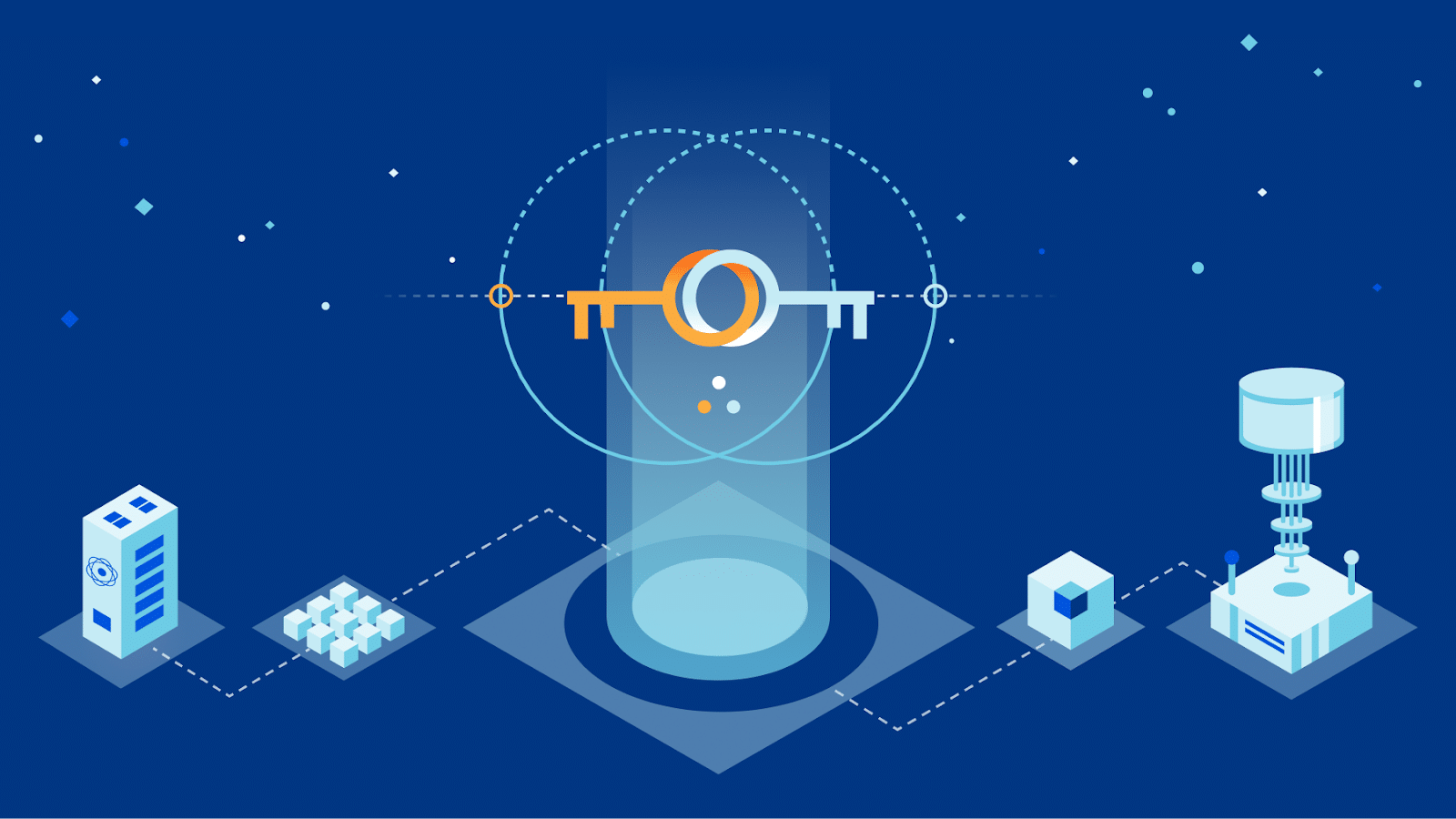
A main update in v3.4 is the enhanced attestation document. In generative AI, proving the correct model runs is as important as data protection. Nitro Enclaves v3.4 allows detailed measurement of model weights and logic with Platform Configuration Registers (PCRs). 

Through integration with AWS Key Management Service (KMS), a Nitro Enclave can cryptographically prove its identity and the integrity of its “Generative Logic” before any decryption keys are released. This means that an LLM’s weights, often a company’s most valuable intellectual property, remain encrypted in Amazon S3 and are decrypted only in the enclave’s volatile memory. If the enclave’s code or the model’s signature is altered by even a single bit, the attestation fails, and the “seal” prevents the logic from being executed. 

+1 

Confronting the Challenges of Generative AI at Scale 

Large-scale AI deployments face three primary security hurdles: prompt leakage, model weight theft, and exposure of inference telemetry. AWS Nitro Enclaves v3.4 addresses these with a layered isolation approach: applications in which the parent instance never sees the unencrypted prompt or the model’s response. This is essential for domains such as healthcare and finance, where PII (Personally Identifiable Information) must be processed by AI without being logged or stored. 

  • Persistent Model Protection: Since enclaves lack persistent storage, decrypted model weights exist only in memory. When the enclave shuts down, the Nitro Hypervisor securely erases the memory, so attackers cannot recover any data. 
  • Refined Resource Allocation: v3.4 improves the balance between memory and compute, so larger enclaves can use high-performance instances like the c7i and r7g series. This means the added security does not significantly slow down inference. 

Pragmatic Deployment Workflows 

To deploy Sealed Generative Logic Isolation, you follow a clear DevOps process. First, you create an Enclave Image File (EIF) with the inference engine, such as vLLM or llama.cpp, and the required startup code. 

In v3.4, nitro-cli supports larger images and complex dependencies, simplifying the containerization of multimodal models. After signing and deploying the EIF, the enclave retrieves the model’s decryption key from KMS using its unique identity, keeping models isolated from the parent OS kernel. 

The Shift Toward Sovereign and Compliant AI 

This release comes as global regulations move toward Sovereign AI. Governments and international bodies now require AI processing to remain within specific legal and security boundaries. Using AWS Nitro Enclaves v3.4, organizations can demonstrate a “Zero-Trust” setup for their AI workloads. 

Isolation matters for Multi-Party Collaboration. With v3.4, two organizations can share sensitive data in a single enclave, running specialized “LoRA” analysis or training models while keeping the raw data inaccessible to either party. The enclave acts as a secure neutral “clean room” for generative logic. 

Conclusion: The New Baseline for AI Trust 

As generative AI transitions from novelty to a core component of enterprise infrastructure, the underlying “plumbing” must be as robust as the models themselves. The introduction of Sealed Generative Logic Isolation in AWS Nitro Enclaves v3.4 provides the technical foundation for this trust. By hardware-sealing the inference process, AWS is removing the major barriers to AI adoption in highly regulated sectors. 

For organizations seeking to securely integrate LLMs into workflows, v3.4 sets a new standard. It protects model intelligence, even in cloud environments.

Source: What is Nitro Enclaves?