



Apple is growing its factory operations in Houston, so Mac Mini production will take place in the US for the first time. The company also plans to boost AI server production and open a new training center to help people build new skills. 

Apple announced today that it will expand its Houston factory, bringing Mac mini production to the US for the first time. The company will also increase AI server manufacturing at the site and begin hands-on training at its new Advanced Manufacturing Center later this year. These steps are expected to create thousands of jobs in Houston. 

Apple is committed to the future of American manufacturing and is proud to expand its presence in the US with Mac Mini production. Tim Cook, Apple’s CEO, said that starting later this year, the company will continue shipping advanced AI servers from Houston ahead of schedule and looks forward to speeding up that work. 

For more than 20 years, people around the world have chosen the Mac mini for its solid performance in a compact design. Its cutting-edge AI features make it a useful instrument for students, creatives, and small business owners. Later this year, Mac mini production will begin at a new factory on Apple’s Houston site, doubling the size of the campus. 

Apple began making advanced AI servers in Houston in 2025, and production is already ahead of schedule. Servers built there, including logic boards made on site, are used in Apple data centers across the country. 

Along with expanding production, Apple is investing in the workforce that supports American manufacturing. Later this year, Apple’s 20,000-square-foot Advanced Manufacturing Center will open in Houston. The new facility will offer hands-on training in advanced manufacturing to students, supplier employees, and businesses of all sizes. Apple experts will teach the same processes used to make Apple products, helping American manufacturers improve their skills. 

Since Apple announced its $600 billion pledge to the US last year, the company and its American manufacturing partners have already reached several milestones. 

  • Apple exceeded its goal by sourcing more than 20 million US-made chips from 24 factories in 12 states, working with partners like TSMC, Broadcom, and Texas Instruments. 
  • Global Wafers has begun production at its new $4 billion silicon wafer facility in Sherman, Texas. Following Apple’s guidance, wafers made in Sherman will be used by Apple’s chip manufacturing partners in the US, including TSMC and Texas Instruments. 
  • With Apple’s investment, Amkor has begun construction of a new $7 billion semiconductor packaging and test facility in Peoria, Arizona. Apple will be the first and largest customer at this site.  
  • Corning’s Harrodsburg, Kentucky, facility now makes only cover glass for iPhones and Apple Watches shipped worldwide. By the end of this year, every new iPhone and Apple Watch will have cover glass made in Kentucky.  
  • In 2026, Apple plans to buy more than 100 million advanced chips from TSMC at its Arizona facility. This is a marked increase from 2025.  
  • Apple opened its manufacturing academy in Detroit, which already helps more than 130 small and medium-sized American manufacturers with hands-on training in AI automation and smart manufacturing. The Academy recently added new online programs so businesses across the country can access the curriculum created by Apple experts and Michigan State University faculty whenever they need it.  

Source: Apple today announced a significant expansion of factory operations in Houston 

In January, Apple shared that its ecosystem now includes over 2.5 billion active devices worldwide, up from 2.35 billion one year earlier. This large and growing base, which covers iPhone, iPad, Mac, and wearables, underpins Apple’s services revenue, which hit a record $30.01 billion in Q1 2026.  

This milestone is driving changes to the app store, leading to deeper service integration, more AI-powered features, and, as regulations increase, policies that are more flexible, secure, and developer-friendly.  

Key influences on App Store changes (2025-2026) 

With 2.5 billion devices and over 850 million people using the App Store each week, the marketplace is changing in multiple important ways:  

  • Deepening Ecosystem Lock-in and Services Growth: As more people use Apple devices, the company is increasing revenue per user by building its services more tightly into its operating systems. For example, iCloud Plus subscriptions have grown as users need more storage, and Apple Music and Apple Pay have become more popular, helping Apple Pay cut global fraud by over $1 billion.  
  • AI-driven functionality (Apple Intelligence): The iPhone 17 series is leading the way with updates in 2025 and 2026 that focus on on-device intelligence. For example, Apple Wallet now uses AI to track orders, and Apple Maps can suggest preferred routes.  
  • New distribution and payment rules: to address both its large user base and new regulations. Apple now lets developers direct users to external websites for payments. This gives developers more ways to accept payments while still reaching Apple’s huge audience.  
  • Strengthened Security and User Reliance: As Apple’s platform grows, the company has enhanced its safe, trusted app environment. It has updated privacy rules and made app reviews stricter, including clear bans on using other developers’ brand names or icons without permission.  
  • Expansion in emerging markets: rapid growth in India has led Apple to launch special app store programs, such as local payment options and support for developers creating apps for new, younger, or first-time Apple users.  
  • Support for new hardware features: The App Store is adapting to support new hardware, such as 5G smartwatches with more features and better camera and AI capabilities on the latest iPhones.  

Impact on Developers 

With 2.5 billion devices in use, developers need to create high-quality, specialized, and secure apps. The App Store, now part of a 1.3 trillion annual economy, asks developers to follow new rules that are stricter yet more flexible, enabling a wider range of AI-powered experiences.  

Apple has reached a new milestone: 2.5 billion active devices worldwide. CEO Tim Cook shared this figure during the company’s Q1 2026 earnings call. This total covers all Apple products, including iPhones, iPads, Macs, and Apple Watches. The number highlights Apple’s wide market coverage and strong demand for its hardware.  

Apple’s Device Count Growth Over the Years 

The 2.5 billion active devices are up from 2.35 billion in January 2025 and 2.2 billion in 2024. This means Apple added about 150 million new devices to its active base in the past year. The steady growth shows strong demand for Apple products, especially the iPhone, which has played a key role in this increase.  

iPhone’s Contribution to Apple Revenue 

Cook also pointed out that Apple reached record revenue of $143.7 billion in Q1 2026, led by the iPhone, which brought in $85.3 billion, a 23% increase from last year. Services reached a new high of $30.01 billion, while Mac sales were lower than last year’s launches. The iPad added $8.6 billion, and wearables like the Apple Watch Series 11 and Ultra brought in $11.49 billion.  

India Acts as a Key Growth Market for Apple 

India was a major highlight in Apple’s earnings call, with Cook reporting strong double-digit revenue growth and the best December quarter yet. He credited this to expanding retail efforts. CFO Kevan Parekh also said Apple’s installed base in India grew at a double-digit rate, making the country a key extended growth market for Apple.  

Source: Apple now has over 2.5 billion active devices 

On February 13, 2026, OpenAI retired GPT-4o from ChatGPT and moved users to a faster, more capable model.  

The new GPT-5.2 model helps OpenAI use resources more efficiently, since only 0.1% of users were still using GPT-4 or GPT-5. It enables better reasoning, improved performance on difficult tasks such as coding, and a more personalized experience. It replaces the warmer but less capable GPT-4o.  

Here’s why your ChatGPT now uses GPT-5.2: 

  • Very few people use older models, since only 0.1% of users rely on GPT-4o; it no longer makes sense to keep it running.  
  • GPT-5.2 is built to handle complex daily tasks better. It provides faster, more accurate, and more reliable answers, and its knowledge extends to August 2025.  
  • By retiring older models like 4o, 4.1, 4.1 Mini, and o4 Mini, OpenAI can focus its resources on making the GPT-5 series even better.  
  • GPT-5.2 uses feedback from the 4-O era to let users choose different tones and to avoid responses that feel too cautious or preachy.   

Some users liked the unique warm style of GPT-40, but the move to GPT-5.2 is permanent for ChatGPT users. The API is not affected by this change for now.  

OpenAI will retire several ChatGPT models today, February 13, 2026. The models being removed are GPT-5, GPT-40, GPT-4.1, GPT-4.1 Mini, and OpenAI-04 Mini. Earlier this month, OpenAI announced the schedule for this change and confirmed that these models will not be available in ChatGPT after the deadline.  

OpenAI explained that low adoption led to this design, since most users have already moved to newer models. GPT-40, which came back for a short time after being removed during the GPT-5 rollout, will also be discontinued as part of this plan.  

OpenAI is also developing a version of ChatGPT made for adult users. At the same time, it is using age-estimation tools across most markets to better control how younger users access the platform.  

These models, GPT-4o, have had a complicated history. It was first removed during the early GPT-5 rollout but brought back after user feedback. The model met criticism for what OpenAI called “psychopathic behavior”. In April 2025, OpenAI reversed an update to GPT-4o after users pointed out the problem, reverting to an earlier version that produced more balanced responses. Now, after its brief return during the GPT-5 rollout, GPT-4o will be discontinued again.  

ChatGPT-5.3 Codex Spark 

OpenAI has also launched GPT-5.3 Codex Spark, a lighter version of GPT-5.3 Codex, made for instant coding. OpenAI says Codex Spark is its first model built just for live coding in Codex. Developers can use it to make focused edits, adjust logic, or refine interfaces and see results right away. OpenAI also released a new macOS version of Codex, offering a desktop interface for managing multiple AI agents at once.  

OpenAI says the focus is on quickness and responsiveness, making the model good for live coding. It runs on Cerebras’ WaferScale Engine 3, a special AI accelerator built for fast processing.  

Codex Spark will be available as a research preview starting February 13. ChatGPT Pro users can access it via the latest Codex app, the command-line interface (CLI), and the VS Code extension.  

Source: OpenAI to discontinue GPT-5, GPT-4o and other models today: What changes 

The Tata Group, Tata Consultancy Services (TCS) (BSE: 532540, NSE: TCS), and OpenAI have launched a new strategic partnership to drive AI-powered innovation in the enterprise, consumer, and social sectors.  

This enterprise will focus on several key areas, including:  

  1. Supporting AI development across Tata Group companies  
  1. Working together to drive AI transformation across industries worldwide  
  1. Building AI infrastructure  

Main Highlights 

  • Empowering Tata Group employees with Enterprise ChatGPT: Thousands of employees will have access to the platform, helping them work more efficiently and creatively. TCS will also use OpenAI’s Codex to improve software engineering results.  
  • Building industry-specific agentic AI solutions: OpenAI and TCS will combine their strengths to deliver effective AI solutions tailored for two specific industries.  
  • Joint go-to-market (GTM) initiatives: TCS and OpenAI will work together to help businesses in India and around the world use AI solutions that fit their needs. TCS will support customers by deploying and scaling OpenAI’s advanced AI platforms globally.  
  • Developing AI Infrastructure: TCS, Hypervault Unit, and OpenAI have started a multi-year partnership to build AI infrastructure in India. The first phase will create 100 MW of capacity, with plans to expand to 1 GW. This will support advanced AI projects and help make India a global AI hub.  
  • Social Impact: The OpenAI Foundation and TCS will work together to offer AI training and resources to young people in India, helping them use AI responsibly and effectively. They will also create technology toolkits for NGOs and start programs intended to improve the lives of at least 1 million Indian youth.  

Sam Altman, CEO of OpenAI, said India is already leading the way in AI adoption. With its talent, ambition, and strong government support, it is well placed to help shape its future through OpenAI for India and our partnership with the Tata Group. We are working together to build the infrastructure, skills, and local partnerships needed to build AI with India for India and in India, so that more people across the country can access and benefit from it.  

N. Chandrasekaran, Chairman, Tata Sons, said the deep collaboration between OpenAI and the Tata Group constitutes a major milestone in India’s vision to become a global leader in AI. We are pleased to partner with OpenAI to create state-of-the-art AI infrastructure in India. This is a unique opportunity for OpenAI and TCS to change industries. Together we will skill India’s youth and empower them to succeed in the AI era.  

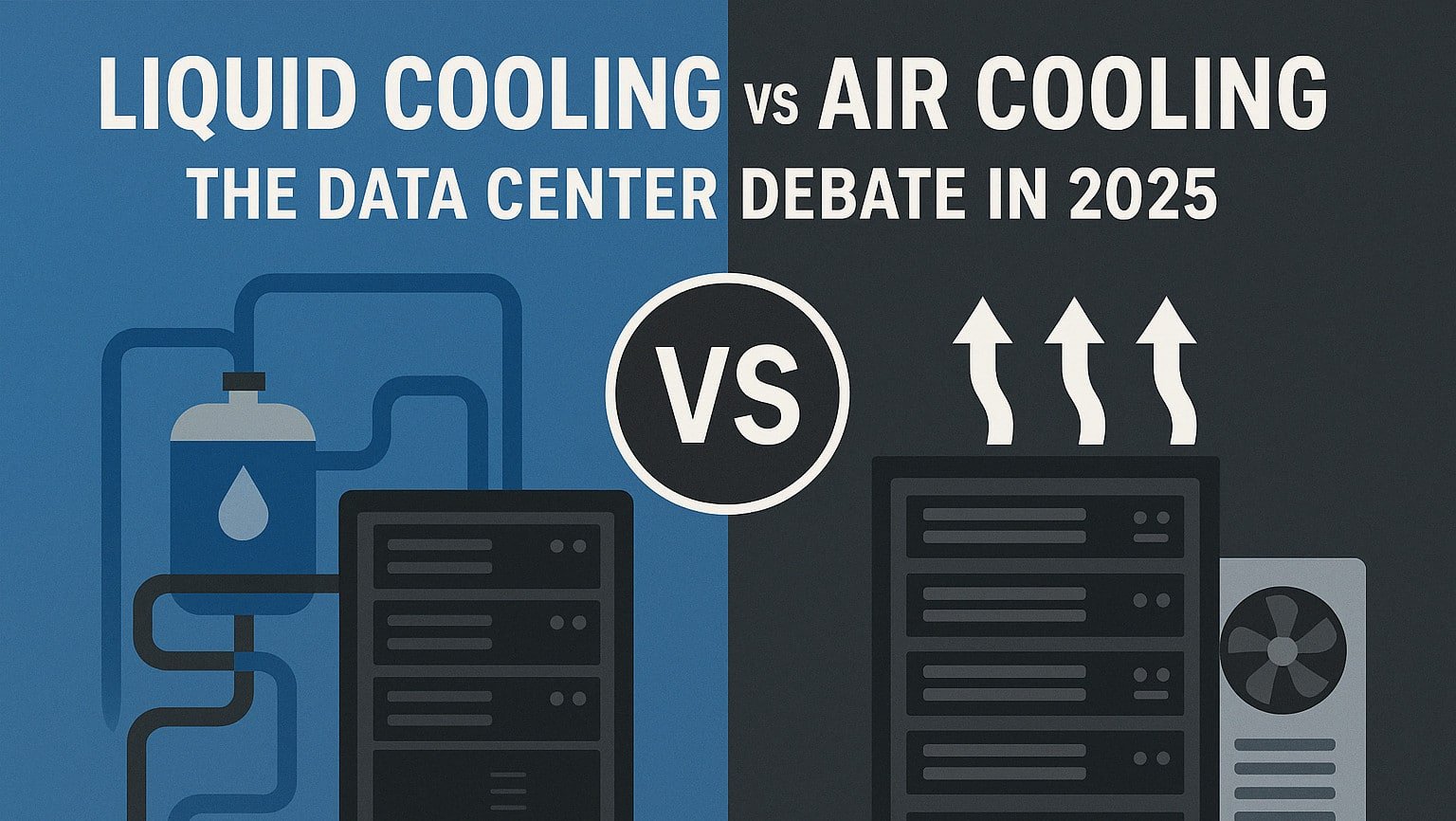
TCS launched HyperVault in 2025 to provide secure, reliable, large-scale, AI-ready infrastructure for organizations that need high computing power powered by green energy. HyperVault will offer custom liquid-cooled data centers with high rack densities and strong network connections across major cloud regions. This cooperation is an important step toward helping India become a global leader in AI and accelerating AI development and adoption.  

About Tata Consultancy Services Limited (TCS) 

Tata Consultancy Services is a trusted partner to leading organizations worldwide. Since 1968, TCS has focused on innovation, engineering superiority, and strong customer service.  

TCS aims to become the world’s largest AI-led technology services company. It helps clients transform their business using AI, from infrastructure to advanced intelligence.  

TCS, part of the Tata Group, is committed to creating long-term value for clients, investors, employees, and the wider community. With skilled teams in 55 countries and 202 service centers worldwide, TCS is recognized as a top employer on six continents. The company quickly adopts and scales new technologies, establishing long-term partnerships with clients. Many of these relationships have lasted for decades, adapting through every technology change from mainframes in the 1970s to today’s artificial intelligence.  

There are 14 of the world’s most prestigious marathons and endurance events, including the TCS New York City Marathon, TCS London Marathon, and TCS Sydney Marathon, all focused on promoting health, sustainability, and community empowerment.  

TCS generated consolidated revenues of over $30 billion in the fiscal year ended March 31, 2025.  

Source: Tata group and OpenAI forge foundational partnership to advance AI transformation in India and globally 

On February 5, 2026, Google started a major update for the Google Discovery Feed. This update changes the kind of content you see on your mobile device, focusing less on sensational global stories and more on local news, in-depth coverage, and special insights.  

Here’s why your feed now shows more local news after the February 2026 update.  

  1. “Local first approach (Country-specific news)” 

Google now prioritizes content from publishers in your country or region.  

  • This means that if you are in the US, you will see more news from local or regional sources rather than international or viral stories from elsewhere.  
  • The goal is to make the Discover feed more helpful and relevant to your daily life and local area.  
  1. Reduction of Clickbait and Sensationalism 

Google is working to show fewer sensational and misleading headlines, often called clickbait, that are just meant to grab your attention.  

  • This means content with shocking headlines, exaggerated claims, or false information will appear less often.  
  • What gets promoted: articles that are honest, informative, well-structured, in-depth, or original.  

3. Focus on Topical Expertise 

Rather than only looking at a website’s overall reputation, Google now does a better job of judging expertise for each topic.  

  • This means a local news outlet with a strong section on a specific topic, like local politics or sports, can now rank higher than a big national site for that subject.  

4. Originality And In-Depth Reporting 

Google now favours original reporting, detailed analysis, and timely articles over simply repeating existing news.  

Summary Of The Shift 

With the February 2026 update, Discover is now seen as a trust engine instead of just a way to drive traffic. If your feed seems more local, it’s because Google wants to connect you with news that matters in your area and cut down on sensational stories.  

Note: the update first launched for English-speaking users in the US and will expand worldwide in the coming weeks and months.  

Google has launched the February 2026 Discover Core update. This update aims to change how content appears in Google Discover.  

This is a broad update to our systems that surface articles in Discover that Google wrote.  

This update is starting with English-speaking users in the US and will roll out to other countries and languages over the next few months. Google said the rollout should take about two weeks to finish.  

What to expect? Google said the Discover core update will improve the experience in several important ways, such as:  

  • Users will see more relevant content from websites based in their own country.  
  • There will be less sensational material and fewer clickbait articles.  
  • Google will highlight more in-depth, original, and timely content from sites that exhibit expertise in a specific area, based on how Google understands the site’s content.  

Since the update prioritizes local content, non-US websites that publish news for US readers might see lower traffic. This effect could decrease or go away as the update rolls out worldwide.  

More details: Google said that many sites demonstrate strong knowledge across different subjects, and its systems are designed to spot expertise in each topic. This means any site can show up in Discover, whether it covers many topics or just one. Google gave this example:  

  • A local news site with a dedicated gardening section could have established expertise in gardening, even though it covers other topics. In contrast, a movie review site that wrote a single article about gardening would likely not.  

Google said it will continue to show personalized content based on people’s creator and source preferences.  

During the testing, Google found that people find the discover experience more useful and worthwhile with this update.  

Be prepared for changes in your Google Discover traffic as this core update rolls out.  

  • Some sites might see increases or decreases; many sites may see no change at all, Google said.  

Roll out. Google said it is releasing this update to English language users in the US and will expand to all countries and languages in the months ahead.  

Why this matters: If your site gets traffic from Google Discover, you might see changes soon. For advice, Google suggests checking out its General Core Update Guidance and the Get On Discover Help page. 

Source:  Google releases February 2026 Discover core update 

Rohde & Schwarz is working with NVIDIA to push AI RAN innovation for 5G advanced and 6G at MWC Barcelona. They will present a new testbed that combines ray tracing, channel emulation, and the NVIDIA Sionna research kit. This setup permits digital twin-based hardware-in-the-loop testing to be done directly, entirely in the lab.  

At MWC Barcelona, Rohde & Schwarz will present a new step forward in AI-based wireless system testing. Built with NVIDIA, the testbed uses hardware-in-the-loop site-specific channel emulation and the NVIDIA Sionna research kit. This lets users test AI-driven applications under realistic network conditions. The demo shows the ongoing partnership between Rohde & Schwarz and NVIDIA, focusing on developing and validating new AI RAN solutions with advanced testing tools.  

Building on earlier proofs of concept in Neural Receiver Design, such as custom constellations for pilotless communication, the new testbed moves from link-level validation to system-level verification with the full 5G NR protocol stack.  

The NVIDIA Sionna research kit, running on a single NVIDIA DGX Spark, operates a software-defined 5G RAN using OpenAirInterface. It also supports AI inference workloads that meet the real-time demands of wireless systems. Just how flexible is the platform? A new AI- and machine-learning-based link adaptation algorithm has been added to the system. The algorithm automatically adjusts the downlink modulation and coding scheme to improve both spectral efficiency and link reliability. The AI-driven link adaptation algorithm can learn about site-specific propagation and user equipment behavior in real time, showing why end-to-end testbeds are important for capturing these effects.  

The Testbed uses the RM&S SMW200A Vector Signal Generator, which has adaptive channel emulation along with the FSW Signal and Spectrum Analyzer. Together, these tools can emulate complex site-specific radio channels and work directly with the NVIDIA Sionna RT ray tracing software. This feedback-controlled system lets researchers and developers test new AI-driven RAN features inside dynamic site-specific RF conditions, all within the lab.  

Gerard Tietscher, Vice President of Signal Generators, Power Supplies, and Meters at Rohde & Schwarz, said, “We are excited to continue our collaboration with NVIDIA with this latest proof of concept testing for testing AI-enhanced base stations for both 5G Advanced and 6G under realistic propagation conditions.” By applying digital twin technology and ray tracing, this approach aims to bridge the gap between AI-driven wireless simulations and real-world deployment, enabling more efficient and accurate testing of next-generation receiver architectures.  

Soma Velayutham, Global Industry Business Development Lead and Telecommunications at NVIDIA, said that synthetic data generation is changing how we train and validate AI-RAN systems by ensuring accuracy, scalability, and privacy, especially in settings with sparse data. Rohde & Schwarz, using the NVIDIA Ciona research kit, demonstrates how industry-leading expertise and inventive technology can come together to accelerate progress in this essential domain.  

At MWC Barcelona 2026, visitors can see live hardware-in-the-loop validation of new AI/RAN features and talk with experts from Rohde & Schwarz and NVIDIA at booth 5A/80 in Hall 5 from March 2 to 5, 2026.

Microsoft rolls out important security updates on the second Tuesday of each month, known as Patch Tuesday. This month, the updates address 59 Microsoft CVEs, including 6 zero-day vulnerabilities.  

Here is a quick overview of the six zero-day vulnerabilities that are currently being exploited.  

Windows Shell Security Feature Bypass Vulnerability 

CVE-2026-21510 (CVSS score 8.8 out of 10) is a security feature bypass in Windows Shell. If an attacker convinces someone to open a malicious link or shortcut file, they can trigger Windows Smart Screen and similar security prompts.  

This vulnerability can be exploited over the network, but it still requires user action. The attacker tricks the victim into opening a harmful shortcut or link. If successful, the attacker can hide the usual iOS security warnings, making it easier to deliver and run more malicious files without the user noticing.  

MSHTML Framework Security Feature Bypass Vulnerability 

CVE-2026-21513, (CVSS score: 8.8/10) Affects the MSHTML framework, which is used for web rendering in Internet Explorer. This flaw is a failure of a network protection mechanism that allows attackers to circumvent network security features.  

To exploit this, the attacker needs the victim to open a malicious HTML file or a typically crafted shortcut that uses MSHTML. Once opened, the attacker can bypass some security checks in MSHTML, potentially weakening browser or Office protections, and enabling further attacks or phishing.  

Microsoft Word: Security Feature Bypass Vulnerability 

CVE2026-21519 (CVSS score 7.8 out of 10) is a local elevation of privilege/vulnerability in Windows Desktop/Window Manager. It is caused by type confusion in which the system mistakenly treats one type of data as another, leading to unanticipated behavior.  

An attacker who is already locked in with low privileges can exploit this issue without needing the user to do anything. They must run a program or exploit on the target system. If successful, the attacker could gain system-level privileges.  

Windows Remote Access Connection Manager Denial of Service Vulnerability 

CVE-2025-21525 (CVSS score 6.2 out of 10) is a denial-of-service vulnerability in the Windows Remote Access Connection Manager (RasMan) service.  

A local attacker who is not logged in can easily exploit this flaw. It can crash the service or even the whole system, but it does not allow the attacker to gain additional privileges or run malicious code.  

Windows Remote Desktop Services Elevation of Privilege Vulnerability 

CVE-2026-21533 (CVSS Score: 7.8 out of 10) is an elevation-of-privilege vulnerability in Windows Remote Desktop Services. It is caused by improper management of user privileges.  

An attacker with low-privilege credentials can exploit this flaw without user assistance. They can run their own code on a system and remote desktop services and use the vulnerability to gain system privileges, fully compromising the system.  

Azure users should also be aware of two serious vulnerabilities, each with a CVSS score of 9.8.  

  • CVE-2026-21531 affecting Azure SDK  
  • CVE-2026-24300 affecting Azure Front Door  

How to apply fixes and check these updates 

These updates fix security issues and help keep your Windows PC safe. Here is how you can check that your system is up to date.  

Open the settings. Click on the Start button, which is the Windows logo at the bottom left of your screen.  

Click on settings, which looks like a small gear icon.  

Go to the Windows Update.  

In the settings window, choose Windows Update. You will usually find it at the bottom of the menu on the left.  

Look for updates.  

Click the “Search for updates” button.  

Windows will now look for the latest Patch Tuesday updates.  

If you turned on Windows updates before, you might see this in your update library.  

Or you might see a message saying “Restart Required”. If so, reboot your computer to complete the update!  

If you don’t see that, keep following the steps below.  

Download and install.  

If updates are available, they will start downloading automatically. When they are done, you will see a button that says “Install” or “Restart now.”  

Install if needed. Follow any instructions. Your computer will likely need to restart to finish the update. If so, click Restart now.  

Verify you are up to date.  

After restarting, return to Windows Update and verify again. If it says you are up to date, you are good to go.

Source: February 2026 Patch Tuesday includes six actively exploited zero-days

Microsoft is changing how Azure VMware solutions (AVS) work because Broadcom has updated its VMware licensing. The company is shifting from bundled licensing to a new approach.  

The new bring-your-own license (BYOL) model may make buying licenses more complicated, but it lets you use your existing licenses. This change is meant to make it easier to adopt hybrid computing solutions.  

Here are the main changes and what they mean for IT teams.  

The New Rules: What Will Change After October 15, 2025 

End of Bundled Licensing: Starting Oct 15, 2025, Microsoft will no longer sell AVS nodes that include VMware, Cloud Foundation, Open (VCF), subscriptions.  

Mandatory BYOL: Anyone buying the new AVS nodes will need to bring their own portable VCF subscriptions, which must be purchased directly from Broadcom or its partners.  

Support Timeline: Current AVS customers with VCF included can continue using their setup without any licensing changes until October 31, 2026.  

Protection for existing users: If you buy reserved instances (RIs) by October 15, 2025, you can keep your current bundled licensing as long as your term lasts.  

What does this mean for IT Teams? 

  • Heightened Operational complexity (short-term). IT teams will no longer receive a single invoice from Microsoft for both cloud infrastructure and VMware licensing. Now they will need to manage, track, and renew VCF licenses separately through Broadcom, which could add more administrative work.  
  • Flexibility in moving from CAPEX to OPEX: The new model makes it easier to move licenses between local systems and Azure VMware solutions, supporting hybrid strategies. However, IT teams will need to manage license compliance across different environments diligently.  
  • Possible cost savings for current license holders: If your organization already has portable VCF licenses, using the BYOL option in AVS could save you money. In general, the AVS VCF BYOL option costs less than the old bundled license included version.  
  • Faster move toward modernization: With managing licenses now more complex and a 2026 deadline, organizations may need to rethink their reliance on VMware. This could speed up moves to native Azure services (IaaS/PaaS) to avoid depending on Broadcom’s licensing in the future.  
  • Managed service experience continues even with the licensing changes. AVS is still a fully managed service. Microsoft will keep handling the infrastructure patching and upgrades, so IT staff do not have to worry about hardware maintenance.  

Recommended Steps For IT Departments. 

  • Audit licenses now: Check your current on-premises VMware licenses to see if they can be used elsewhere.  
  • Review Reserved Instances: Decide whether to secure the current bundled VCF by purchasing one- to three-year reserved instances before October 15, 2025.  
  • Engage procurement: start talking with Broadcom or their authorized partners to learn about the new process for getting portable VCF subscriptions.  
  • Plan for 2026: Ensure all your workloads are ready to switch to BYOL by October 31, 2026.  

Broadcom has updated its VMware licensing policies, affecting Microsoft partners and customers using Azure VMware Solution.  

With these changes, customers must bring their own portable VCF subscriptions when using any hyperscaler platform. This means they must buy VCF subscriptions directly from Broadcom through the Broadcom partner ecosystem or use. To use with hyperscaler cloud services. Although this affects how customers can buy new VCF licenses, it does not affect the availability of AVS services.  

Azure VMware Solution (AVS) already supports Broadcom’s model through the AVS VCF BYOL option, which lets customers use AVS with their own VCF subscriptions. As you are there, the preferred option for running VMware and mine is the AVS VCF BYOL option, which also costs less than AVS with VCF subscriptions included.  

This update is only about licensing and does not change the Azure VMware Solution cloud service itself. Microsoft will continue to offer AVS as a fully managed VCF private cloud service on Azure, handling infrastructure and VMware host management, including patching and upgrades. This allows IT staff to focus on higher-value work, such as modernizing workloads and launching new AI projects. 

In February, Microsoft released an update to Visual Studio 2026 that makes GitHub Copilot testing for .NET generally available. This new feature brings an AI-powered workflow for generating, building, and running tests, and lets you create tests with a single right-click.  

Key Features and Functionality 

GitHub Copilot testing for .NET works as an automated testing agent within the Visual Studio IDE.  

  • Automated Iterative process: When you start it, the agent reviews your C# code at any level, creates tests, builds the project, runs the tests, and keeps fixing issues until everything is stable.  
  • One-click entry point: You can now use this feature by right-clicking your code in the editor, choosing Co-Pilot actions, and then selecting Generate tests. The tool figures out the right scope for you.  
  • Natural Language prompts: You can also begin by typing @test in the Co-Pilot chat window and explaining in simple terms what you want to test.  
  • Framework awareness: The agent understands your solution’s answers and builds the system, and it works smoothly with XUnit, NUnit, and MS-Test.  
  • Coverage and Summary: After finishing, Co-Pilot gives you a summary in the chat window. This includes code coverage information from before and after, plus direct links to the tests it created for you to review.  

Availability 

This feature is now available in Visual Studio 2026 v18.3. You will need a paid GitHub Co-Pilot subscription (Business or Enterprise) to use it.  

GitHub Co-Pilot testing for.NET is a new feature in Co-Pilot chat built into Visual Studio. It helps automate creating, running, and testing C# code for projects, solutions, files, classes, or members. This tool is for C# developers who want to quickly set up thorough test coverage without writing every test case by hand. Co-Pilot testing can generate tests for XUnit, NUnit, and MSTest frameworks.  

GitHub Co-Pilot testing for Dotnet is different from one-time prompts in Co-Pilot Agent Mode. It gives you a guided, ongoing experience designed to generate tests. The results are consistent because they use the C# compiler and language rules, and the tool understands your code base, file structure, and testing practices to create reliable, relevant tests.  

Security Warning 

The first time you use GitHub Co-Pilot testing for Dotnet, Co-Pilot will ask for your permission to run code generated by its language module on your computer. This can include installing or restoring NuGet packages and running tests. If you do not give general consent, Co-Pilot will ask for your approval each time before it does any of these actions.

Source: Overview of GitHub Copilot testing for .NET 

Samsung will hold its next Galaxy Unpacked event on February 25, where it is expected to introduce the new Galaxy S26 series of smartphones. Before the event, the company shared some features coming to these phones, such as Perplexity in Galaxy AI, a zero-picking privacy display, and AI-driven image editing with text prompts. Samsung may also launch the Galaxy Buds 4 series at the same time.  

Samsung Galaxy Unpacked: Event Details 

  • Date: February 25  
  • Location: San Francisco  
  • Live stream: Samsung newsroom and Samsung YouTube channel.  

Samsung Galaxy S26 Series: What to Expect 

The Samsung Galaxy S26 lineup will likely include three models:  

  • Galaxy S26  
  • Galaxy S26+  
  • Galaxy S26 Ultra  

Before the launch, Samsung highlighted some features expected in these new phones. These include:  

Privacy display: The Galaxy S26 will offer a new privacy feature that lets users control what others can see on their screens in public. Samsung teasers show that users can hide private information such as messages, passwords, and notifications. There will also be a zero-peek privacy setting that instantly covers the entire screen.  

Image editing via text prompts: Samsung has shown that users can edit images simply by typing the changes they want. The AI will understand these instructions and make several edits at once, so users won’t need to adjust things manually.  

Perplexity: Samsung will add Perplexity as an alternative AI agent on its upcoming flagship phones, alongside Google Gemini, with access via HeyPlex or a long press of the side button and integration across native and select third-party apps.  

Revamped Bixby: The company is also overhauling Revamped Bixby. Samsung is updating Bixby with One UI 8.5 to make it more dialogue-based and better at comprehending natural language. The new Bixby will be able to get live web information right in its interface, so users won’t have to open a browser.  

9to5 Google reported that the Galaxy S26 Ultra will retain a 5,000 mAh battery, equal to its predecessor, with potential marketing materials of up to 30 hours of usage on a single charge. The phone is also set to charge up to 75% in around 30 minutes.  

The camera hardware will likely be the same as the Galaxy S25 Ultra, with a 200MP main sensor, 50MP ultrawide, 50MP telephoto, and 5x optical zoom, and a 10MP 3x telephoto lens. However, it may have a new camera island designed similarly to the Galaxy Z Fold. The phone is expected to use Qualcomm’s Snapdragon 8 Elite Gen 5 for Galaxy chipset.  

Galaxy S26 and Galaxy S26 Plus: Expected Specifications 

The Galaxy S26 and Galaxy S26 Plus are expected to get an updated camera module, but will look similar to the previous models, depending on the market. They may use either the Snapdragon 8 Elite Gen 5 or Samsung Exynos 2600 chipset.  

Both phones are expected to have:  

  • A 50 MP main camera  
  • A 12 MP ultra-wide lens  
  • A 10 MP telephoto camera with 3x optical zoom and OIS, just like before  

The Galaxy S26 Plus may have a 6.7-inch flat LTPO M14 AMOLED display with a 120 Hz adaptive refresh rate and a 4900 mAh battery. The regular Galaxy S26 could feature a 6.3-inch display and a 4,300 mAh battery.  

Galaxy Buds 4 series: What to expect? 

The Samsung Galaxy Buds 4 series is expected to have a slimmer, more compact design while keeping the stem-style look from the Galaxy Buds 3. The Buds 4 Pro will probably drop the blade lights from the last Pro model, with Samsung focusing on better sound quality. The charging case may be redesigned for a flat shape for easier access.  

A GizmoChina report says the regular Galaxy Buds 4 will support both Bluetooth Classic and Bluetooth Low Energy. Bluetooth Classic is used for things like streaming and calls, while BLE is used for low-energy tasks such as syncing and background connections.

Source: Samsung Galaxy Unpacked on Feb 25: What to expect from S26 series, Buds 4