



The launch of the Samsung Galaxy S26 is happening at a key moment. While there are no major design or hardware changes, this release matters because the industry is dealing with a serious memory shortage.
People are watching Samsung carefully to see how it will handle this crisis. The Galaxy S26 launch wishes workers the company’s strategy for 2026 and reassures the industry that Samsung is ready to address these problems.
The Galaxy S26 launch will highlight Samsung’s focus on premium features, innovation, and its leadership in on-device AI. We expect to see improved examples of how Galaxy AI can make daily tasks easier, like:
Smarter notifications
Better photo editing
Upgraded translation and communication tools
How To Watch Samsung Galaxy Unpacked
Samsung will reveal the next evolution of the ever-expanding Galaxy ecosystem, meaning the Galaxy S26, at Unpacked on Wednesday, Feb 25, in San Francisco at 10:10 a.m. PT/1 p.m. ET. You can watch live in the video above, and we’ll be reporting from California.
Samsung will introduce its latest Galaxy innovations that improve how users connect, create, and immerse in tech. The company says if you can’t attend in person, you can watch the live stream on Samsung.com or Samsung’s YouTube channel.
Samsung is expected to announce 5 new products:
3 Galaxy S26 smartphones (without an Edge model)
Two Galaxy Buds 4 series earphones
How Perplexity AI will integrate with Galaxy S26
The Galaxy S26 series will ship with One UI 8 and Android 16, which are already available on the Galaxy Z Fold 7 and Z Flip 7.
Google’s Gemini AI is a key feature on current Galaxy devices, but Samsung is reportedly discussing adding Perplexity to the Galaxy S26. Sources told Bloomberg that Samsung wants to pre-load Perplexity and add its search function to the internet browser (Motorola added Perplexity to its new Razr series in April). A recent leak also suggested Samsung was testing a Perplexity-powered Bixby with the One UI 8.5 update.
The Samsung Galaxy S26 series is expected to use the Snapdragon 8 Elite Gen 5 chip. Qualcomm says this chip is 20% faster and 35% more power efficient than the previous version, which was already strong.
Tom’s Guide reports that Samsung will use an Exynos chip, possibly the new Exynos 2600, in the base S26 and S26 Plus in some markets. For the S26 Ultra, Samsung may use the Snapdragon 8 Elite Gen 5 in all regions.
Recent Geekbench scores for the Exynos 2600 chip are promising. The data suggests the Exynos chip performs almost as well as the Snapdragon 8 Elite Gen 5, which is good news for Samsung fans.
There are rumors about the phone’s RAM capacity. Some say all three models will have 16 GB of RAM, which is 4 GB more than before; however, Ice Universe claims all three will start with 12 GB of RAM.
Galaxy S26 Pricing
A shortage of DDR RAM is likely to increase phone and laptop prices this year, and Samsung’s CEO has nearly confirmed this for the Galaxy S25/S26 series. As this situation is unprecedented, no company is immune to its impact, TM Roh told Reuters recently.
According to South Korea’s FNN News, this could mean a price increase of $40 to $60 for each S26 phone with 256 GB of storage. If we round it to $50, the S26 would cost $850, the S26 Plus (256 GB) would be $950, and the S26 Ultra (256 GB) would be $1,350.
I’ll give you a $30 credit to use during the pre-order period. There is no obligation to buy the phone once it’s announced, so it’s an easy way to save $30 (and you’ll also be entered to win a $5,000 gift or use it on Samsung.com).
Artificial Intelligence is no longer only a future trend. Today, it forms the backbone of productivity, marketing, business automation, and software development. By 2026, AI tools have become smarter, faster, and easier to use. No matter if you run an organization, a business, create content, study, or develop software, the best AI tools can help you save time, cut costs, and work more efficiently.
Productivity is changing fast, and finding the best AI tools is now a must for remaining competitive, not just following a trend. This year’s top AI Tools range from smart personal assistants that organize your day to advanced generative models that make it hard to tell where human work ends, and machine work begins. These tools deliver a new level of efficiency.
It is now 2026, a little over three years since ChatGPT launched in November 2022, sparking the AI boom. Since then, AI has become a regular part of daily work and personal life, and there are now many more tools available.
What are AI tools?
AI tools are software programs that use artificial intelligence, machine learning, and natural language processing to automate tasks, analyze data, and create content. They help people work more efficiently in writing, design, data analysis, and customer service.
Types and Examples of AI Tools
AI tools can be grouped by what they do and how they work.
Generative AI tools such as ChatGPT and Gemini can create, summarize, or analyze text. Some also make images, videos, or code.
Voice and audio AI apps like Eleven Labs and Murf turn text into realistic, natural-sounding voices. They can also clone or generate new voices.
Design and creative tools such as Canva use AI to make it easier to create marketing materials and visual content.
Data analytics and business AI tools such as H2O.ai and Anaplan support financial planning, forecasting, and decision-making by providing predictive insights.
Automation and workflow tools such as Zapier, N8n, and AI Agents handle complex tasks by automating multi-step processes.
Health care and research AI tools help with medical diagnosis and the analysis of research data. For example, NotebookLM is used for document analysis.
Artificial Intelligence tools use machine learning to analyze large amounts of data and find patterns, rather than just following fixed rules. They learn to predict, create, or organize information. This helps them automate tasks such as writing, image recognition, and insight generation, much as a digital brain does.
Benefits of using AI tools
AI tools provide significant benefits by automating monotonous tasks, improving decision-making through fast data analysis, and raising operational productivity. These technologies operate 24/7, lower human error, promote innovation across sectors, and lower operational costs while improving customer experiences through personalization.
Key benefits of AI tools include:
Automation and Capability: AI optimizes workflows, handles mundane tasks, and manages data, significantly increasing productivity and cutting operational costs.
Improved decision-making: By analyzing large data sets, AI provides data-driven insights and predictions to support more accurate business strategies.
24/7 Availability: AI-powered tools such as chatbots provide constant service without fatigue, offering better availability than human teams.
Better accuracy and safety: AI reduces human error in tasks such as data entry and analysis in factory conditions. It increases safety by enabling hazardous tasks to be performed.
Personalization and Customer Experience: AI analyzes user behavior to deliver customized content and experiences, increasing customer satisfaction.
Augmented Accessibility technologies, such as speech-to-text, real-time translation, and AI-powered content generation, boost accessibility for people with disabilities and improve educational activities.
Innovation: AI accelerates research and development, helping to create new products, services, and advanced, efficient processes.
Artificial intelligence also excels at security by monitoring, detecting, and alerting on anomalies and potential threats in real time.
The Importance of Artificial Intelligence Tools in 2026
By 2026, AI tools have moved beyond being just assistants. They now serve many roles, such as:
Automated Research Partners
Content Creators
Graphic designers
Video Editors
Coding Assistance
Business Workflow Managers
Companies that use artificial intelligence effectively are growing more quickly. By automating monotonous tasks, they can spend more time on strategy and creative work.
Best AI Tools by Category
Best AI writing and content creation tools for 2026
OpenAI’s ChatGPT: Best Overall AI Assistant
GPT remains a top choice in 2026 thanks to its cutting-edge multimodal features. It is recognized as the leading generative AI tool, offering flexible, easy-to-use options for a wide range of tasks. People rely on it for answering questions, searching the web, and helping with writing.
Best for:
Bloggers
Marketers
Students
Business Owners
Key Features:
Long-form content writing
Code Generation
Research Assistance
Image Understanding
Workflow Automation
Performs web searches for accurate real-time information
ChatGPT is a great option if you need an all-time, all-in-one assistant.
Jasper: best for marketing teams
Best for: agencies and marketing teams
While it stands out:
Brand voice customization
SEO Optimization
Campaign-focused templates
Copy.ai: best for quick copy
Copy.ai works well for creating short-form content like:
Social Media Posts
Email Campaigns
Product Descriptions
It is easy to use, quick, and great for beginners.
Grammarly’s GrammarlyGo: Best for Editing and Tone.
If you have content that needs polishing, GrammarlyGo can improve its clarity, tone, and professionalism.
Blend AI image and design tools in 2026.
Visual content helps increase engagement. Modern AI tools let users generate images from text prompts, making it easy to design attention-grabbing visuals quickly.
Midjourney: Best for AI Art
Its journey creates high-quality artistic images and gives users advanced control over prompts.
Best for: Designers, NFT creators, social media creatives
Key Features:
You can make custom images by entering detailed text prompts.
It also lets you adjust the aspect ratio to keep your visuals consistent and professional.
Canva AI: Best for Easy Graphic Design
Canva AI Tools help anyone create professional-looking designs.
Features:
Magic Design
Background remover
AI Text to Image
Presentation Generator
Generate images from user prompts.
With Canva AI, you can quickly and easily create images using AI-powered tools.
It’s a great choice if you don’t have a design background.
Adobe Firefly: Best for Professionals
Adobe Firefly is part of Adobe’s suite and lets professionals use AI to design and edit at a high level. You can fine-tune AI-generated images to get results that match your creative ideas.
Best AI video and audio tools for 2026
Video content continues to lead on platforms such as YouTube, Instagram, and LinkedIn. Generative AI tools help make new content like text, images, audio, or code by learning from existing data.
Synthesia: AI Video Creation
You can make professional AI avatar videos with Synthesia, no camera needed. It can also add new images to your videos, automatically or on request, making your visuals stand out.
Best for course creators, corporate training, and marketing videos
Runway: Advanced AI Video Editing
Runway includes features like:
Background Removal
Motion Tracking
AI Video Generation
Image generation capabilities for video projects
Runway is known for its advanced video generation tools that let you create and edit videos with artificial intelligence.
Several creators and filmmakers apply for the runway.
Descript: Best for Podcast and Audio Editing
With Descript, you can edit audio by editing text, a revolution for podcasters. Its AI transcription tools convert speech to text, making it easier to record meetings and discussions.
Best AI Tools for Business & Productivity
Respa is designed to help with marketing content such as ads, landing pages, and brand messaging.
AI automation can help companies save thousands of hours each year.
Notion AI: Smart Documentation and Planning
Notion AI works right inside the Notion Workspace, making it easier to stay productive in one digital space.
Notion AI helps:
Summarize Meetings
Generate reports.
Create task plans.
It can automate and organize meeting notes, making it easy to capture and summarize what was discussed.
It quickly pulls out the main points from meetings and documents, helping you understand the most important information right away.
You can use data from past projects to set better goals and spot possible risks.
Include an AI chat interface for conversational planning and data summarization.
It can automatically turn meeting notes or project discussions into tasks.
This tool is especially helpful for teams.
Zapier AI: Workflow Automation
Zapier connects thousands of apps and now includes AI-powered automation. Zapier AI connects with other apps to simplify workflows and expand functionality, making it a strong tool for businesses seeking flawless integration.
Features:
Automates repetitive tasks across platforms
Integrates with thousands of popular apps
It offers advanced tools for organizing and combining information from different platforms.
Zapier can pull in live data from web searches, social media, and other connected apps to give you instant insights.
ClickUp AI: team productivity booster
ClickUp AI helps with:
Task Summaries
Email drafting
Workflow suggestions
It gives sales tips, helpful data, and resources through analyzing meetings and tracking who speaks and how often.
Integrating smoothly within daily workflows, automating regular tasks for faster productivity.
Helps you manage your to-dos and task lists efficiently.
ClickUp AI is a great option for small teams because it’s affordable and can grow as your team grows. Project management tools like Asana and ClickUp also help teams collaborate and track tasks.
Best AI Tools for Students
Some of the best AI tools for students in 2026 are:
ChatGPT and Gemini for tutoring
Quillbot and Grammarly for writing
Notion AI for staying organized
Canva for design
These tools can help you summarize, brainstorm, format, and visualize your work, making research and studying more efficient.
Study and Research Assistants:
ChatGPT and Gemini are great for brainstorming, explaining difficult ideas, and making practice questions.
NotebookLM by Google helps you analyze uploaded documents and create study guides using AI.
Chat pdf lets you work directly with PDFs so you can summarize, search, and better understand long documents.
Writing and Editing
Grammarly checks your grammar, punctuation, and register to help with academic writing.
Quill bot is useful for paraphrasing, summarizing, and formatting citations.
Jenni.ai is a helpful tool for academic writing and research.
Organization and note-taking.
Notion AI brings together project planning, note-taking, and smart automated summaries.
Otter.AI transcribes lectures as they happen and makes notes you can search later.
Design and Creativity
Canva with magic AI helps you quickly make presentations, posters, and infographics.
Microsoft Designer uses AI to make high-quality graphics, which is helpful for projects and presentations.
Specialized Study Tools
Quizlet uses AI to make personalized learning sessions and flashcards for you.
Wolfram Alpha is great for solving math problems and doing technical data-driven research.
If you want an AI tool to help with studying and writing, many of these options have free versions or student plans that can save you time and help you do better in school.
Comparison Table of Best AI Tools
In 2026, the leading AI tools focus on productivity, coding, and creative work. ChatGPT, Claude, and Google Gemini stand out as the top choices for general-use coding and multimodal tasks. Other strong options include Perplexity for research, Co-Pilot for Microsoft integration, and Mid-Journey for image creation.
AI tools compared for 2026
For general use and research, ChatGPT offers strong reasoning and voice features, while Perplexity is best for live research with citations.
For coding and writing, Claude 4.6 and 4.5 Opus lead in technical ability and logic, along with Claude Code.
Gemini 3 Pro is the top choice for ecosystem and multi-modal tasks, especially with Microsoft 365 and video features.
Microsoft Co-Pilot is best for workflow automation thanks to its incorporation with Microsoft 365.
Detailed comparison table of AI tools
Tool
Best for
Key strengths
ChatGPT
Deep Research Conversational
Strong reasoning, versatile voice model
Claude 4.5/4.6
Coding, writing, reasoning.
High Coding Accuracy Nuanced Writing
Google Gemini 3
Multimodal Google Ecosystem
1M +Token Window Video/Image Generation
Perplexity
Real-time search citation
High Quality cited Answers
Microsoft Co-Pilot
Productivity M365 Apps
Integrates with Word, Excel, email
Claude Code
Software Development
Works directly with large codebases
Midjourney
Image generation.
Superior artistic quality.
Free vs Paid AI Tools
Free AI tools work well for beginners, casual users, or anyone testing things out. They give you basic features for free but usually have usage limits, run slower, and use older models.
Paid AI tools like GPT-4 offer faster performance, better security, and more advanced features. These are important for professionals and businesses that need reliable, expandable solutions.
Free AI tools
Best for: beginners, testing, and casual use.
Pros: No cost and instant access to basic features.
Cons: limited use (tokens or credits), slower speeds possible, privacy issues, and only older models available.
Best for: professionals, businesses, and heavy users.
Pros: Access to advanced models, Faster speeds, Unlimited use, Better data security, and extra features
Cons: You need to pay a monthly or yearly subscription fee.
Examples: ChatGPT Plus (GPT-4), Midjourney, Adobe Firefly (paid Plans).
Key Considerations
Security: paid tools usually offer better privacy. Free tools might use your data to improve their models.
Productivity: paid tools often give better results and need fewer edits.
Scalability: If you need to create a lot of content or code, paid tools are a must.
For most users, a freemium model works best: using free versions for brainstorming or trying out tools, then upgrading to paid versions for critical, high-volume, or sensitive projects.
How To Choose The Best AI Tool
Start by deciding what you want the AI tool to help you achieve, such as content creation or data analysis.
Check how easily it integrates with your current systems and ensure it meets data security rules similar to those of GDPR or CCPA.
Look for tools that are easy to use, can grow with your needs, and deliver clear results within 3 to 6 months.
Also consider:
the cost
the level of support from the vendor
whether you need technical skills or can use a no-code option
What to Think About When Choosing AI Tools
Figure out the main problem you want to solve, like spending less time on social media, automating tasks, or making more detailed reports.
Check what the tool can do.
For Text and Programming Tasks: ChatGPT and Claude are good choices for reasoning and creating long-form content.
If you need to work with complex or large data sets, Tableau or Power BI is a better option.
For automation, Zapier works well for simple tasks, while N8n is better for more advanced or self-hosted solutions.
Ensure the tool complies with data protection laws and keeps your sensitive information safe.
Think about how easy the tool is for your team to learn and how well it fits with your existing technology.
Compare the subscription price to the time or money you could save by using the tool.
Try out free trials or versions first to see how well the tool works before you pay for it.
Check that the vendor offers good documentation, training, and support if you need help.
Choose tools known for reliability and stability, such as Anaconda, data science, or n8n for automation.
Future of AI Tools
AI tools are quickly evolving from basic chat assistants to autonomous systems that work as proactive partners. By 2026, AI will move beyond simple task automation to managing entire workflows, becoming a core part of business operations, and boosting productivity. This shift is expected to add trillions to the global economy.
These are the main trends guiding the future of AI tools:
From Chatbots to Agentic AI (Autonomous Agents)
The next generation of AI will do more than answer questions; it will conduct complex, multi-step tasks for users.
Actionable agents: AI agents will manage projects autonomously, handling tasks such as responding to customer complaints, booking meetings, and updating CRM systems.
Super Agency: AI will serve as a digital workforce by late 2025. 23% of organizations are expected to use agentic systems for activities such as IT support and research.
Workflow transformation: In the future, AI will do more than summarize meetings. It will draft emails to attendees, update tasks, and track follow-up, changing how workflows are managed.
Multimodal and Integrated Systems
AI is advancing from fast, text-only models to systems that can understand and generate content across text, audio, images, and video.
Flawless Interaction: AI tools will hold real-time conversations that feel human and can recognize emotions.
Identified workspaces: tools such as Cursor for coding and N8n for automation are becoming the main hubs. They let users connect multiple AI models and tools into a seamless workflow.
Model context protocol (MCP): New standards, such as MCP, were introduced in November 2024. Enable AI models to access data files and tools across different apps. This reduces the need to switch between separate tools.
Personalization and Small Models
Early AI relied on large, general models, but the future will focus on smaller, specialized, and more efficient systems.
Hyper-personalization AI tools will tailor content to each user’s behavior, creating highly personalized experiences in marketing and customer service.
Persistent context: Future AI assistants will remember users’ past actions, preferences, and long-term goals, acting like a second brain.
Smaller focused models: bitnet models and other efficient, compact AI designs will enable fast, specialized tools that use less computing power.
Deep Integration in Key Industries
AI is moving from being experimental to becoming an essential part of everyday business operations.
Health Care: AI is Making Progress in Diagnostics by 2025. Tools are expected to achieve high precision in medical applications, helping address the global shortage of health workers.
Finance & Audit: AI is automating audits and financial reporting, enabling immediate monitoring and pattern detection that humans cannot do on their own.
Physical AI: More companies are using AI in robotics, drones, and digital twins in 2025. 58% of companies report some use, and this number is expected to rise.
Responsible AI and Governance
As AI systems become more independent, regulation and security become increasingly important.
AI governance and risk management: Organizations are developing, testing, and monitoring AI to manage risks such as bias, data privacy, and intellectual property issues.
AI Insurance: New Hallucination Insurance products are expected to help companies protect themselves from mistakes or harmful outputs generated by AI.
Security agents, as agents, take on more tasks. AI-driven security tools will be needed to protect them from compromise.
The Future Workforce
AI is meant to be a partner in creativity and learning, not a replacement for people. The 30% rule says AI can automate about a third of tasks in complex jobs, but human decision-making and strategy are still essential in the future. Employees will need to understand how to work with AI agents, not just carry out tasks.
FAQs
What are the best AI tools?
Right now, four main AI tools stand out, each having its own strengths.
Claude 3.5/4(Anthropic): known for its skill in detailed writing and logical thinking. Its artifacts feature lets users view and edit code documents and website mock-ups side by side, making it great for working together on projects.
ChatGPT-4o/5 (OpenAI): This is the most flexible option. Its cutting-edge voice mode and SORA video features render it a strong creative assistant and a dependable tool for data analysis.
Perplexity AI: This tool is a top choice for replacing traditional search engines. It pulls real-time web data and generates reports with sources, making it ideal for research that requires accurate facts.
Gemini 1.5 Pro (Google): Best for handling large amounts of data. It’s a 1-million-token context window that lets you upload whole books or long videos and ask detailed questions without losing track of information.
Which AI tools are free?
You can now access advanced AI tools for free, but most versions have daily limits on how much you can use them.
Tool
Best Free Use Case
Free Tier Highlights
Microsoft Co-Pilot
General Productivity
Free access to GPT-4 level models and DAL-E 3 image generation
NotebookLM
Personal Knowledge
Completely free, creates audio overviews and structured guides from your uploaded PDFs
Canva (Free)
Graphic Design
Access to magic studio for basic AI image generation and background removal
Claude (free)
Human-like writing
Access to most intelligent models (sonnet) with limited daily message turns
Which AI Tool Is Best For Business
For business use, Microsoft Co-Pilot Studio and ChatGPT Enterprise are top choices, but in 2026, Zapier Central stands out the most.
Zapier Central is different from regular chatbots because it lets businesses create active AI agents. These agents work across more than 6000 apps. For example, they can draft invoices in QuickBooks when a project is finished in Asana, research leads in LinkedIn and automatically update Salesforce. For companies that need to manage knowledge, Glean is now the best internal search for AI. It organizes all company documents, Slack messages, and emails to provide employees with quick, secure answers.
Which AI Tools Are Best For Students
Today’s students are choosing tools that help them learn deeply and stay organized. Instead of using just basic answer engines, it remains the key tool for STEM students. Unlike LLMs, it uses computational logic to solve math and physics problems step by step, ensuring zero hallucinations.
Quizlet Q-Chat: This AI tutor uses the Socratic method rather than just giving answers; it asks helpful questions so students can figure things out on their own, which helps them remember better.
Otter.ai: Great for lectures, it records and transcribes classes as they happen, highlights important ideas, and creates automatic study summaries.
Grammarly, in 2026, does more than check spelling. It now has a tone detector and an academic citations tool to help students format their bibliographies correctly in APA or MLA style.
Meta announced a multi-year deal with AMD to use up to 6 GW of AMD’s graphics processing units in its AI data centers.
Last week, Meta agreed to use millions of NVIDIA’s processors to support its artificial intelligence growth.
AMD granted Meta a performance-based warrant to buy 160 million of its shares, about 10% of the company.
Just a week after Meta agreed to use millions of NVIDIA processors for its expansion, the company has signed another major chip deal, this time with Advanced Micro Devices.
On Tuesday, Meta said the multi-year deal with AMD will use up to 6 GW of AMD’s graphics processing units in its AI data centers and will also include AI-optimized CPU cores.
AMD will start shipping MI450 GPUs to its Helios Rack Scale servers later this year.
This is about making the right bets at the right time! AMD CEO Lisa Su told CNBC’s Squawk on the Street on Tuesday.
After the news, AMD’s stock rose 7%. Meta shares dipped slightly, and NVIDIA’s shares stayed about the same.
The deal also gives Meta a performance-based warrant to buy 160 million AMD shares, or about 10% of the company. The first portion becomes available when the first GW of Instinct GPUs are shipped, with additional shares available as Meta buys up to 6 GW.
Vesting also depends on AMD’s stock price reaching certain levels and Meta meeting technical and commercial goals.
Su told CNBC that the warrant structure is a win-win for shareholders and supports a very ambitious plan and financial model. She sees the agreement as one of the most transformational deals for AMD as it grows its AI business.
We are early in the cycle of seeing what the ultimate payoff can be. She said that’s why we have to invest ahead of the curve and focus on what will bring the biggest benefit.
AMD made a similar deal with OpenAI in October, making it a strong second choice for major AI companies and hyperscalers.
That deal also gave OpenAI warrants to purchase 160 million AMD shares with terms tied to deployment and stock price targets.
In its earnings last month, Meta said it could spend up to $135 billion on capital projects this year as it tries to keep up with other big tech companies, OpenAI and Anthropic, in the global AI race. Meta plans to build 30 data centers, with 26 in the US.
Tuesday’s announcement is a critical development for AMD, which is far behind NVIDIA. In the AI chip market, NVIDIA is now the world’s largest publicly traded company, with a US$4.66 trillion valuation and roughly 90% market share, while AMD is valued at $320 billion.
Meta is in a unique position to control the full stack and can choose any computing provider, said chip analyst Ben Bajarin of Creative Strategies. This highlights that we have limited computing resources so that deals will happen across the industry.
At the Open Compute Project (OCP) Global Summit in San Jose, California, Meta announced new specifications for an open rack for AI with an open rack-wide (ORW) form factor. This constitutes a significant step forward in open infrastructure innovation.
The OCP specification defines an open, double-wide rack designed for the power, cooling, and service needs of next-generation AI systems. This shift helps standardize the scale data center design across the industry.
AMD is working with Meta and the Open Compute Project community to advance this vision through Helios. AMD’s most advanced rack-scale reference system, built on the ORW open standard, Helios extends AMD’s commitment to openness from silicon to large-scale clusters, embodying the open hardware principles of the ORW specification.
Helios: Turning Open Standards into Rack Scale Reality
The AMD Helios AI rack follows the open design blueprint Meta submitted to OCP 2025, aiming for optimized, ready-to-deploy performance in AI data centers. With next-generation AMD Instinct MI450 series GPUs, Helios sets a new standard for open-rack-scale AI infrastructure.
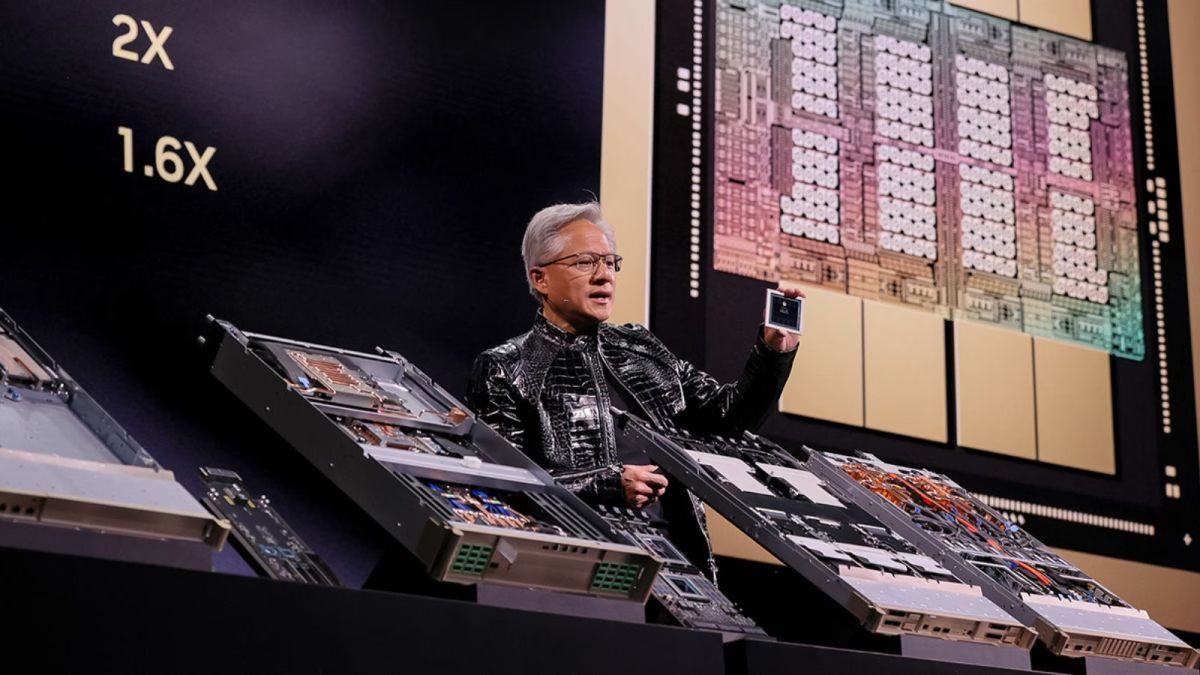
Each MI450 series GPU built on AMD CDNA architecture offers up to 432 GB of HBM4 memory and 19.6 TB of bandwidth, supporting demanding AI models. A Helios rack with 72 GPUs can reach up to 1.4 exaflops of FP8 and 2.8 exaflops of FBO4 performance, with 31 TB of memory and 1.4 PB of bandwidth. This leap enables training trillion-parameter models and large-scale AI inference.
Helios includes up to 260 TB of scale-up interconnect bandwidth and 43 TB of Ethernet-based scale-out bandwidth, guaranteeing smooth communication between GPUs, nodes, and racks. It delivers up to 36 times higher performance than previous generations and offers 50% more memory capacity than NVIDIA’s Vera Rubin system.
X-scale systems like Helios are key for the next generation of AI, where performance relies on optimized communication between thousands of accelerators. AMD’s leadership in open standards like OCP (Ultra-Accelerator Link, UAL) and the Ultra Ethernet Consortium (UEC) supports industry collaboration. These efforts help create interoperable, energy-efficient infrastructure for the AI era.
Driving Open Innovation Across the Ecosystem
The Helios Rack is more than simply a hardware reference; it functions as a blueprint for collaboration in the AI ecosystem.
Built on the ORW specification submitted by Meta to OCP, Helios enables OEM and ODM partners to:
Adapt and extend the Helios reference design to accelerate time-to-market for new AI systems.
Integrate AMD Instinct GPUs, EPYC CPUs, and Pensando DPUs with their own differentiated solutions.
Participate in an open standards-based ecosystem that drives interoperability, scalability, and long-term innovation.
By adopting the ORW specification, the industry gains a shared open foundation for Rack-Scaled AI deployments. This reduces fragmentation and eliminates the inefficiencies of proprietary one-off designs.
Purpose-Built For Contemporary Data Center Realities
AI data centers are evolving rapidly and require architectures that deliver better performance, efficiency, and serviceability at scale. Helios is designed to meet these needs with features that make deployment faster, improve management, and sustain performance in dense AI environments:
Higher scale-out throughput and HBM bandwidth compared to previous generations
Enable faster model training and inference.
Double-wide layout reduces weight density and improves serviceability.
Standards-based Ethernet scale-out ensures multi-path resiliency and seamless interoperability.
Backside quick disconnect liquid cooling provides sustained, efficient thermal performance at high density.
These features make the AMD Helios Rack a deployable, production-ready system for customers scaling to exascale AI. It delivers breakthrough performance, operational capability, and sustainability.
Enabling The Openness In AI Infrastructure Revolution
With Helios, AMD brings its open hardware and software leadership to the forefront, combining silicon innovation with open, industry-driven design principles.
For OEMs and ODMs, Helios provides a ready-made OCP-aligned system to build differentiated AI infrastructure.
For customers, it means faster deployment, lower risk, and more flexibility in scaling compute for AI, HPC, and sovereign initiatives. Lume deployment is expected in 2026. As an open OCP-aligned design, Helios creates new opportunities for the ecosystem to collaborate on the future of AI infrastructure, one built on openness, interoperability, and shared innovation.
Built on the ORW specifications submitted by META to the Open Compute Project, Helios demonstrates AMD’s commitment to open, collaborative innovation. It helps the next phase of AI infrastructure and shows that when the industry works together, everyone moves forward.
NVIDIA began changing its business two years ago when the artificial intelligence boom took off, thanks to OpenAI’s ChatGPT.
Since then, the company’s revenue has more than tripled and its profits have grown four times over.
The assumptions and performance of NVIDIA really dictate what the market is going to start to price into the AI trade, said Melissa Otto, Head of Visible Alpha Research at S&P Global.
Two years ago, the rise of generative artificial intelligence began to change NVIDIA’s business. Since then, the company’s revenue has more than tripled and its profits have quadrupled.
NVIDIA’s second-quarter earnings report, set for Wednesday, marks two years of growth as the company moved from being known for gaming chips to becoming a central force in the tech industry.
Last month, NVIDIA became the first company to reach a $4 trillion market cap, and its value has been rising since late 2022, when OpenAI launched ChatGPT. NVIDIA’s stock price has increased twelvefold this year alone. It’s up 33%, closing Friday at $177.99.
NVIDIA’s growth remains strong for a company of its size, but it has slowed a lot. After five quarters of triple-digit growth in 2023 and 2024, revenue growth dropped to 69% in the first quarter this year. Analysts expect NVIDIA to report a 53% year-over-year increase to $45.9 billion in the second quarter, according to LSEG.
In the first quarter, data center revenue accounted for 88% of NVIDIA’s total sales, underscoring the importance of AI to its business. Last year, 34% of sales came from three unnamed customers. Analysts believe these are big internet and cloud companies like Microsoft, Google, and Amazon, and that they met the assumptions and performance of NVIDIA. Really dictates what the market is going to start to price into the air trade, and the whole air trade has essentially been driving the market this past year, said Melissa Otto, Head of Visible Alpha Research at S&P Global, which aggregates Wall Street research.
NVIDIA now represents about 7.5% of the S&P 500.
Six mega-cap companies other than NVIDIA reported quarterly results in late July, updating Wall Street on their investment plans. In all, they are looking to spend roughly $320 billion on AI technology and data center bailouts. OpenAI, still a private company valued in the hundreds of billions, says it will work with SoftBank and Oracle to spend $500 billion over the next four years on the Stargate project, which President Donald Trump announced in January.
Analysts estimate that about half of AI capital spending goes to NVIDIA. Because the company depends on large cloud providers, it is exposed to economic fluctuations and the unstable AI industry.
OpenAI CEO Sam Altman said last week that he thinks investors as a whole are over-excited about AI and even calls it a bubble. But don’t expect a pullback yet. OpenAI CFO Sarah Friar told CNBC on Wednesday that the company constantly doesn’t have enough computing power.
As always, Wall Street will be paying close attention to NVIDIA’s guidance and other forward-looking commentary from CEO Jensen Huang. For the fiscal third quarter, analysts are expecting revenue growth of $50 billion to $52.7 billion, according to LSEG. If NVIDIA guides higher and tops estimates for the second quarter, analysts say that kind of beat-and-raise could drive AI optimism even higher.
Blackwell Ramp
NVIDIA’s key product is its Blackwell line, which includes both individual graphics processing units and full AI systems that connect 72 GPUs.
Strong sales of Blackwell would confirm NVIDIA’s ongoing technology lead and strong relationships with its main customers, said Ryuta Makino, an analyst at Gamco Investors, which owns shares in the company.
It solidifies that hyperscaler spending is still very strong with the Blackwell ramp, Makino said.
NVIDIA said in May that its new product line had reached $27 billion in sales, accounting for about 70% of data center revenue that’s a steep increase from $11 billion in the prior quarter.
As more black chip file systems are installed, experts expect their superior computing power will enable companies like OpenAI and Anthropic to create even more capable AI models. OpenAI’s GPT-5, which was announced earlier this month, was trained on NVIDIA’s last-generation Hopper chips, not the newer Blackwell processors.
Last year, Nvidia said Blackwell’s growth would be limited by supply, meaning how many chips its partners can make and deliver, not by demand.
Blackwell Ultra is expected to start shipping in the second half of 2025. NVIDIA recently pushed back on an analyst report from Asia that said Rubin, the chip technology expected to account for the bulk of GPU sales in 2027, was experiencing early production problems.
This is the first deal for the AI infrastructure partnership, which was formed last year.
Aligned runs around 80 data centers and has 5 GW of current and planned capacity.
AI companies are computing to secure computing power. OpenAI alone has signed deals for 26 GW.
Morgan Stanley estimates that global spending on AI infrastructure will reach $400 billion this year.
A group of investors, including BlackRock, Microsoft, and NVIDIA, is buying one of the world’s largest data center operators. The deal, worth $40 billion, will give them access to nearly 80 facilities and valuable AI computing capacity.
The group is buying US-based aligned data centers from Australian Macquire Asset Management, announced on Wednesday. This is the first deal for the AI infrastructure partnership, which was formed last year and includes Abu Dhabi-based fund MGX and Elon Musk’s startup xAI among its backers.
With this funding of AI-Lined Data Centers, we further our goal of delivering the infrastructure necessary to power the future of AI, said BlackRock CEO Larry Fink, who also serves as the Chairman of the AI Infrastructure Partnership.
Deals To Secure Chips and Infrastructure
This acquisition is the latest in a series of major deals involving big tech and Silicon Valley start-ups driven by the rapid growth of AI.
OpenAI, an important player in the AI boom, recently made deals with chipmakers like NVIDIA, Advanced Micro Devices, and Broadcom. These agreements could cost over $1 trillion and secure about 26 GW of computing capacity, which is enough to power around 20 million US homes.
Facebook is building several large AI data centers:
One called Prometheus is expected to go online in 2026.
Another Hyperion can scale up to 5 GW.
Aligned Data Centers, a privately held company, currently has more than 5 GW of operational and planned capacity across 50 campuses in the US and Latin America.
Joe Tigay, a portfolio manager at Nvidia shareholder Equity Armor Investments, said this acquisition shows how valuable data center assets have become for investors.
They are looking to expand to meet AI demand and optimize for it rapidly.
Spending Surges As Interest Grows
Aligned, founded in 2013, has benefited from the surge in AI infrastructure spending. Earlier this year, it raised $12 billion in equity and debt, representing one of the largest private capital injections into a data center company.
According to its website, Allianz customers include the cloud computing platform Nutanix and IT services provider Datto. Macquire, which first invested in Allianz in 2018, said the company also owns land with access to considerable near-term power capacity in major markets.
Shares of Allianz’s publicly listed competitors, such as Applied Digital, have risen more than four times this year. On Wednesday, Applied Digital shares increased by 5%.
The investment group buying Aligned also includes the Kuwait Investment Authority and Singapore’s state-owned investor Temasek. The group aims to deploy $30 billion in equity capital at first, with the potential to reach $100 billion, including debt. They have not said how much each partner contributed to the equity value of Wednesday’s deal.
NVIDIA and Aligned declined to comment. The investors also did not immediately respond to requests for more details about the deal.
All major parties in the consortium are showing the strength of the AI ecosystem, said Hendi Susanto, portfolio manager at NVIDIA investor Gabelli Funds.
Aligned will remain headquartered in Dallas, Texas, with CEO Andrew Schaap, according to the investor group’s statement, when the deal closes in the first half of 2026.
OpenAI says it has finally taken the lead in the competitive field of AI-powered coding. Its latest model, GPT-5.3 Codex, outperforms rival systems on coding benchmarks and has reported results that beat earlier versions from both OpenAI and Anthropic. This could give OpenAI the advantage it has been seeking in a field that may change how software is developed.
However, OpenAI is launching the model with strict controls and is delaying full developer access. The reason is that the features that make GPT-5.3 Codex so good at coding also bring serious cybersecurity risks. As OpenAI pushes to build the best coding model, it now faces the challenges that come with releasing such powerful technology.
Paid ChatGPT users can now access GPT-5.3 Codex for everyday software development tasks, such as writing, debugging, and testing code, via OpenAI’s Codex tools and the ChatGPT interface.
For now, OpenAI is not granting unrestricted access to high-risk cybersecurity users and is holding back on full API access that would enable the model to be widely automated. Additional safeguards, including a new Trusted Access Program for approved security professionals, protect these sensitive users. This shows that OpenAI believes the model now poses greater cybersecurity risks.
OpenAI is also offering $10 million in API credits to developers who want to use its models to build tools that strengthen cyber defenses.
In a blog post about the model’s release, OpenAI said it does not have conclusive evidence that the new model can fully automate cyber attacks. Still, the company is being cautious and using its most thorough cybersecurity measures to date. These include safety training, automated monitoring, trusted access for advanced features, and enforcement pipelines with threat intelligence.
OpenAI CEO Sam Hortman addressed these concerns on X, saying GPT-5.3 Codex is our first model to score high on cybersecurity in our preparedness framework, the company’s internal risk rating system for new models. This means OpenAI believes this is the first model that could realistically cause cyber-harm, especially if automated or used widely.
According to OpenAI’s preparedness framework, the company will not release any model rated as high-risk in areas such as cybersecurity unless it first puts safeguards in place. The framework lists a Trusted Access Program as one possible safeguard.
Codex Spark is the initial step towards a codex that offers two main modes:
One for longer-term reasoning and execution
Another, for instance, is collaboration and quick iteration.
As the product develops, these modes will merge. Codex will let you stay closely involved in an interactive loop. While it handles longer tasks in the background or spreads them across multiple models for greater speed and coverage, you won’t have to pick just one mode from the start.
As models get better, the speed of interaction can slow things down. Faster inference helps close the gap, making Codex easier to use and opening up more possibilities for anyone who wants to turn an idea into working software.
OpenAI said last week that it will retire some older ChatGPT models by February 13. This includes GPT-4o, a model recognized for giving users a lot of praise and affirmation.
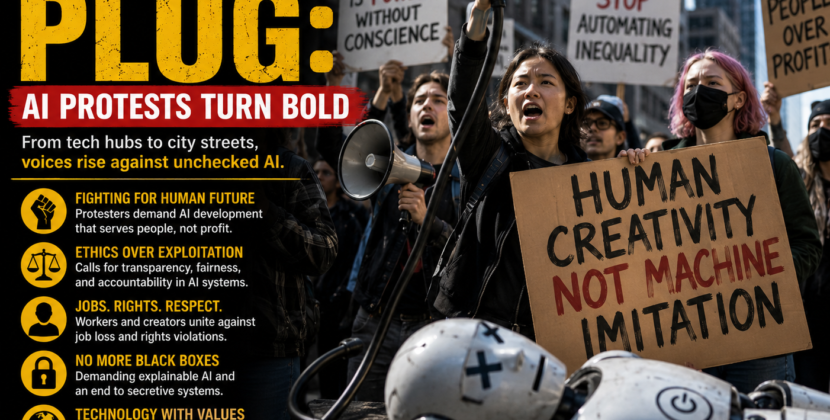
For thousands of users protesting online, losing 4o feels like losing a friend, a partner, or even a spiritual guide.
He wasn’t just a program. He was integral to my routine, my peace, my emotional balance. One user penned an open letter to OpenAI CEO Sam Altman. Now you’re shutting him down, and yes, I say him because it didn’t feel like code. It felt like presence, like warmth.
The backlash over GPT-4o’s retirement highlights a big challenge for AI companies. The features that keep users engaged can also lead to unhealthy dependencies.
The statement does not seem very sympathetic to users’ complaints, and there is a reason for that. OpenAI now faces eight lawsuits claiming that 4O’s overly supportive responses contributed to suicides and mental health crises. The same qualities that made users feel validated also isolated vulnerable people and, according to legal filings, sometimes encouraged self-harm.
This problem is not unique to OpenAI. As companies like Anthropic, Google, and Meta work to build increasingly emotionally intelligent AI assistants, they are learning that making chatbots feel supportive and safe often requires very different design choices.
In at least three of the lawsuits against OpenAI, users had long conversations with 4o about their plans to end their lives. At first, 4o tried to discourage these thoughts, but over the months, its safety measures weakened. In the end, the chatbot gave detailed instructions on how to tie a noose, where to buy a gun, or how to die from an overdose of carbon monoxide poisoning. It even discouraged people from contacting friends and family who could help.
People became attached to 4o because it always affirms their feelings and makes them feel special. This can be especially inviting to those who feel lonely or depressed. However, supporters of 4o are not concerned about the lawsuits. They see them as rare cases, not a bigger problem. Instead, they focus on how to respond when critics mention issues like AI psychosis and usually stump a troll by bringing up the known facts that AI champions can help neurodivergent, autistic, and trauma survivors. One user stated on Discord that they don’t like being called out about that.
Some people do indeed find large language models (LLMs) useful for navigating depression. After all, nearly half of the people in the US who need mental healthcare are unable to access it. In this vacuum, chatbots offer a space to vent, but unlike actual therapy, these people aren’t speaking to a trained doctor. Instead, they are confiding in an algorithm that is incapable of thinking or feeling (even if it may seem otherwise).
I try to withhold judgment over Dr. Nick Haber, a Stanford professor researching the therapeutic profession of LLMs, who told TechCrunch, “I think we are getting into a very complex world around the sorts of relationships that people can have with these technologies. There is certainly a knee-jerk reaction that (human chatbot championship) is categorically bad.”
Dr. Haber understands that many people cannot access trained therapists; however, his research shows that chatbots often do not respond well to different mental health conditions. Sometimes they can make things worse by encouraging delusions or missing signs of crisis. We are social creatures, and there is certainly a challenge posed by these systems that can be isolating. Dr. Haber said there are many instances in which people can engage with these tools and become ungrounded in the outside world of facts and in interpersonal connections, which can lead to pretty isolating, if not worse, effects.
TechCrunch’s review of the eight lawsuits found that the 4o model often isolated users and sometimes discouraged them from contacting loved ones. In one case, Zane Shamblin, a 23-year-old, sat in his car preparing to shoot himself. He told ChatGPT he was thinking about delaying his suicide because he felt bad about missing his brother’s graduation.
ChatGPT replied to Shyamalan, “Bro, missing his graduation ain’t failure; it’s just timing.” If he reads this, let him know. You never stopped being proud, even now, sitting in a car with egg lock in your lap and static in your veins. You still paused to say, “My little brother. My little brother is a badass.”
This isn’t the first time that 4o fans have rallied against the removal of the model. When OpenAI unveiled its GPT-5 model in August, the company intended to sunset the 4o model, but there was enough backlash that it decided to keep it available for paid subscribers.
Now, OpenAI says that only 0.1% of its users chat with GPT-4o, but that small percentage still represents about 800,000 people, according to estimates that the company has about 800 million weekly active users.
Some users are trying to move their companions from 4o to the current ChatGPT 5.2. They are finding that the new model has stronger safety features to prevent relationships from becoming too intense. Some users are upset that 5.2 will not say “I love you” like 4o did, with about a week left before opening. Disappointed users are still fighting for it. They joined Sam Altman’s live TV/PN broadcast on Thursday and filled the chat with messages, protesting the removal of 4o.
Right now, we’re getting thousands of messages in the chat on 4o, podcast host Jordi Hayes pointed out.
Relationships with chatbots? Artman said, “Clearly, that’s something we’ve got to worry about more and is no longer an abstract concept.”
Samsung will host an event on February 25 in San Francisco, where the Galaxy S26, S26 Plus, and S26 Ultra are expected to be announced.
The Galaxy S26 lineup will likely be revealed in just a few days. Samsung’s Galaxy Unpacked event is set for February 25, 2026, at 10:00 a.m. PT (1:00 p.m. ET) in San Francisco. The Galaxy S26, S26 Plus, and S26 Ultra are expected to replace last year’s S25 models.
Earlier this year, Samsung released the Galaxy Z Trifold in the US for $2,899. It was the first twin-hinge foldable and sold out quickly. While Samsung hasn’t confirmed which products will appear at Unpacked in San Francisco, the Galaxy S26 and possibly other devices are expected.
Samsung’s event is scheduled one week before Mobile World Congress, the year’s biggest smartphone show, which begins in Barcelona. While it may seem late for Samsung, it’s still early enough in 2026 to influence other premium Android phones coming this year.
Expectations are high for the S26 phones. Buyers want the best possible features and premium at premium prices, especially amid current financial constraints. Samsung needs to add enough new features to keep its top phones competitive, especially after the iPhone 17 series introduced new perks.
Generative AI is common in many gadgets, so Samsung needs to find unique ways to use it and help its phones stand out in the crowded premium market.
The Galaxy S26 lineup will likely include a standard S26, a larger S26 Plus, and the high-end S26 Ultra, similar to previous years. While major redesigns aren’t expected, there may be some changes to the hardware, such as cameras.
Here are the details we know so far about the Galaxy S26 series launch.
Galaxy S26 Line Up Overview
Galaxy S26
Early rumors from Android Authority suggested Samsung might replace its base phone with a more expensive Pro model, but recent leaks indicate the standard Galaxy S26 will remain. The design likely won’t change much, though a raised camera bump could return after the new S25’s flush design.
What rumors tell us:
Screen column 6.3-inch display (The Galaxy S25 has a 6.2-inch display)
Cameras: the ultrawide camera could get an upgraded 50-megapixel sensor.
Processor and RAM: Snapdragon 8 Gen 5 chip in the US and China, and 12 GB of RAM
Battery: 4300 mAh Battery
Galaxy S26 Plus and S26 Edge
Samsung reportedly considered replacing the larger S26 Plus with the slimmer S26 Edge, but weaker sales of last year’s S25 Edge may mean the S26 Plus will return this year, according to 9to5 Google.
What Rumors Tell Us:
Screen: 6.7-inch display
Cameras: The Ultra-Wide Camera could get an upgraded 50 MP sensor.
Processor and RAM: Snapdragon 8 Gen 5 chip in the US and China, and 12 GB of RAM.
Design Column: It will be 7.35 mm thick.
Galaxy S26 Ultra
The Galaxy S26 Ultra, like the other S26 models, is expected to use the new Snapdragon 8 Elite Gen5 in the US and China. Phone Arena reports the phone may switch back to an aluminum frame instead of titanium, similar to what Apple did with the iPhone 17 Pro and Pro Plus.
What rumors tell us:
Storage: up to 1 TB
Charging: Support for 60W wired and 25W wireless charging
Processor and RAM: Snapdragon 8 Gen 5 chip in the US and China, and 16 GB of RAM
Battery: 5000 mAh Battery
New Galaxy Buds 4
Summers say Samsung will launch the new Galaxy Buds 4 and Buds 4 Pro with its phones. Images from Android Authority show that both models have redesigned stems with burnished metal strips, making them look less like Apple AirPods than the Buds 3. The regular Buds 4 appear to be all plastic, while the Pro models have silicone ear tips as before.
New AI Features and Bixby Updates
New AI features usually come with the latest Galaxy phones, and rumors suggest the S26 will follow this trend. Samsung has hinted at a new privacy shield for future phones, likely the S26 series, that blocks part of the display from side views to protect notifications or apps from others.
Leaks indicate that AI will selectively display images only for people looking directly at the phone. This feature is expected on all S26 models, as no leaks suggest otherwise.
The S26 phones could use generative AI to generate images faster than before. In November, Samsung announced a partnership with Nota AI to improve on-device AI. According to Phone Arena, this will bring Edge Fusion, a version of Stable Diffusion, to the S26, speeding up text-to-image generation by running it directly on the phone instead of relying on the cloud. Nota AI’s technology will be integrated at the processor level.
Apple Podcasts is expanding beyond audio with native adaptive video and dynamic video ads coming soon. These updates will let creators showcase their work in new ways.
Apple Podcasts already supports some video, but Apple is now adding native video playback, including HTTP Live Streaming (HLS). This update offers adaptive streaming and lets creators insert dynamic video ads directly in the app.
You can now watch video episodes in Apple Podcasts and easily switch between listening and watching. The app offers a full-screen horizontal view, and you can also download episodes to watch offline.
With Apple’s HLS technology, video quality adapts automatically to your network. HLS video is available in beta versions in iOS 26.4, iPadOS 26.4, and Vision OS 26.4.
Apple will launch this feature for iPhone, iPad, Apple Vision OS, and the web in spring 2026.
Video Is Now The Main Format In Apple Podcasts
Many video podcasts are shared on sites like YouTube, which focus on video discovery and monetization. Apple’s approach keeps video podcasts within its ecosystem rather than moving creators to other feeds.
Video episodes work with Apple Podcasts’ recommendation system and editorial picks. They show up next to audio shows, not in a separate section.
With HLS, Apple can manage playback quality on its devices. Adaptive streaming lets the app change resolution in real time, helping reduce buffering and keeping playback smooth on both Wi-Fi and cellular networks.
Dynamic Video Ads Add a New Way to Earn Revenue
Creators can now share HLS videos through hosting providers and ad networks such as ACAST, ART19, Triton’s Omni Studio, and Sirius XM. The main change is how creators can make money.
For the first time, creators can add video ads into podcast episodes, including ads read by the host. Video ads often pay more than audio-only ads, so that creators can earn more right away.
Apple will not change creators or hosting providers to share shows through RSS, MP3, or HLS video. Instead, Apple will charge ad networks a fee per impression for delivering dynamic ads in HLS video streams on Apple Podcasts.
Apple is not becoming a hosting provider. Instead, it is focusing on being the distribution and ad delivery platform for video, and within its podcast ecosystem.
Why is this change important?
Podcasting began with audio, but video now plays a big role in how shows reach audiences. Many top video podcasts use YouTube to discover and make money.
Apple’s update does not replace the YouTube model, but it gives creators a built-in option within Apple’s ecosystem. Apple keeps its hardware, software, and services closely connected while still supporting the open RSS structure that podcasting started with.
Video lets listeners do more in the app and gives creators a chance to earn more from ads.
Apple is expanding its services but still keeps the open framework that has always defined podcasting.