



Key Points 

  • Energy experts say that AI data centers are increasing electricity demand and causing higher electricity prices for US households.  
  • People living in parts of the country, such as the West and the Northeast, have seen electricity prices rise faster than in other regions.  
  • The energy demand from data centers supporting artificial intelligence is expected to continue growing throughout this decade.  

Data centers that power artificial intelligence are raising household electricity prices, and energy experts say prices may not drop anytime soon.  

According to the latest data from the Energy Information Administration, residential electricity prices in September rose 7.4% to about 18 cents per kilowatt hour.  

From 2013 to 2023, electricity prices rose at about the same rate as inflation, but an EIA forecast from May says they will likely rise faster than inflation through at least 2026. Some regions will be affected more than others.  

Energy experts and economists say that data centers supporting AI projects, which consume a lot of electricity, are a major driver of rising prices.  

These data centers are large buildings filled with computer servers and other equipment that run cloud computing, artificial intelligence, and other technologies.  

The main reason prices are rising is that electricity demand, both current and expected, is growing faster than new supply.  

The US Department of Energy estimated in December 2024 that a data center could use between 6.7% and 12% of all US electricity by 2028, up from 4.4% in 2023.  

John Quigley, a senior fellow at the University of Pennsylvania’s Kleinman Center for Energy Policy, said the data center frenzy is the main reason electricity prices are rising for households. They are pretty much the whole boat when it comes to increases in electricity demand, Quigley said.  

It’s going to get worse, he said.  

Affordability Is the Most Important Issue In Politics 

Experts say that data centers are not the only reason electricity prices are rising. Escalating electricity prices can strain household budgets, undermine economic competitiveness, and hinder the electrification of energy systems, researchers at the Lawrence Berkeley National Laboratory wrote in a recent study.  

Politicians are using the issue of rising electricity prices in U.S. households to gain support.  

New Jersey Governor-elect Miki Sherrill, a Democrat, said Virginia Governor-elect Abigail Spanberger, also a Democrat, promised to cut electricity bills for people in their states. During her campaign, Spanberger said she wants to ensure data centers don’t pay more for energy than other businesses in Virginia.  

While campaigning, President Donald Trump also promised to cut electricity prices in half within his first 18 months in office.  

Importability remains the most salient issue in politics. Chris Krueger, a strategist at Washington Research Group, wrote in a research note on Tuesday.  

Rising energy bills are pushing households deeper into debt. A recent analysis by the Century Foundation, a progressive think tank, found that rising energy bills are pushing households further into debt. LS has risen 32% since 2022, from $597 to $789, it found. Utilities include electricity and other costs such as gas and water.  

According to the National Energy Assistance Directors Association, households that use electricity for heating are expected to see their winter heating bills rise to $1,205 this season, about 10% higher than last winter’s $1,093. Again, feel the pressure on their utility bills in the coming months, particularly if winter is cold, according to a Bank of America Institute report.  

Excitement about AI has pushed the US stock market higher, leading to speculation that it could soon be in an attack bubble that might burst. Right soon, Pop!  

No matter whether the market’s AI rally lasts, the technology’s growth is clear. The International Energy Agency expects global electricity demand from AI data centers to more than quadruple by 2030.  

Global electricity demand from data centers is set to more than double over the next five years, consuming as much electricity by 2030 as the whole of Japan does today, Faith Birol, IEA Executive Director, said in that analysis.  

According to the IEA analysis, the effects will be particularly strong in countries like the U.S., where data centers are expected to make up almost half of the growth in total electricity demand.  

IEA found that by 2030, the US economy is likely to use more electricity for processing data than for making all energy-intensive tools combined, such as:  

  • aluminum  
  • steel  
  • cement  
  • chemicals  

Quigley of UPenn said that expected demand has created a need for new infrastructure, such as power lines, substations, and power plants, and that companies pass at least some of these costs on to residential customers.  

He said that, in effect, households are holding to pay for the extension of AI data centers.  

Quigley said that while AI-powered electricity demand is rising across the U.S., some electric grid managers are better at controlling costs than others. The price increase will vary by region, he said.  

For example, extreme weather such as hurricanes, storms, and wildfires has led to sizable price increases in some states, such as California. In California, wildfire risk mitigation and liability insurance were major cost drivers, according to an October report from Lawrence Berkeley National Laboratory, a U.S. Department of Energy lab managed by the University of California. In response to inflation, 31 states saw electricity prices decline from 2019 to 2024, according to Lawrence Berkeley National Laboratory researchers. 17 states saw price increases after inflation, especially in states on the West Coast and in the Northeast, they found.  

Additionally, they also found that average retail electricity prices rose by 23% in nominal terms during that period before inflation adjustments. Easing residential electrification, including electric vehicles, is among the factors pushing electricity demand, according to the Bank of America Institute.

Source: AI data center ‘frenzy’ is pushing up your electric bill — here’s why

Apple is reportedly splitting up its artificial intelligence (AI) division and moving two major product teams. According to reports, Apple is shifting its secretive robotics group to the hardware engineering division following the transfer of Siri to the software engineering team in March. The process started in 2021, when Apple moved the self-driving car project from the AI division to Kevin Lynch, the VP of Technology, who leads the watch OS department.  

Apple Plans Return To Its Functional Organization 

His latest Power On newsletter reports that Apple is restructuring its AI division after 6 years. Before 2018, Apple used a functional structure rather than organizing by products and separate divisions. For the iPhone and Apple Watch, the company had hardware engineering, software engineering, and service teams that each worked on different parts of its third devices.  

To focus more on AI, Apple hired John Giannandrea, a former Google executive, as senior VP of Machine Learning and AI Strategy. After he joined, Apple reportedly combined several AI projects under his leadership, including Apple Intelligence, Siri, the now-discontinued self-driving car project, and the robotics division. This was the first time Apple moved away from its usual functional structure.  

Ehrman says that six years after creating The Division, Apple is now facing setbacks. The company reportedly believes it has fallen behind competitors in AI, and delays in launching Apple intelligence features, especially Siri upgrades, have led Apple to reconsider the future of its AI division.  

In March, Gary and Andrea reportedly lost responsibility for Siri, which was given to Mike Rockwell, the leader of Vision OS development. According to Gurman, the robotics group is also leaving the AI division and will be managed by the Hardware Engineering Department. Led by John Ternus.  

Apple’s robotics group is reportedly a major focus for the company. Earlier this year, a report said Apple is developing non-humanoid robots, and the first products in this area could go into production in 2028.  

The Bloomberg report says that removing projects from the AI division shows Apple’s growing dissatisfaction with Giannandrea. Apple is reportedly preparing for him to leave, and according to Gurman, his position probably will not be filled after he departs. Instead, the company is expected to return to the functional organizational structure that it used before 2018.  

Apple is quietly looking into robotics again as it moves its focus away from Apple Intelligence.  

A recent Bloomberg report says Apple is considering several AI-powered hardware ideas, including:  

  • Smart Home displays  
  • Security devices  
  • A tabletop robot that could use facial recognition and move to interact with people  

These devices are not officially in development, and sources warn they might never be released.  

One prototype, called S95H and possibly set for a 2027 launch, features a swiveling screen on a robotic arm. People have named it the Pixar lamp because it moves like the Animation Studio’s famous mascot.  

The robot is meant to be a more personal, smart assistant, able to follow users during video calls or react physically during conversations. Apple is also looking into mobile wheeled robots and humanoid robots for industrial tasks.  

Apple has long been great at integrating hardware and software and at human interfaces. Gary Marcus, an AI authority and professor emeritus of psychology and neural science at New York University, told Decrypt, “I don’t personally think that reliable humanoid domestic robots are at all closes to hand. But if I ever buy a humanoid for the home, I hope it will come with Apple’s care for privacy, reliability, elegance, security, and considerate design.”   

Rumors that Apple was planning a line of robots began last year, as the company made several AI-related announcements and updates. In February, long-time Apple analyst Ming-Chi Kuo said Apple is looking into both humanoid and non-humanoid robots. For its future smart home ecosystem, these products are still in the early proof-of-concept (PLC) stage.  

At a recent company meeting, CEO Tim Cook reportedly told employees that Apple needs to win in AI. He called the company’s upcoming products “amazing” and suggested some would be announced soon, while others are still in development. He did not mention robotics specifically.  

Apple’s goal is to make artificial intelligence feel more real and present. Although the robot is still in early development, it is a key part of Apple’s effort to return to AI competition.  

A home display for smart automation, video calls, and a new version of Siri that can talk with users is reportedly closer to release and could come out in 2026. Both the display and the robot would use a new software platform called Charismatic, which is designed for voice commands, facial recognition, and customized content.  

Apple did not respond to Decrypt’s request for comment.

Sources: Apple Reportedly Moves Robotics Team Out of AI Division Ahead of Anticipated Restructuring 

Apple’s Robot Plans Resurface—Here’s the Latest

OpenAI is gradually turning ChatGPT from a simple chatbot into a complete research tool. The latest update, a dedicated document viewer from deep research mode, marks real progress in this direction. This feature lets users view, navigate, and work with long research reports right inside ChatGPT. While it might look like a small interface change, industry experts see it as part of a larger shift: OpenAI wants its AI-generated content not just to be informative but also ready for professional use.  

According to MacRumors, the document viewer is now available to ChatGPT Plus Pro and Team subscribers who use Deep Research. This feature adds a side panel that displays Deep Research results as organized multi-section documents with a table of contents, citation footnotes, and options to copy or export sections, rather than a long scrolling chat. Users now get a document that looks more like a finished research brief or whitepaper.  

From Chat Bubbles to Structured Documents: Why the Document Viewer is Important 

OpenAI launched Deep Research in early 2025 to meet the need for AI tools that can handle complex, multi-step research online. Unlike regular GPT queries, Deep Research takes a few minutes as it reviews many sources, summarizes findings, and creates detailed reports. This feature has become popular with analysts, consultants, academics, and journalists who need quick, thorough briefings on complicated subjects.  

Until now, the main issue has been how Deep Research results were presented. These reports could run to thousands of words, yet they appeared in the same chat format as simple answers. Users had to copy the text into Google Docs or Word, fix the formatting, and track down citations themselves. The new Document Viewer removes much of this hassle. MacRumors reports that it offers clickable source links, easy section navigation, and export options that preserve formatting, turning the output into a nearly finished professional document.  

OpenAI’s Move To Attract Enterprise Knowledge Workers 

The timing of this update is intentional. OpenAI has been working hard to attract business customers, and the document viewer fits into its goal of making ChatGPT essential for professional work. The company’s enterprise and team plans are growing quickly, and features like Deep Research, which provides structured output, help demonstrate that the subscription is worth it for more than just basic AI support.  

OpenAI CEO Sam Altman has often said the company wants to build AI that does more than answer questions; it should handle real work. Recently, Altman discussed a time when AI agents managed entire research projects and delivered polished results that required little editing. The document viewer is a real step toward this goal by making deep research results easy to use in presentations or client reports. OpenAI is positioning ChatGPT to compete with other chatbots and traditional research and consulting services.  

Competition from Google, Perplexity, and Anthropic 

OpenAI’s update also shows how competition is heating up among AI research assistants.  

  • Google’s Gemini is getting better at multi-step research and presenting results in organized formats, especially with Google Workspace.  
  • Perplexity AI focuses on answers with clear citations, attracting users who value accuracy and good presentation.  
  • Anthropic’s Claude is known for detailed, well-structured analysis, which many people prefer for complex research.  

All of these competitors are adding features that focus on usability, output quality, and how well their tools fit into users’ workflows, not just on the intelligence of their models. OpenAI’s document viewer is a direct answer to this trend. The company understands that for professional users, a polished interface and well-structured output are just as important as strong reasoning. A well-researched report is much more useful when it’s organized, easy to navigate, and has clear citations rather than being a plain block of text.  

How the Document Viewer Works 

According to MacRumors, the Document Viewer starts automatically when a Deep Research task finishes. The results appear in a panel on the right side of the screen. Separate from the chat, users can scroll through the document. Click section titles in the Table of Contents to jump to different parts and hover over citations to see the sources.  

The export feature is especially important for professionals. Reports can be downloaded in different formats, and the citations stay intact, so users don’t have to rebuild notes or source lists when moving the document to their own tools. This focus on detail shows that OpenAI has listened to feedback from businesses and professional users, many of whom have pointed out the gap between Deep Research’s strong analysis and its basic delivery format.  

What This Means For Future AI-Assisted Research 

The document viewer also provides a clue about OpenAI’s plans. Its organized format could make it easy to add features like collaborative editing, where several team members can comment on a deep research report in ChatGPT or an AI agent that updates sections based on feedback. It could also enable version control, so users could ask Deep Research to add an older report with new information and see the changes tracked in the viewer.  

These features could push ChatGPT further into areas now reserved by tools like Notion, Coda, and specialized research platforms such as Elicit and Consensus. OpenAI has already shown it is willing to add new types of tools to ChatGPT. Over the past two years, it has introduced image generation, code execution, file analysis, and web browsing, all as part of a plan to make ChatGPT the main interface for knowledge workers using AI.  

The Subscription Economics Behind the Feature 

Also important to look at the business model. Deep research is one of OpenAI’s most resource-intensive features, as it requires more processing time and multiple web searches for each query. By making deep research more useful and improving the results, OpenAI adds value to its higher-priced subscriptions. ChatGPT Pro at $200/month offers much deeper research capacity than the $20+/month tier. Features like the document viewer help make the higher price worthwhile while making the results easier to use right away.  

For enterprise buyers evaluating whether to deploy ChatGPT team or enterprise across their organization, the Document Viewer addresses a common objection: that AI-generated research still requires too much human post-processing to be practical. If a deep research product can be exported as a near-finished document with correct citations and professional formatting, the return-on-investment calculation shifts meaningfully in OpenAI’s favor.  

What This Means For Professional Research Workflows 

The launch of the document viewer shows that the AI industry is shifting from showcasing impressive demos to focusing on real, practical users. For years, people have discussed what AI models can do, including their reasoning skills, broad knowledge, and ability to handle complex prompts. Now, what sets products apart is how well they fit into professional workflows and deliver these abilities in useful formats.  

OpenAI’s document viewer for deep research isn’t a breakthrough in artificial intelligence itself. Instead, it’s a breakthrough in how AI products are designed. That difference could be just as important as it is today, as leading AI companies to reach similar levels of model effectiveness. The ones that succeed are those that understand how professionals work and design their tools to match. With this update, OpenAI is clearly betting that the future of AI is not only about smarter thinking but about delivering better results.

Source: OpenAI’s ChatGPT Deep Research Gets a Document Viewer — And It Signals a Bigger Shift in How AI Handles Complex Analysis

We are close to solving problems once considered impossible in areas such as drug discovery, materials science, and energy.  

This progress is thanks to quantum computers, which can solve problems that even the best supercomputers cannot. They can look at many possibilities at once. However, the same power means they could also break through our current digital protections, such as public-key cryptography systems that keep bank transfers, messages, trade secrets, and classified information private.  

Simply put, the encryption we use today to keep our information safe could be broken by a large quantum computer in the next few years.  

Even though we do not have those quantum computers yet, some bad actors are not waiting. They are probably already saving encrypted data now, planning to unlock it later when quantum computers become available.  

So, what should we do? In short, we need to prepare.  

Today, we want to share an update on our efforts to keep users safe as quantum technology advances, along with some suggestions for how policymakers can help improve security for everyone.  

First, some background: The security-eminent community has been actively striving to address the risk of future quantum-powered attacks rather than just watching as threats grow.  

Experts in cryptography have already developed post-quantum cryptography algorithms designed to resist attacks from upcoming quantum computers. After years of international work, the National Institute of Standards and Technology (NIST) in the US released the first set of these standards in 2024.  

As Quantum Computation Technology advances, Google has not relied solely on current guidelines. Since 2016, we have been preparing for a post-quantum world by testing post-quantum cryptography, adding these features to our products, and sharing our knowledge through research and technical papers.  

Getting ready for the quantum era means concentrating on both research and action. We are fully committed to both, so let’s look at each one:  

When researching and updating PQC timelines (when it is safe to do so), we will share research that shows what is needed to break asymmetric cryptography, including asymmetric encryption and digital signatures. This work helps explain how PQC migration timelines may change and how a CRQC could affect sectors like health and finance.  

Completing PQC Migrations: We are on schedule to finish our PQC migration safely, following NIST’s guidelines. We have started using PQC in our internal systems and products. To make this transition successful, we are focusing on three main areas:  

  1. Being flexible with cryptography  
  1. Securing important shared infrastructure  
  1. Helping the wider ecosystem adapt  

These steps will help build stronger security for the future.  

These efforts demonstrate our strong commitment to keeping the digital economy secure in the long term. Still, we know that security in the quantum area will require teamwork. Here are five recommendations intended for policymakers to help manage this change:  

Five Steps Policymakers Can Take to Get Ready for the Quantum Era 

  1. Drive Momentum Across Society, Especially For Critical Infrastructure: policymakers should look beyond public-sector networks and address gaps and challenges, including workforce needs, in key areas such as energy, telecommunications, and healthcare. It is also important to protect the trust systems behind digital networks, working closely with certificate authorities. We need to move faster.  
  1. Make sure AI is designed with PQC in mind: cryptography keeps AI systems secure as we use them; it is even more important to protect their foundations. PQC should be seen as a key part of supporting the long-range growth of AI.  
  1. Reduce global fragmentation: We need to work together with a unified approach. The NIST standards for quantum-proof cryptography offer a global, scalable, and secure benchmark. If widely used, these standards can help us move faster and avoid incomplete or insecure solutions.  
  1. Promote cloud-first modernization: Adopting new cryptographic standards will be a major undertaking, and PQC gives us another reason to use the cloud. Instead of spending public money to update old systems and hard-coded cryptography, governments should focus on moving these systems to the cloud. This way, they can benefit from the work that providers like Google Cloud are already doing to enable PQC worldwide. Rely on experts to avoid getting caught off guard. A CRQC is not always 10 years away, while we cannot say exactly when it will arrive. Staying in touch with experts from research institutions and teams such as Google’s Quantum AI Research Group will help policymakers stay ahead of emerging threats.  

Here’s the bottom line: Quantity computing can help form a brighter tomorrow. But we need an all-hands-on-deck approach to make sure breakthroughs, not breakdowns, define the quantum era. Working together, we can prepare today and promote greater security tomorrow.  

Source: The quantum era is coming. Are we ready to secure it? 

Seagate Technology Holdings PLC (Nasdaq: STX) and its subsidiary, Seagate HDD Cayman, announced that on February 11th, 2026, they reached separate, privately negotiated agreements with a small group of holders of Seagate HDDs 3.5% exchangeable senior notes due 2028. Under these agreements, $600 million in notes will be exchanged for about $599.2 million in cash and several of Seagate’s ordinary shares. The exact number will be set over one trading day starting February 12, 2026. The exchanges are expected to close around February 17, 2026, subject to standard closing conditions. After completion, the exchanged notes will be retired. About $400 million in notes will remain outstanding with no changes to their terms.  

These exchanges are private placements. Any ordinary shares issued in these exchanges have not been and will not be registered under the Securities Act of 1933 or other securities laws. The shares may only be offered or sold under an exemption from registration or in a transaction that does not require registration. This press release is not an offer to sell or a solicitation to buy any securities, and no offer or sale will be made where it would be illegal.  

About Seagate 

Seagate Technology Leads in Mass Capacity Data Storage. We create technology that helps you store data securely and make the most of it. Founded over 45 years ago, Seagate has shipped more than 4 billion terabytes of storage and offers a wide range of devices, systems, and services for all kinds of data needs.  

@2025 Seagate Technology LLC. All rights reserved. Seagate Technology and the Spiral logo are registered trademarks of Seagate Technology LLC in the United States and/or other countries.  

Cautionary Note Regarding Forward-Looking Statements 

This press release includes forward-looking statements as defined by the Private Securities Litigation Reform Act of 1995. These statements reflect current expectations about future events based on certain assumptions and cover anything not directly related to historical facts. The company cannot guarantee that the exchanges will happen or confirm their size or conditions. Forward-looking statements often use terms such as “expects,” “intends,” “plans,” “anticipates,” “believes,” “estimates,” “predicts,” “projects,” “should,” “may,” “will,” “continue,” “can,” “could,” or similar terms.  

But not using these words does not mean a statement is not forward-looking. These statements are based on information available to the company as of the date of this press release, and they are subject to risks and uncertainties that could cause actual results to differ significantly from past results or current expectations. These risks include those listed under “Risk Factors” and “Management’s Discussion and Analysis of Financial Condition and Results of Operations” in the company’s latest Form 10-K filed with the US Securities and Exchange Commission. Do not place undue reliance on these forward-looking statements, which only speak as of the date of this release. The company does not have to update these statements after this date unless required by law.  

Source: Seagate Announces Exchanges with Holders of $600 Million Principal Amount of Exchangeable Notes 

The 2026 deadline signals a major change, moving from simply being aware of quantum risks to actually requiring the use of post-quantum cryptography (PQC).  

This change is happening because Quantum computers could soon break current encryption methods like RSA and ECC. Big tech companies are acting now because attackers are already stealing encrypted data to unlock in the future, and new government rules will soon require quantum-safe security.  

Why 2026 Matters 

  • Just now, decrypt later (HNDL): criminals are already gathering encrypted data (such as military secrets, financial records, and personal information) and saving it. When a powerful enough quantum computer is available, they will be able to break this data open after the fact.  
  • Long-term data value: Information created in 2026 that needs to remain private for 10 to 20 years is already at risk, as quantum computers may be able to break it while it still matters.  
  • Regulatory Mandates: Governments are setting firm deadlines. The EU requires high-risk sectors such as finance and healthcare to begin switching by the end of 2026. US agencies and their contractors must also follow new quantum-safe standards.  
  • The integration time frame: It takes 3 to 5 years to upgrade encryption systems. If companies start in 2026, they will finish around 2030 or 2031, which matches when experts expect quantum machines to become a real threat.  

Why Current Encryption Won’t Be Enough 

Today’s common encryption methods like RSA, ECC, and Diffie-Hellman depend on math problems that quantum computers can solve in just hours, rather than the thousands of years it would take regular computers.  

  • Shor’s algorithm: This quantum procedure can break asymmetric cryptography methods like RSA and ECC.  
  • Grover’s algorithm: This quantum method weakens symmetric encryption like AES, so larger key sizes, such as AES-256, are now needed.  

The PQC Shift: What’s Happening Now 

  • NIST standards finalization (2024-2026): In August 2024, NIST released the first set of PQC standards (ML-KEM/ML-DSA), providing the industry with a clear path to begin using quantum-resistant algorithms.  
  • Tech leader actions: Big companies like Google have already begun using PQC in products such as Chrome and their internal VPNs to guard against future risks.  
  • Combined Methods: Since PQC is still new, many companies are using a mixture of traditional and quantum-safe algorithms. This solution helps keep data secure and makes the transition easier.  
  • Crypto agility focus: Companies are making their systems more flexible so they can quickly switch to new cryptographic algorithms as standards change, rather than having to overhaul everything later completely.  

What Happens If Companies Don’t Act 

Companies don’t switch to PQC because they could face a retroactive data breach where all data is exposed once quantum computers arrive. Not acting could mean losing trust, suffering big financial losses, and breaking new security laws.  

Ways To Build A Strong Future 

Transitioning post-quantum cryptography is essential, but it shouldn’t stop your business. Most organizations can start this process without interrupting daily work. The key is to start early so you can stay ahead rather than rush at the last minute.  

Educating your stakeholders is often one of the hardest parts. Many board members and senior leaders may not be aware of the quantum threat, so it’s important to highlight this issue and prepare a budget presentation to secure the resources you need.  

It often helps to align your PQC planning with other digital transformation projects. If you are moving to the cloud or updating your apps, this is a great time to include crypto agility in your plans.  

This work is not a side-project. Organizations should designate a team or leader to track PQC process progress, vendor readiness, and adherence to industry standards. It is especially important to follow groups like NIST and ETSI, since they help set the direction for global PQC standards.  

It’s fine to start small. You might run an internal PQC workshop or order a cryptographic audit to find your weak spots and decide where to focus first.  

The Quantum Era Is Coming. Get Ahead Of It Now 

Dumb computer technology might sound like science fiction, but its security risks are real and urgent. Data you encrypt today could be at risk of theft soon. That’s why experts recommend that businesses start preparing now.  

In essence:  

  • PQC isn’t about encryption; it’s about making your business resilient for the long term.  
  • Companies working on post-quantum cryptography are already creating tools, plans, and protocols that will define the future of cybersecurity.  
  • You don’t have to change everything at once, but you do need a plan, and you should start soon.  
  • Crypto agility, risk prioritization, and working with the right vendors are the main pillars of a successful transition.  

Source: Why Your Business Needs Post-Quantum Cryptography: Insights from Industry Experts 

Apple has introduced Apple Creator Studio, a new set of creative apps that brings studio-level tools to everyone. Building on the popularity of Mac, iPad, and iPhone among creators, this suite offers apps for video editing, music production, creative imaging, and visual productivity. Features inspired by Final Cut Pro, Logic Pro, Pixel Meter Pro, Keynote, Pages, Numbers, and FreeForm. Apple Creator Studio gives creators the tools they need to edit, customize, and bring their ideas to life while protecting their privacy.  

Final Cut Pro now offers new video editing tools and smart features for Mac and iPad, making even complex projects easier to manage. Pixel Meter Pro is available on iPad for the first time, designed for touch and Apple Pencil. Logic Pro for Mac and iPad adds features like Sync Player and Chord ID to help anyone create, produce, and mix music with Keynote, Pages, Numbers, and FreeForm. Subscribers get new content and smart features to boost creativity and productivity on Mac, iPad, and iPhone.  

Apple Creator Studio will be available on the App Store starting Wednesday, January 28th, for $12.99 per month or $129 per year, and comes with a 1-month free trial. The subscription includes:  

  • Final Cut Pro/Logic Pro and Pixel Meter Pro for Mac and iPad  
  • Semicolon Motion Compressor and Main Stage for Mac  
  • Semicolon and Premium Features for Keynote, Pages, and Numbers on iPhone, iPad, and Mac  

College students and instructors can subscribe to the free trial at the link in the description below.  

Apple Creator Studio is a great value that enables creators of all types to pursue their craft and grow their skills by providing easy access to the most powerful and intuitive tools for video editing, music-making, creative imaging, and visual productivity all leveled up. With advanced, intelligent tools to augment and accelerate workflows, said Eddie Cue, Apple’s senior vice president of Internet software and services, there’s never been a more flexible and accessible way to get started with such a powerful collection of creative apps. For professionals, imaging artists, entrepreneurs, students, and teachers to do their best work and explore their creative interests from start to finish.  

Supercharging Visual Productivity 

For over 20 years, Apple’s visual productivity apps, including Keynote, Pages, and Numbers, have helped people create impressive presentations, documents, and spreadsheets. FreeForm also offers users new ways to brainstorm and collaborate visually.  

Apple Creator Studio adds new features and premium content to help creators do even more with their projects. The new content hub offers a collection of high-quality photos, graphics, and illustrations with a subscription. Users also get access to new premium templates and themes in Keynote, Pages, and Numbers.  

Along with Image Playground, new image tools let users create high-quality images from text or change existing images using Generative Models from OpenAI. On-device AI can upscale images with super-resolution and keep them sharp and detailed. Auto Crop suggests the best ways to crop photos for a strong visual impact.  

Apple’s Creator Studio helps users make presentations faster in Keynote with new beta features. These include generating a first draft from a text outline and creating presenter notes from slides. Subscribers can also tidy up slides to fix layouts and object placement. In Numbers, Magic Fill lets subscribers operate formulas and fill tables using pattern recognition.  

Keynote, Pages, Numbers, and FreeForm will stay free for everyone to use, including Apple Creator Studio subscribers. These apps will keep getting updates with the latest versions featuring the new Liquid Glass design and supporting the updated windowing and menu bar on iPadOS 26.  

Source: Apple introduces Apple Creator Studio, an inspiring collection of the most powerful creative apps  

Cisco is introducing AgenticOps, a new approach that uses AI-driven agents to handle networking, security, and observability tasks in real-time. With tools like the Deep Network Model and AI Canvas, companies can automate complicated workflows to solve problems more quickly and move IT teams from routine maintenance to more strategic, proactive roles.  

Here Are the Main Parts of Cisco’s AgenticOps Strategy 

  • Intelligent automation: AgenticOps goes beyond traditional AI assistants by using autonomous agents that work with network security and application data to deliver complete automated solutions.  
  • Security for AI: new AI defense solutions, such as AI BOM and model context protocol catalogs, help prevent agent manipulation and keep the AI supply chain secure.  
  • AI-aware infrastructure: The new Silicon-1 G-300 switch is designed to improve GPU array performance for Agentic tasks, boosting data center efficiency.  
  • Unified visibility: AgenticOps brings together information from Cisco, ThousandEyes, Secure Firewall, and Splunk, giving a completely new view throughout different IT systems.  

This change helps sync organizations manage the increasing complexity of contemporary IT without adding risk, while ensuring people remain in control of AI-powered results.  

The latest AgenticOps features for networking, security, and observability offer new ways to automate, scale, and simplify IT operations in today’s AI-driven world.  

Cisco has introduced new AgenticOps features created for the AI era. AgenticOps, launched last year, is an IT Operating Model that puts agents at the center, enabling autonomous action under oversight. The latest updates in networking, security, and observability help IT teams work more efficiently at scale.  

Security environments are becoming more distributed and complex, putting extra pressure on already busy teams. To address these problems, organizations need a new way to operate, one that leverages smart automation while maintaining reliability, accuracy, and strong governance. AgenticOps is designed for this, helping teams manage complexity and work effectively at scale.  

For teams that manage and secure dispersed networks and infrastructure, AgenticOps is a major step toward making things simpler, said Jeetu Patel, President and Chief Product Officer at Cisco. This shows the real strength of Cisco as a platform. By offering Agentic features that match key IT needs, we bring together Cisco’s broad visibility, expert models, and strong governance to help teams do more.  

Last year, Cisco launched AgenticOps and changed how AI is used in networking to handle the increasing complexity of IT operations with advanced AI and unified network data, including the deep network model. Tools like Agentic Workflows and AI Canvas help IT teams solve problems faster and automate safely. Now, Cisco is expanding Agentic-driven operations to cover networking, security, and observability, supporting IT operations across Cloud, On-site, Industrial, Enterprise, Data Center, and Service Provider Settings.  

Cisco’s AgenticOps uses broad system awareness drawing from a wide range of data sources like Cisco Networking, Security Cloud Control, Cisco Nexus One, Splunk, and others by collecting live data from both internal and external networks, security tools, apps, and joint platforms such as Cisco Thousand Eyes, SecureWire Firewall, and Splunk Observability. AgentOps enables smart context-aware automation at scale. This approach lets machines handle daily operations while teams retain control of the results.  

Source:Cisco Expands AgenticOps Innovations Across Portfolio 

In late 2025, the Google Threat Intelligence Group (GTIG) observed more threat actors using artificial intelligence (AI) to accelerate attacks, particularly in reconnaissance, social engineering, and malware development. This report updates our November 2025 findings on how threat actors are using AI tools.  

By identifying these early indicators and offensive proofs of concept, GTIG aims to arm defenders with the intelligence needed to anticipate the next phase of AI-enabled threats, proactively thwart malicious activity, and continually strengthen our classifiers and models.  

Executive Summary 

Google DeepMind and GTIG have observed more attempts at model extraction, also known as distillation attacks, which constitute a form of intellectual property theft and violate Google’s Terms of Service. In this report, we describe the steps we have taken to stop this activity, including detection, disruption, and model extraction. We have not seen direct attacks on our most advanced models or generative AI products from Endurance-Advanced Enduring actors. We have stopped many attempts by private companies and researchers worldwide to extract our proprietary logic.  

Government-backed threat actors now use large language models as key tools for technical research, targeting, and quickly creating more convincing phishing messages. This report shows how groups from the Democratic People’s Republic of Korea, Iran, the People’s Republic of China, and Russia used AI in late 2025. It also helps us understand how misuse of generative AI appears in real-life campaigns we have stopped so far. GTIG has not seen APT or information operations (IO) actors reach new capabilities that would change the overall threat landscape.  

This report looks at the following areas:  

  • Model extraction attacks: Over the past year, distillation attacks have become a more common means of stealing intellectual property.  
  • AI-augmented operations: Real-world examples show how groups are making reconnaissance and phishing more efficient by leveraging AI to build trust.  
  • Agentic AI: Threat actors are beginning to explore building Agentic AI tools to support malware and tool development.  
  • AI-integrated malware: New malware families like Honest Queue are testing Gemini’s application programming interface (API) to create code that can download and run second-stage malware.  
  • Underground jailbreak ecosystem: Malicious services such as Xanthorox are appearing in underground markets. They claim to be independent models but actually use jailbroken commercial APIs and open-source model context protocol (MCP) servers.  

At Google, we are committed to developing AI boldly and responsibly. This means we act to stop malicious activity by turning off projects and accounts linked to bad actors, and we keep improving our models to make them harder to misuse. We also share best practices with the industry to help defenders and strengthen protections across the ecosystem.  

In this report, we describe the steps we have taken, including disabling assets and leveraging intelligence to enhance the security of our classifiers and models. You can find more details about how we protect Gemini in the white paper, Advancing Gemini’s Security Safeguards.  

Direct Model Risks: Disrupting Model Extraction Attacks 

As more organizations use LLMs in their main operations, the unique logic and training behind these models have become valuable targets. In the past, attackers would break into computer systems and steal trade secrets. Now that many LLMs are available as services, attackers can use regular API access to try to replicate specific AI model features.  

In 2025, we did not see any direct attacks on advanced models from known APT or Information Operations groups. However, we noticed model-extraction attacks, also known as distillation attacks, on our AI models. These attacks aim to learn how a model reasons and makes decisions.  

What Are Model Extraction Attacks 

Model extraction attacks occur when someone uses authorized access to carefully test a machine learning model and gather information to train a new one. Attackers use a method called knowledge distillation (KD) to transfer knowledge from one model to another. That is why the MEA is often called a distillation attack.  

Model extraction and knowledge distillation enable attackers to speed up AI model development and reduce costs. This is a type of intellectual property (IP) theft.  

Knowledge distillation (KD) is becoming a common machine learning method for training student models using existing teacher models. This usually means asking the teacher model questions in a certain area, then fine-tuning the results or using them in other training steps to create the student model. Distillation has valid uses, and Google Cloud offers tools for it. But using distillation on Google’s Gemini models without permission breaks our Terms of Service. Google is working on ways to spot and stop these attempts.  

Source:GTIG AI Threat Tracker: Distillation, Experimentation, and (Continued) Integration of AI for Adversarial Use 

To sum up: 

  • Intel is working with Saimemory to create Z-Angle Memory (ZAM), a new type of DRAM that stacks RAM chips vertically to boost memory density.  
  • According to PC World, prototypes should be ready by 2027, and the technology could be available for sale by 2030. ZAM may offer a high-bandwidth alternative to HBM for AI servers.  
  • The new technology builds on Intel’s Foveros chip stacking and is designed to reduce power consumption while keeping up with the rising memory demands of AI.  

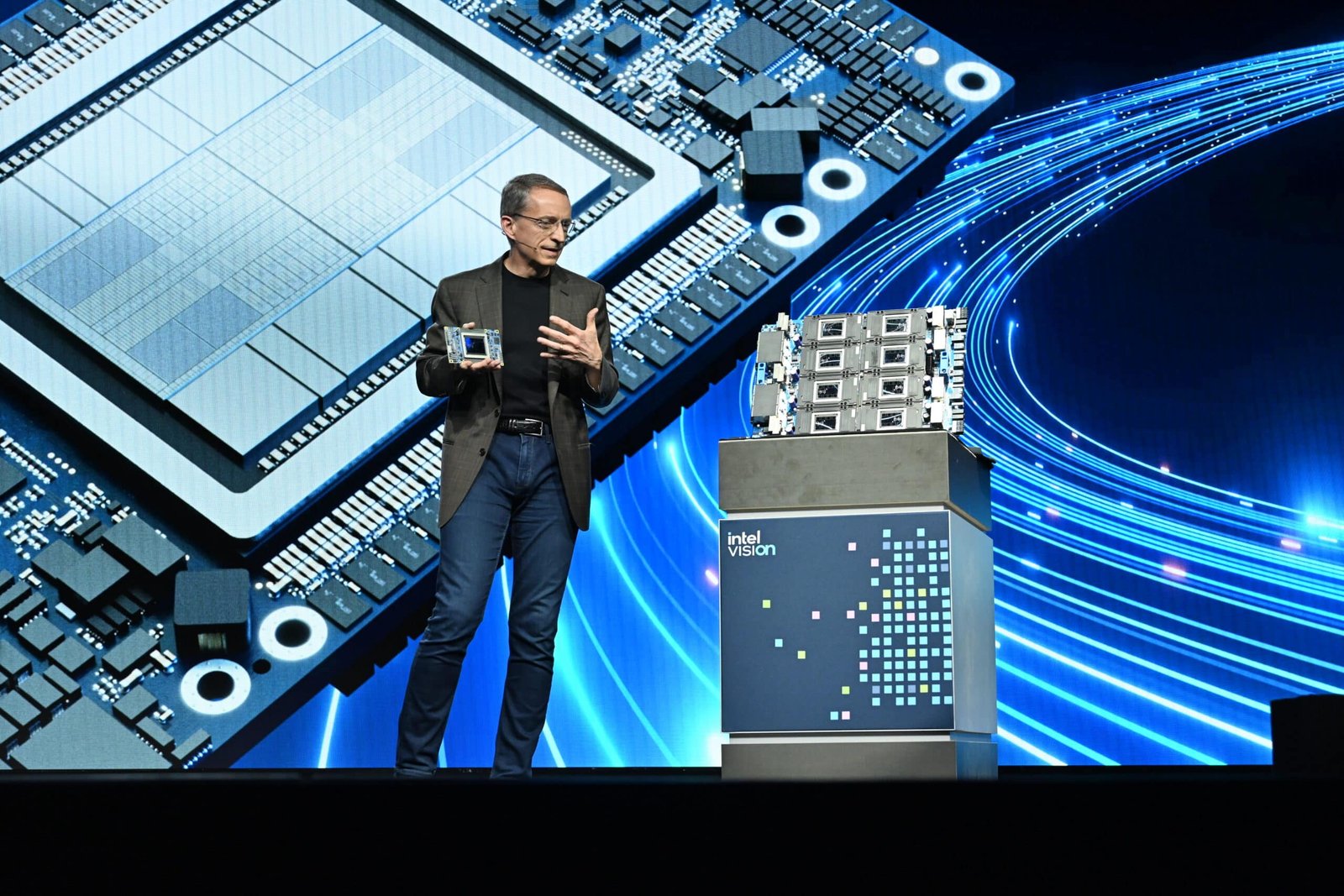
Intel has introduced the prototype of Z-Angle Memory (ZAM), which it is developing together with Saimemory, a SoftBank subsidiary.  

According to WCCFT Tech, Intel did not have working samples at Intel Connection Japan 2026. However, the event focused on how ZAM could save energy and reduce heat compared to traditional high-bandwidth memory (HBM). It aimed to attract more investment and partners.  

While many people look for affordable DDR memory, large data center companies have brought up most of the available HBMs. This change has led memory makers to focus more on HBMs, affecting the supply of consumer products such as DDR5, DiMMS, and NVMe/SSDs. Intel and Saimemory hope to change this in the future and create new revenue opportunities for Intel, which was a major memory manufacturer until the 1980s.  

At the Japan event, Intel featured key leaders, including Joshua Fryman, CTO of Intel Government Technologies, and Makoto Onho, CEO of Intel Japan. Alongside Saimemory representatives, they represented the new ZAM prototype and explained how its design differs from traditional memory. The memory is stacked vertically and uses Z-Angle copper interconnects that run connections diagonally through the memory stack. This design is said to improve heat flow by creating a central thermal pillar in the chips.  

ProWatch explains that ZAM is built to overcome the heat issues found in traditional flat memory designs. Thanks to its vertical stacking and thermal features, ZAM could offer higher capacity modules than HBM, use less power, and run cooler. It may also cost less to make, but that has not been proven yet.  

Intel is mainly investing in the project, but ZAM will use Intel’s next-generation DRAM bonding (NGDB) technology. This should help ZAM combine the benefits of HBM and traditional DRAM with better energy efficiency. Intel says operations are targeted to begin in Q1 2026, with prototypes in 2027 and commercialization by 2030.  

This step also shows Intel moving away from making only chips and becoming more involved in design. Its US factories want to bring in more third-party design and manufacturing work, and ZAM is another way for Intel to use its technology to create products for other companies.  

All of this follows major layoffs under the new CEO, Lip Bu-Tan, who has managed an integrated relationship with the White House. The government eventually took a 10% stake in Intel.  

Sources:Client Computing 

Intel Shows Off Vertical ‘Z-Angle’ Memory, Promises Big Thermal Boost