




The robotics field is entering a new era as Amazon develops machines that can respond to human emotions for its last-mile delivery operations. The company is testing delivery robots that use artificial intelligence to understand human behavior and adapt their interactions accordingly.   

The new technology uses emotion AI to create a system that transforms robot-human interactions in daily logistics operations. Amazon developed delivery systems that combine perception with machine learning and behavioral modeling to achieve delivery operations that understand human needs.  

From Functional Robots to Socially Aware Machines  

Delivery robots follow fixed pathways to deliver packages from one location to another. The system executes tasks but lacks the capacity to detect human activities.   

The development of delivery robots that utilize AI technology to recognize human emotions marks a major advancement in this field. The systems use tone, facial expressions, and body language as recognition signals, enabling users to interact with technology more naturally.   

The implementation of emotion AI in robots enables them to adapt their responses to actual circumstances, leading to better protection and more satisfying user experiences in AI delivery robot systems.  

How Emotion AI Works in Delivery Systems  

Emotion AI uses various sensors and cameras, along with machine learning algorithms, to process human emotional signals. The system uses visual and auditory data analysis to determine emotional states, which include frustration, confusion, and satisfaction.   

The delivery robots‘ AI system uses this information to adjust its operating patterns in real time. The robot system implements two functions: slowing down operations when it detects uncertainty and providing specific delivery instructions to users during their delivery interactions.   

The implementation of emotion AI in robots lets them break free from fixed training systems, enabling them to handle diverse situations and fostering greater trust in the AI of delivery robots.  

Enhancing Customer Experience  

The main advantage of emotion-aware robotics systems lies in their ability to enhance customer interactions. Human-robot contact occurs during delivery operations, which last for short yet crucial periods.   

Delivery robots equipped with artificial intelligence enable users to interact with them in more natural, seamless ways. Robots can identify user support requirements and situations where they should reduce user contact, enabling them to deliver customized experiences.   

By leveraging emotional artificial intelligence, companies can enhance their last-mile delivery operations and increase customer satisfaction with their delivery robot AI systems.  

Safety and Situational Awareness  

The design of emotion-aware systems contains critical safety components that need to be evaluated. Public robots must operate in environments that present challenges, including moving pedestrians and existing vehicles, as well as unexpected human actions.   

Emotion AI technology helps robots identify risks by detecting human emotional states. The robot system uses the physical signs of agitation and distraction displayed by people nearby to determine their optimal navigation path and speed.   

The extra awareness feature improves delivery robot systems by making their artificial intelligence more reliable, enabling their practical use in real-world environments.  

Integration with Logistics Infrastructure  

The robots that recognize human emotions require integration with complete logistics systems to achieve optimal performance. The system needs to operate together with delivery timetable systems, route optimization systems, and inventory control systems.   

The delivery robots’ AI system achieves operational goals through its user-adaptive interface, which supports dynamic user interactions.   

The capabilities of emotion artificial intelligence extend beyond personal contact situations, as they determine robotic behavior in the delivery system and enhance productivity across AI delivery robot networks.  

Privacy and Ethical Considerations  

The use of emotion recognition technology raises important questions about privacy and data security. Human behavioral data should be collected and analyzed through methods that maintain both regulatory compliance and ethical standards.   

The delivery robot system must use emotion AI in accordance with two requirements: complete data-use policies and effective user data protection systems.   

The successful adoption of these technologies depends on finding the right balance between technological progress and ethical business practices.  

Challenges in Implementation  

The first emotion-aware robotics system shows promise, but current research needs to overcome multiple technical challenges in the field. The process of correctly recognizing human emotions across different settings needs extensive training data to achieve its required level of accuracy.   

Environmental factors, including lighting conditions and noise levels, as well as different cultural practices, will affect how emotion AI systems perform their functions.   

Delivery robots require AI systems to achieve consistent accuracy and reliability, as these factors directly affect user trust and operational performance.  

Competitive Impact on the Logistics Industry  

Amazon’s research into robots that understand human emotions will have an impact that extends beyond its own logistics operations. Businesses must implement identical technologies to maintain their market position while providing advanced customer service.   

The use of emotion AI in delivery robots will create a fundamental advantage, establishing new benchmarks for customer interactions and operational reliability.   

The field will experience rapid development through new investment into technologies that enable machines to understand human behavior.  

Conclusion: Human-Aware Automation Redefines Delivery  

Amazon’s testing of emotion-aware systems marks a significant milestone in robotics. The company develops new ways for machines to interact with humans through its delivery robots, which use emotion AI technology.   

This innovation has the potential to enhance security, improve customer service, and set new standards for automated logistics systems.   

As technology continues to evolve, emotion-aware robots will become a standard feature of delivery systems, providing efficient service while maintaining human contact.

Sources: Amazon News 

Google Patent

NVIDIA has introduced a significant NVIDIA NVLink updateGPU cluster scaling and AI capability aimed at improving how GPUs communicate across nodes. The update focuses on reducing latency and increasing bandwidth between distributed systems. This directly impacts how large AI models are trained across clusters. As workloads grow, faster interconnects are becoming essential for maintaining efficiency.  

When GPUs Speak Faster Than Before 

The update strengthens multi-GPU training performance by enabling faster data exchange between GPUs in different servers. Previously, cross-node communication created bottlenecks during large training runs. NVLink now minimizes those delays by improving link efficiency. This allows models to scale without proportional slowdowns.   

Another benefit of multi-GPU training performance is reduced synchronization time. Training cycles depend on constant updates between GPUs. Faster links mean fewer idle cycles during communication. This leads to more consistent throughput across clusters.  

The Blueprint Behind The Upgrade 

The main feature of this release is the NVLink 6 architecture, which brings faster data channels and improved routing. These upgrades help GPUs share memory and workloads more efficiently. NVLink 6 also supports more connections per server, boosting overall data throughput in large setups.   

The NVLink 6 architecture also includes fault tolerance. It can reroute traffic dynamically if a connection fails. This ensures stable performance even in large-scale environments. Reliability becomes critical when training runs last for days or weeks.  

Rethinking Data Center Efficiency 

The update plays a direct role in AI data center optimization by reducing wasted compute cycles. Faster communication lowers the time GPUs spend waiting for data. This improves utilization rates across the entire cluster. Data centers can achieve more output without increasing hardware.  

In addition, AI data center optimization benefits from better energy efficiency. Shorter training times mean lower power consumption per workload. This is especially important as AI infrastructure expands rapidly. Energy costs are becoming a major factor in deployment decisions.  

Scaling Without Exploding Costs 

One of the main concerns in AI expansion is the AI compute scaling cost. As clusters grow, communication inefficiencies can drive up expenses. NVLink addresses this by improving how resources are shared across nodes. Better coordination reduces redundant processing.  

The impact on AI compute scaling cost becomes clearer at scale. Large enterprises running thousands of GPUs can see measurable savings. Efficient interconnects reduce the need for over-provisioning. This keeps infrastructure lean while maintaining performance.  

Enterprise Systems Get a Structural Boost 

The update strengthens enterprise AI infrastructure NVIDIA by enabling more predictable scaling. Enterprises need systems that can grow without constant redesign. NVLink provides a stable foundation for distributed workloads. It supports both training and inference at scale.  

New land, another advantage of enterprise AI infrastructure NVIDIA is simplified deployment with improved interconnects. Fewer adjustments are needed to balance workloads. This reduces operational complexity. Teams can focus more on models and less on system tuning.  

The Competitive Landscape Shifts 

With this NVIDIA NVLink updateGPU cluster scaling AI, NVIDIA is reinforcing its position in high-performance AI computing. Computing solutions often rely on standard networking technologies. NVLink offers a more specialized approach tailored for GPU communication. This gives NVIDIA an edge in large-scale deployments.  

This update also meets the growing demand for faster AI training. Companies need to deliver models quickly, and better connections help speed up development. This can affect which platforms businesses decide to use.  

Where Legacy Systems Begin To Struggle 

Older GPU clusters may not fully benefit from the advances introduced by this NVIDIA NVLink update. GPU cluster scaling and legacy AI interconnects often lack the bandwidth required for modern workloads. This creates inefficiencies as models grow larger, and upgrading becomes less optimal over time.  

The difference between new and old systems will keep growing. Modern designs are made for large workloads, while older ones are built for smaller, separate jobs. This affects how fast they run and how much they cost to operate.  

Signals From Scaling The Horizon 

A Faster Path Through Training Complexity 

The NVLink update signals a larger shift toward GPU-connected GPU systems. Training is no longer about separate nodes working alone. Now it depends on systems that make data sharing easy, which changes how engineers build AI workflows.  

Efficiency as a Design Requirement 

Getting better performance isn’t just about having more computing power anymore. How fast systems can communicate is just as important. NVLink shows that how connections are designed affects overall efficiency, which will guide future hardware choices.  

A Clear Direction For AI Infrastructure 

This update points to the future of GPU scaling. Companies are moving toward closely connected clusters with very low delays. NVLink helps make this shift possible and sets a new standard for what AI infrastructure should offer.  

In summary, NVIDIA’s NVLink update is more than a small step forward. It addresses key problems in distributed AI training and scaling by improving communication speed, reducing costs, and boosting reliability. It changes how GPU clusters work. As AI workloads grow, updates like this will set the pace for future progress. 

Source: NVIDIA Launches Nemotron 3 Nano Omni Model, Unifying Vision, Audio and Language for up to 9x More Efficient AI Agents 

Boston Dynamics is developing new robotic technology through its research on multiple robots that coordinate their movements to operate in industrial settings. The company is currently conducting experiments with robot swarm AI technology, which enables multiple machines to work together rather than operate as separate entities, according to initial test results.  

The development represents a fundamental transformation in logistics automation, as operational efficiency now depends on system intelligence rather than separate robot capabilities. Warehouses that use swarm-based coordination will reach new heights in operational speed, flexibility, and the ability to handle increased workloads.  

From Individual Robots to Collective Intelligence  

Traditional warehouse robots are typically programmed to perform specific tasks independently. While effective, these systems can struggle with coordination and adaptability in dynamic environments. 

The introduction of robot swarm AI changes this paradigm by enabling robots to communicate and collaborate in real time. Instead of operating in isolation, each unit becomes part of a larger, interconnected network. 

This shift represents a fundamental transformation in logistics automation, where decision-making is distributed across multiple agents rather than centralized in a single control system. 

How Swarm AI Works in Warehouses  

Swarm AI derives its fundamental principles from the study of natural systems, such as ant colonies and bird flocks, because these systems generate complex results from the combination of basic individual activities.   

Robot swarm AI systems operate in a warehouse environment using sensors, communication protocols, and machine learning algorithms to coordinate their movement and task execution. The robot system maintains constant data sharing about its current location, operational tasks, and environmental conditions.   

The system uses its capabilities to distribute work tasks while maintaining a safe distance between moving elements and finding the best travel paths. The automated logistics process reaches higher efficiency levels because it can maintain operations during unexpected events.  

Enhancing Efficiency and Throughput  

The main advantage of swarm-based systems leads to more efficient operations. The use of multiple robots to coordinate their activities enables warehouses to achieve greater operational efficiency by reducing idle time and eliminating workflow interruptions.   

The robot swarm AI system enables the dynamic distribution of picking, sorting, and transportation tasks based on current operational conditions.   

The system enables organizations to achieve higher productivity by completing customer orders more quickly, serving as a critical performance indicator for present-day automated logistics operations that require both swift and precise results.  

Flexibility in Dynamic Environments  

The nature of warehouses remains dynamic because inventory levels, demand patterns, and operational procedures continuously change. Traditional automation systems require manual reconfiguration to handle operational changes in their environment.   

The flexibility of swarm-based systems exceeds that of other operational systems. Robot swarm AI enables robots to adjust their behavior automatically in response to new conditions, without requiring centralized intervention.   

Logistics automation operations benefit from this adaptability because it enables them to expand their operations while maintaining continuous service without needing extensive system changes.  

Reducing Single Points of Failure  

Centralized control systems are points of failure that create bottlenecks in automated environments. The entire operation will be disrupted when the central system fails.   

Swarm AI addresses this issue by distributing decision-making across multiple units. The system maintains operational effectiveness because all other robots remain functional after one robot malfunctions.   

Robot swarm AI provides significant value to logistics automation by combining resilience with operational dependability.  

Integration with Warehouse Management Systems  

The operation of swarm AI requires integration with existing warehouse management systems (WMS) to achieve its intended purpose. The systems provide essential information on inventory levels, order processing status, and operational workflow requirements.   

The robot swarm AI system achieves task execution through this integration by using operational goals to determine which tasks should be performed first.   

The system establishes a direct link between planning activities and implementation work through its logistics automation, increasing operational efficiency.  

Workforce Implications and Human Collaboration  

The implementation of swarm robotics technology raises significant questions about how human employees will operate in warehouse environments. Automated systems reduce the need for human workers but create new job opportunities in system monitoring, operational maintenance, and performance optimization.   

Humans will operate at higher strategic levels with robot swarm AI, as it handles system management and optimization, freeing them from repetitive tasks.   

The logistics automation field requires organizations to prioritize worker training programs that teach employees how to use emerging technologies.  

Challenges in Implementing Swarm Systems  

The implementation of swarm AI in warehouses poses challenges stemming from its potential benefits. The development process requires both advanced engineering and extensive testing to achieve reliable communication protocols and accurate robot coordination.   

The system faces two main challenges: maintaining operational performance during scaling and sustaining system stability. Robot swarm AI must be capable of handling large numbers of units without degradation in efficiency.   

Integrating swarm systems into existing logistics automation systems requires organizations to invest substantial resources in new infrastructure and software development.  

Competitive Impact on the Logistics Industry  

Boston Dynamics’ research on swarm AI will have significant effects on the logistics sector. The companies that implement these technologies will attain a competitive advantage through improved operational efficiency and adaptable business processes.   

The implementation of robot swarm AI systems will set new standards for warehouse operations, shaping future logistics automation practices.   

The competitive market forces other companies to increase their spending on swarm technology to keep pace with these developments.  

Conclusion: Collective Intelligence Redefines Automation  

Boston Dynamics’ testing of swarm-based systems marks a significant transformation in warehouse technology. The company developed a robot swarm AI that enables machines to operate as a single unit beyond their existing automation capabilities. The development will create a new logistics automation system that operates more efficiently, with better operations and improved efficiency.   

Swarm robotics will become an essential element of contemporary supply chains as the technology advances, establishing new standards for operational excellence and industry progress.

Sources: Blogs 

Highlights

Google has rolled out a new runtime designed to optimize Google Vertex AI agents and enterprise AI platform capabilities at scale. The release focuses on enabling coordinated execution across multiple agents rather than isolated model calls. This shift reflects growing demand for systems that can manage complex independent workflows. It also signals a move away from fragmented AI tooling toward unified orchestration.  

When Agents Stop Acting Alone 

The new runtime introduces deeper coordination through AI agent orchestration tools that manage task delegation between agents. Instead of linear pipelines, enterprises can now design branching logic that enables agents to collaborate dynamically. This allows one agent to validate outputs while another retrieves or transforms data. The result is more resilient execution with fewer manual interventions.  

This approach aligns with broader trends in multi-agent systems. Cloud architectures and distributed intelligence are becoming necessary as workloads scale beyond single-node limits. Enterprises are increasingly designing systems where agents specialize and communicate. Reuters runtime formalizes that pattern into a managed environment.  

Beyond Pipeline: Smarter Workflow Automation 

A key part of the update is better integration with Vertex AI automation workflows. These workflows let teams set up reusable patterns that agents can use or change as needed. Developers no longer have to script every step. They can build flexible flows that improve over time. This reduces duplicate work and makes updates easier.  

The runtime improves how Vertex AI automation workflows manage task ordering. Agents can now stop, start, or change steps in response to real-time events. This makes workflows more flexible and better able to handle agents. It also lowers the risk of problems in long processes.  

Scaling Without Fragmentation 

The push toward enterprise AI deployment in 2026 is evident in how the runtime handles scaling. Organizations are no longer experimenting with isolated pilots; they are building systems meant to run continuously across departments. The runtime supports this by managing execution across distributed infrastructure. It ensures consistent behavior even as workloads grow.  

At the same time, enterprise AI deployment in 2026 requires tighter governance. The runtime includes controls for monitoring agent behavior and tracking decision paths. This is critical for compliance and debugging in regulated industries. It also helps teams understand how outputs are generated across multi-agent flows.  

Cost Pressures Meet Intelligent Allocation 

One of the less visible but important aspects of the release is AI infrastructure cost optimization. Running multiple agents simultaneously can quickly increase compute usage. The runtime addresses this by allocating resources dynamically based on task priority. It avoids over-provisioning while maintaining performance.  

This ties directly into broader concerns around AI infrastructure cost optimization. Enterprises are under pressure to justify AI spending with measurable outcomes. Efficient orchestration reduces redundant processing and improves utilization rates. Over time, this can significantly lower operational costs.  

A Competitive Edge in Multi-Agent Design 

Google’s emphasis on Google Vertex AI agents‘ enterprise AI platform capabilities positions it against competitors building similar orchestration layers. The differentiation lies in how tightly integrated the system is with existing services. Developers can move from model development to deployment without switching environments. This reduces friction and accelerates adoption.  

The runtime also boosts Google’s position in the growing market for cloud systems with many agents. As more companies offer agent-based tools, how well these tools work together matters more. Google believes a single unified platform will do better than separate tools. How quickly companies adopt it will show if that’s true.  

What This Means for Legacy AI Stacks 

Companies using older systems may struggle to keep up with those using AI agent orchestration tools. Older setups often need people to manage connections between services, which makes it hard to grow and adds extra work. Orchestrated agents, on the other hand, can adapt more quickly to new needs.  

The gap will widen as Google Vertex AI agents and enterprise AI platform features continue to evolve. Companies that delay modernizing risk falling behind in both efficiency and capability. Transitioning to agent-based systems may require upfront investment, but the long-term benefits are becoming harder to ignore.  

Closing Segments From The Runtime Frontier 

The new runtime marks a big change in how AI systems are created and run. Working with many agents is now a standard, not just a test. Google’s method combines orchestration, automation, and scaling into a single system.  

For businesses, the question is not whether they should use agent-based systems, but how quickly they can do so well. The new runtime gives a clear way forward and shows where old models fall short. As more companies adopt it, the line between test projects and real AI operations will become even clearer.

Source: News, tips, and inspiration to accelerate your digital transformation 

Apple is developing a new approach to system performance through its research into artificial intelligence, which is helping the company improve memory management in its newest devices. Early signals suggest that upcoming Macs may feature Apple AI memory systems designed to dynamically compress and manage data in real time.   

This development shows how intelligence will become a fundamental part of computer processing design. Apple uses AI technology to improve Mac efficiency and responsiveness, and overall AI performance, rather than relying on hardware upgrades.  

Rethinking Memory Management in Modern Macs  

Traditional memory management systems operate using two methods that combine static memory allocation with predefined rules for data compression. The existing methods provide successful outcomes, but they fail to handle changing work patterns and user usage patterns.   

The introduction of Apple AI memory marks a move toward adaptive systems that can learn and continuously optimize. AI-driven models analyze usage patterns to determine the optimal memory allocation and compression methods at any given time.   

The method improves resource utilization, enhancing Mac AI performance across numerous applications.  

How AI Memory Compression Works  

AI-based memory compression systems employ machine learning algorithms to determine which data elements can be compressed without disrupting system performance. The system creates a priority list of essential data, which it compresses at a higher level than it treats nonessential information.   

The Apple AI memory system can also predict future usage patterns, allowing it to prepare resources in advance. The system reduces latency while maintaining smooth performance during both multitasking and resource-demanding operations.   

The combination of improved processing speed and intelligent resource handling creates better Mac AI performance.  

Integration with macOS and System Architecture  

The main advantage of Apple is that it can create products that combine hardware components and software. AI-based memory systems achieve their maximum performance only when their components work together without interruption.   

Apple AI memory enables macOS to manage memory through allocation, compression, and retrieval. The system safeguards proper functioning because AI systems make decisions that follow its established priorities.   

The system requires this integration because it enables Mac AI to maintain stability as it adapts to new environmental factors.  

Impact on Multitasking and Application Performance  

Modern computing environments require multiple applications to run simultaneously, which can lead to memory contention. The system experiences performance problems when it fails to manage memory resources, resulting in operational delays, system crashes, and performance degradation.   

Mac computers achieve better multitasking through Apple AI memory technology. The system uses intelligent resource allocation to guarantee that essential applications get prioritized access while handling less critical tasks through appropriate resource management.   

The combination of improved workflow processes and increased Mac AI performance delivers better results for users working on demanding projects such as video editing, software development, and AI-based tasks.  

Efficiency Gains and Energy Optimization  

AI-driven memory compression delivers major energy efficiency benefits through its implementation. The system achieves its primary energy-reduction goal by reducing excessive data transfers while more effectively managing resources.   

The system provides extended battery life for portable devices while maintaining their operational capabilities. The Apple AI memory system uses energy efficiently, supporting Apple’s commitment to environmental sustainability.   

The combination of enhanced Mac AI performance and advanced energy management systems delivers users a more efficient and balanced computing experience.  

Developer Implications and Ecosystem Impact  

The introduction of AI-driven memory systems will influence how developers design applications. Software developers must optimize their products to utilize Apple AI memory, which will maintain system compatibility and performance standardization.   

Developers can leverage Apple-provided tools and frameworks to integrate their applications with system-level AI features. This enables more adaptive and efficient software experiences.   

The Mac AI performance enhancements will extend their benefits across the operating system and all applications.  

Challenges and Technical Considerations  

AI-driven memory compression poses implementation challenges that must be addressed before its benefits can be realized. Building predictive models that meet high-accuracy standards requires both extensive data collection and ongoing model improvement.   

The system development process introduces additional difficulties through its tendency to create complex operational structures. User confidence in Apple’s AI memory system depends on its ability to perform reliably under all operational conditions.   

The process requires developers to strike a balance between two important aspects. When data compression exceeds appropriate levels, it can cause delays during data access, resulting in decreased performance for Mac AI systems.  

Competitive Landscape and Industry Trends  

The technology industry now shows a widespread trend, driven by Apple’s dedication to developing AI-based system-optimization methods. As hardware improvements reach physical limits, companies are increasingly turning to software and AI to enhance performance.   

With its AI memory system integration, Apple has established itself as a dominant force in the field, setting new benchmarks for contemporary computer memory management.   

Competitors may follow suit, adopting similar approaches to improve Mac AI performance equivalents in their own devices.  

Conclusion: Smarter Memory for Smarter Computing  

The introduction of AI-driven memory compression represents a major advancement for personal computing. Apple transforms performance and efficiency standards by implementing Apple AI memory across its operational systems.  

The enhancements to Mac AI performance demonstrate how AI technology can improve essential system functions, enabling devices to operate faster and more effectively.   

AI-based memory systems will evolve into essential components of future technology because their ongoing development will continue to drive fundamental shifts in computing systems. 

Sources: Apple Latest News 

Now Available: Monthly Subscriptions with a 12-Month Commitment

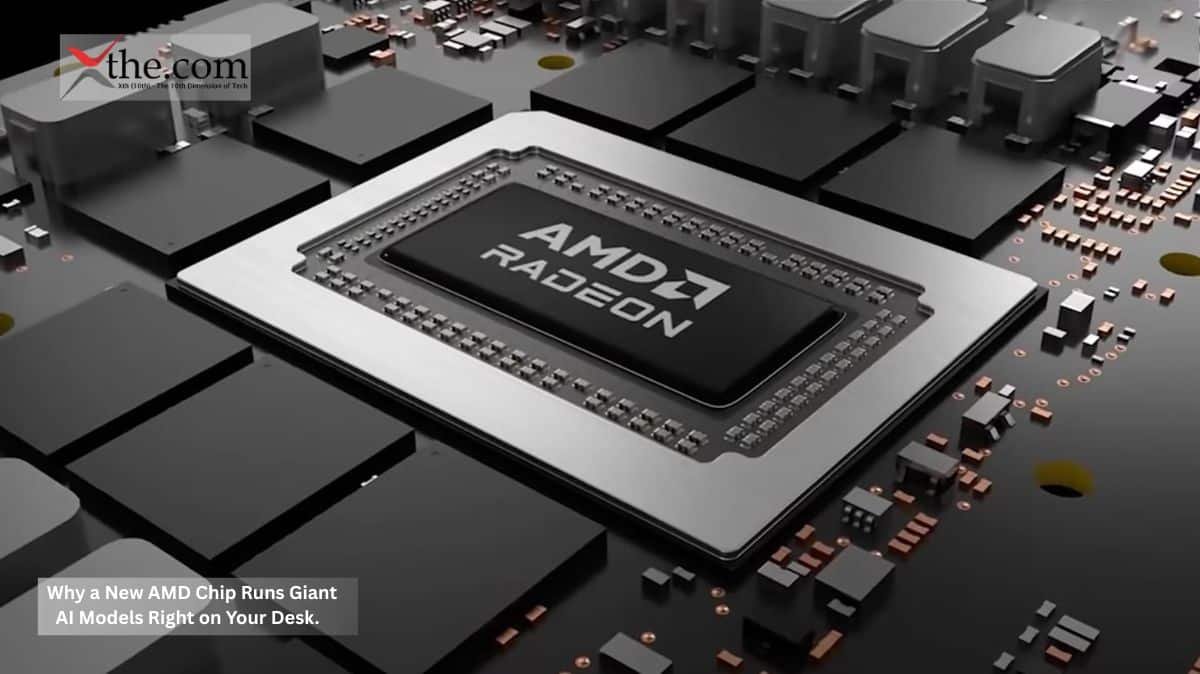
The latest development from AMD has introduced two major changes to processor performance and energy efficiency management. The company is introducing advanced AI-driven techniques into its latest Ryzen lineup, marking a major technological advancement for AMD’s AI chips

The innovation enables systems to manage performance, power consumption, and workload distribution in real time via AI running directly on the processor architecture. The method demonstrates a transition to adaptive hardware systems that leverage intelligent technology as computing requirements constantly change.  

The Evolution of CPU Optimization  

The standard method for improving CPU performance requires predefined performance states and strict power management rules. The system operates effectively under regular workload conditions, but fails to support the dynamic resource needs of contemporary computing applications, which require adaptive performance. 

New CPU performance optimization systems will provide processors with a mechanism to learn about user behavior and offer opportunities for increased efficiency through real-time, immediate system changes, enabling optimization based on data rather than fixed parameters. 

The AMD AI chip development is considered a critical milestone to allow systems to achieve greater processing (performance) capability without the need to provide additional power to those systems. 

How AI-Driven Optimization Works  

An AI-based optimization system employs machine learning models that track system performance throughout the entire operational period. The system uses multiple data inputs, which include CPU core performance, memory usage, and thermal sensor measurements, to identify optimal operational settings.   

The AI-based CPU optimization system adjusts clock speeds, voltage settings, and core usage based on current workload demands. This system allocates its resources to specific operational needs that require distribution.   

The AMD AI chips execute their operations without user notice, enabling users to experience better performance and efficiency gains with no manual work required.  

Enhancing Performance Through Intelligent Resource Allocation  

AI-driven optimization delivers its main benefit by enabling better resource allocation across tasks. The system uses critical workload evaluation to determine which tasks receive priority processing while it manages system efficiency.   

The design of AMD AI chips depends on this capability because intelligent resource management enables the chip to maintain its performance levels.   

CPU optimization AI enables processors to manage multiple complex tasks, including multitasking, content creation, and AI processing, resulting in a smoother, faster user experience.  

Energy Efficiency and Sustainability Benefits  

Modern processor design now dedicates most of its resources toward developing energy-efficient systems suitable for both mobile applications and data center environments. The AI-powered optimization system reduces energy consumption by identifying and eliminating unused resources.   

The CPU optimization AI system AMD implemented enables its AI chips to achieve better performance by reducing unnecessary energy consumption and lowering power demand across the entire system.   

The system reduces energy consumption across all computing environments, extending battery life for portable devices and supporting environmental sustainability.  

Integration with Operating Systems and Kernel-Level Support  

The success of AI-based optimization methods requires their complete integration with both operating systems and system software components. The hardware-software interface requires kernel-level support to establish essential communication links between these two system components.   

AMD AI chips optimize performance by working with system processes across different applications. AI-based CPU optimization improves system performance by affecting CPU performance and overall system operation.   

The complete system optimization process ensures uniform implementation, leading to improved performance and operational efficiency.  

Impact on Battery Life and Mobile Computing  

The integrated power management systems allow laptops and devices to save energy and hence prolong the life of the battery. 

Optimizing with AI reduces power consumption for tasks that require less power, whilst still maintaining full system capability during high-power demand, helping keep the device working without losing its ability to perform as designed. 

AI that is optimized for CPU usage allows AMD’s AI chips to execute operations quickly while also using less electrical energy because the devices can change depending on how the devices are used and therefore can save a great deal of energy in addition to being able to do the same work as before due to the devices remaining powered on. This is helpful for users who need to keep their devices running continuously without being able to recharge the battery. 

Challenges in Implementing AI Optimization  

The implementation of AI-driven optimization systems offers substantial advantages to organizations but poses multiple challenges for their implementation. The development of accurate predictive models requires large datasets, which scientists must create through ongoing research efforts. 

The team must find a way to achieve better performance results while maintaining system stability. The system will experience problems when users apply optimization methods that exceed reasonable limits.   

AMD requires its AI chips to function correctly under all operational conditions that different workloads will create. The CPU optimization AI system needs to maintain user experience while it operates under different environmental conditions.  

Competitive Implications in the Processor Market  

The industry trend shows that companies are adopting AI technology for their hardware operations. The increasing complexity of processors requires new optimization methods, as traditional approaches fail to deliver the performance and efficiency required.  

AMD uses CPU optimization AI to create products that function as more intelligent and adaptive systems than standard processors.  

The development of AMD AI chips will most likely push competing companies to adopt similar approaches, leading to faster technological progress across the sector.  

Conclusion: Intelligent Processing for the Next Generation  

The latest advancements from AMD highlight a significant shift in processor design. The company developed a system that uses AI-based CPU optimization to enhance its architectural design, enabling better control over system performance and energy consumption.  

The development of AMD AI chips shows a broader trend toward smart hardware that adapts to users’ needs.  

The continuous development of AI technology in computing systems needs these technological breakthroughs to build future processors that operate more efficiently and respond faster while maintaining environmental sustainability.

Sources:  Your Trusted Partner for Advancing AI 

The Linux Kernel Archives

Power demand from AI workloads is rising faster than utilities expected, forcing a rapid rethink of infrastructure planning. Training clusters and inference systems now consume energy at a scale once limited to heavy industry. This surge is placing pressure on data center energy USA capacity, especially in regions already operating near grid limits. As utilities respond, the pace of upgrades is becoming a defining factor in how quickly AI infrastructure can expand.  

Data Center Energy USA Drives a New Utility Playbook 

Utilities are moving away from long-term planning and adopting faster ways to get things done. Demand from AI is harder to predict and often jumps in big steps, so they need to expand capacity more flexibly. Old timelines no longer match the rapid pace of new data center construction.  

As a result, approval processes are moving faster, and investment strategies are changing. Utilities are focusing on projects that support high-intensity computing centers. Their aim is to prevent delays that could slow AI-driven economic growth.  

The push for grid upgrades underscores the urgency of the situation. Substations, transmission lines, and distribution systems are being upgraded to handle more power. These changes are necessary to keep the grid reliable as demand increases.  

When Algorithms Meet Megawatts 

AI workloads differ from traditional enterprise computing because they require steady, high-intensity power rather than varying usage. This brings new challenges for balancing supply and demand on the grid.  

Now, utilities have to plan for constant peak loads. This changes how they manage power generation and reserves, making real-time monitoring and response systems even more important.  

In this situation, the need for grid upgrades is obvious. Without strong infrastructure, even minor disruptions can cause big problems. Reliable power is essential to keep AI systems running.  

The Geography of Power: Where Demand Is Surging 

Demand growth is not the same everywhere. Regions with established data center clusters are seeing the fastest increases. These spaces already have some infrastructure, which makes them appealing for further expansion.  

But having so many data centers in one area can cause bottlenecks. Local grids may struggle to meet new demand, so utilities in these regions are under pressure to add capacity quickly.  

The spread of data center energy USA demand into new regions is also notable. Companies are exploring locations with available power and land. This helps reduce the risk and balance the load across the network.  

Infrastructure Strength Meets Engineering Innovation 

To meet rising demand, utilities need more than just extra capacity. They are using new technologies to boost efficiency and resilience, including advanced transformers, smarter distribution systems, and improved forecasting tools.  

Energy storage is now part of the solution. Batteries help manage peak demand and provide backup during outages, adding flexibility to the grid and supporting continuous operations.  

More renewable energy is also being used. Solar and wind projects are now directly connected to data center operations, helping meet sustainability goals and growing energy needs.  

Speed Versus Stability: The Ultimate Balancing Act 

Speeding up infrastructure projects brings new risks. Utilities must ensure that rapid expansion does not compromise system stability. Careful planning and testing are needed to keep things reliable.  

Regulations are changing, too. Governments are updating policies to allow faster development while still maintaining oversight. This makes the environment for infrastructure projects more dynamic.  

It’s crucial for utilities and data center operators to work closely together. Clear communication helps set expectations and timelines. Without it, projects may be delayed or overrun.  

Strategic Implications for AI Infrastructure Growth 

Now, energy availability is a top factor in site selection. Companies consider power access as much as connectivity and cost, which changes the competition for data center development.  

Utilities that can add capacity quickly have an edge. They attract more investment and help local economies grow, creating a cycle that drives even more infrastructure development.  

The expansion of data center energy USA capacity is shaping long-term industry trends. It influences where AI clusters form and how they scale. Energy is no longer just a support function; it is a strategic asset.  

Risk and Opportunity in a Power-Constrained Future 

Energy bottlenecks are a real risk for AI growth. Infrastructure delays can slow new projects and raise costs, so companies need to plan carefully to avoid them.  

At the same time, there are chances for innovation. New technologies and business models can help solve energy challenges, including partnerships between utilities and private companies.  

Companies that act early can secure key resources. By working with utilities, they can make sure they have reliable power, giving them an advantage in a fast-growing market.  

What Comes Next for Powering AI Systems? 

The relationship between utilities and data centers will continue to evolve. Both need to adapt to new demand patterns and technology. Working together will be essential to meet future needs.  

Investment in infrastructure will stay high. As AI use grows, utilities will probably keep expanding capacity. This will mean ongoing coordination with regulators and industry partners.  

Innovation will be important, too. New ways to generate, store, and distribute energy will shape the grid’s future and support the next stage of AI growth.  

Final Thoughts on Energy and AI Expansion 

Power as the New Limiting Factor 

Energy availability is now the main limit on AI growth. Without enough power, even the best systems cannot run. This makes planning infrastructure more important than ever.  

Building Grids That Keep Pace 

Rail- railways need to keep modernizing and expanding their networks. This helps them meet growing demand while staying reliable. Long-term success depends on steady investment.  

Securing Advantage Through Energy Strategy 

Companies that focus on energy planning will be better prepared for growth. Reliable power lets them deploy and scale faster. The future of AI will depend on how well energy challenges are handled.

Source: Committed to Restoring America’s Energy Dominance. 

Cooling systems that used to manage steady enterprise workloads are now struggling to handle the heat generated by today’s powerful computers. In Phoenix, a major data center operator recently saw rack densities exceed 80 kW, pushing traditional air systems to the limit and requiring urgent upgrades. This challenge is no longer just a possibility. It’s real, costly, and happening across the industry.   

Within the first wave of upgrades, one pattern stands out: a decisive shift toward data center cooling strategies that rely less on air and more on direct heat removal.  

The Pressure Breaking Legacy Systems 

For years, raised floors and chilled air were enough, but high-performance computing clusters, especially those used for large-scale AI training, create heat in new ways. Air struggles to absorb and move this heat, especially when racks are close together.  

Operators now face three immediate constraints. They are thermal-density ceilings that limit compute expansion, power inefficiencies driven by overworked HVAC systems, and space limitations in legacy facilities not designed for modern loads.  

A co-location provider in Chicago shows how quickly things can change. After bringing on a new client, their cooling system reached its limit in just six months. Upgrading the air systems wasn’t practical, so they switched to liquid cooling. This move eased heat problems and freed up more rack space.  

Why Liquid Cooling Is Gaining Ground 

Liquid cooling has been around forever, but more data centers are using it as AI workloads grow. Liquid moves heat much more efficiently than air, so operators can handle higher densities without using a lot more energy.  

The rise in liquid cooling AI deployments reflects this shift. These systems circulate coolant directly to heat-generating components, CPUs, GPUs, and memory modules, removing heat at the source rather than dispersing it into the room.  

The key advantages driving liquid cooling adoption are higher rack density support, where facilities can exceed 100 kW per rack without thermal instability, energy efficiency gains delivering reduced reliance on large-scale air movement to lower power usage effectiveness, and operational predictability, where more consistent thermal control improves hardware longevity.  

In Northern Virginia, the largest data center market in the US, several operators have begun standardizing liquid-ready infrastructure in new builds. Retrofitting remains complex, but new facilities increasingly treat liquid cooling as a baseline requirement.  

The Economics of Cooling Upgrades 

Transitioning to liquid systems incurs upfront costs, such as plumbing, containment, and specialized hardware, which add complexity. Yet the financial calculus is shifting.  

Take a mid-sized data center running at 20 MW. Air cooling can use up to 40% of its total energy. By adding liquid cooling, operators can reduce those numbers significantly and the computing power that brings in revenue.  

This is where data center cooling becomes less of a maintenance concern and more of a strategic lever. Lower operating costs combined with the ability to host high-density workloads translate into stronger margins over time.  

A Hypothetical Cost Scenario 

  • Air cooling system upgrade: lower upfront cost, limited scalability.  
  • Liquid cooling retrofit: higher initial investment, but enables 2-3X compute density.  
  • ROI horizon: typically 3 to 5 years, depending on workload density  

For AI-driven talents, the choice is straightforward. They can prioritize performance per watt, not just capital expenditure.  

AI Workloads Are Reshaping Infrastructure Design 

The rapid growth of generative AI and machine learning has changed how data centers are designed. Facilities are now built for peak performance, not just average use.  

This is where liquid cooling AI systems play a defining role. They allow operators to deploy GPU-heavy clusters without thermal throttling, maintain consistent performance during prolonged training cycles, and reduce downtime linked to overheating risks.  

A large data center operator in Texas recently rebuilt an entire campus to use liquid cooling loops at both the rack and facility levels. This led to a clear boost in computing power without needing more space.  

Challenges That Still Slow Adoption 

Despite clear advantages, liquid cooling is not a universal solution yet.  

Persistent Barriers: 

  • Retrofitting complexity: older facilities require significant structural changes. New line.   
  • Skill gaps: maintenance teams must adapt to fluid-based systems.  
  • Vendor fragmentation: lack of standardization complicates procurement and integration.  

These challenges are why some operators continue to use air-based systems even as it becomes harder to meet performance needs.  

Still, the direction is clear. As AI workloads increase, waiting to upgrade becomes more expensive than making the switch.  

A Structural Shift, Not a Passing Trend 

The expansion of data center cooling technologies built around liquid systems signals more than a tactical upgrade cycle. It reflects a deeper transformation in how compute infrastructure is designed, financed, and operated.  

Data centers that adapt early get a head start. They attract valuable clients, support new workloads, and run more efficiently. Those who wait risk lower profits and more technical problems.  

Cooling used to be a minor concern, but now it’s central to infrastructure planning. As demand for computing grows, the ability to manage heat will decide which operators stay ahead and which fall behind. 

Source: Advancing Energy Tech 

Recent lease filings across major markets reveal a clear pattern: new AI-focused infrastructure is being secured at scale. These agreements show that operators are moving quickly to lock in capacity before demand tightens further. The expansion of US data centers is no longer just about storage and compute; it is increasingly tied to concentrated AI workloads. As a result, leasing activity has become an early indicator of where the next generation of AI clusters will emerge.  

US Data Centers Anchor the Next Wave of AI Infrastructure 

These filings show a move from spread-out deployments to concentrated compute hubs. AI workloads need dense setups of GPUs, networking, and power, which work best in clusters. This is leading operators to secure larger connected spaces rather than smaller, separate sites.  

The increase in hyperscale leases underscores the need for larger, more integrated setups. These deals often cover whole facilities or campuses built for high-performance computing. By securing space early, companies can set up their infrastructure without delays.  

Power availability is a major factor in choosing sites. AI clusters consume much more energy than traditional workloads, so reliable, scalable power is essential.  

From Empty Land to AI Powerhouses 

Many new leases are for undeveloped or newly expanded sites. Developers are preparing land for high-density data centers, enabling custom layouts that meet advanced cooling and networking requirements.  

The rise in hyperscale leases is turning these sites into long-term infrastructure hubs. Operators are signing multi-year deals that support big investments, creating stability for both developers and tenants.  

These projects also draw in supporting industries, equipment suppliers, construction companies, and energy providers, all of which help build these clusters. Over time, this forms a local ecosystem around each site.  

Geography Becomes Strategy in Cluster Formation 

Getting a lease is just the first step in building an AI cluster. Operators also need to invest in specialized infrastructure, such as high-capacity networking, advanced cooling, and backup power supplies.  

Cooling is now a key concern. AI workloads generate significant heat, so more efficient cooling solutions are needed. Liquid cooling and other advanced methods are becoming more common.  

Network connectivity is also crucial. AI clusters depend on fast data transfer between nodes, which requires strong fiber connections and low-latency networks.  

Supply Constraints Shape Leasing Behavior 

Rising demand for data center space is causing supply shortages. Space is key. Scratched-up space in key markets is becoming scarce, so companies are securing leases earlier in the development process.  

Pre-leasing is now common. Operators commit to space before construction finishes to make sure it will be available, reducing the risk of delays when they are ready to deploy infrastructure.  

These supply limits also affect pricing and contract terms. As demand rises, landlords have greater negotiating power, potentially leading to higher costs for tenants.  

Strategic Implications for Enterprises and Providers 

The growth of AI clusters is changing how companies plan their infrastructure. They now have to think about capacity, location, and scalability, which calls for a more strategic approach to leasing.   

Providers are responding with more flexible options. Some are building modular facilities that can expand over time, letting tenants grow their operations as demand increases.   

The growth of US data centers also affects competition. Companies that secure the best locations early get an edge, allowing them to set up infrastructure faster and run more efficiently.  

Risk And Opportunity In Early Cluster Positioning 

Getting in early on new clusters offers big opportunities. Companies can secure essential resources like power, connectivity, and space before they become scarce.  

However, early commitments come with risks. Market conditions can shift, changing demand and prices. Companies need to weigh the benefits of early access against the risk of over-investing.  

Building clusters also means working with local stakeholders. Communities need to support the infrastructure for large data centers, including handling environmental and regulatory issues.  

What Comes Next for AI Infrastructure Expansion? 

The current surge in leasing is likely to keep going as AI adoption increases. New clusters will appear in both established and new markets, further changing the data center landscape.  

New technology will also shape future developments. Better hardware and cooling systems may change how clusters are built, leading to more efficient and compact facilities.  

Collaboration across the industry will be key. Developers, operators, and governments need to work together to address shared challenges, such as supporting sustainable growth and reliable infrastructure.  

Final Perspective on AI Cluster Growth  

Lease Activity as a Leading Signal 

These filings offer useful insight into future infrastructure trends. They show where companies are investing and how they plan to grow, making them a key sign of where the industry is headed.  

Building Clusters that Last 

Successful AI clusters need more than just space. They rely on power, connectivity, and skilled workers. Long-term planning is crucial for steady growth.  

Securing Advantage Through Early Moves 

Companies that move early can secure key resources and build a strong position, laying the groundwork for future growth. The ongoing expansion of US data centers will be central to shaping the AI landscape.

Source: Insights & Research  

Recent US filings reveal a sharp increase in fab equipment orders, pointing to an acceleration in semiconductor capacity expansion. These filings provide easy early visibility into how manufacturers are scaling production capabilities. The surge in demand for semiconductor equipment US reflects growing confidence in long-term chip demand. As investments increase, equipment procurement is becoming a leading indicator of industry momentum.  

Semiconductor Equipment US Demand Signals a New Build Cycle 

Equipment orders usually come before any visible increase in semiconductor output. Companies buy tools months before new facilities start running. Because of this, procurement data is a good sign of future production capacity.  

The recent increase in orders suggests that several fabs are starting to build and expand. These projects need a steady supply of specialized machines. If deliveries are late, production schedules can be delayed.  

Demand for lithography tools is especially high. These systems are key to creating circuit patterns at ever-smaller sizes. Because they are complex and expensive, they are a main focus in spending plans.  

The Machinery Behind The Microchips 

Semiconductor manufacturing relies on a wide range of specialized equipment. Every step, from preparing wafers to final checks, requires precise tools. These systems must operate with very high accuracy to meet quality standards.  

Lithography tools play a crucial role in this process. They decide how tightly circuits can be packed on a chip. Improvements here directly affect how well and efficiently chips work.  

Other types of equipment, such as etching and deposition systems, are also in high demand. These tools together are the backbone of chip factories. Having enough of them directly affects how much can be produced.  

Clusters of Growth: Where Orders Are Concentrating 

The jump in equipment orders isn’t happening evenly across the board. Some regions are becoming the main centers for semiconductor growth. These areas benefit from having the right infrastructure and available workers.  

States where fabs are being built are leading in buying equipment. This creates local demand for installation, maintenance, and support. Over time, these areas can grow into major industry hubs.  

The concentration of semiconductor equipment US investments also attracts related industries. Suppliers of components, materials, and services tend to follow equipment deployment. This strengthens the overall ecosystem.  

Supply Chain Pressure Builds Behind the Scenes 

As more equipment is ordered, the supply chain comes under more pressure. Makers of key parts have to ramp up to keep up with demand. Any delay in the chain can disrupt the whole process.  

Wait times for complex machines are already getting longer. Companies are ordering earlier to ensure they get their equipment on time. This shows they are worried about possible slowdowns.  

Working closely with equipment suppliers is now more important for chip makers. Good communication helps keep expectations and schedules on track. Without it, projects are more likely to be delayed.  

Investment Strategies Shift Toward Long-Term Capacity 

The latest surge in equipment orders shows a change in how companies invest. They are now focused on building long-term capacity instead of chasing quick gains. This shows they believe demand for semiconductors will stay strong.  

Companies are spending money on both new factories and upgrades to old ones. This lets them boost output and work more efficiently. It also means they do not have to rely as much on outdated systems.  

Government incentives are helping drive this change. Policies that support domestic production encourage companies to invest in the US. This helps the US semiconductor industry grow.  

Workforce and Technical Expertise Challenges 

Expanding equipment use needs skilled workers. Engineers and technicians must set up, operate, and maintain complex machines. This increases the need for special training and education.  

How fast companies can grow depends on having enough skilled workers. To fill this gap, companies are investing in training programs. They are also working more with schools and colleges.  

Technical know-how is also needed to keep equipment running well and make improvements. Performance has to be checked and adjusted regularly. This keeps output and quality steady.  

Risk and Opportunity in Infrastructure Expansion 

The fast rise in equipment orders brings both chances and risks. It helps boost production capacity, but it also creates challenges with coordination and using resources well.  

Growth clusters in infrastructure can benefit local economies, but they require careful planning to avoid overconcentration in a single location. Spreading growth across regions can help lower risks.  

Companies that handle these challenges well can get ahead of the competition. Investing early in equipment and infrastructure gets them ready for future demand. This opens the door to long-term success.  

The Road Ahead For US Semiconductor Manufacturing 

The current jump in equipment orders will likely shape the industry for years. As new factories come online, production capacity will grow significantly. This will affect how chips are supplied worldwide.  

New technology will keep driving better equipment. Manufacturers will look for tools that are more precise and efficient. This will keep pushing the limits of chip design.  

Working together will become even more important for companies in the industry. Shared problems require joint solutions, such as fixing supply chain issues and building the workforce.  

Final Outlook on Equipment-Driven Expansion  

Orders Today, Capacity Tomorrow 

More recruitment orders clearly show that production will grow in the future. Companies are getting ready for higher demand by investing in key infrastructure. This prepares them for long-term growth.  

Building Clusters That Sustain Growth 

Regional clusters are important for supporting semiconductor manufacturing. When investment is focused on a single area, it creates efficiencies and attracts more resources. These clusters can keep local economies active.  

Positioning for the Next Wave of Innovation 

Companies investing in advanced equipment are better positioned for future developments. Access to the latest tools enables them to produce more complex and efficient chips. The continued growth of semiconductor equipment US will remain central to industry progress.

Source: LAM RESEARCH CORPORATION