






Washington, DC
Nearly three-quarters of a million mail ballots landed on election officials’ desks after Election Day in 2024, and under a ruling handed down this week, every one of those late arrivals would still have counted. That single figure explains why Monday’s Supreme Court mail-in ballot ruling landed with such force in state capitols from Jackson to Sacramento.
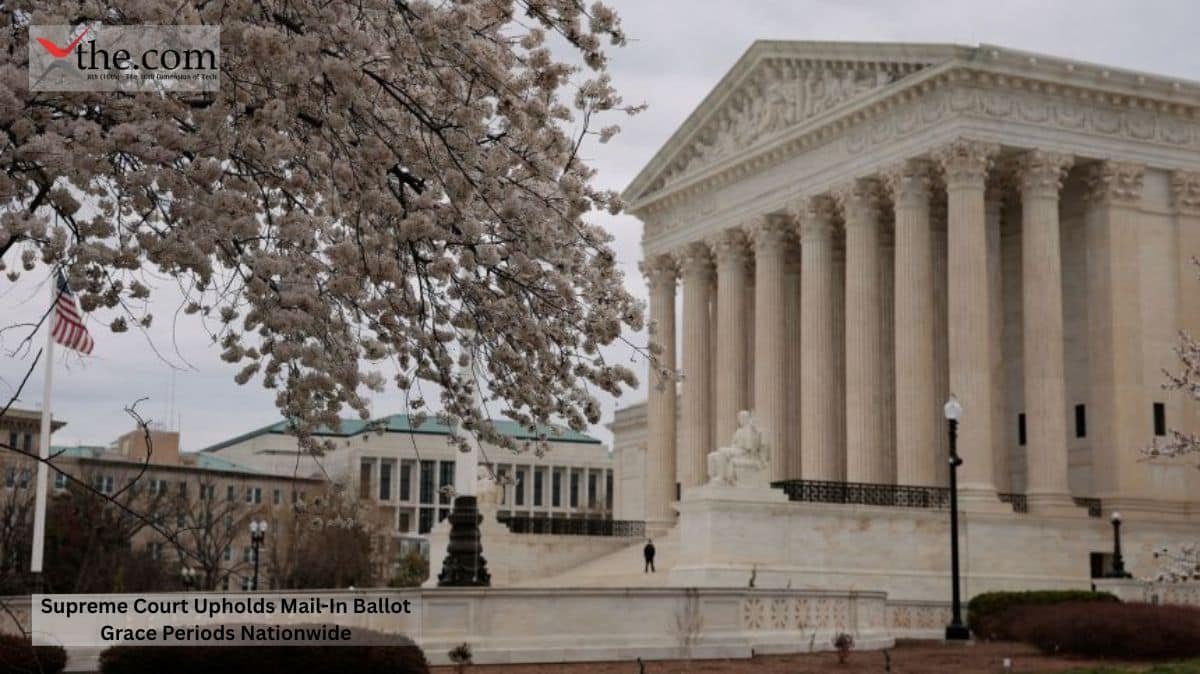
In a decision that scrambled the usual ideological lines, the justices ruled 5-4 that states can keep counting absentee ballots that arrive after polls close, as long as they were postmarked by Election Day. The SCOTUS election-day ballots case, formally styled Watson v. Republican National Committee, focused on a Mississippi law that allows ballots to arrive up to 5 business days late and still be counted. Justice Amy Coney Barrett wrote the majority opinion, joined by Chief Justice John Roberts and the three Democratic-appointed justices. This combination surprised many who followed the case.
Why the Mississippi Case Became a National Flashpoint
The Mississippi ballot ruling came after a series of lawsuits from the Republican National Committee and the Trump campaign before the 2024 election. They argued that federal law does not allow states to accept ballots arriving after Election Day, even if mailed on time. At first, a federal judge agreed with Mississippi, but the Fifth Circuit Court of Appeals, a panel of Trump appointees, later overturned that decision, ending the grace period. This set up a Supreme Court case with national consequences.
Fourteen states and the District of Columbia currently maintain some form of post-Election Day grace period for domestic mail ballots, and roughly a dozen more extend similar flexibility to ballots cast by military members and citizens living overseas. That patchwork made the mail-in ballot grace period 2026 fight a proxy battle over how much latitude states keep to run their own elections a question the court answered, at least for now, in favor of the states.
The Legal Reasoning Behind a 5-4 Split
Justice Barrett’s opinion focused on a key detail in the law. Federal rules set a sole Election Day, but they do not say when ballots must arrive at election offices. She wrote that the voting process ends when people finish voting, not when every ballot is counted. This view allowed Mississippi’s law to remain in place without changing the overall system Congress created for national elections.
Justice Samuel Alito, writing for the four dissenting justices, warned that the decision could cause confusion and weaken public faith. He said that counting ballots after polls close is like extending the election, which could make people doubt the results. Barrett’s opinion had already addressed this point, saying that questions about timing should be decided by lawmakers, not judges.
The Supreme Court’s 5-4 mail-ballot decision stands out more for who joined the majority than for the close vote. Barrett and Roberts, both appointed by conservatives, sided with the liberal justices. This shows that debates about state power do not always follow party lines. As one election law expert said, letting states set their own rules can help either party, depending on the state.
What This Means for Voters Heading Into the Midterms
For election officials, the ruling removes a major source of uncertainty as they prepare for the fall elections. Washington’s secretary of state pointed out that over 250,000 ballots arrived late but were postmarked on time in 2024. Without the grace period, those voters would have lost their say. Rural areas, where mail takes longer to arrive, would have been hit hardest if the rule had changed.
Voting rights advocates were quick to frame the decision as protective of exactly those voters. The outcome avoids a disorderly, last-minute overhaul of midterm election ballot rules just months before voters head to the polls, and it preserves confidence for military families and rural residents who depend on the extra window to have their ballots counted. Election officials in the eighteen states and territories with existing grace periods, Mississippi among them despite being a Republican-led state, can now finalize their 2026 procedures without fear of a court-ordered rewrite.
President Trump, who has long pushed for firmer mail voting rules, called the decision a major loss. He again urged Congress to pass the SAVE America Act, which would require stricter voter ID and citizenship checks and limit mail voting to special cases like illness, disability, or military service. The House has passed the bill, but it is unlikely to pass in the Senate, so its future is uncertain.
A Narrower Fight Still Ahead
The Supreme Court’s decision does not end all debates about mail and absentee voting. On Monday, the justices asked the Trump administration to provide its opinion on a Pennsylvania case about whether voters must write a date and a statement on mail ballot envelopes for them to be counted. This issue could come back to the Court soon. The Court will also hear a case about Arizona’s proof-of-citizenship law next term, which could affect how states manage their voter rolls.
The Supreme Court rule states to count mail-in ballots that arrive after Election Day in 2026, but it only settles the question of when ballots must be received. It does not address other issues, such as how ballots are checked, dated, or processed. Lawyers expect the upcoming citizenship-verification case, RNC v. Mi Familia Vota, to draw just as much attention when arguments start in the fall.
The Road to November
Monday’s ruling means that the same rules used in 2024 will stay in place for 2026, at least for when ballots must be received. That stability is important. Election officials had worried they might have to change procedures quickly, which could confuse voters and put extra pressure on already busy county offices.
The SCOTUS mail-ballot grace-period ruling’s midterm-election impact will likely be measured less in headlines than in ballots quietly counted weeks from now, arriving a day or two late from a rural mailbox or an overseas military post, exactly as the law intended. Whether Congress moves on the SAVE America Act, whether the Arizona citizenship case reshapes voter rolls, and whether states like Mississippi choose to tighten their own laws despite this week’s outcome will determine how durable this settlement proves to be. For now, the deadline that matters most is the one voters already know: get your ballot in the mail by Election Day, and the rest, in most of the country, will take care of itself.
Source: https://www.foxnews.com/politics/supreme-court-rules-mail-in-ballots-received-after-election-day