




CDC Urges Americans to Get the 2026-27 Flu Shot by the End of October
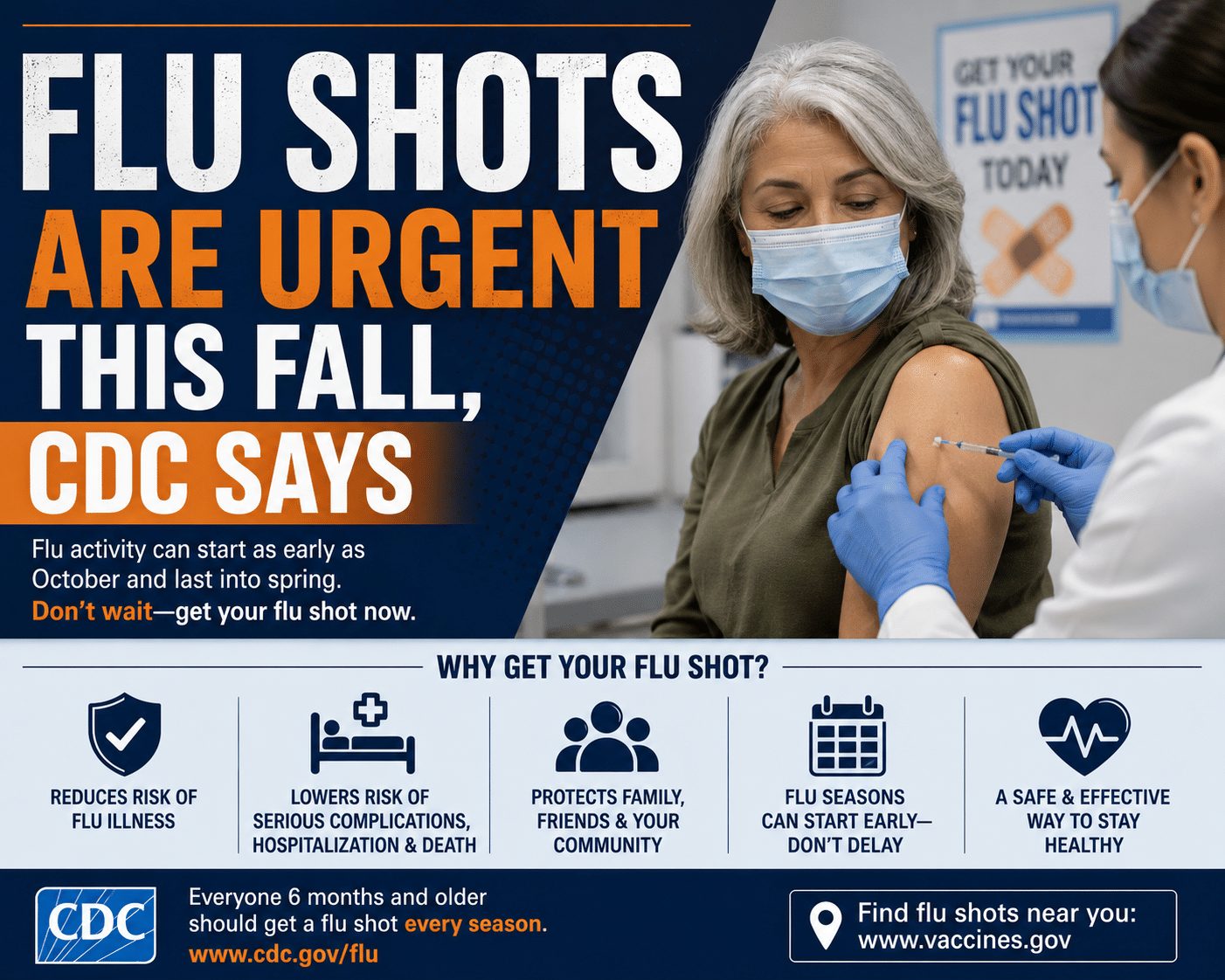
The 2026-27 flu season is underway, and federal health officials are repeating the same instruction they give every fall with unusual urgency: get vaccinated by the end of October. The Centers for Disease Control and Prevention says September or October is the ideal window for most people, because it takes about two weeks for immunity to build, and because flu typically starts spreading in earnest during the colder months when windows close and schools fill.
The recommendation lands against an uncomfortable backdrop. Vaccination rates have been sliding for years: fewer than 44% of people in the United States received a flu shot during the 2025-26 season, down from 52% in 2021. Public health experts warn that another soft year could mean a harder season, particularly for older adults, young children, pregnant women and people with chronic conditions. The good news this year is supply and access: updated flu vaccines are now available in every state, and new options, including the return of a nasal spray for a broad age range, make it easier than ever to get protected.
What the CDC Recommends for 2026-27
The CDC’s interim clinical guidance for the 2026-27 season keeps the fundamentals unchanged. Routine annual flu vaccination remains recommended for everyone six months and older, with few exceptions. For most people, vaccination should ideally occur in September or October, though officials emphasize that vaccination should continue after October and throughout the influenza season as long as viruses are circulating. A late shot is far better than no shot.
The agency also stresses that the vaccines are updated annually to match the strains circulating in a given year, which is why last year’s shot does not count for this season. Co-administration with other routine vaccines remains common in pharmacies and clinics, and the CDC continues to recommend the approach for most adults. The message from clinicians is simple: the best place to get the shot is wherever you will actually get it, whether that is a drugstore, a workplace clinic or a doctor’s office.
Why Vaccination Rates Are Falling
The decline from 52% coverage in 2021 to under 44% last season reflects a mix of fatigue, misinformation and access problems. Pandemic-era enthusiasm for staying current on shots has faded, and trust in public health messaging has taken hits from years of polarized debate. Surveys show that a growing share of parents delay or skip childhood vaccines entirely, a trend that alarms pediatricians who see flu hospitalizations cluster among unvaccinated children each winter.
There is also a quieter problem: complacency about severity. Because flu is familiar, people underestimate it, forgetting that seasonal influenza kills tens of thousands of Americans in a typical year and sends hundreds of thousands to hospitals. CDC studies have also shown that this season’s vaccine effectiveness may be lower than in prior years, a reality that can cut both ways. Some take it as a reason to skip the shot, while experts counter that partial protection still shrinks the odds of severe illness, which is the outcome that matters most.
New Options This Season
This year’s rollout includes one development that particularly expands access. FluMist, the nasal spray vaccine, is once again recommended by the CDC for adults up to age 49 and children aged two and older, offering a needle-free path for people who avoid shots. For families with young children who dread appointments, that option alone can change the calculus on vaccination.
Supply is not expected to be a constraint. Manufacturers and public health officials report that updated flu vaccines, formulated to match circulating strains, are widely distributed across states and territories. CIDRAP’s review of the fall vaccine landscape found no expected shortages of influenza vaccine, and pharmacists in most states can administer shots without an appointment, sometimes without a copay depending on insurance. The infrastructure for a strong season exists; the remaining question is whether people use it.
Who Is Most at Risk
While flu can land healthy adults out of work for a week, the burden falls disproportionately on specific groups. Older adults face the highest risk of complications, including pneumonia and hospitalization. Children under five and infants are frequent visitors to emergency rooms during bad seasons. Pregnant women, people with asthma, diabetes and heart disease, and those with weakened immune systems all face elevated risks, and vaccination during pregnancy passes protection to newborns too young for their own shots.
Caregivers and household contacts matter too. Health officials push the idea of cocooning: vaccinating the people around vulnerable family members reduces the chance the virus reaches them. With another respiratory virus season approaching, when flu, COVID-19 and RSV will circulate simultaneously, hospitals are hoping for a higher-coverage year. Fewer flu infections means fewer crowded emergency departments and fewer dangerous coinfections with other viruses.
Where and When to Get Your Shot
The practical advice from physicians is straightforward. Book the vaccination now rather than waiting for the first wave of cases, because immunity needs roughly two weeks to mature. Pharmacies remain the most convenient venue for most adults, while pediatric offices handle children and anyone needing several vaccines at once. Those with insurance should know that flu shots are covered as a preventive benefit under most plans; community clinics and local health departments provide free options for the uninsured.
Timing flexibility is a feature, not an excuse to postpone. If October slips by, November and December vaccinations still blunt the tail of the season, which often peaks in January or February and can run as late as May. For travelers visiting family over the holidays or heading to crowded indoor gatherings, the end-of-October target gives the best margin of safety.
The Bottom Line for American Families
The 2026-27 flu season will be shaped by decisions made in the next few weeks. Vaccines are plentiful, accessible and free for most people, while the virus itself remains a serious threat that hospitalizes hundreds of thousands of Americans each year. Public health officials have watched coverage slip for three straight seasons, and they know that each percentage point of decline shows up later in emergency rooms.
The CDC’s guidance boils down to one sentence: get your flu shot by the end of October, and keep going after that if you miss the window. With a nasal spray back on the menu and shots available on practically every corner, there has never been an easier season to check this off the list.
Frequently Asked Questions
When is the deadline for a 2026 flu shot?
The CDC recommends vaccination by the end of October for most people, but shots given later still help, since flu often circulates into spring. Two weeks are needed for full protection.
Do I need a new flu shot this year?
Yes. Flu vaccines are updated annually to match circulating strains, so last season’s vaccination does not carry over into the 2026-27 season.
Can I get the flu vaccine without a needle?
Probably. The FluMist nasal spray is recommended this season for healthy adults up to 49 and children two and older, subject to supply at your provider.
Are flu shots free?
Most insurance plans cover flu vaccination with no cost sharing, and community clinics and health departments offer free shots for uninsured patients.