




Iran Sets Seven Conditions for Reopening the Strait of Hormuz as Oil Markets Watch
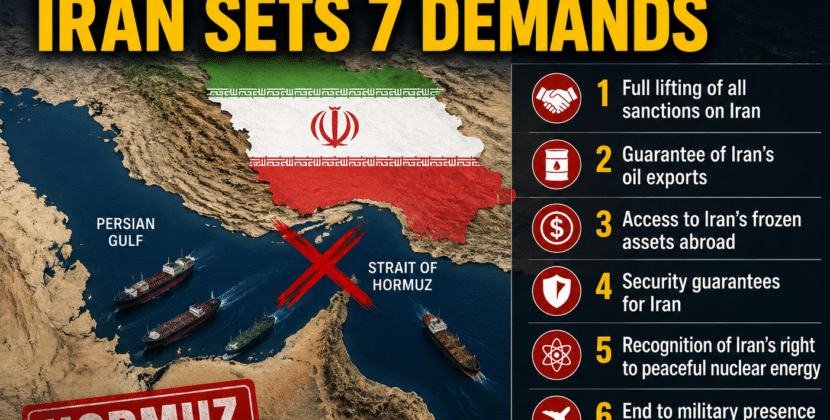
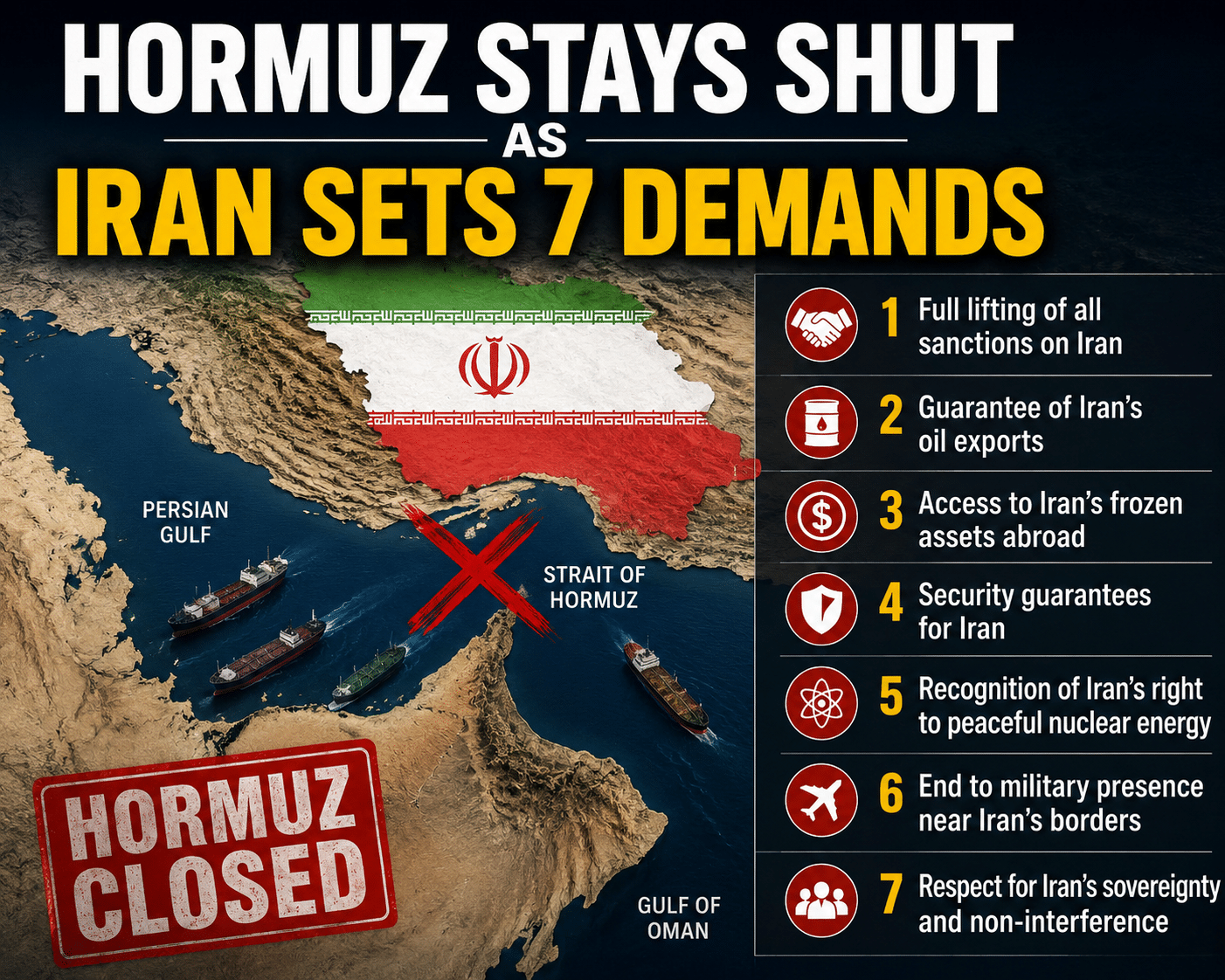
The Strait of Hormuz, the narrow waterway through which a large share of the world’s seaborne oil passes, is back at the center of the conflict between the United States and Iran, and Tehran is attaching a price to reopening it. Iranian officials say the strait will not reopen until our seven conditions are met, tying one of the most important chokepoints in global energy trade to a list of demands that includes sanctions relief and an end to military pressure.
The standoff keeps American drivers and global markets in a state of permanent uncertainty. Every report of traffic moving through the strait nudges oil prices lower, and every headline about strikes or stalled talks pushes them higher. Energy analysts say the seven-conditions standoff is now the single biggest variable for fuel prices heading into the winter, because even a partial, prolonged closure changes what refineries pay and what households pay at the pump.
Why the Strait of Hormuz Matters
Geography explains the obsession with this stretch of water. The strait lies between Oman and Iran and connects the Persian Gulf to the open ocean. Roughly a fifth of the world’s oil consumption flows through it, and the Gulf’s liquefied natural gas shipments depend on it as well. There is no practical substitute for the route: pipelines out of the region can carry only a fraction of the volume, and the detours would add weeks and billions in cost.
For the United States, the connection is indirect but immediate. American production insulates the country from a full supply shock, but oil is priced globally. When crude spikes on Hormuz fears, every refinery in the country pays more for the barrel it processes, and those costs move through gasoline, diesel and jet fuel. That is why a maritime dispute 7,000 miles away shows up on the receipt at a gas station in Ohio.
The Seven Conditions
Iran has not released a detailed public checklist, but officials have framed the demands around a familiar package: verifiable sanctions relief, guarantees against renewed strikes on oil infrastructure, protection for its own export shipping, and an end to the economic campaign that has choked its finances. Tehran is also linking the strait to the broader war, arguing that reopening the waterway and halting attacks are two sides of the same negotiation.
Analysts are skeptical that any single round of talks will satisfy all seven. The conditions are designed to be traded: some are cheap for the West to concede, others cut at the heart of the pressure campaign. That structure gives Iran leverage while keeping the pot boiling, because markets must price in the possibility that the strait stays constrained for weeks or months even as diplomats shuttle between capitals.
Exports Are Flowing, but the Threat Remains
Complicating the picture is the fact that crude exports from the strait have largely returned to levels seen before the outbreak of the war, as producers and traders adapted with insurance arrangements, naval escorts and creative routing. Diesel flows in particular have recovered, and shipping data has shown traffic grinding forward through periods of heightened tension rather than stopping dead.
That recovery is real but fragile. Market watchers note that the resumption happened under constant threat, with tanker operators pricing in risk premiums and insurers charging accordingly. A single attack on a supertanker could reverse the trend overnight, and Iran’s explicit linkage of the strait to its seven conditions means the status quo can change with one diplomatic failure or one military escalation. The ceasefire history of this conflict, agreed in one season and broken by the next, keeps everyone humble about forecasts.
What It Means for Gas Prices in the U.S.
The pump is where geopolitics becomes politics. When the war escalated and the strait closed earlier in the year, gasoline and diesel prices spiked, feeding an inflation surge that pressured the Federal Reserve and gave voters a daily reminder of the conflict. Prices eased as exports resumed, but analysts warn that the relief is conditional on shipping staying open and on sanctions not tightening further.
For households, the practical impact shows up beyond the gas tank. Diesel prices flow into trucking and delivery costs, which land on shelf prices for food and goods. Airlines price fuel surcharges off the same benchmarks. And because energy is one of the categories that moves fastest in inflation data, a renewed spike would complicate the Fed’s plans and ripple into mortgage rates and borrowing costs. Economists say the Hormuz question is really a question about whether inflation keeps cooling or reignites.
The Military Dimension
The diplomatic stall sits on top of a live military situation. The United States has surged forces into the region through the conflict, including carrier deployments and additional airpower, while strikes have repeatedly targeted oil infrastructure on both sides. Each escalation raises the risk that a pipeline terminal, a port or a tanker becomes the incident that forces a permanent reroute of global supply.
Naval presence is meant to deter exactly that outcome. Convoys and escorts reassure insurers and keep cargoes moving, which is part of why exports have recovered despite the rhetoric. But the same proximity creates escalation risk: warships in confined waters, aircraft overhead and Iranian fast boats patrolling the strait form a mix that has produced crises before. Traders know it, which is why calm can evaporate on a single alert.
What to Watch Next
Three signals will tell the story in the weeks ahead. First, the talks: whether the seven conditions become a negotiating framework or a public relations posture. Second, the flows: tanker traffic and shipping insurance rates, which reveal what operators believe even when officials do not talk. Third, the price of crude itself, where the war premium is visible in every tick.
For American consumers, the best case is boring: a gradual normalization of traffic, stable prices at the pump and a winter that does not echo the spikes of the past year. The worst case is a closure that forces the world to ration a slice of its energy supply. Between those extremes lies the most likely outcome, the one markets are pricing now: an uneasy, headline-driven equilibrium where the strait stays half-open, the demands stay on the table, and the bill stays with drivers.
Frequently Asked Questions
Why does Iran control the Strait of Hormuz?
Iran sits along the northern edge of the narrow shipping lane, giving it the ability to threaten traffic with mines, fast boats and missiles even though the waterway is international.
What are Iran’s seven conditions?
The package centers on sanctions relief, security guarantees for its oil exports and an end to strikes on energy infrastructure, though Tehran has not published a full public checklist.
How would a closure affect U.S. gas prices?
Oil is priced globally, so a Hormuz shock lifts crude everywhere. That raises refinery costs, pushing gasoline, diesel and jet fuel higher within weeks.
Is oil still flowing through Hormuz today?
Yes. Exports have largely recovered to pre-war levels through escorts and insurance arrangements, but Iran’s demands and military tension keep the reopening fragile.