



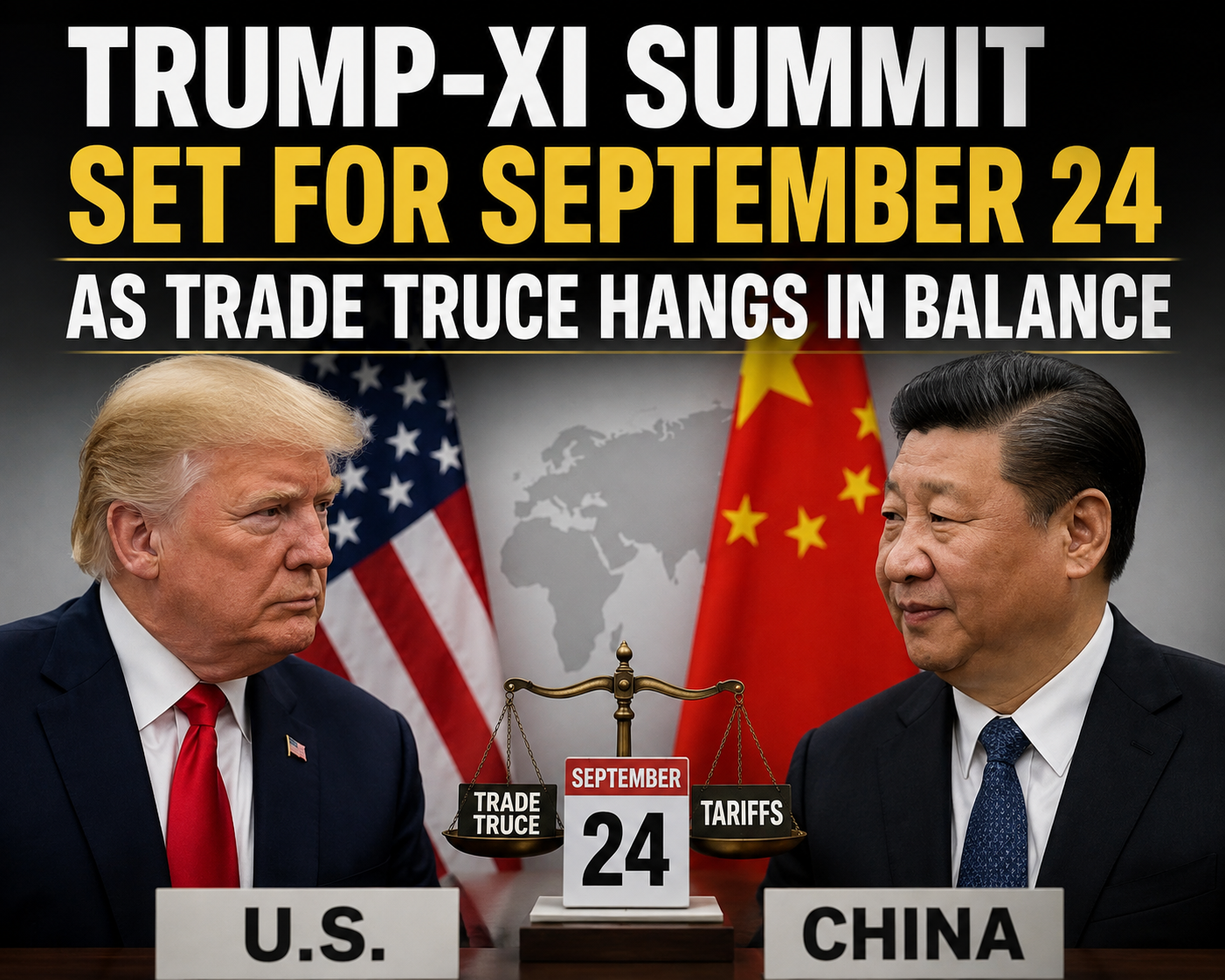
Trump-Xi Summit Set for September 24 as Trade Truce Hangs in the Balance
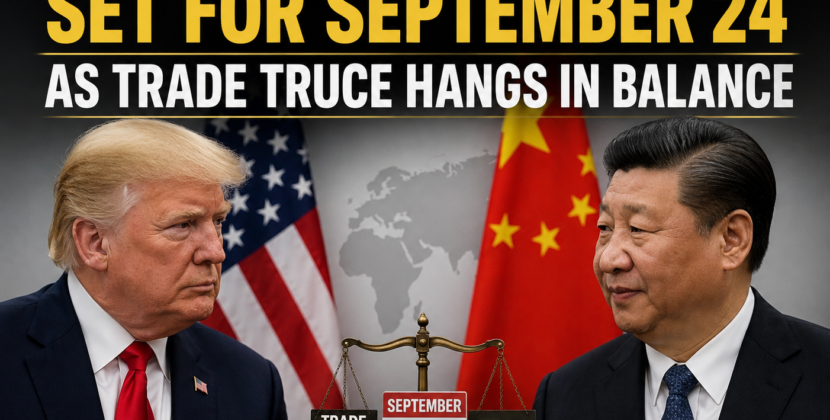
Chinese President Xi Jinping will arrive in Washington on September 23 for a high-stakes summit with President Donald Trump the following day, a meeting that could determine the future of U.S.-China relations for years to come. The summit comes at a critical moment, with a tariff truce between the two economic superpowers set to expire on November 10, 2026.
A Crowded Agenda
The agenda for the September 24 summit is the most ambitious in recent memory, covering trade and tariffs, Taiwan, Iran, artificial intelligence, critical minerals, and agricultural purchases. The two leaders will meet at the White House, with a formal state dinner scheduled for that evening.
Trade is expected to dominate the discussions. The U.S. currently imposes tariffs averaging 55 percent on Chinese imports, while China has responded with retaliatory tariffs on American agricultural products and manufactured goods. The tariff truce agreed to during Trump’s state visit to Beijing in May 2026 is set to expire in November, creating an urgent need for a new agreement.
According to reports from the Peterson Institute for International Economics, the two sides are discussing a package of agricultural purchases that would return U.S.-China agricultural trade to pre-2025 levels. The deal would include purchases of American soybeans, corn, wheat, and pork, and could be worth as much as $30 billion over two years.
The Chinese are looking for a win on agriculture, said Scott Kennedy, a senior adviser at CSIS. They want to show that engagement with the U.S. produces tangible benefits, and agricultural purchases are the easiest way to do that.
Taiwan Remains the Flashpoint
While trade may dominate the headlines, Taiwan is likely to be the most contentious issue on the agenda. Trump has approved a series of arms sales to Taiwan totaling more than $11 billion, a move that has infuriated Beijing and raised tensions in the western Pacific.
Taiwan has been conducting live-fire military exercises from September 16 to 18, involving units from the Army, Navy, Air Force, and Marine Corps. The exercises included, for the first time, the integration of unmanned systems with traditional military platforms, signaling Taiwan’s commitment to modernizing its defenses.
China views Taiwan as a breakaway province and has never renounced the use of force to achieve reunification. The arms sales to Taiwan are a red line for Beijing, and Xi is expected to press Trump to halt further transfers of weapons to the island.
The question is whether Trump is willing to trade concessions on Taiwan for a broader deal on trade and security, said Bonnie Glaser, director of the Asia Program at the German Marshall Fund. Given the domestic political dynamics in the U.S., that would be an extremely difficult sell.
The Iran Factor
The summit also comes at a time of heightened tensions in the Middle East, where U.S. military operations against Iran have escalated significantly. China has close economic ties with Iran and has been a vocal critic of U.S. military actions in the region. The Iran issue adds another layer of complexity to an already complicated relationship.
Trump is expected to press Xi to use China’s influence with Iran to help de-escalate the situation, while Xi will likely push for a diplomatic solution that includes sanctions relief for Tehran. The two sides may also discuss the status of the Strait of Hormuz, through which a significant portion of the world’s oil supply passes.
The Election Factor
The summit takes place less than six weeks before the U.S. midterm elections, adding a political dimension to the negotiations. Polls show Democrats are favored to make significant gains in both the House and Senate, which could complicate Trump’s ability to implement any deal reached with Xi.
Trump will want to come away from the summit with a tangible victory that he can point to on the campaign trail, said Evan Medeiros, former senior director for Asia on the National Security Council. That means the deal will likely focus on areas of immediate political benefit, like agricultural purchases, rather than deeper structural reforms.
For Xi, the summit is an opportunity to demonstrate China’s growing influence on the world stage and to project an image of stability and competence at a time when China’s economy is facing significant headwinds, including a property crisis, weak consumer spending, and declining foreign investment.
What to Expect
Analysts expect the summit to produce a limited deal focused on agricultural purchases, some easing of technology export controls, and a framework for continued negotiations on more contentious issues. A full resolution of the trade dispute is unlikely, but both sides have strong incentives to avoid an escalation.
The biggest wildcard is Taiwan. If Trump agrees to any restrictions on arms sales to Taiwan, it would be a dramatic concession that could alienate key allies in the Pacific and provoke a backlash in Congress. If he refuses to budge, it could derail the entire summit.
The world is watching, said Henry Kissinger, who has advised both American and Chinese leaders for decades. The relationship between the United States and China will define the 21st century. The question is whether these two leaders can find a way to manage their differences without stumbling into conflict.
The summit begins on September 24 at the White House. A joint press conference is scheduled for that evening, with details of any agreements expected to be announced shortly thereafter.
The Technology Dimension
Technology is another critical area of discussion at the summit. The Trump administration has imposed strict export controls on advanced semiconductor equipment, effectively cutting off Chinese companies from the cutting-edge chips they need for artificial intelligence, 5G telecommunications, and other advanced technologies. China has responded by investing heavily in its own semiconductor industry, pouring billions of dollars into domestic chipmakers.
The technology dispute has created a bifurcated global tech ecosystem, with separate supply chains, standards, and platforms emerging in the U.S.-led and China-led spheres. Some analysts believe that the summit could produce an agreement to ease certain technology export controls, particularly for less-sensitive products, in exchange for Chinese concessions on other issues.
However, there are strong voices within the U.S. government, including members of Congress from both parties, who oppose any relaxation of technology restrictions. They argue that China has repeatedly demonstrated that it will use advanced technology for military and surveillance purposes, and that easing controls would undermine U.S. national security.
The technology issue is the most difficult part of the relationship, said Matt Pottinger, former deputy national security adviser. It touches on everything from national security to economic competitiveness to human rights. Finding the right balance will require difficult trade-offs on both sides.