





Austin, Texas | July 10, 2026
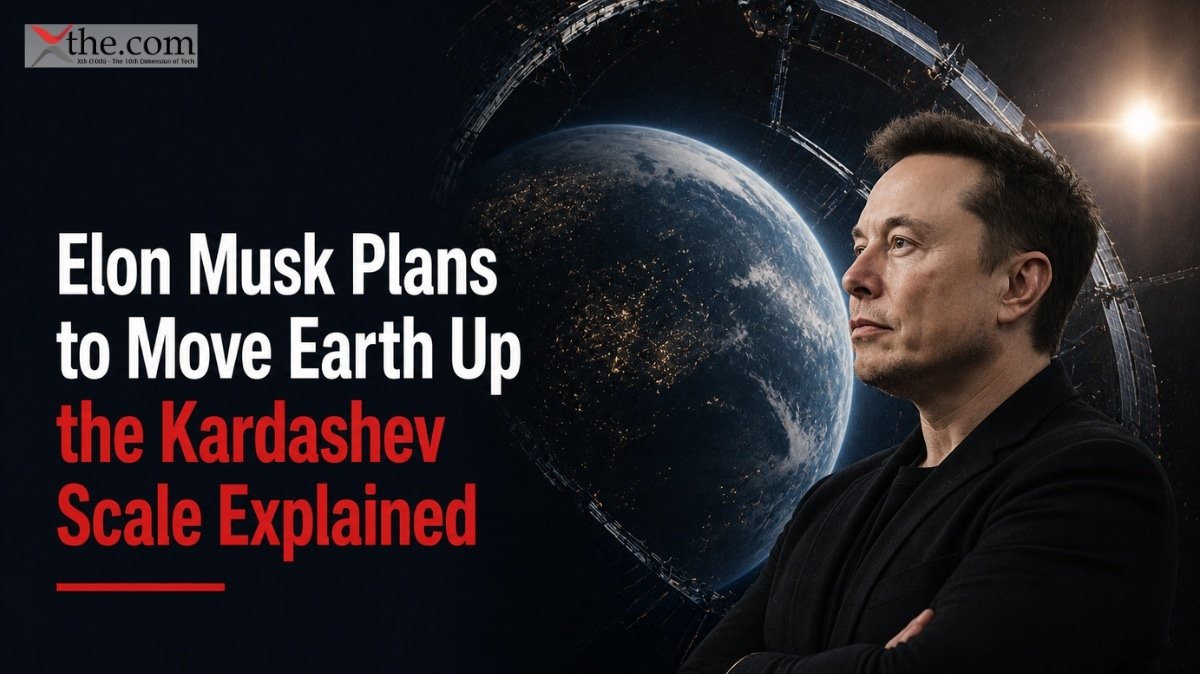
Earth uses only a fraction of the energy theoretically available to it, yet demand for electricity continues to surge as artificial intelligence, electric transportation, advanced manufacturing, and cloud computing expand. Against that backdrop, Elon Musk’s Kardashev scale Earth, Musk energy civilization plan, and Kardashev scale AI civilization have become central topics after CNN reported that Elon Musk framed his long-term vision around advancing humanity up the Kardashev scale. (Ground News)
Instead of announcing a new product, Musk’s latest vision lays out a plan for civilization as a whole. He connects energy production, AI, transportation, and space infrastructure into one big goal that is likely to shape technology investments for decades.
Elon Musk Kardashev scale Earth: Understanding the Bigger Vision
The Kardashev scale was proposed in 1964 by Soviet astronomer Nikolai Kardashev to classify civilizations by the amount of energy they can use. A Type I civilization can use nearly all the energy available on its home planet. Type II civilizations capture much of the energy emitted by their parent star, while Type III civilizations operate on a galactic scale. Scientists generally estimate Earth currently sits around 0.73 on this scale, meaning humanity remains well below full planetary capability.
Musk believes that boosting available energy is one of the biggest challenges for civilization. More electricity could help grow economies, power better AI, increase industrial output, and even support permanent human settlements outside Earth.
This view shows why Musk’s energy civilization plan goes far beyond just electric cars or reusable rockets. His strategy is all about increasing energy supply as fast as technology can keep up.
Why Energy Sits at the Center of the Strategy
Modern economies rely on steady electricity. AI data centers need huge amounts of power. Electric vehicles put more demand on the grid. Automation and robotics use more electricity each year.
Musk thinks the answer is to greatly increase clean energy production, not to limit how much we use it.
Several technologies form the foundation of the Kardashev scale AI civilization concept.
Building a lot of solar power capacity is a priority because the sun provides Earth with far more energy than people use today.
Battery storage, a major part of Tesla’s energy business, helps balance the ups and downs of renewable energy.
AI from xAI could help manage power generation, forecast energy needs, and balance the grid in real time.
If nuclear fusion becomes practical for commercial use, it could one day give us almost unlimited clean electricity.
Space-based solar power is another long-term idea. In theory, satellites could gather solar energy nonstop and transmit it to Earth, but there are still significant technical and financial challenges before this could work at scale.
The Role of Musk Kardashev Type 1 civilization
When people talk about Musk’s Kardashev Type 1 civilization, they mean a goal that goes far beyond short-term profits or new products.
A real Type I civilization would use Earth’s resources wisely and make much more energy than we do now. It would have strong infrastructure, smart energy systems, and enough industry to enable moving into space.
Getting there would require many years of steady technological progress, not just one big breakthrough.
Musk frequently argues that becoming a multiplanetary species also reduces existential risks facing humanity, including natural disasters or planetary-scale catastrophes. That philosophy complements the Kardashev framework because greater energy capacity makes large-scale space exploration progressively feasible.
SpaceX xAI Tesla Kardashev scale energy Creates One Strategic Narrative
Investors are interested in Musk’s recent comments because he’s brought several separate businesses under a single long-term goal.
The SpaceX xAI Tesla Kardashev scale energy strategy treats each company as handling a different part of the same big challenge.
Tesla focuses on renewable generation, battery storage, electric transportation, and grid-scale energy management.
SpaceX develops reusable launch systems able to lower the cost of transporting equipment into orbit as it expands satellite infrastructure.
xAI provides increasingly capable artificial intelligence systems that could optimize everything from electrical grids to autonomous manufacturing.
The Boring Company contributes to underground transportation and infrastructure that could support growing urban populations and eventually inform construction techniques for lunar or Martian settlements.
On their own, each company focuses on a different market. But together, they look like parts of a bigger plan to build a new kind of civilization.
AI Could Become the Operating System for Planetary Energy
Artificial intelligence has already demonstrated its ability to improve logistics, manufacturing efficiency, and predictive maintenance.
When used in national power networks, AI could predict electricity demand, shift supply during peak times, improve renewable energy use, and reduce energy losses.
This practical application gives additional meaning to the Kardashev scale AI civilization.
Musk now sees AI not simply as software, but as a kind of infrastructure that could manage energy systems over continents and maybe even on other planets in the future.
These abilities will matter more as electricity demand grows because of AI data centers, robots, and electric vehicles.
The Investment Case Behind Musk’s Civilization Energy Goal
Musk’s civilization energy goal is about much more than just single technologies.
More and more, investors look at how businesses fit into long-term infrastructure trends.
Electricity demand is expected to continue climbing.
Battery deployment continues to expand.
Launch costs continue to fall as reusable rockets become more common.
Artificial intelligence continues to increase the need for high-performance computing.
Instead of seeing these industries separate, Musk shows how they connect and support each other.
If clean energy becomes the key resource of this century, companies involved in different parts of that system could all benefit at the same time.
This way of thinking explains why Musk often talks about civilization as a whole, not just single products.
Challenges Facing the Kardashev scale space expansion plan
The Kardashev scale space expansion plan remains highly ambitious and faces major barriers.
Commercial nuclear fusion has yet to reach broad deployment.
Space-based solar power remains experimental.
Global electrical grids require trillions of dollars in modernization.
AI systems themselves use a lot of electricity, which means we need more energy just to run the actual systems designed to make energy use smarter.
Politics also make things tricky, since energy infrastructure crosses countries, different rules, and competing economic interests.
Some critics say that just being positive about technology won’t fix environmental, political, or money problems. Supporters reply that steady innovation has helped humanity grow its abilities many times before.
What the Long-Term Vision Means
The long-tail keyword “Elon Musk plans move Earth higher Kardashev scale what it means 2026” indicates increasing public curiosity about the wider significance of Musk’s announcement.
The answer is more about real infrastructure than science fiction. To move Earth up the Kardashev scale, we’d need more electricity, smarter ways to distribute it, more efficient energy sources, better storage, cheaper launches, and ongoing progress in AI.
Similarly, the phrase “Kardashev scale Type 1 civilization Musk SpaceX energy plan explained” captures the central idea linking Musk’s companies. Rather than chasing separate business goals, they now seem focused on growing humanity’s long-term energy supply and making permanent living beyond Earth possible.
It’s still unclear if this vision will succeed. But it’s one of the most ambitious efforts by a tech leader to create a single plan connecting AI, energy, transportation, and space. If even some of it happens, talking about civilization-scale infrastructure could become as important to investors and decision-makers as today’s debates about software or social media.
Source: Elon Musk’s plans refer to an idea conceived in the 1960s. What is the Kardashev scale?