






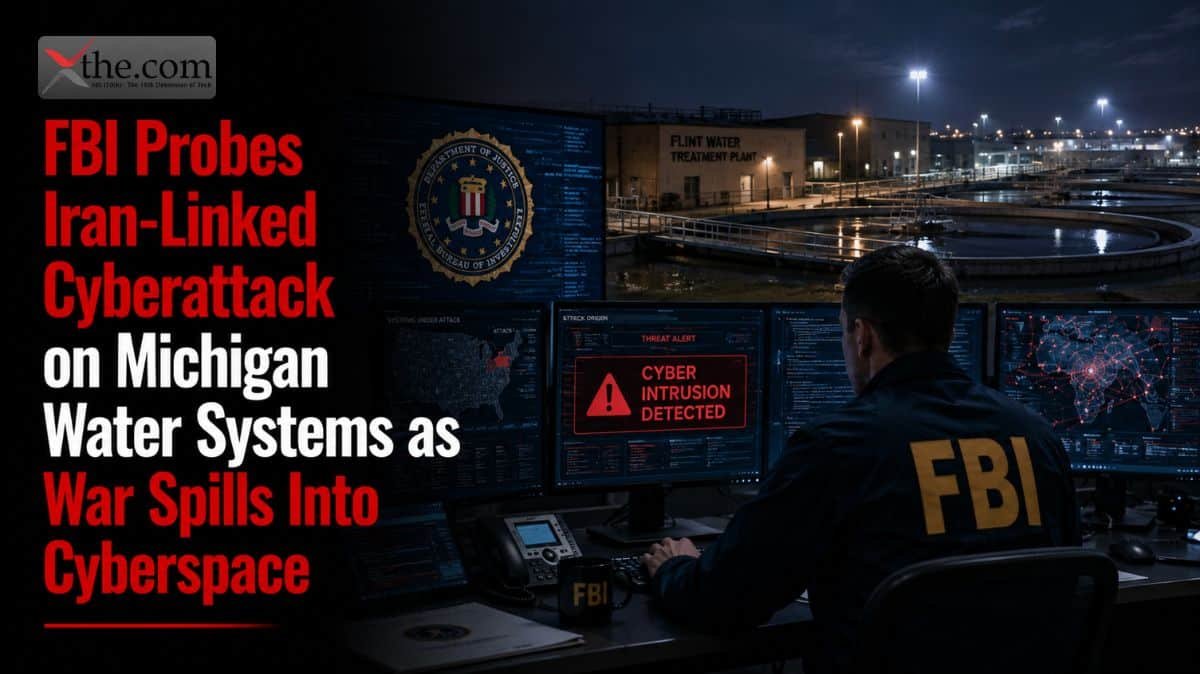
The breach is the second in days, following a similar attack in Minnesota, raising fears that America’s critical infrastructure has become a battlefield.
The FBI has opened a formal investigation into a cyberattack on Michigan’s water systems, including whether Iran was behind the breach, just one day after Minnesota reported a similar intrusion. The back-to-back attacks, targeting the most basic of human needs — clean water — have sent alarm bells ringing across the nation’s cybersecurity community and raised the specter of a new front in the 2026 Iran war.
“This Is Not a Drill”
Michigan officials detected unusual activity in their water treatment networks late last week, prompting an immediate shutdown of affected systems and a call to federal law enforcement. While no contamination of drinking water has been confirmed, the attackers gained access to operational controls — a level of penetration that could have allowed them to alter chemical levels, disrupt supply, or shut down treatment plants entirely.
“This is not a drill and this is not a prank,” said Michigan Governor Gretchen Whitmer in an emergency press conference. “Someone with sophisticated capabilities targeted the systems that keep our families safe. We are treating this as a potential act of war.”
The Minnesota attack, disclosed just 24 hours earlier, followed a nearly identical pattern. Hackers accessed water system controls through vulnerabilities in third-party software, suggesting a coordinated campaign rather than isolated incidents. Cybersecurity experts say the timing — amid the hottest phase of the U.S.-Iran war — points to a state-sponsored operation.
Iran’s Digital Shadow War
Iran has long been suspected of maintaining advanced cyberwarfare capabilities, with previous attacks linked to its Islamic Revolutionary Guard Corps and affiliated hacker groups. But targeting civilian water infrastructure marks a dangerous escalation — one that blurs the line between military and civilian targets in ways that could violate international law.
“Going after water systems is a red line,” said Jen Easterly, former director of the Cybersecurity and Infrastructure Security Agency (CISA). “It’s not just an attack on infrastructure — it’s an attack on public health. If Iran is behind this, it changes the nature of the conflict.”
The FBI’s investigation is being conducted in coordination with CISA, the Department of Homeland Security, and state-level cybersecurity teams. Officials have not yet publicly confirmed Iranian involvement, but sources familiar with the probe say early indicators — including the attack methodology and IP traces — point to known Iranian cyber actors.
America’s Water Systems Are Vulnerable
The Michigan and Minnesota breaches have exposed a chilling vulnerability in America’s critical infrastructure. The nation’s water systems — operated by thousands of local utilities, many with shoestring budgets and outdated technology — are notoriously easy targets for hackers.
A 2023 EPA report found that the majority of U.S. water utilities lack basic cybersecurity protections, including multi-factor authentication and regular software updates. Congress has repeatedly failed to pass legislation mandating minimum security standards, leaving the sector fragmented and underdefended.
“We’ve been warning about this for years,” said Senator Mark Warner (D-VA), chair of the Senate Intelligence Committee. “You can’t have 50,000 water systems running on Windows XP and expect them to stand up to a nation-state actor. This was inevitable.”
The White House Response
President Trump addressed the cyberattacks during a Friday press briefing, vowing a ‘massive and overwhelming’ response if Iran is found responsible. But he offered no specifics, and critics say the administration’s track record on cybersecurity has been inconsistent at best.
“We will hit them harder than they’ve ever been hit,” Trump said. “Nobody attacks our water and gets away with it.”
But cybersecurity experts warn that retaliation in cyberspace is complicated. Unlike airstrikes, cyber operations are difficult to attribute with 100% certainty, and a hasty response could escalate the conflict in unpredictable ways. Some fear that the U.S. could be drawn into a tit-for-tat cyberwar that targets hospitals, power grids, and financial systems on both sides.
“What’s Next”
For now, Michigan and Minnesota have restored their water systems to normal operations, but both states have increased monitoring and restricted remote access to critical controls. Other states are scrambling to audit their own vulnerabilities.
The attacks have reignited a long-stalled debate in Congress about mandatory cybersecurity standards for critical infrastructure. Bipartisan legislation has been introduced before, only to die in committee. This time, lawmakers say the stakes are too high to ignore.
“If we don’t act now, the next attack won’t just be on water systems,” Senator Warner warned. “It’ll be on power grids, hospitals, and air traffic control. We’re playing catch-up in a game we should have won years ago.”
For the residents of Michigan and Minnesota, the fear is more immediate. They turned on their taps this weekend not knowing whether the water flowing out was safe — a reminder that in modern warfare, the battlefield is everywhere, and the enemy is already inside the gates.








