






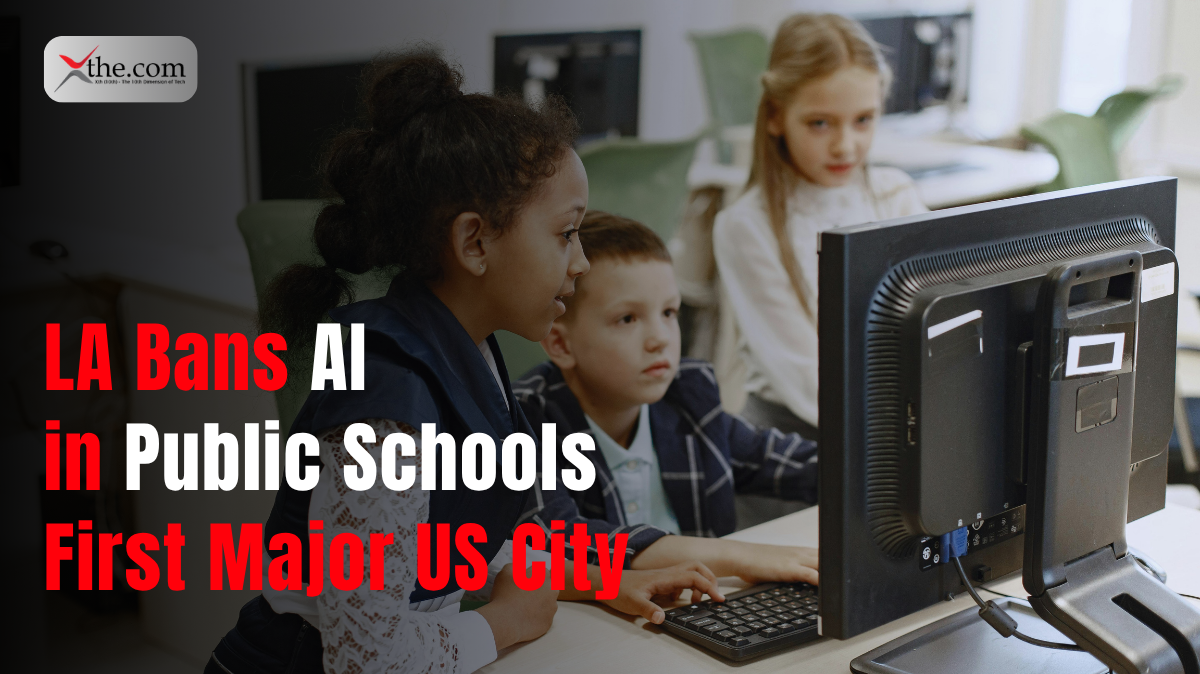
Los Angeles Becomes First Major US City to Ban AI in Public Schools
The Los Angeles Unified School District has passed a sweeping resolution banning the use of artificial intelligence tools in all public schools, making LA the first major American city to implement a comprehensive AI prohibition in K-12 education. The decision, which takes effect on October 1, 2026, has ignited a fierce national debate about the role of technology in education.
The Ban: What It Covers
The resolution, approved by the LAUSD Board of Education in a 6-1 vote on September 2, prohibits the use of generative AI tools including ChatGPT, Claude, Gemini, and similar platforms for any educational purpose within the district. The ban applies to both students and teachers, covering assignments, lesson plans, grading, and administrative tasks. Schools that violate the ban risk losing a portion of their discretionary funding.
The resolution specifically targets large language models and AI writing assistants, citing concerns about academic integrity, data privacy, and the erosion of critical thinking skills. However, the ban does not extend to assistive technologies designed for students with disabilities, such as speech-to-text software and AI-powered reading assistance tools, which are protected under federal disability law.
Why LAUSD Made This Decision
LAUSD Superintendent Alberto Carvalho stated that the ban was driven by a growing body of evidence that AI tools are undermining the educational mission of public schools. In a press conference following the vote, Carvalho cited surveys showing that over sixty percent of high school students in the district had used AI to complete assignments without teacher knowledge, and that student writing scores had declined by fifteen percent since the widespread adoption of generative AI tools.
The superintendent also raised concerns about data privacy, noting that AI platforms collect vast amounts of student data, including information about their academic performance, writing patterns, and personal interests. Carvalho argued that this data collection poses unacceptable risks to student privacy, particularly given that many AI companies share user data with third-party advertisers.
The Opposition: Parents and Tech Groups Push Back
The ban has faced significant opposition from parents, technology advocates, and some educators who argue that prohibiting AI tools will leave students unprepared for a technology-driven workforce. The California Technology Education Association released a statement calling the ban misguided, arguing that rather than banning AI, schools should teach students how to use it responsibly and ethically.
Parent groups have also voiced strong opposition. A coalition of over two thousand LAUSD parents signed a petition arguing that the ban disproportionately affects students in lower-income communities, who rely on AI tools to access tutoring and academic support that their families cannot afford to hire privately. The petition noted that AI tutoring platforms have been shown to improve test scores for disadvantaged students, and that banning these tools will widen the achievement gap.
Some teachers have also expressed frustration with the policy. A survey conducted by the Los Angeles Teachers Union found that forty-two percent of teachers had incorporated AI tools into their lesson planning and instructional materials, and that many felt the ban would undermine years of professional development focused on technology integration.
National Implications
The LAUSD ban is being closely watched by school districts across the country, as educators and policymakers grapple with how to regulate AI in education. Several other large districts, including those in Houston, Miami, and Chicago, are reportedly considering similar restrictions, though none have moved as far as LA in implementing a comprehensive ban.
At the federal level, the Department of Education has issued guidance encouraging schools to develop AI use policies rather than blanket bans, but has stopped short of mandating any specific approach. The Biden administration has emphasized the importance of balancing innovation with student safety, and has called for increased funding for AI literacy programs.
The Academic Integrity Crisis
The ban comes amid a growing crisis of academic integrity in American schools. According to a recent study by the Center for Academic Integrity, the use of AI to complete assignments has become so widespread that traditional methods of assessing student learning are becoming increasingly unreliable. The study found that AI-generated essays are often indistinguishable from human-written work, making it nearly impossible for teachers to detect cheating without specialized software.
Detection tools themselves have proven problematic. Several AI detection platforms have been shown to produce false positives at alarming rates, particularly against non-native English speakers and students with certain learning disabilities. This has led to a situation where innocent students are being accused of cheating, while actual AI-generated work often goes undetected.
Alternative Approaches
Educators and AI experts have proposed several alternative approaches to the blanket ban. These include requiring students to disclose AI use in their assignments, developing AI literacy curricula that teach students about the capabilities and limitations of AI tools, and redesigning assessments to focus on skills that AI cannot easily replicate, such as creative problem-solving and oral presentation.
Some school districts have adopted hybrid models that allow AI use under teacher supervision while prohibiting unsupervised AI use for graded assignments. These approaches aim to preserve the educational benefits of AI while maintaining academic integrity standards.
Looking Ahead
The LAUSD ban is expected to face legal challenges from technology companies and parent groups who argue that it violates students First Amendment rights and constitutes an unreasonable restriction on educational tools. Regardless of the legal outcome, the ban has catalyzed a national conversation about the appropriate role of AI in education, a conversation that will continue to shape American schools for years to come.
**External Sources:**
· [EdWeek – LAUSD AI Ban Coverage](https://www.edweek.org)
· [LA Times – Schools Ban AI](https://www.latimes.com)
· [NBC News – AI in Education](https://www.nbcnews.com)
· [CNN – AI School Bans](https://www.cnn.com)
· [Department of Education – AI Guidance](https://www.ed.gov)
School districts across California are watching the LAUSD situation closely. The California Department of Education has announced it will release guidance on AI in schools by the end of the year, and several state legislators have introduced bills that would establish statewide AI use standards for public schools. The debate is expected to continue throughout the 2026-2027 school year and beyond.