






The $58.6 Billion Lockheed Martin Deal
In July 2026, the Pentagon announced one of the largest single defense contracts in American history: a $58.6 billion agreement with Lockheed Martin to manufacture Patriot interceptor missiles over the coming decade. The contract represents a fundamental restructuring of the U.S. missile defense industrial base and a direct response to the most serious munitions shortage since the Cold War.
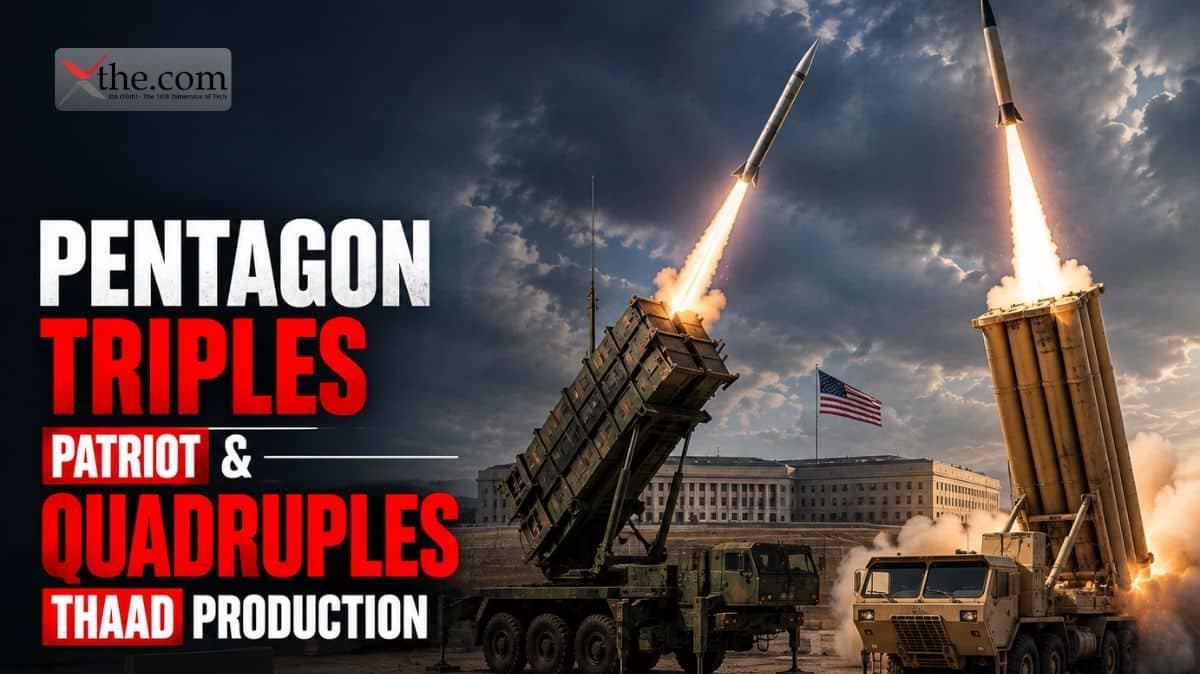
The deal is part of a broader Pentagon initiative to triple Patriot missile production and quadruple THAAD interceptor manufacturing through new framework agreements with multiple defense contractors. These targets reflect a dramatic shift from the “just-in-time” munitions philosophy that has guided U.S. defense procurement for three decades.
Lockheed Martin’s contract covers not just missile production but also the expansion of manufacturing facilities, workforce training, and supply chain resilience. The company is actively seeking domestic mineral supplies to reduce dependence on foreign sources for critical components used in missile guidance systems — a priority that aligns with the Trump administration’s broader push to onshore critical supply chains.
Why the Pentagon Is Scaling Up
The production surge is driven by a perfect storm of geopolitical crises. The ongoing 2026 Iran war has consumed approximately 65% of the U.S. Patriot interceptor stockpile and at least 38% of THAAD interceptors, according to CSIS estimates based on open-source analysis and budget data.
Simultaneously, the Russo-Ukrainian war continues to drain Western munitions stocks, with European allies also dependent on U.S. missile production. The Pentagon now faces the reality that two major conflicts are competing for the same limited industrial capacity.
The Math Behind the Crisis:
Table
| System | Pre-Conflict Annual Production | New Target | Multiplier |
| Patriot PAC-3 MSE | ~500 interceptors/year | ~1,500/year | 3x |
| THAAD Interceptors | ~50-60/year | ~200-240/year | 4x |
| GMLRS Rockets | ~10,000/year | ~14,000/year | 1.4x |
| PrSM Missiles | ~100/year | ~300/year | 3x |
Defense Secretary Pete Hegseth has framed the expansion as a national security imperative, stating that the U.S. must be prepared for “sustained, high-intensity conflicts against peer adversaries” — a doctrinal shift away from the short, decisive wars that shaped Pentagon planning for a generation.
Patriot Missile System Overview
The MIM-104 Patriot system remains the backbone of U.S. and allied missile defense. The latest variant, Patriot PAC-3 MSE (Missile Segment Enhancement), uses hit-to-kill technology to destroy incoming ballistic missiles, cruise missiles, and advanced aircraft through direct impact rather than explosive fragmentation.
Each Patriot battery consists of:
- AN/MPQ-65 radar for detection and tracking
- AN/MSQ-104 engagement control station
- Launching stations with 4-16 missiles each
- Power generation and communications units
The system has been extensively tested in combat during the Iran war, with mixed results. While Patriots have successfully intercepted hundreds of Iranian ballistic missiles and drones, the system has also suffered losses — including at least one radar and one launcher destroyed by Iranian strikes.
The challenge is that each incoming threat typically requires two Patriot interceptors to ensure destruction, meaning a single large-scale attack can consume an entire battery’s ammunition in minutes. This “two-shot doctrine” is the primary driver behind the production tripling.
THAAD System Expansion
The Terminal High Altitude Area Defense (THAAD) system serves a different but complementary mission. While Patriot defends against missiles in their terminal phase (final approach), THAAD intercepts ballistic missiles at higher altitudes and longer ranges, providing an outer layer of defense.
THAAD is particularly critical against:
- Intermediate-range ballistic missiles (IRBMs)
- Intercontinental ballistic missiles (ICBMs) in their mid-course phase
- Hypersonic glide vehicles (limited capability)
The decision to quadruple THAAD production reflects growing concerns about North Korea’s expanding missile arsenal, China’s advanced ballistic missile programs, and Iran’s continued development of longer-range systems. The U.S. currently operates THAAD batteries in Guam, South Korea, and the Middle East, with additional units planned for Poland and Japan.
Industrial Base Challenges
Despite the massive contracts, defense contractors face significant hurdles in meeting the Pentagon’s ambitious targets:
Workforce Shortage: The missile defense industry lacks sufficient skilled technicians, engineers, and production workers. Lockheed Martin and Raytheon are competing for the same limited talent pool, driving wages up and extending hiring timelines.
Supply Chain Bottlenecks: Critical components — including solid rocket motors, precision guidance systems, and advanced semiconductors — face production constraints. Many of these components have only one or two qualified domestic suppliers.
Quality Control Issues: The rush to increase production has already raised concerns about maintaining quality standards. A 2025 GAO report found that accelerated missile production during previous conflicts led to higher failure rates in fielded weapons.
Facility Expansion: Building new production lines requires years of construction and certification. The Pentagon is exploring public-private partnerships to repurpose existing industrial facilities, but environmental reviews and community opposition can add months or years to timelines.
The “Amazon for War” Initiative
Complementing the production surge is the Pentagon’s new “Amazon for War” digital logistics platform, which aims to revolutionize how the military tracks, distributes, and replenishes munitions. Named for its consumer-like interface, the system uses artificial intelligence to predict demand, optimize stockpile locations, and automatically trigger reorders when inventories fall below specified thresholds.
The platform represents a fundamental shift from the current system, where munitions management is fragmented across multiple services and commands with limited visibility. By creating a unified digital supply chain, the Pentagon hopes to reduce waste, eliminate duplicate stockpiles, and ensure that the right weapons reach the right units at the right time.
Global Implications
The U.S. missile production expansion has significant implications for allies and adversaries alike:
For Allies: European and Indo-Pacific partners who depend on U.S. missile defense systems will benefit from increased availability, but they will also face longer wait times as domestic replenishment takes priority. NATO members have been urged to increase their own missile production capacity.
For Adversaries: China and Russia are closely monitoring the U.S. industrial mobilization. Both nations have invested heavily in missile production and may accelerate their own programs to maintain numerical superiority. The missile defense race is becoming as important as the nuclear arms race.
For the Defense Industry: The $58.6 billion contract and associated production increases represent a massive windfall for Lockheed Martin, Raytheon, and Northrop Grumman. However, the industry must balance short-term production demands with long-term sustainability — a challenge that has tripped up previous mobilization efforts.
Timeline and Production Targets
Table
| Milestone | Target Date | Status |
| Patriot production increase to 1,500/year | 2027 | In progress |
| THAAD production increase to 200/year | 2028 | Framework agreements signed |
| Lockheed Martin facility expansion | 2027-2029 | Planning phase |
| First new-production Patriot interceptors | Q2 2027 | Pending |
| Full THAAD quadrupling | 2029-2030 | Long-term target |
Frequently Asked Questions
Q: Why is the U.S. tripling Patriot production specifically?
A: The Iran war has consumed approximately 65% of the Patriot interceptor stockpile. Each incoming missile typically requires two interceptors, creating enormous demand during sustained combat.
Q: What is the total cost of the missile production expansion?
A: The Lockheed Martin contract alone is worth $58.6 billion. Additional contracts for THAAD expansion and other systems will likely push the total investment above $75 billion.
Q: How long until production targets are met?
A: Full tripling of Patriot production is targeted for 2027. THAAD quadrupling will take longer, with full capacity expected by 2029-2030.
Q: Will this affect missile deliveries to allies like Ukraine?
A: Yes, in the short term. Domestic replenishment will take priority, potentially reducing the flow of missiles to Ukraine and other allied nations.
External Sources:
- CSIS War with Iran Analysis: Renewed Iran War Would Test Diminished Interceptor Inventories
- Lockheed Martin: Second Quarter Highlights.
- U.S. Department of Defense: Southcom Establishes Joint Task Force Western Hemisphere








