





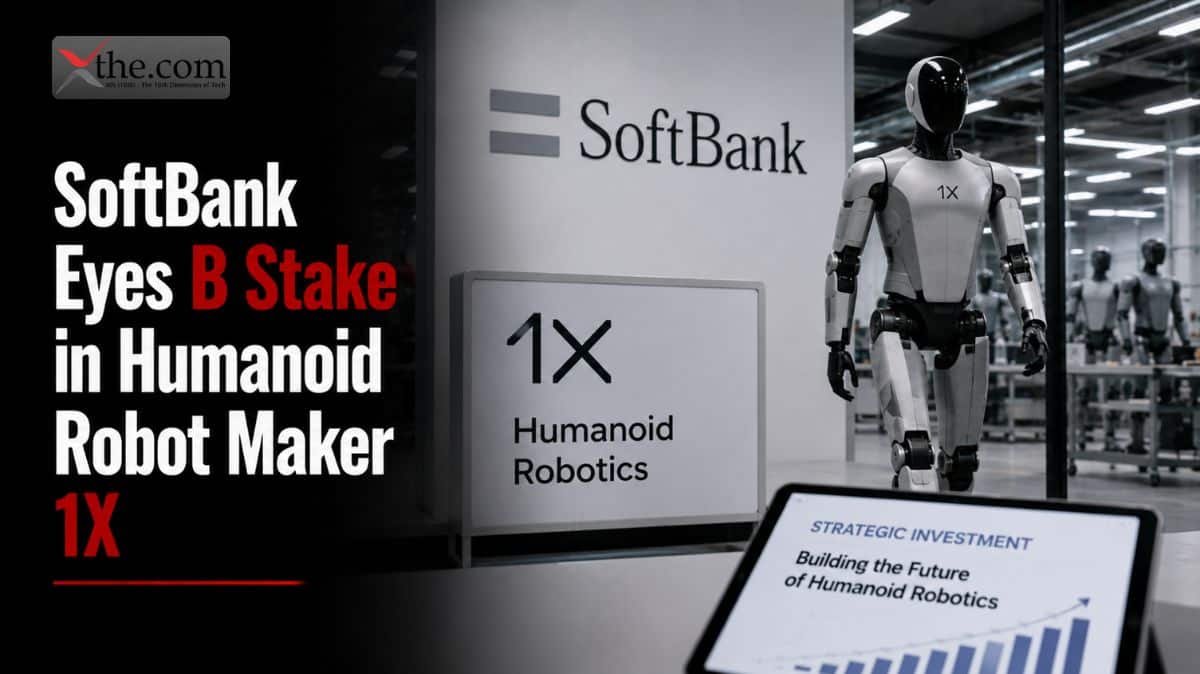
SoftBank Group, the Japanese technology conglomerate known for its aggressive bets on emerging technologies, is in advanced talks to acquire a majority stake in humanoid robot developer 1X Technologies at a valuation of approximately 6 billion dollars. The deal, first reported by The Information on August 27, would represent one of the largest investments in humanoid robotics to date and signals SoftBank renewed commitment to the robotics sector after years of cautious investments following its WeWork and other tech bet losses.
What Is 1X Technologies
1X Technologies, headquartered in Palo Alto, California, with research operations in Norway, develops safe humanoid robots designed to perform household chores and offer personalized assistance. The company was formerly known as Halodi Robotics before rebranding in 2023. 1X has attracted significant attention for its NEO robot, a humanoid designed for home use that can navigate stairs, open doors, carry objects, and perform basic household tasks. The company is backed by OpenAI, which invested in 1X earlier this year as part of its strategy to develop embodied AI systems that can interact with the physical world. 1X robots use a combination of computer vision, natural language processing, and advanced motor control to interact safely with humans in domestic environments. The company NEO robot stands approximately 5 feet 6 inches tall and weighs about 150 pounds, making it one of the most compact and lightweight humanoid robots in development. Unlike industrial humanoids designed for factory floors, NEO is specifically engineered for home environments. It can navigate standard doorways, climb stairs, sit in chairs, and interact with common household objects. The robot uses a combination of electric actuators and advanced control algorithms that allow it to move with a natural, human-like gait. Safety is a primary design concern, with NEO featuring compliant actuators that can sense and respond to unexpected contact with humans or objects.
Why SoftBank Is Investing
SoftBank CEO Masayoshi Son has long been bullish on robotics and artificial intelligence as transformative technologies. The company previously invested heavily in Boston Dynamics, the maker of the Atlas humanoid robot, before selling it to Hyundai in 2021. That experience taught SoftBank valuable lessons about the robotics market and timing. With 1X, SoftBank sees an opportunity to invest in a company that is closer to commercializing humanoid robots for everyday use. The humanoid robotics market is projected to reach 38 billion dollars by 2035, according to recent industry analysis, driven by labor shortages in manufacturing, logistics, and healthcare sectors across the developed world.
The Valuation Question
A 6 billion dollar valuation for 1X Technologies represents a significant premium over the company last funding round, which valued it at approximately 2 billion dollars. This rapid appreciation reflects the growing investor enthusiasm for humanoid robotics and the strategic value of 1X intellectual property and engineering talent. However, some analysts have questioned whether the valuation is justified given that 1X has not yet achieved significant commercial revenue. The company has delivered prototype units to select customers but has not announced mass production timelines. SoftBank appears to be betting that the combination of 1X robotics expertise and OpenAI AI capabilities will create a product that can scale rapidly once it reaches market.
What This Means for the Robot Industry
The potential SoftBank investment would validate humanoid robotics as a major technology category worthy of institutional capital. It could also trigger a wave of competitive investments, with other conglomerates seeking to acquire or invest in humanoid robot startups. Companies like Figure AI, Agility Robotics, and Apptronik are all developing humanoid robots and could benefit from increased investor interest. The deal also highlights the growing intersection of AI and robotics, as companies like 1X that combine advanced machine learning with physical hardware become increasingly valuable.
Impact on Workers
The prospect of humanoid robots entering homes and workplaces raises important questions about the future of human labor. 1X Technologies has positioned its robots as assistants rather than replacements, designed to handle repetitive and physically demanding tasks while freeing humans for more creative and interpersonal work. However, labor advocates worry that widespread adoption of humanoid robots could accelerate job displacement in sectors like logistics, manufacturing, and food service. The International Labour Organization has called for policies to ensure that the benefits of robotics are shared broadly across society rather than concentrated among technology companies and their investors. The World Economic Forum has estimated that humanoid robots could displace approximately 85 million jobs globally by 2035, while simultaneously creating 97 million new roles in robot maintenance, programming, and oversight. The net effect on employment remains hotly debated among economists. Some argue that the productivity gains from humanoid robots will create new industries and job categories that we cannot yet imagine, while others warn that the transition period could be extremely disruptive for workers in affected industries.
OpenAI Connection
The relationship between 1X Technologies and OpenAI adds another dimension to this deal. OpenAI investment in 1X is part of its broader strategy to develop AI systems that can operate in the physical world, not just process text and images. If SoftBank acquires a majority stake, it would need to navigate the existing relationship with OpenAI, which may have its own plans for 1X technology. Industry observers note that this could create interesting dynamics, as SoftBank, OpenAI, and 1X would need to align their strategies for the humanoid robotics market. OpenAI investment in 1X also includes technology-sharing agreements that give 1X access to advanced AI models for controlling its robots. This creates a unique competitive advantage, as 1X robots can leverage the same language understanding capabilities that power ChatGPT. Industry analysts note that this combination of cutting-edge AI and physical robotics hardware is extremely rare and could give 1X a significant lead over competitors who lack access to frontier AI models.
What Happens Next
The talks between SoftBank and 1X are still ongoing, and a deal is not yet finalized. If completed, the acquisition would likely face regulatory review in both the United States and Japan. 1X Technologies has indicated that it plans to begin limited commercial production of its NEO robot in late 2027, with broader availability expected in 2028. The SoftBank investment would provide the capital needed to scale production facilities and accelerate the development of next-generation models.