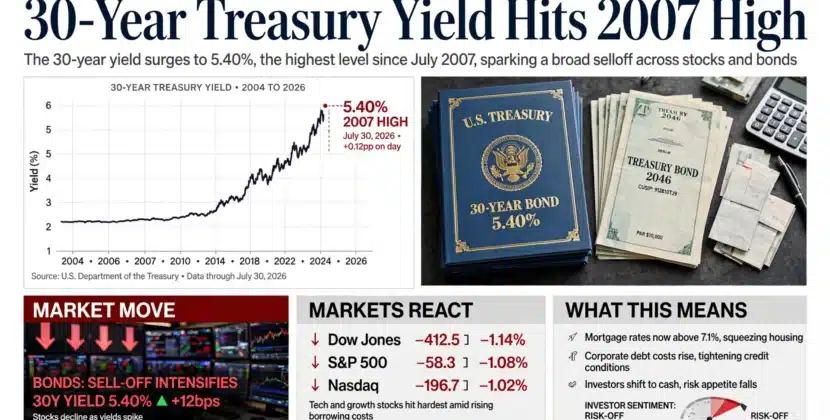




30-Year Treasury Yield Hits Highest Level Since 2007 as Iran War Oil Fears Rattle Markets
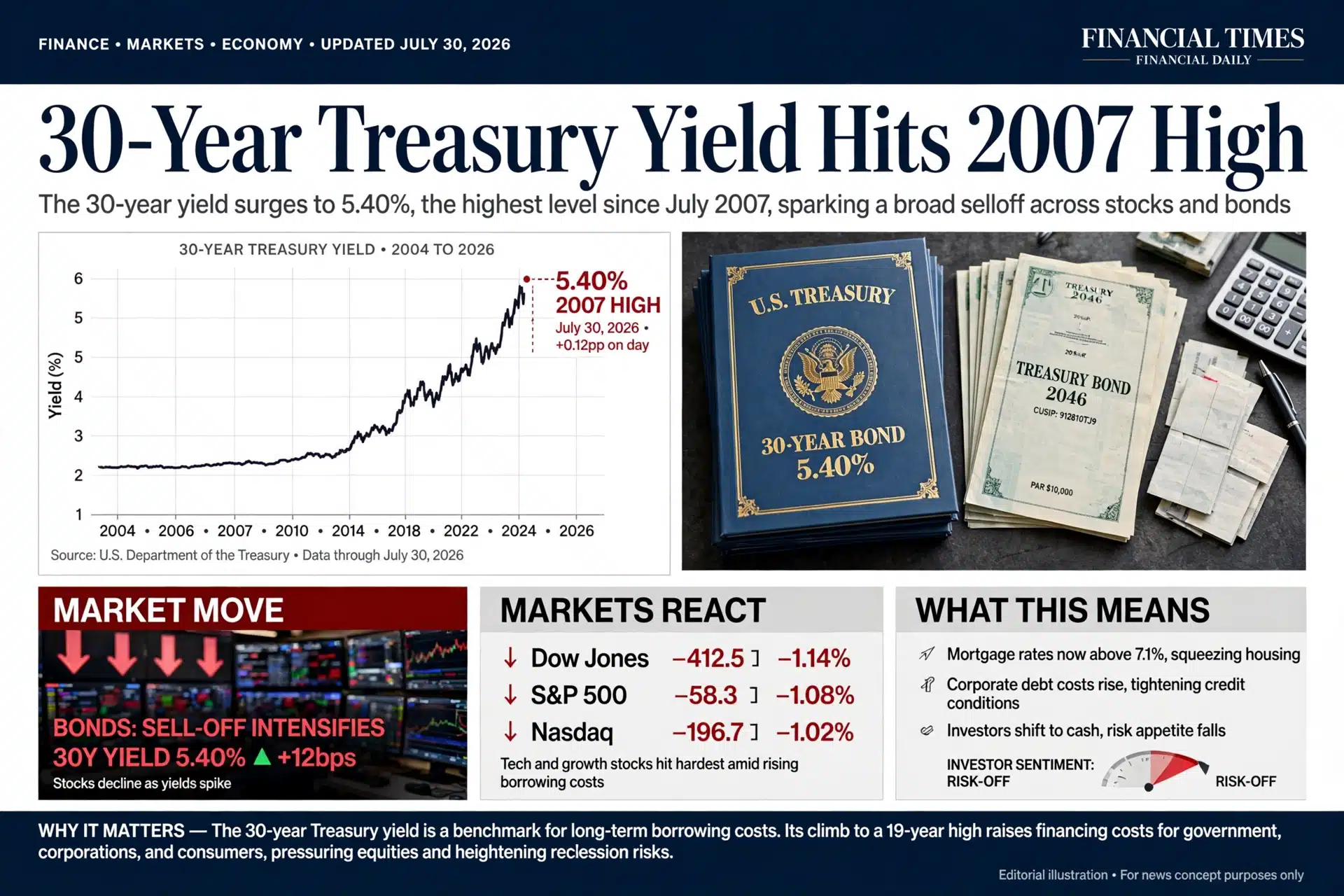
The bond market flashed its loudest warning of the year on Monday. The 30-year Treasury yield climbed to its highest level since 2007, a milestone last seen before the financial crisis, as war and oil worries festered and investors demanded more money to lend to the U.S. government for three decades. The move caps months of pressure from stubborn inflation, heavy government borrowing and a fresh geopolitical shock: the widening war involving the United States, Israel and Iran, which has pushed crude prices higher and reawakened fears of an energy-driven price spike.
Stocks abroad were mixed, the euro slid under the weight of France’s debt troubles, and oil infrastructure strikes kept traders on edge. In Asia, shares actually rose on reduced odds of another Federal Reserve rate hike, a reminder that the same number can read as relief in one market and alarm in another. For American households, the practical effects are already visible in mortgage quotes, auto loan rates and the yields paid on new savings accounts. When the long end of the curve rises this fast, borrowing gets more expensive everywhere, and the government’s own interest bill rises with it.
Why the 30-Year Yield Matters
The 30-year bond is the yardstick for long-term lending in the United States. Mortgage rates track it loosely, corporate debt is priced off it, and municipal borrowers use it as a benchmark. A yield at its highest level in nearly 20 years means the cost of long money is back where it sat in the pre-crisis era, before a decade of near-zero rates taught a generation of savers and builders that cheap capital was normal.
Analysts said this move is different from the short-term spikes that come and go with each Fed meeting. Long yields reflect expectations about growth, inflation, and how much debt Washington will issue for years to come. When the 30-year rises while investors also fret about war and oil, it signals that people are being paid less than they want for committing money far into an uncertain future. That is exactly the kind of environment in which financing for homes, factories and refineries slows down, because projects that only work at low rates stop penciling out.
Bill Gross Says Do Not Own Bonds
No voice carries more theater in the bond world than Bill Gross, the so-called Bond King who co-founded Pacific Investment Management. Gross said investors should not own long-term bonds right now, warning that volatility in long-duration debt will stay elevated as the Iran war rolls on and government borrowing keeps climbing. He pointed out that long yields have already reached the highest levels in about 24 years, and he argued the era of steady bond gains that defined 2020 and 2021 is not coming back on schedule.
His warning lands with extra weight because the same trade that made bond investors money in downturns, buying duration when yields fall, is the trade that hurts most when yields run higher. Gross has been critical of U.S. fiscal deficits for years, and his latest comments tied the market’s mood directly to the war, noting that geopolitical risk premiums show up in the oil price first and in the bond market shortly after. Financial advisers caution that a single investor’s call is not a plan, but the reasoning matches what markets are already doing: punishing long bonds until the inflation path and the war outlook clarify.
Oil and the Iran War Variable
Crude oil is the transmission line between the battlefield and the bond desk. With U.S. and Israeli strikes hitting Iranian oil infrastructure, traders have been pricing the risk of supply disruptions that would drive gasoline and heating costs higher just as the Fed tries to finish its inflation fight. Every headline about damaged terminals or closed shipping lanes shows up within minutes in the futures curve, and then in expectations for consumer prices.
Energy shocks are historically nasty for bonds because they cut both ways at once: they raise prices while slowing growth, a combination that leaves central banks guessing. Markets this month have already been upended by the war, with equities swinging on ceasefire rumors and Treasury yields responding to every escalation. Economists said the bond market is now carrying a war premium on top of an inflation premium, and until one of the two fades, long yields will stay uncomfortable for borrowers.
What It Means for the Fed and the October Meeting
Just days ago, a weak September jobs report, with only 29,000 jobs added, pushed traders to sharply reduce bets on another Fed rate hike at the October meeting. Odds of a hike fell, stocks rallied, and commentators said the report put the central bank on hold. The yield story complicates that relief. Inflation is still above target, energy costs are climbing again because of the war, and officials have repeatedly said they are data dependent rather than committed to any path.
Asia’s rally on Monday came precisely because traders cut the odds of more tightening, showing that some markets read slower hiring as the dominant variable. Bond investors are focused on the other side: an oil-driven price push that could keep the Fed from cutting and could even keep the door open to future increases. The result is a market split between a labor market that is cooling and an energy market that is heating, with the October meeting still genuinely open.
What Higher Yields Mean for American Wallets
For savers, the news is not all bad. New certificates of deposit and high-yield savings accounts are paying more than they have in years, and short-term Treasury bills offer a guaranteed return that competes with stocks for conservative money. The flip side is that anyone carrying credit card debt, an adjustable loan or a new mortgage faces higher costs, and existing homeowners watch the gap between their locked-in rate and today’s quote widen further.
Retirement savers hold the middle ground. Bond funds suffer when yields rise because existing bonds are worth less than new ones, which is the mechanical pain Gross is warning about. But buyers of fresh bonds eventually benefit from higher income. The practical rule advisers give is to match the duration of bonds to the date the money is needed: funds for next year’s expenses should sit in short paper, while money decades away can ride out the volatility and clip the new, richer coupons.
What Comes Next
Three forces will decide whether the 30-year yield pushes higher or finally cools. The first is oil: if strikes ease and crude falls back, the war premium drains out of the market. The second is inflation data, starting with the next CPI release, which will confirm whether the cooler trend from earlier this year survived the energy shock. The third is Washington itself, since heavy issuance of long-term debt keeps supply in front of buyers who are demanding more yield to take it.
For now, the market’s message is simple. Money for thirty years has not been this expensive since before the last financial crisis, and until stocks, bonds and oil find a common story about the war, borrowers should expect the pressure to continue and savers should expect the extra yield to stick around.
Frequently Asked Questions
Why are 30-year Treasury yields rising?
Investors are demanding more return to lend long amid war-driven oil fears, heavy government borrowing and inflation still above the Federal Reserve’s target, pushing the 30-year yield to its highest level since 2007.
What does a high 30-year yield mean for mortgage rates?
Mortgage rates track the 30-year Treasury yield closely, so a jump to 2007-era levels translates directly into higher monthly payments for new buyers and less savings for anyone refinancing.
Did Bill Gross really say to avoid bonds?
Yes. The investor known as the Bond King said long-term bonds face ongoing volatility as the Iran war continues and deficits grow, arguing that yields near 24-year highs make long-duration debt unattractive.
How does the Iran war affect my money?
Strikes on oil infrastructure lift crude prices, which raises consumer costs and inflation expectations. That hurts bonds and can pressure stocks while hitting household budgets at the gas pump and grocery shelf.