




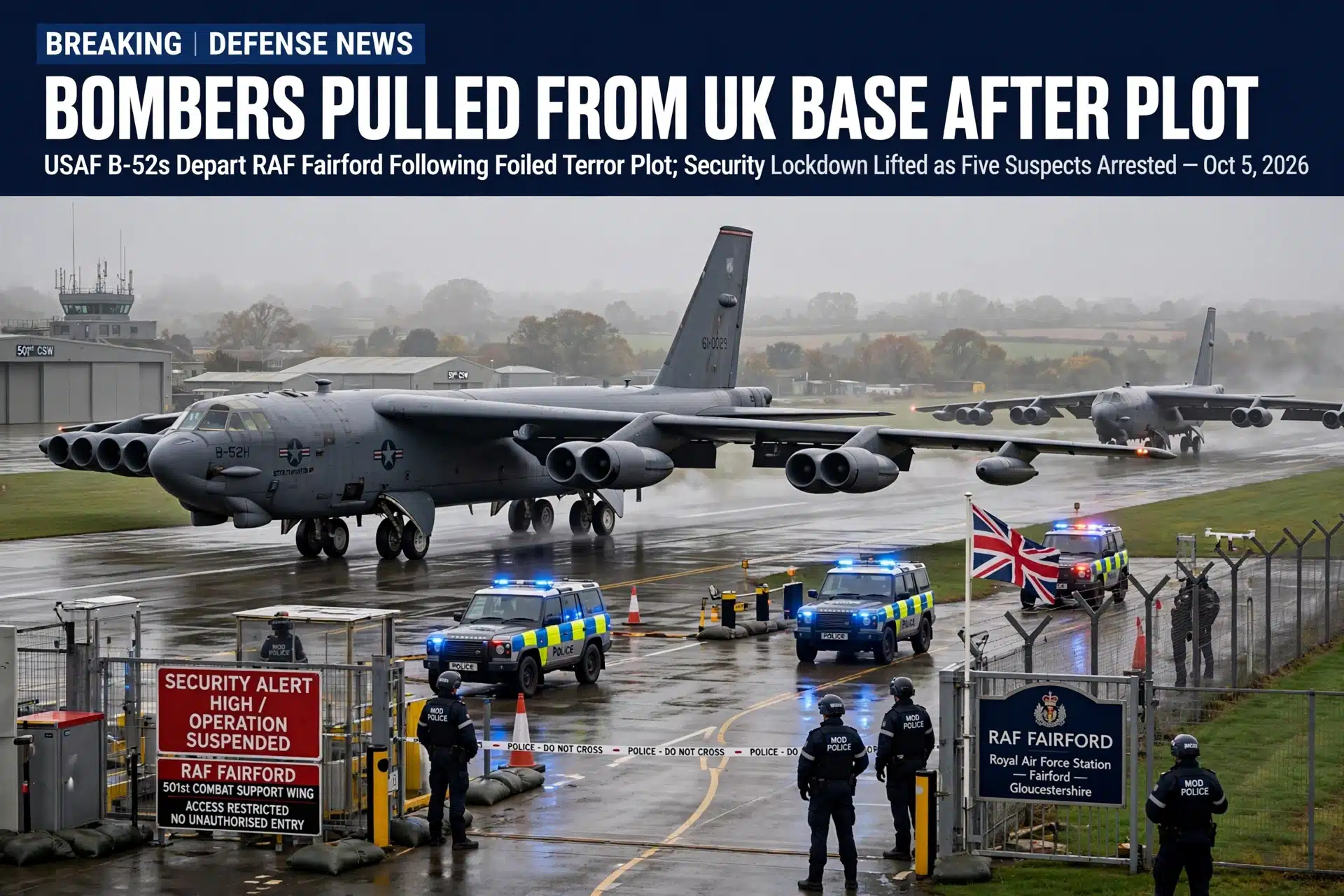
US Pulls All Bombers From RAF Fairford After Suspected Iran-Linked Terror Plot in England
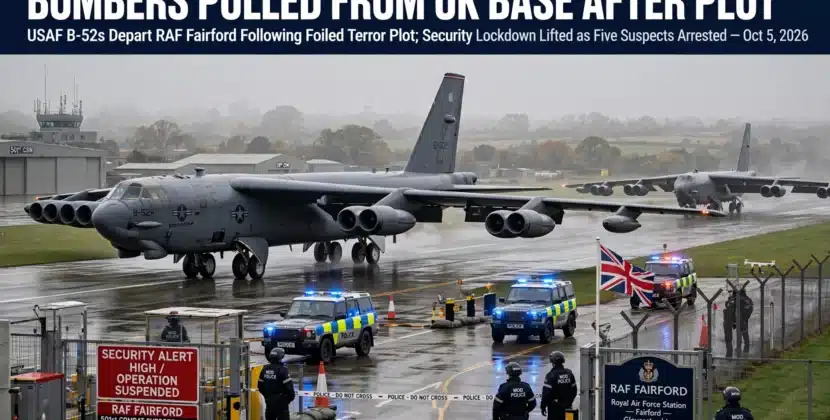
The United States rushed its warplanes home over the weekend. The Air Force removed every B-1 bomber stationed at RAF Fairford, the sprawling Gloucestershire airfield in southern England that has served as a launch point for strikes in the Iran war, after British police arrested several men in a suspected terrorism investigation that officials say may be linked to Iran. The withdrawal of all 12 aircraft to their home stations in the United States was completed on Sunday, and the base that hosted a weeks-long bombing campaign fell suddenly quiet.
The move is one of the most tangible signs yet that the conflict with Iran is reaching beyond the battle zone and into the security of Western allies’ own territory. Fairford became the centerpiece of the American air campaign, with tankers, support crews and bombers streaming into the quiet countryside. Now investigators are working through a suspected plot against the very facility used to launch those missions, and military commanders chose to pull the aircraft out rather than defend them in place.
What Happened at RAF Fairford
British police increased security around the base after arresting five men on suspicion of explosives and terrorism offenses in late September. Authorities said the arrests were connected to a suspected attack plot targeting the air base, and U.S. officials have suggested the threat may be tied to Iranian-linked activity as the war between Washington, Israel and Tehran has intensified. The suspects were detained in the area surrounding the base, and the investigation has continued for days with a heavy police presence on the roads around the airfield.
Officials emphasized that no attack on the base succeeded. Still, the calculus for commanders was straightforward: dozens of high-value aircraft parked on open ramps make a tempting target, and removing them eliminates the risk while the probe runs its course. The bombers flew back across the Atlantic to their stations, ending a deployment that had been central to the air war. Ground crews and support units remained behind to secure equipment and continue cooperating with British investigators.
Why Fairford Mattered to the Iran War
RAF Fairford has been the war’s most visible American foothold in Europe. The base’s long runways and extensive hangars make it one of the few places in Europe that can handle heavy bombers in quantity, and the Air Force moved B-1s there early in the conflict to generate sorties against Iranian targets. Aircraft launched from the field flew hours-long missions, refueled midair and returned to England, turning a former Cold War outpost into the hub of the campaign.
That role made the base both symbol and target. Strategically, positioning bombers within a day’s flight of the Middle East shortens response times and spreads American air power across two continents. Politically, it drew Britain directly into the war’s geography, a complication for London as public opinion at home remains wary of deeper involvement. The suspected plot underscored that hosting American strike aircraft carries risks that extend well beyond defense budgets.
The Arrests and the Iran Question
The five men arrested near the base were held on suspicion of preparing terrorism acts, and investigators are examining whether the plot was directed or inspired by Iranian-linked actors. President Trump has spoken about the arrests publicly, and U.S. officials have pointed toward Iran as they described the threat. Tehran has denied involvement in plots on Western soil in the past, and as of Monday no charges tied to a completed attack plan had been announced.
Intelligence analysts noted that alleged plots on European soil have previously combined real operational intent with propaganda value, and that charges in the early days of an investigation often evolve. What is not in dispute is the effect: the arrests triggered a security lockdown, a political conversation in Britain about the war, and the removal of the entire bomber contingent within days. Allies are now reviewing how exposed other facilities that host U.S. forces may be.
What It Means for the Wider War
The withdrawal comes as the conflict’s second month reshapes deployments across the region. Over the weekend, senior Trump administration officials met at Camp David to discuss the war’s direction, and the Pentagon is pressing ahead with plans to send a third aircraft carrier strike group and thousands more troops to the Middle East. Bombers leaving England does not reduce American combat power in the theater, since the aircraft can operate from bases closer in, but it does mark a shift in where the risk is being managed.
Military planners increasingly treat basing as a vulnerability. Long deployments to fixed airfields concentrate aircraft, munitions and crews in predictable locations, exactly what an adversary looks for when plotting strikes or sabotage. Spreading bombers back to the United States, where they can deploy forward on short notice, trades some efficiency for survivability, a pattern seen in previous crises when Washington moved prized assets out of reach.
What Comes Next for the Base and the Probe
British authorities are expected to keep the investigation running for weeks, and the charges, if filed, will clarify how developed the alleged plot truly was. Fairford will remain under heavy security regardless, and the Air Force has not said when or whether bombers will return. Some analysts expect a longer pause than officials have publicly acknowledged, particularly if the probe points to insider knowledge of base routines.
For residents around the airfield, the sudden quiet is a reminder of how quickly the war has reached into ordinary English countryside life. For defense planners, the episode is a case study in the trade-offs of power projection: concentrated force is efficient until the day it becomes a target. And for the broader coalition fighting Iran, the message is sobering. The conflict’s perimeter now includes the bases from which it is waged.
Frequently Asked Questions
Why did the US pull bombers from RAF Fairford?
The Air Force removed all 12 B-1 bombers after British police arrested several men in a suspected terrorism plot against the base that officials say may be linked to Iran.
What is RAF Fairford used for?
RAF Fairford in Gloucestershire, England is a Royal Air Force station that has long hosted American bombers. In the current Iran war it served as a primary launch point for B-1 strike missions.
Were any aircraft destroyed or attacked?
No. Officials said no attack on the base succeeded. The bombers were flown preemptively to their home stations in the United States while the terrorism investigation continues.
Could bombers return to the UK soon?
The Air Force has not announced a return timeline. Analysts expect the contingent to stay away until the probe concludes and security arrangements around the base are reassessed.