





iPhone 18 Pro and iPhone 18 Pro Max Go on Sale in 20 More Countries Today
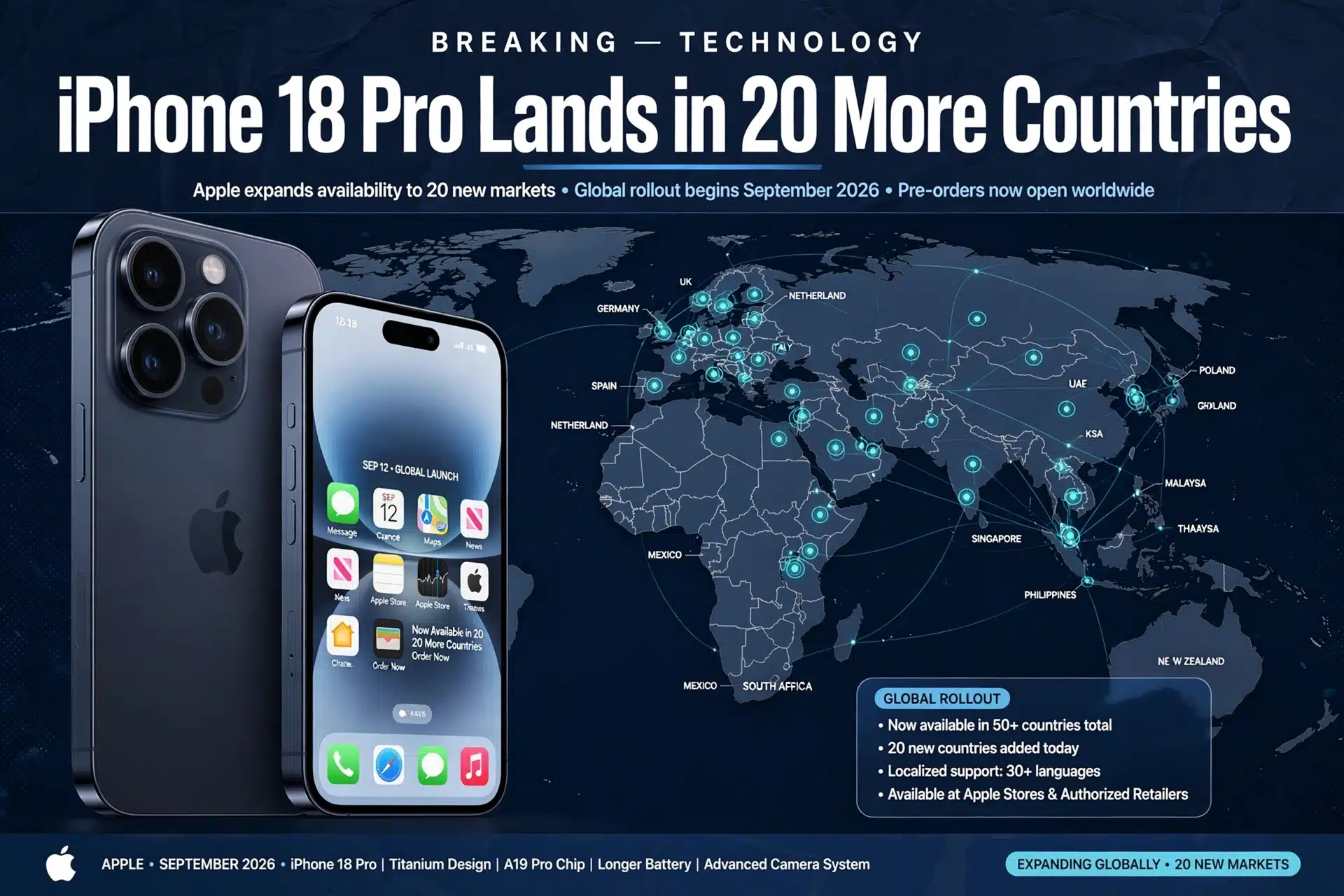
Apple’s iPhone 18 Pro and iPhone 18 Pro Max reach their second major sales wave today, September 25, when the devices become available in 20 additional countries one week after the initial launch in more than 65 markets. The rollout completes the widest iPhone launch in the company’s history and pushes the new flagships into the hands of hundreds of millions of additional buyers worldwide.
For US customers, the phones have been available since September 18, but the global expansion matters: it resets inventory, triggers a new round of trade-in deals and marks the point where supply finally catches up with preorder demand. Here is what is launching today, what the phones cost in the US, what is actually new this year and whether upgraders should act now or wait.
What Is Launching Today
The second wave covers 20 countries and regions that did not receive the September 18 launch, following Apple’s standard two-phase schedule announced at the September 9 event. Preorders opened September 12 for the first batch of markets, and today’s countries get their first retail availability, with carrier stores, Apple retail locations and authorized resellers opening sales at local launch times.
Both models are included: the iPhone 18 Pro and the larger iPhone 18 Pro Max, in the new Burgundy finish alongside the existing color range, with storage options running up to 2TB, a first for the lineup. Because today’s wave adds major markets in Europe, Asia and the Middle East, gray-market imports and cross-border price comparisons will spike this week, which usually pushes secondary-market prices down for older models.
US Pricing and Where to Buy
In the United States, the iPhone 18 Pro starts at $1,199 and the iPhone 18 Pro Max starts at $1,299, positioning both firmly in the premium tier after last year’s price adjustments. Carriers and retailers are offering the usual array of trade-in credits, installment plans and bundle deals, with the strongest incentives typically attached to new lines and premium unlimited plans.
Storage configurations run from 256GB up to 2TB, and the top-tier capacity is what pushes the Pro Max past $2,400 in some markets when fully specced. Buyers who ordered during the September 12 preorder window largely received devices on launch day; anyone ordering now should expect shorter waits than the initial backlog, since the second wave is served from inventory that has been building for weeks.
What Is Actually New This Year
The headline upgrade is the A20 Pro chip, built on Apple’s latest process, which delivers a meaningful jump in on-device AI performance and efficiency. Apple is marketing the phone as a total AI powerhouse, with the neural engine handling more tasks locally rather than in the cloud, faster photo and video processing and improved battery life backed by a larger cell and a new vapor chamber cooling system that sustains performance during heavy loads.
The camera system pairs a 48MP main sensor with a variable aperture, a genuine hardware change that lets the phone behave more like a compact camera in mixed lighting, alongside upgrades to the ultrawide and telephoto modules. Display brightness, durability and connectivity round out the changes. Compared with the iPhone 17 Pro, the differences are evolutionary rather than dramatic, which is the central question for upgraders this year.
Should iPhone 17 Pro Owners Upgrade?
The honest answer depends on what you have. Coming from an iPhone 15 Pro or older, the combination of the A20 Pro chip, variable aperture camera and battery improvements justifies the jump, particularly with trade-in values still strong during launch month. Coming from an iPhone 17 Pro, the case is thinner: performance is better and the camera is more versatile, but day-to-day experience will feel familiar.
There is also a scheduling wrinkle this cycle. The standard iPhone 18 is not arriving alongside the Pros, with Apple shifting the non-Pro model to a spring 2027 window, so buyers choosing between tiers have fewer new options right now. That makes the Pro the default choice for anyone who wants the latest hardware this fall, and it means resale values for last year’s Pros should hold reasonably well through the holidays.
What Comes Next for the iPhone 18 Lineup
After today’s 20-country wave, availability broadens to remaining markets through October, followed by the holiday quarter where Apple typically reports its launch-period sales. Analysts will be watching whether the second wave matches first-weekend demand, since supply chain reporting suggests Pro Max units have been the constrained product throughout the rollout.
For American shoppers, the near-term priorities are simpler: compare trade-in offers across carriers, decide on storage before ordering, since 256GB fills quickly for video-heavy users, and check whether the variable aperture and battery gains address your actual pain points. With the global launch now complete, supply is the best it will be all year, which historically makes the weeks right after the second wave the strongest moment to buy.
Frequently Asked Questions
When does the iPhone 18 Pro go on sale in more countries?
Today, September 25, 2026, the iPhone 18 Pro and Pro Max arrive in 20 additional countries, one week after the September 18 launch in more than 65 markets.
How much does the iPhone 18 Pro cost in the US?
The iPhone 18 Pro starts at $1,199 and the iPhone 18 Pro Max starts at $1,299, with configurations reaching 2TB storage that push prices considerably higher.
What is new on the iPhone 18 Pro?
Key upgrades include the A20 Pro chip, a 48MP main camera with variable aperture, a vapor chamber cooling system, longer battery life and expanded on-device AI features.
Is the iPhone 18 Pro worth upgrading from the iPhone 17 Pro?
It is a worthwhile upgrade from the iPhone 15 Pro or earlier. Coming from the 17 Pro, the gains are real but incremental, so most owners may prefer waiting for stronger trade-in offers.