




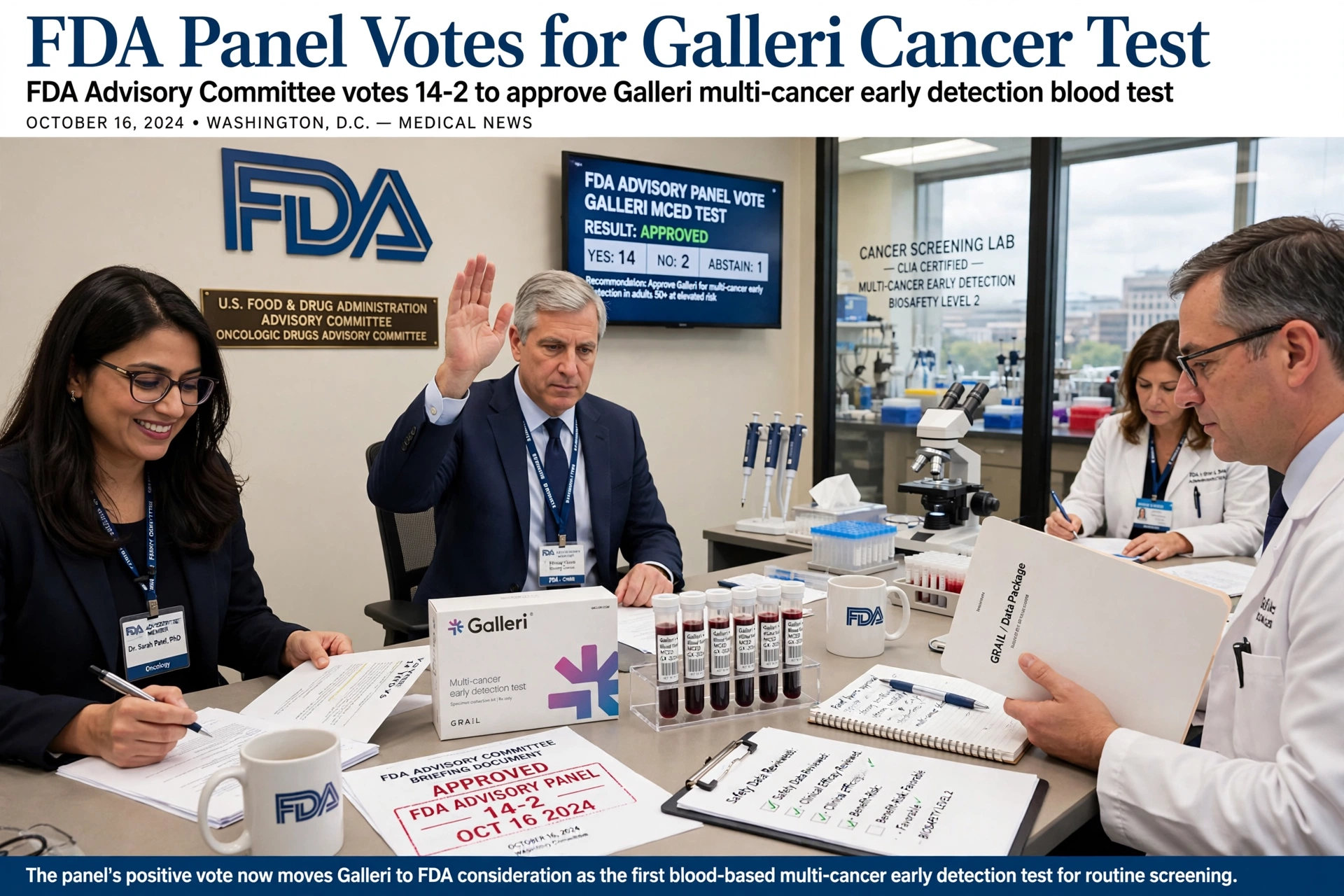
FDA Panel Votes to Back Grail’s Galleri Blood Test in Landmark Multi-Cancer Screening Decision
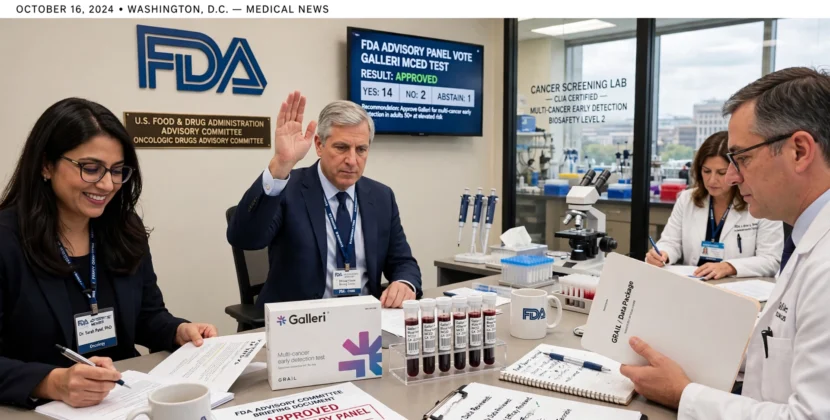
A key FDA advisory committee voted this week to recommend approval of Galleri, the blood test from GRAIL that screens for more than 50 types of cancer from a single draw, moving the United States to the brink of its first multi-cancer early detection test. The Molecular and Clinical Genetics Panel of the FDA’s Medical Devices Advisory Committee backed the test in three separate votes after a day of data-heavy testimony about what the screening can and cannot do.
The stakes reach far beyond one product. If the FDA follows the panel’s advice, millions of adults over 50 could eventually be offered a routine blood test that hunts for cancer signals no standard screening currently covers, including pancreatic, ovarian and liver cancers. Regulators were careful to note the agency is not bound by the committee’s recommendation, but advisory panel votes usually shape the final call. Here is what the panel decided, how the test works and what happens next.
The Three Votes, Explained
Ten voting members considered the premarket approval application across three questions. The committee voted 7 to 2 with 1 abstention that the benefits of the test outweigh its risks, voted unanimously 10 to 0 on safety, and voted 6 to 4 on effectiveness, the narrowest of the three tallies. That split effectiveness vote is the number to watch: it shows experts believe the test works, but disagree about how convincingly the trial data proves it finds cancers early enough to matter.
Panelists highlighted data gaps during the discussion, pressing GRAIL on follow-up completeness and on how the test performs outside controlled trial settings. Even so, the overall benefit-risk vote put the committee firmly on the side of approval for prescription use in adults aged 50 and older.
How the Galleri Test Works
Galleri is a qualitative, next-generation sequencing-based diagnostic that looks for cancer-specific methylation patterns in cell-free DNA isolated from a standard blood sample. Methylation is a chemical tag on DNA that behaves differently in cancer cells than in healthy ones, which lets the test spot a signal and predict where in the body it may have originated, a feature called cancer signal origin prediction.
The test is prescription-only and intended for screening multiple cancer types in adults 50 years and older. A positive result is not a diagnosis; it triggers a diagnostic workup by a qualified healthcare professional to confirm and locate the disease. The FDA granted Galleri Breakthrough Device designation back in 2018, and this week’s vote is the culmination of a review years in the making.
The Evidence Behind the Vote
GRAIL’s application leans on large interventional and randomized controlled studies, including FDA-approved investigational device exemption trials: PATHFINDER 2 in North America and the landmark NHS-Galleri trial in England. Results of both were published recently in Nature Medicine, with related papers appearing in the New England Journal of Medicine.
In clinical studies, the test detected approximately four to seven times more cancers than standard of care alone, and most test-detected cancers were found at earlier stages when treatment with curative intent may be possible, all while maintaining a low false-positive rate and high accuracy for predicting the cancer’s origin. Those are the numbers that persuaded a majority of the panel that a new screening category is justified.
What Happens Next for Americans
The FDA is expected to make a final decision on the premarket approval application in the coming months. The agency said it considers the committee’s recommendations but does not have to follow them, so approval is likely but not guaranteed. If cleared, Galleri would become the first test of its kind sold in the United States, with a price and insurance coverage pathway that will determine how widely it is actually used.
Health plans and Medicare coverage decisions will be the real gatekeepers. GRAIL has argued that finding cancers at stage one or two could reduce late-stage treatment costs, but payers will want long-term mortality data before footing the bill for population-wide screening. Employers and clinicians also need guidance on how to communicate incidental and false-positive results without triggering unnecessary procedures.
Why This Matters for Cancer Screening in the US
Standard screening today covers a handful of organs, including breast, colon, cervical and prostate, which means most cancers have no routine test at all. That gap is why oncologists have called a validated multicancer blood test the biggest shift in screening since the mammogram. Detecting hard-to-find cancers early, when surgery or targeted therapy is still an option, could move the needle on survival for diseases that are usually caught too late.
The competitive field is also moving. GRAIL’s rivals, including Exact Sciences and Guardant Health, are developing their own blood-based cancer screens, and a positive FDA decision would push the entire category toward routine use. For now, Galleri sits alone in front of regulators with the deepest trial portfolio, built on randomized studies involving thousands of participants rather than small observational pilots. That scale is what allowed the committee to judge not just whether the test finds cancer, but whether using it across a healthy population produces more benefit than harm.
The caution is equally real. Early detection only helps if follow-up care is fast and accurate, and experts stress that Galleri complements, not replaces, proven screenings. Patients should keep up with mammograms and colonoscopies while regulators and insurers sort out where this new test fits.
Frequently Asked Questions
Did the FDA approve the Galleri test?
Not yet. An FDA advisory committee voted 7 to 2 with one abstention that Galleri’s benefits outweigh its risks, plus unanimous support on safety and a 6 to 4 vote on effectiveness. The FDA makes the final decision in the coming months.
Which cancers can the Galleri blood test detect?
Galleri screens for signal from more than 50 types of cancer, including cancers with no standard screening test, and predicts where a detected signal originated so doctors can begin a targeted diagnostic workup.
Who is eligible for a multicancer blood test?
The test is prescription-only and intended for adults aged 50 and older. It is designed to add to existing screenings such as mammograms and colonoscopies, not replace them.
How much will the test cost?
Pricing has not been finalized for a US launch. Coverage will likely depend on payer decisions and ongoing trial results, with the FDA expected to rule on approval within months.