






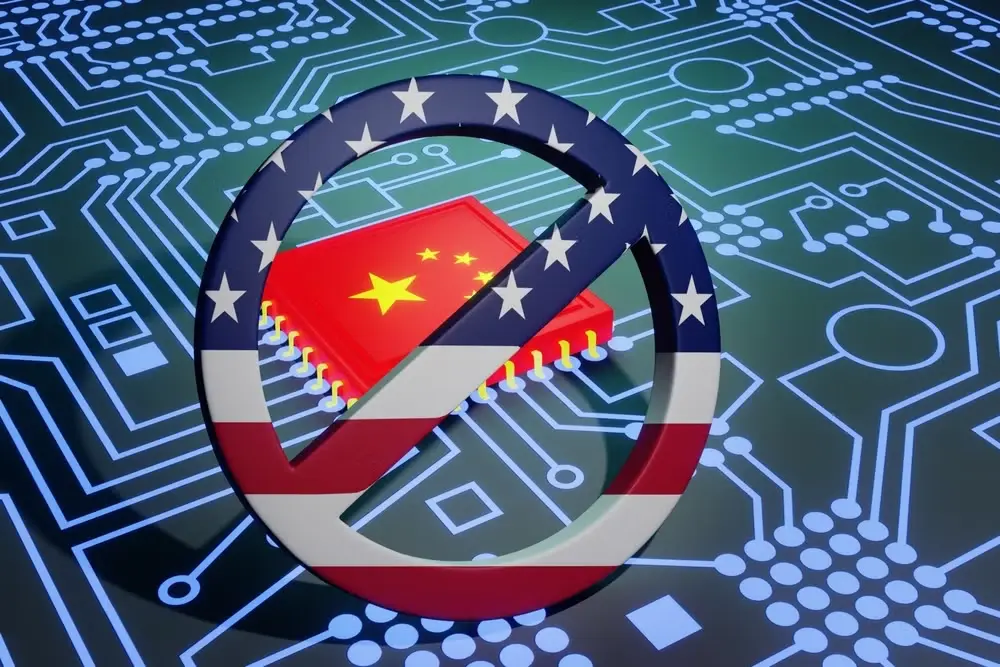
The United States has increased controls on AI chips, setting export limits for about 120 countries. These new limits apply broadly, not just to China.
- Exports to 18 allied countries, such as Japan, Britain, and the Netherlands, are exempt from these new rules.
- The goal of the regulations is to strengthen US leadership in AI.
These new regulatory measures build on previous US efforts, with officials emphasizing that the aim is not only to safeguard advanced computing power for the US and its allies but also to specifically block China’s access.
The new rules divide countries into groups: close US allies will have unlimited access, about 120 nations will face new limits, and exports to China, Russia, Iran, and North Korea will stay blocked.
With these actions, announced at the end of President Joe Biden’s term, the US extends its focus beyond targeting just China. These expanded regulations are designed to help maintain America’s leading role in AI by managing broader global access to AI.
The US leads AI now both in AI development and in AI chip design and it’s critical that we keep it that way, Commerce Secretary Gina Raimondo said.
These regulations are the result of a four-year effort by the current administration to limit China’s access to advanced chips that could boost its military. The rules also aim to keep the US ahead in AI by closing loopholes and adding new safeguards to control chip exports and global AI development.
It is not clear how President-elect Donald Trump’s administration will enforce these new rules, but both administrations see China as a competitive threat. The regulation will take effect 120 days after publication, giving the new administration time to review it.
The new rule will graphics processing units (GPUs) which are necessary for data centers that train AI models. Most GPUs are made by NVIDIA, based in Santa Clara, California, whereas Advanced Micro Devices (AMD) also sells AI chips. After the announcement, NVIDIA’s shares fell about five percent, and AMD’s dropped about one percent in morning trading.
Another proposed change is that, if approved, cloud providers would not need export licenses to obtain AI chips. As a result, they could build data centers in countries unable to import enough chips under US quotas.
Shares of all three companies fell by about 1%.
To obtain approval, authorized companies must meet strict requirements, including compliance with security standards, fulfillment of reporting requirements, and a plan or history of respecting human rights.
Previously, the Biden government had put broad restrictions on China’s access to advanced chips and the equipment needed to make them. These controls were updated each year to tighten the rules and include countries that might send the technology to China.
NVIDIA Warns of Overreach
Not surprisingly, given the global implications for chip supply and data center operations, major industry leaders began criticizing the new rules even before their formal publication.
On Monday, Nvidia described the rules as a sweeping overreach and said the White House is restricting technology already available in mainstream gaming PCs and consumer hardware. Earlier this month, data center provider Oracle argued that the rules would give most of the global AI and GPU market to our Chinese competitors.
These restrictions do not affect gaming chips.
The rules require licenses for exporting advanced chips worldwide, with some exceptions. They also set controls on model weights for the most advanced closed-weight AI models. Model weights are key to how machine learning systems make decisions and are usually the most valuable part of an AI model. Divide countries into a three-tier system: about 18 countries, including Japan, Britain, South Korea, and the Netherlands, are exempt from the rules. 120 countries, including Singapore, Israel, Saudi Arabia, and the United Arab Emirates, will face country-specific cuts. Arms embargo holds. Countries such as Russia, China, and Iran are completely barred from receiving the technology.
US-based providers like Amazon Web Services and Microsoft, which are likely to receive global approval, can use up to 50% of their total AI computing power outside the US. They are limited to 25% outside tier one countries and just 7% in any single non-tier one country.
How effective the rule turns out to be over the next 10 to 15 years is now up to the incoming team, said Megan Harris, a national security official during the first Trump administration. They are well aware that ensuring a dominant domestic industry is a core element of competition with China. China’s commerce ministry responded to the new rules, saying it will take the necessary steps to protect its legitimate rights and interests.
AI could improve access to healthcare, education, and food, among other benefits. However, it can also be used to develop biological and other weapons, support cyberattacks, and help with surveillance or human rights abuses.
The US must be prepared for significant increases in AI’s capabilities in the coming years, which would have a transformative impact on the economy and national security, US National Security Advisor Jake Sullivan said.
Source: US tightens its grip on AI chip flows across the globe








