






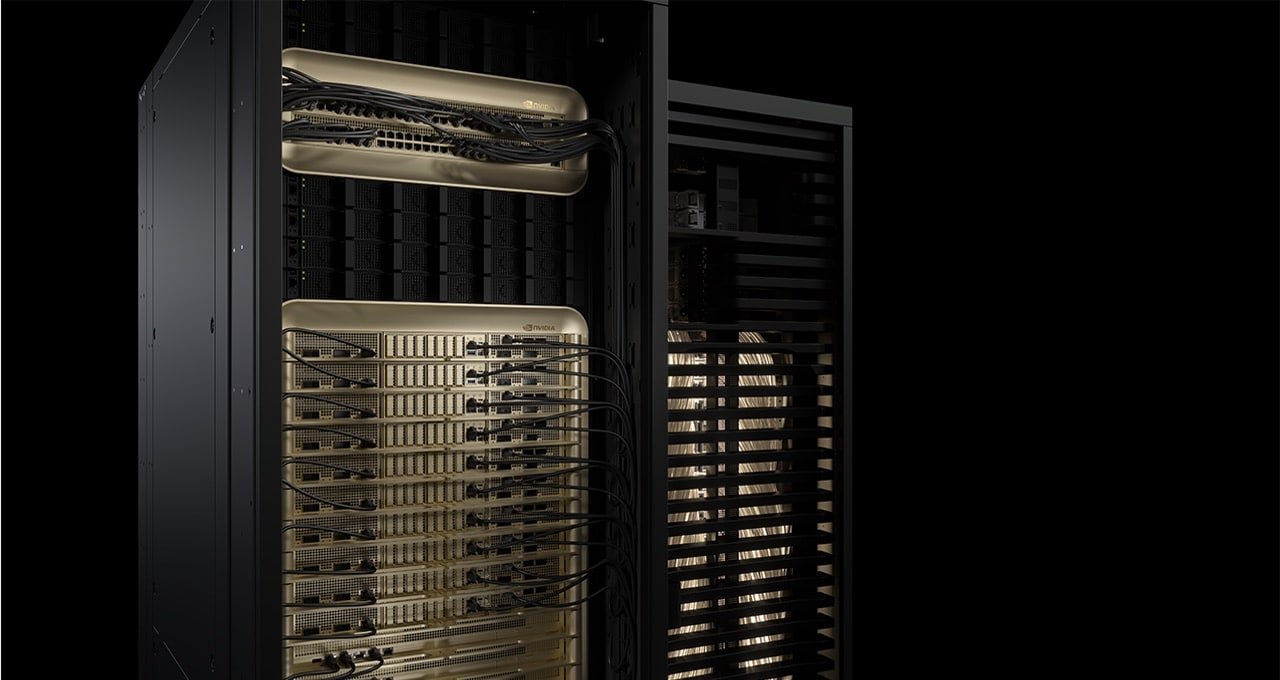
NVIDIA has introduced a significant NVIDIA NVLink update, GPU cluster scaling and AI capability aimed at improving how GPUs communicate across nodes. The update focuses on reducing latency and increasing bandwidth between distributed systems. This directly impacts how large AI models are trained across clusters. As workloads grow, faster interconnects are becoming essential for maintaining efficiency.
When GPUs Speak Faster Than Before
The update strengthens multi-GPU training performance by enabling faster data exchange between GPUs in different servers. Previously, cross-node communication created bottlenecks during large training runs. NVLink now minimizes those delays by improving link efficiency. This allows models to scale without proportional slowdowns.
Another benefit of multi-GPU training performance is reduced synchronization time. Training cycles depend on constant updates between GPUs. Faster links mean fewer idle cycles during communication. This leads to more consistent throughput across clusters.
The Blueprint Behind The Upgrade
The main feature of this release is the NVLink 6 architecture, which brings faster data channels and improved routing. These upgrades help GPUs share memory and workloads more efficiently. NVLink 6 also supports more connections per server, boosting overall data throughput in large setups.
The NVLink 6 architecture also includes fault tolerance. It can reroute traffic dynamically if a connection fails. This ensures stable performance even in large-scale environments. Reliability becomes critical when training runs last for days or weeks.
Rethinking Data Center Efficiency
The update plays a direct role in AI data center optimization by reducing wasted compute cycles. Faster communication lowers the time GPUs spend waiting for data. This improves utilization rates across the entire cluster. Data centers can achieve more output without increasing hardware.
In addition, AI data center optimization benefits from better energy efficiency. Shorter training times mean lower power consumption per workload. This is especially important as AI infrastructure expands rapidly. Energy costs are becoming a major factor in deployment decisions.
Scaling Without Exploding Costs
One of the main concerns in AI expansion is the AI compute scaling cost. As clusters grow, communication inefficiencies can drive up expenses. NVLink addresses this by improving how resources are shared across nodes. Better coordination reduces redundant processing.
The impact on AI compute scaling cost becomes clearer at scale. Large enterprises running thousands of GPUs can see measurable savings. Efficient interconnects reduce the need for over-provisioning. This keeps infrastructure lean while maintaining performance.
Enterprise Systems Get a Structural Boost
The update strengthens enterprise AI infrastructure NVIDIA by enabling more predictable scaling. Enterprises need systems that can grow without constant redesign. NVLink provides a stable foundation for distributed workloads. It supports both training and inference at scale.
New land, another advantage of enterprise AI infrastructure NVIDIA is simplified deployment with improved interconnects. Fewer adjustments are needed to balance workloads. This reduces operational complexity. Teams can focus more on models and less on system tuning.
The Competitive Landscape Shifts
With this NVIDIA NVLink update, GPU cluster scaling AI, NVIDIA is reinforcing its position in high-performance AI computing. Computing solutions often rely on standard networking technologies. NVLink offers a more specialized approach tailored for GPU communication. This gives NVIDIA an edge in large-scale deployments.
This update also meets the growing demand for faster AI training. Companies need to deliver models quickly, and better connections help speed up development. This can affect which platforms businesses decide to use.
Where Legacy Systems Begin To Struggle
Older GPU clusters may not fully benefit from the advances introduced by this NVIDIA NVLink update. GPU cluster scaling and legacy AI interconnects often lack the bandwidth required for modern workloads. This creates inefficiencies as models grow larger, and upgrading becomes less optimal over time.
The difference between new and old systems will keep growing. Modern designs are made for large workloads, while older ones are built for smaller, separate jobs. This affects how fast they run and how much they cost to operate.
Signals From Scaling The Horizon
A Faster Path Through Training Complexity
The NVLink update signals a larger shift toward GPU-connected GPU systems. Training is no longer about separate nodes working alone. Now it depends on systems that make data sharing easy, which changes how engineers build AI workflows.
Efficiency as a Design Requirement
Getting better performance isn’t just about having more computing power anymore. How fast systems can communicate is just as important. NVLink shows that how connections are designed affects overall efficiency, which will guide future hardware choices.
A Clear Direction For AI Infrastructure
This update points to the future of GPU scaling. Companies are moving toward closely connected clusters with very low delays. NVLink helps make this shift possible and sets a new standard for what AI infrastructure should offer.
In summary, NVIDIA’s NVLink update is more than a small step forward. It addresses key problems in distributed AI training and scaling by improving communication speed, reducing costs, and boosting reliability. It changes how GPU clusters work. As AI workloads grow, updates like this will set the pace for future progress.








