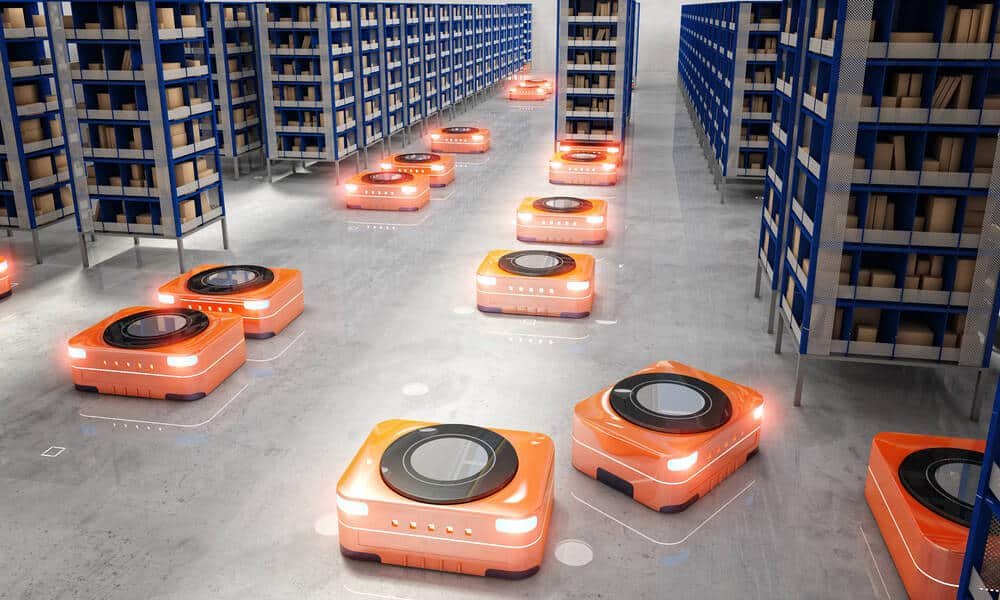
The evolution of warehouse automation is occurring at a much higher rate than ever before, moving away from siloed robotic systems and towards a more integrated, coordinated system of intelligence. Boston Dynamics is currently testing collaborative systems of robots powered by robot swarm AI, where groups of robots work together to accomplish a task rather than relying on individual robots. This shift in coordination represents a major change in how warehouses will manage their large-scale operations as logistics networks continue to grow more complex, creating an ever-greater need for synchronized, adaptive automation.
How Robot Swarm AI Operates
In a robot swarm system, coordination among robots is used to achieve a common goal. This means there is no single controller or “brain” of the operation that tells everyday robots what to do; rather, robots communicate with one another in real time to ensure their tasks are accomplished efficiently.
Some of these functions include:
- Real-time communications between robots
- Dynamic assignment of tasks based on the work to be performed
- Ability to adjust continuously to changes in operational conditions
With robot swarm AI, warehouses can improve their processes by not requiring a constant human presence for supervision, leading to increased speed and accuracy.
Evolution of Warehouse Automation
Traditional warehouse systems are often limited by fixed workflows and predefined roles. In contrast, swarm-based systems introduce flexibility and responsiveness.
| Coordination | Centralized | Distributed |
| Flexibility | Limited | High |
| Scalability | Moderate | Advanced |
By integrating warehouse automation technologies with intelligent coordination, organizations can significantly improve operational efficiency.
The role of logistics AI
Logistics AI is essential for enabling swarm intelligence by coordinating data processing and decision-making across robotic systems. It allows robots to move efficiently, avoid collisions, and prioritize tasks based on urgency.
Benefits include:
- Quick order processing
- Reduction in operational delays
- More efficient use of resources
The use of logistics AI increases the overall performance of automated systems in complex warehouse environments.
Effects on the Robotics Industry
Swarm intelligence is transforming how robotics is used in logistics and supply chain management. Now large-scale operations are performed more efficiently by coordinated systems than by machines performing isolated tasks.
Major impacts include:
- Greater operational efficiency
- Improved scalability of warehouse systems
- Less reliance on manual processes
Risk: Disturbance of the Logistics Industry
The benefits are great but the advent of advanced automation brings new risks.
Potential issues could be:
- Implementation costs are high.
- Failures of system coordination
- Workforce Dislocation
The advent of robot swarm AI could challenge the current logistics models, and organizations must adapt quickly to remain competitive.
Opportunity for Scalable Automation Systems
Despite these risks, swarm-based systems have great opportunities for growth and innovation.
Organizations may:
- Scale operations without proportionally increasing
- laborEnhanced delivery deadlines
- Increase operational flexibility
Companies that can accommodate changes in demand and market conditions can design warehouse automation systems.
Conclusion
Boston Dynamics’ work demonstrates how coordinated intelligence is shaping the future of logistics. robot swarm AI is transforming warehouse operations by enabling machines to collaborate and adapt in real time.
As industries continue to evolve, organizations that invest in intelligent automation will gain a significant competitive advantage. The future of logistics will depend on the ability to integrate advanced technologies while managing the challenges they introduce.