




Austin, Texas
If an assembly line stops running, a modern auto plant can lose over $2 million per hour. Just one faulty robotic arm, an overheated conveyor motor, or a warehouse routing error can disrupt the entire supply chain. Because of these risks, manufacturers now invest in Dell Precision systems designed for physical AI, not just for office work.
The real surprise is not the software, but the powerful hardware found under engineers’ desks.
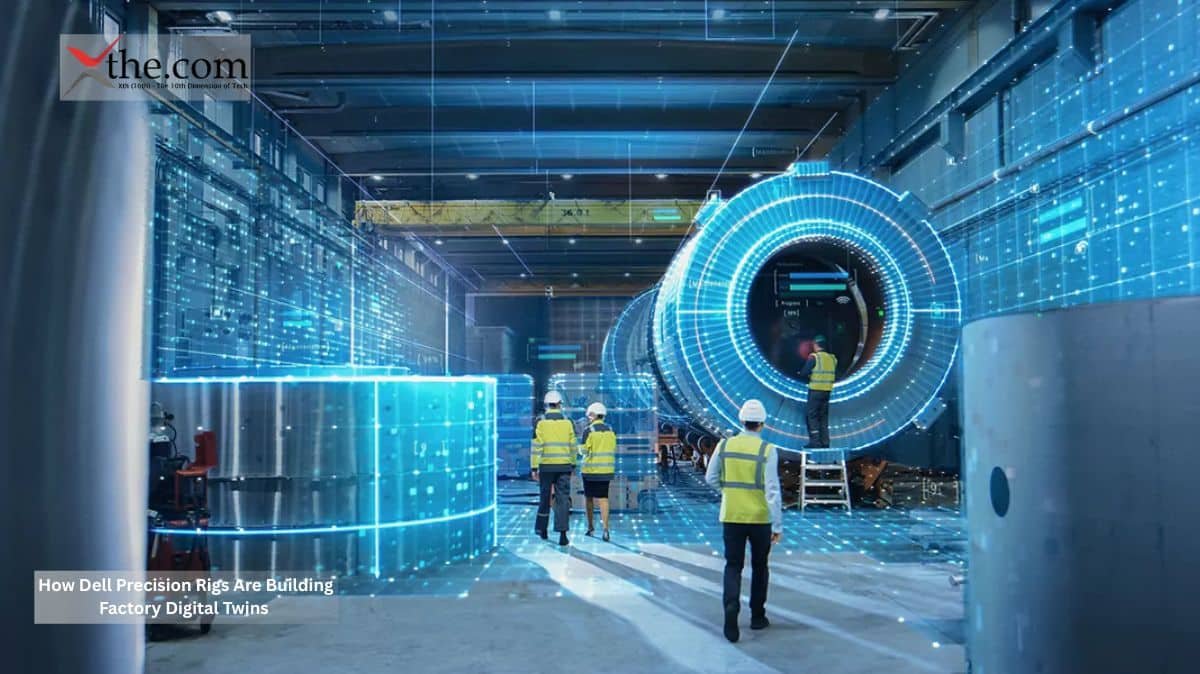
High-end workstation towers, which used to be linked with Hollywood animation or architecture, now run some of the world’s most advanced factories. Engineers use these computers to build full-scale virtual models of warehouses, production lines, and shipping hubs before any construction or equipment installation begins.
This approach, known as a digital twin system, offers significant financial benefits.
Why Dell Precision Matters in the Era of Physical AI
Manufacturing leaders no longer test these in real factories first because the risks are too great. One design flaw in a semiconductor or aerospace plant can cause months of delays and waste millions in materials.
This change has made Dell Precision workstations a key part of industrial planning.
Unlike regular office PCs, these systems use advanced GPUs, greater memory bandwidth, and robust cooling to run large industrial simulations. Engineers can model warehouse airflow, track robot movement, or simulate forklift traffic during busy periods.
The goal is not just to visualize operations. Companies want to predict how systems will behave.
This is where physical AI comes in. These AI models analyze how machines perform under stress, how workers move, and how production systems respond to problems. Instead of waiting for accidents to happen, factories now test thousands of failure scenarios in digital simulations.
For example, a pharmaceutical company designing a new packaging line can use a digital twin system to match conveyor speeds, robotic arm timing, and worker movement. If the simulation finds collision risks or bottlenecks, the company can change the layout before installation begins.
These savings add up fast.
The Rise of Industrial Simulation as a Financial Strategy
For many years, manufacturing was based on trial and error. Companies built prototypes, identified problems, disassembled equipment, and repeated the process.
Modern industrial simulation changes this process.
Now, factories can run virtual stress tests 24 hours a day using processing hardware capable of rendering billions of calculations simultaneously. Warehouse managers can simulate emergency shutdowns; aerospace companies can test vibration limits, and car makers can see how robotic welders work at full speed.
These hardware needs are huge.
A complex factory simulation might use real-time physics, AI predictions, and sensor data from thousands of devices. The demand is why high-performance workstation computers for factory simulation are now among the fastest-growing areas of enterprise computing.
These systems are no longer for specialized engineering teams. Now, they also help finance departments, safety regulators, logistics managers, and company strategists.
How the Dell Twin System Reduces Factory Accidents
Industrial accidents rarely occur because of a single big failure. Most begin with small problems that build up over time.
For example, a robotic arm might move slightly out of alignment, a loading dock could cause crowding, or a cooling system might overheat during busy times.
Traditional factory oversight often missed these small warning signs because managers could only watch live operations. Digital twin systems change this by allowing companies to run continuous simulations in thousands of different conditions.
Take a distribution warehouse getting ready for the holidays. Engineers can test how self-driving forklifts work with human workers during the busiest times. If the simulation shows a higher risk of collisions near loading zones, managers can adjust traffic patterns before the rush starts.
This preventive model has become central to enterprise design strategies in many manufacturing industries.
Insurance companies have noticed this trend too. Some now consider digital safety models when assessing risk, since simulated testing can reduce the risk of shutdowns and worker injuries.
The Hardware Arms Race Behind Enterprise Design
The public conversation around AI usually focuses on chatbots or cloud software, yet the industrial sector increasingly depends on local processing hardware with extreme computational capacity.
This trend is good for workstation makers who focus on both engineering and AI hardware.
A modern Dell Precision workstation for industrial simulation might have multi-core CPUs, professional Nvidia RTX GPUs, ECC memory, and cooling systems built for nonstop use. These features are important because factory simulations often run for days without stopping.
The impact of this technology goes beyond just factories.
Retail logistics companies now create virtual distribution centers before opening real ones. Energy teams use digital simulations to lower environmental risks, and construction companies test building designs before starting work.
The growth of physical AI signals a larger economic shift. Companies now see virtual modeling not as an extra but as insurance for their operations.
This shift is changing how businesses buy computing equipment.
The next wave of high-performance workstation computers for factory simulation will probably look like small data centers inside engineering departments. As factories become more automated, the systems that design them will need even greater computing power.
Companies that invest early may gain more than just efficiency. They could spot industrial problems before they happen.
Source: Dell Blog