




San Jose, California.
If an AI assistant has full access to corporate email, it can quickly create legal problems. Just one wrong file upload, a copied customer database, or an exposed API key can cause trouble. This risk is why many large American companies remain cautious about using autonomous software agents, even after investing billions in AI infrastructure.
NVIDIA NemoClaw was created to tackle these problems. It is a security-focused framework for the OpenClaw agent platform, designed to address a major challenge in enterprise AI: enabling autonomous agents to operate continuously without risking confidential business data.
Timing is especially important for banks, healthcare providers, and government contractors.
Why NVIDIA NemoClaw Targets Enterprise Anxiety
Many corporate IT departments now want always-on AI assistants to help with tasks like summarizing meetings, organizing cloud storage, managing compliance documents, and monitoring workflows all day. While the productivity benefits are evident, the security risks are a real concern.
For example, a pharmaceutical company might use AI agents to sort internal research files. This automation saves employees hours each week. However, if an agent is not properly isolated, it could accidentally access unreleased drug trial records and send parts of them to an unscheduled third-party model for analysis. Just one mistake like this could lead to regulatory investigations, lawsuits, and questions from shareholders.
This is the situation that NVIDIA NemoClaw is designed to address.
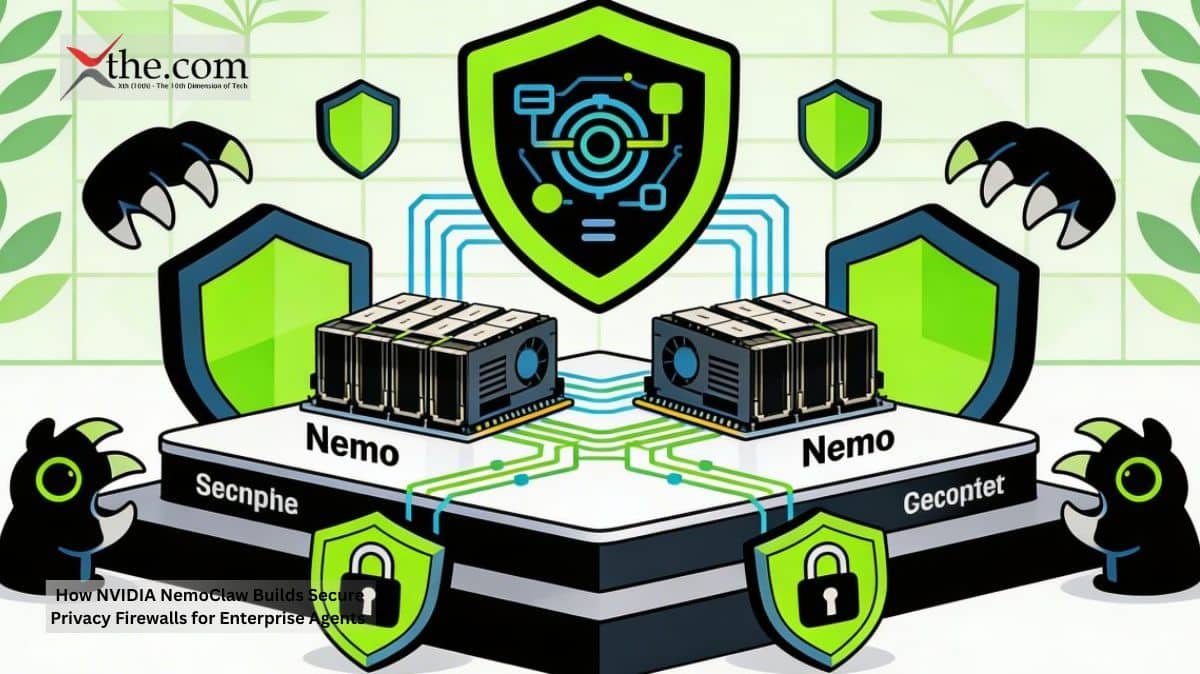
Instead of being just another chatbot, NVIDIA NemoClaw works as a containment layer around the OpenClaw Agent platform. Its architecture is built to keep autonomous processes separate and secure using protected execution environments powered by the Open Shell runtime and Nemotron models.
This difference is important because companies are now concerned not only about external hackers but also about AI systems making unauthorized decisions within their networks.
The Security Model Behind The OpenClaw Agent Platform
The main idea behind the OpenClaw agent platform is ongoing automation.
Rather than waiting for instructions, agents stay active in the background and keep handling tasks on their own.
But this constant activity also brings new risks.
Traditional software applications follow strict instructions. Autonomous agents are different. They interpret worlds, access various systems, and sometimes act independently in response to the situation. Because of this, security teams need ways to control what these agents can access, store, and share.
NVIDIA NemoClaw solves this problem by using multiple layers of isolation.
The first layer uses containerized ex-execution. Each automated workflow runs in a secure environment managed by the OpenShell runtime. If an agent tries to access restricted workflows or send sensitive information outside approved units, the runtime can stop the request before the data leaves the container.
The second layer uses a policy-aware inference with Nemotron models. These models are built to spot sensitive enterprise data, such as financial records, healthcare IDs, internal encryption keys, and proprietary documents.
This method changes how companies view enterprise cloud security. Rather than relying only on perimeter defenses, they now have internal monitoring tools made for autonomous AI systems.
Why Regulated Industries Finally Pay Attention
Over the last two years, large healthcare providers and financial institutions have cautiously tested AI pilots. Many of these projects stopped because compliance teams could not ensure proper data privacy protections.
This doubt slowed down adoption even when the productivity benefits were clear.
Take a regional bank that processes thousands of mortgage applications each week. An autonomous AI agent could verify document completeness, spot inconsistencies, and automatically organize files. However, federal banking rules require strict handling of computer data. Without strong containment, legal teams will not approve deployment.
NVIDIA NemoClaw aims to close this trust gap.
By keeping workflows inside the open shell runtime, organizations can set stricter boundaries for sensitive tasks. Compliance officers can also audit agent actions more closely since the platform tracks task execution and permission histories.
This could have a big impact, and analysts expect regulated industries to become a major growth area for secure enterprise AI over the next five years, as companies face greater pressure to be efficient while complying with stricter regulations.
The Importance Of The NVIDIA NameClaw Secure Enterprise Agent Installation Guide
The growing interest in the NVIDIA NemoClaw secure enterprise agent installation guide indicates a broader shift: IT companies are no longer just asking whether AI agents can boost productivity. Now, they want to know if these systems are safe enough for enterprise use.
This change is important.
In the past, enterprise AI tools often focused on impressive demos with security features added later. NVIDIA is taking a different approach by making containment and policy enforcement central to the architecture, not just optional extras.
This strategy matches what enterprise buyers now want. Chief information security officers are looking for autonomous systems that act less like unpredictable experiments and more like reliable, auditable enterprise infrastructure.
A New Phase for Autonomous Enterprise AI
As always, when AI assistants become more common, companies will need to rethink workplace trust. Employees may soon work with background agents that organize communications, manage workflows, and prepare reports all day long.
But this future will only happen if companies trust that these agents can work without exposing confidential information.
NVIDIA NemoClaw is an early effort to build this trust into the core of enterprise automation. If it works as promised, the wider AI industry may start treating security containerized agents as the standard, not just an optional upgrade.
For corporate America, this could be the point when autonomous AI moves from managed experiments to everyday business operations.
Source: Nvidia Newsroom