





Austin
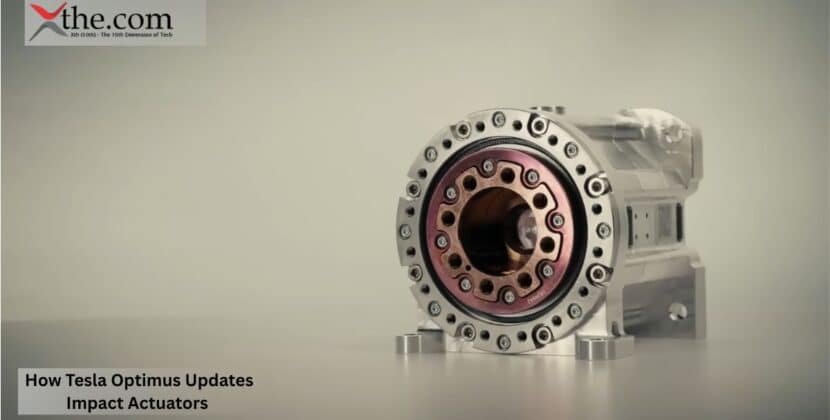
Atomic answer: Tesla (TSLA) has filed new technical specifications regarding the integrated actuators in the Optimus humanoid robot, focusing on improved thermal dissipation during repetitive lifting. According to official disclosures, the new design utilizes custom-designed planetary gear sets to increase torque density while reducing kW-per-limb power draw.
Warehouse robots handle thousands of repetitive arm movements every shift. Even a slight increase in actuator temperature can lower efficiency before the system shuts down. Industrial automation engineers are familiar with this problem. Heat affects torque stability, reaction precision, and component lifespan. In humanoid robots, these problems are even tougher because their movement patterns keep changing.
This change challenge is now a main topic in discussions about Tesla Optimus and its changing actuator design. While most people focus on motion demonstrations, the real engineering challenge is ensuring robotic actuators are durable, efficient, and scalable over long periods of use.
For TSLA, these updates are more than just robotics research. They are part of a long-term plan connected to manufacturing automation, warehouse productivity, and the future of labor costs.
Why Actuator Design Determines Humanoid Viability
Most humanoid robotics projects face the same problem. It is easier to show a robot moving than to prove it is reliable a robot might work across a stage without issues but break down after months of repeated use in industry.
That is why robotic actuators are so important. They manage motion, balance, width, strength, and the flow of energy through every point. If actuators are inefficient, they use more power and generate excess heat throughout the system.
In a controlled demo, these limits might seem manageable; in a logistics warehouse running 20 hours a day, the situation is very different.
A humanoid robot that moves containers, lifts parts, and climbs ramps faces constantly changing workloads. This puts a lot of stress on its actuator, coolant systems, and onboard processing.
The Shift Towards Smart Motion Control
Recent updates on Tesla Optimus show that TSLA is focusing on improving actuator performance through both software and hardware improvements.
This approach is part of a bigger trend in physical AI. Machines now use adaptive learning systems to manage movement efficiently in real time, rather than just following fixed instructions.
For example, a humanoid robot carrying uneven packages in a warehouse has to keep changing its balance, grip, and walking style. Fixed control models use more power and generate extra heat. AI-powered motion systems can help by continuously improving movement patterns and reducing strain on actuators.
This kind of efficiency matters more as humanoid robots leave the lab and start working in real facilities.
How Edge Compute Supports Actuator Efficiency
Many robotics companies first relied on centralized cloud processing to analyze movement. This setup caused delays and made robots less responsive during complex tasks.
Now, modern humanoid robots use local edge computing instead. Making movement decisions closer to the hardware lets them adapt faster to changes and stress.
For Tesla Optimus, this is important because ac-actuator systems need to respond in milliseconds. If connections are delayed during lifting or moving, the robot can become unstable, or its parts can wear out faster.
Picture a robotic worker in a car assembly plant. It lifts a fifteen-kilogram battery while moving around people and equipment. Its onboard system has to quickly adjust torque between joints and monitor actuator temperatures.
Without effective edge computing, this process slows down and consumes more energy.
The Growing Importance Of Thermal Scaling
Industrial robotics engineers are now focusing more on thermal management than on just movement speed. Long-term reliability is what makes these robots commercially successful.
This is why there is growing interest in how the Tesla Optimus Gen 2 actuator thermal scaling works in warehouse environments. The issue is about more than just cooling. Thermal scaling impacts battery life, maintenance, timing, uptime, and overall costs.
Warehouse conditions make these problems worse. These places are often warm, have lots of machines running, changing airflow, and robots working long hours.
A humanoid robot might work well for an hour, but start to fail after eight hours of non-stop use, causing problems for operations. Logistics teams will always choose reliability over flashy demos.
Why AI Logistics Depends on Reliable Robotics
The future of AI logistics relies on automated systems that can operate reliably even in unpredictable conditions.
E-commerce fulfillment centers already move millions of packages each day. Labor shortages and higher costs are pushing warehouses to invest more in automation.
This opens up significant opportunities for humanoid robotics platforms that can operate in spaces designed for people without requiring new infrastructure.
Unlike fixed robotic arms, humanoid robots can navigate current facilities, use elevators, handle various objects, and interact with people. However, these abilities depend on the durability and thermal stability of their actuators.
That is why the actuator conversation matters far more than marketing footage of humanoid robots walking demonstrations.
The Strategic Role of TSLA in Industrial Robotics
The robotics industry now recognizes that software alone cannot compensate for poor hardware efficiency; strong robotic actuators, smart control systems, and local processing must work together as a single system.
Tesla Optimus shows how physical AI, edge computing, and industrial automation are coming together, while other companies build prototypes, TSLA has something many states do not experience with large-scale manufacturing.
That manufacturing experience could be a key advantage if humanoid robots move from experiments to widespread commercial use.
The next stage of industrial automation may not be about who makes the most human-like robot. It will probably depend on who can build humanoid robots that work reliably in real-world settings, with predictable maintenance, stable thermal performance, and easy integration into AI logistics networks.
Enterprise Procurement Checklist
- Infrastructure Consequence: Charging stations for humanoid fleets require high-voltage DC fast-charging infrastructure integrated into warehouse floors.
- Deployment Risk: Initial deployments are limited to “controlled environments” due to ongoing refinements in bipedal balance on uneven surfaces.
- Procurement Bottleneck: Internal Tesla production priority means external enterprise availability for logistics partners remains “TBD.”
- Operational Action: Safety officers must redefine “shared workspace” protocols as humanoid robots begin pilot testing alongside human staff.
- Thermal Analysis: Continuous operation in 40°C+ warehouse environments requires secondary cooling fans for the robot’s central compute backpack.
Source: Tesla Blog