






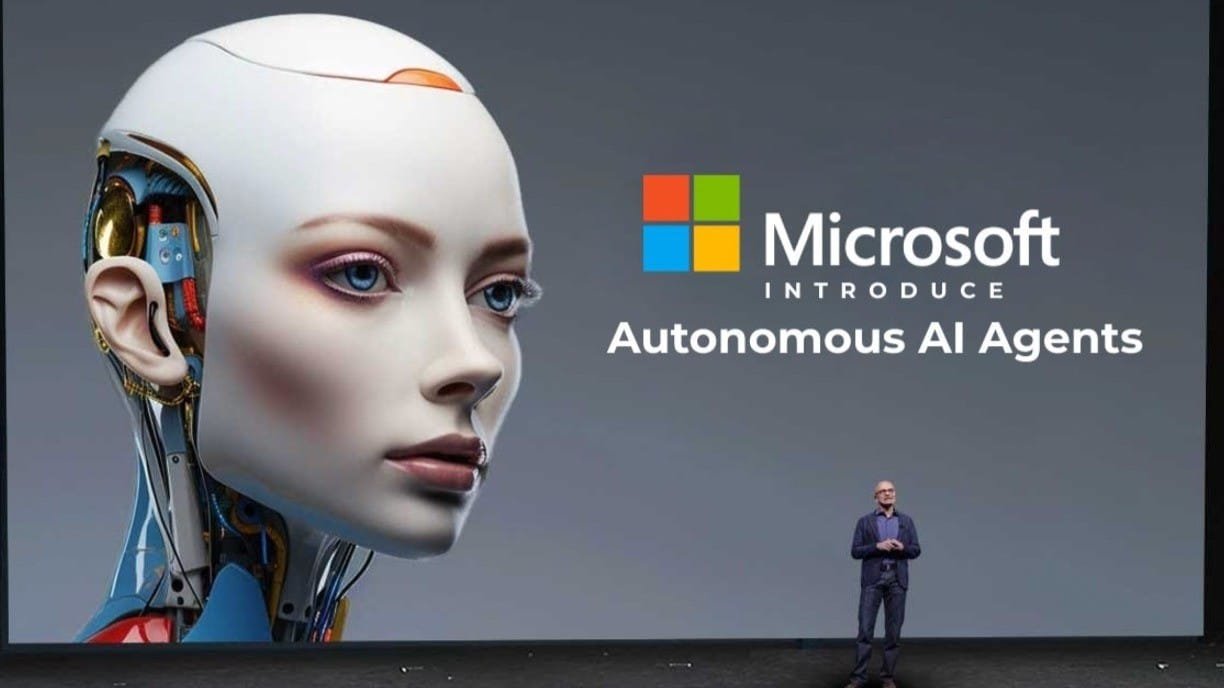
Microsoft is speeding up the move from traditional rule-based automation to autonomous AI agents that work as digital colleagues. These agents can reason, act, and improve workflows independently. Built on Microsoft 365 Copilot, Copilot Studio, and Azure AI, they do more they now do more than just summarize material. They can handle entire business processes from start to finish.
Key aspects of the Shift:
- From automation to autonomy: agents can now perform advanced tasks such as managing supply chains, answering customer service questions, and automating financial reconciliation. They are capable of decision-making, adapting to changing scenarios, and reducing manual work, though they still rely on input and oversight for complex situations.
- Agentic workflows follow these systems use large language models (LLMs) for reasoning and connect to tools through APIs. This capability lets them analyze data, make routine workflow decisions, address simple exceptions, and coordinate across actions across systems. However, when workflows lack clear rules or involve novel scenarios, human intervention is required to guide agent behavior and resolve uncertainties.
- The new apps: Jared Spataro from Microsoft calls these agents the new apps for an AI-powered world. They are built to work together and increase productivity.
- Practical impact: for example, Cineplex reduced customer service handling time from 15 minutes to just 30 seconds and now manages thousands of refunds automatically
- Enterprise adoption: Nearly 70% of Fortune 500 companies already use Microsoft 365 Copilot. The next generation of agents will focus on managing multi-step workflows
- Agent 365 and governance: Microsoft is launching Agent 365 as a control platform to manage and oversee these agents within current enterprise IT systems
By combining autonomous features with generative intelligence, Microsoft’s AI agents are helping businesses shift from experimentation to operational AI systems.
- Specific use cases for finance, sales or HR
- The difference between agentic AI and standard generative AI
- The security and governance controls (like authorization fabric)
On Monday, Microsoft introduced a new enterprise software bundle that combines artificial intelligence tools, security controls, and automated agents into a single platform. This move could change how software developers build and manage applications in corporate environments.
The company calls the product package Microsoft 365 E7 or the Frontier Suite. It combines Microsoft’s Copilot AI assistant, a new system for managing AI agents, and a set of identity, security, and compliance tools that large organizations already use in Microsoft’s cloud ecosystem.
The suite aims for workplaces where software agents work with employees and interact with enterprise systems. Developers must build applications that enable agents to access functions and data while maintaining security and auditability.
A New Layer For AI-Driven Software
The main part of the announcement is Agent 365, which Microsoft describes as a control layer for AI agents working across Microsoft 365 apps and corporate systems. This platform lets organizations create, deploy, and monitor agents that can retrieve information, draft reports, and/or carry out workflow steps across different tools.
For developers, this approach takes AI integration beyond chat interfaces and into the core of application logic. Instead of building separate AI features, developers can design services that agents use through APIs or workflow connectors.
Microsoft aims to have agents be full participants in enterprise software with the same governance rules as employees
Implications For Developer Workflows
The arrival of managed AI agents could lead development teams to use more modular architectures. Applications may need clearer APIs and permission models so agents can interact with them safely.
Developers using Microsoft’s ecosystem will likely see deeper integration between Copilot and development tools. Copilot already helps with coding tasks in products like GitHub and Visual Studio. The new platform suggests these features will expand into workflows like documentation, reporting, and automation.
Another result is the need for stronger security and identity controls. Microsoft describes the Frontier suite as combining intelligence and trust, so AI systems must follow the same access rules as employees.
For developers, this could mean stricter authentication, role-based access controls, and audit trails for any service an AI agent uses.
Multi Model AI Support
Microsoft also said Copilot will support multiple AI models, including those from outside providers. This approach could give developers more flexibility in choosing models for different tasks while keeping applications within Microsoft’s security framework.
The company did not explain how developers will choose or route models, but the announcement suggests Microsoft wants the platform to act as a neutral layer that manages AI services instead of relying on just one model provider.
A Border Enterprise AI Push
The Frontier Suite highlights Microsoft’s approach to deeply integrating AI into its productivity and cloud platforms, making AI features part of the standard application stack alongside identity, compliance, and security services.
This integration means enterprise developers can expect AI to be standard in business applications, streamlining management, and compliance.
Microsoft will offer the E7 Suite starting May 1 at about $99 per user monthly
Enterprise adoption will depend on how easily teams can integrate agents with existing systems and maintain required governance.
Source: Microsoft Unveils AI “Frontier Suite,” Expanding Copilot and Agent Tools For Enterprise Developers








