






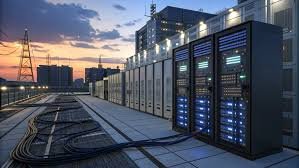
Ashburn VA: A single large AI data center can use as much electricity as 50,000 homes. In some parts of the United States, utilities are now delaying new grid connections by years instead of months. The rapid growth in AI energy demand means data center power is no longer only a theoretical issue. It is now a real limit that executives face when planning huge expansions.
The problem is clear: there is only so much power available, but the demand for AI keeps growing.
Why AI Energy Demand Data Center Power is Hitting a Wall
AI workloads use much more electricity than traditional cloud computing. Training a state-of-the-art model can take tens of megawatt-hours per run. Running these models at scale increases daily energy demand.
However, utilities work on much longer schedules. Upgrading the grid can take 5 to 10 years, especially in already crowded areas. This gap is now determining how fast companies can build new AI infrastructure.
Three main factors are causing this bottleneck:
- Rapidly growing electricity needs: AI clusters require a steady, high level of power, often more than 100 MW per facility.
- Regional grid limits: States such as Virginia and Texas, major data center hubs, are approaching their transmission capacity.
- Rising power costs in the USA: Electricity prices have gone up because of higher fuel costs, upgrades to infrastructure, and sudden increases in demand
For operators, compute electricity has changed from something predictable to a major and unpredictable challenge.
Microsoft Azure Energy Strategy Signals A Shift
Large cloud providers are not waiting for utilities to catch up. Instead, they are finding ways to adapt.
The Role of Microsoft Azure Energy Investments
Microsoft has become more proactive about securing its energy supply. The Microsoft Azure energy strategy now includes long-term renewable contracts, partnerships with nuclear providers, and investments in local grids.
This approach shows a bigger trend: cloud providers now need to think and act like energy companies.
For example, imagine a new AI region that needs 150 MW of power. Without energy agreements in place ahead of time, the project could be delayed for a long time. With these agreements, the project can move forward much faster.
Even with this active investment, Microsoft Azure’s energy efforts still face limits. Issues such as transmission infrastructure, permit delays, and pushback from local communities remain major challenges.
AI Infra Scaling Meets Physical Constraints
The limits of AI infra scaling
For years, growing AI infrastructure just meant adding more GPUs. That is no longer the case.
Now, the available power determines how quickly new systems can be deployed. Even if you buy the latest hardware, it will not be used without consuming enough electricity. The change is forcing the industry to rethink AI infra-scaling across the industry.
Executives must now factor in lead times for grid interconnection, on-site generation options, and geographic diversification to access available capacity.
As a result, AI infra scaling is now just as much about managing energy as it is about technology.
The Rising Cost Equation
Electricity was once only a small part of data center operating costs. That is changing fast.
Understanding the Power Cost USA Pressures.
AI workloads that consume significant energy make companies more sensitive to fluctuations in power costs. For large-scale projects, a 10% increase in electricity rates can mean millions of dollars in additional yearly expenses.
Key contributors include fuel price volatility affecting wholesale electricity markets, Capital expenditures for grid upgrades passed on by customers, and demand charges tied to peak usage patterns.
For CFOs, compute electricity can no longer be ignored. It is now a key factor that directly affects profit margins.
AI Sustainability Moves From PR To Procurement
Environmental issues are no longer simply topics in corporate reports. They now affect buying decisions and government approvals.
The business case for AI sustainability
Large enterprises now evaluate vendors based on their AI sustainability metrics, such as carbon emissions and energy sources. Governments are also increasing oversight, especially in areas where data centers put pressure on local resources.
This situation brings both difficulties and possibilities. Companies that invest in renewable-backed infrastructure gain a competitive advantage. Inefficient operations risk higher costs and reputational harm.
This move toward AI sustainability also makes financial sense. Using less energy cuts both emissions and costs.
The Chain Reaction On AI Growth
Limits on AI energy demand and data center power are already slowing down project schedules. Some projects are moving to new locations, while others are being downsized.
What this means for AI compute availability
Cloud customers may begin to see limited regional availability of high-performance AI instances, longer wait times for capacity provisioning, and higher pricing tiers for energy-intensive workloads.
These shifts reflect a simple reality. When power becomes scarce, allocation becomes selective.
Risk, Opportunity, and Key Impact
Risks
The risks include delayed AI deployments due to insufficient grid capacity, margin pressure from rising power costs USA, compute electricity volatility, and regulatory obstacles tied to environmental and local community concerns.
Opportunities
- Investment in energy-efficient architectures reduces dependency on constrained grids.
- Effective partnerships with utilities accelerate access to power.
- Leadership in AI sustainability fortifies brand and market standing.
Executive Implications
Top executives now need to rethink how they assign resources. Securing energy is now just as important as buying hardware. Overlooking the limits of AI infra scaling due to electricity could put long-term plans at risk.
The Strategic Outlook
The time of unlimited AI growth is over. AI energy demand and data center power are now key factors in determining where and how AI systems can expand.
Organizations that include energy planning in their technology strategies will be able to move faster and work more efficiently. Those who ignore power issues will face delays, higher costs, and lost opportunities.
The next stage of AI computation will not be decided just by better algorithms or hardware. It will depend on who can secure, manage, and refine energy on a large scale.
Source: Official Microsoft Blog








