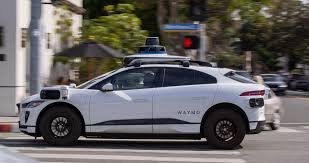
Waymo is currently expanding its self-driving technology through its operations in various American cities. The company’s latest developments demonstrate increased autonomous operations capabilities, indicating a transition toward fully automated transport and delivery systems.
The expansion process demonstrates how industrial automation in the USA has become more advanced through the implementation of AI systems, which now operate across multiple sectors, including mobility, logistics, and urban infrastructure.
Scaling Autonomous Operations AI
Waymo has made a major advancement with the development of its autonomous operations AI, enabling the company to deploy its first full-scale operational system after completing its experimental testing phase.
Waymo vehicles use advanced perception models, sensor fusion, and machine learning to successfully navigate challenging urban environments with minimal human support.
The company uses these capabilities to develop its Waymo operations, which now work on extending their system uptime and geographical reach while testing the system in real-world driving situations.
Advancing Industrial Automation in the USA
The development of industrial automation in the United States has expanded beyond manufacturing to include transportation and logistics operations. Autonomous mobility systems are becoming part of a larger ecosystem of intelligent infrastructure.
Waymo demonstrates how AI logistics automation improves efficiency in both passenger transport and goods movement by reducing the need for human drivers.
The United States’ modern automation systems are undergoing a transformation that combines robotics, artificial intelligence, and real-time data processing.
How Autonomous Driving AI Systems Work
The self-driving system uses advanced artificial intelligence to process data from multiple input sources, including cameras, lidar, radar, and high-definition maps.
The systems continuously analyze their environment, forecast future movement patterns, and make driving decisions instantaneously.
The implementation of industrial robotics and artificial intelligence principles in mobility operations enables vehicles to function as intelligent agents that can adjust their behavior in response to changing road conditions.
The approach provides the necessary framework for implementing safe, dependable autonomous operations using AI systems in high-traffic urban areas.
Expansion of Waymo Operations Across Cities
The latest phase of Waymo operations includes broader geographic coverage and increased ride availability in select U.S. regions.
Waymo uses its expanded operational area to test self-driving technology performance under actual traffic conditions, different weather conditions, and through complex road situations.
The expansion represents an essential achievement that will drive progress in industrial automation in the United States mobility industry.
AI Logistics Automation and Urban Mobility
The major effect of Waymo’s expansion is essential to AI logistics automation.
The technologies used for passenger transport also provide solutions for freight transport and urban logistics management.
Cities achieve better operational performance through the implementation of autonomous systems in their transportation networks, which help reduce traffic congestion and develop intelligent automated systems that benefit the USA.
Industrial Robotics AI in Transportation
The principles behind industrial robotics AI are increasingly being applied beyond factory environments. In autonomous vehicles, robotics systems interpret sensory data and execute precise physical actions in real time.
The combination of robotics and AI technologies enables vehicles to operate as mobile robotic vehicles through advanced self-driving capabilities.
The development of AI for autonomous operations is leading to greater convergence between robotics and transportation.
Safety and Reliability in Autonomous Systems
Waymo operations will continue to expand while maintaining safety as their primary focus. The autonomous systems must demonstrate their ability to function properly across a range of test conditions, including extreme situations and unpredictable human actions.
AI models for self-driving operations need to be trained and tested in both real-world driving and simulated practice tests.
The USA industrial automation system needs to demonstrate reliable operation before various sectors will accept its use in public infrastructure.
Regulatory and Infrastructure Challenges
The nature of mobility is, for some, thought to derive from comfortable structures, particularly through regulatory ratification and infrastructure preparedness. Rules and laws should be in place to support catalytic activities, such as AI’s autonomous operations, while safeguarding residents’ safety.
In addition, anticipated infrastructure modifications may accompany AI logistics’ automation, such as improved mapping, communication systems, and traffic coordination mechanisms.
All of these factors intricately determine the pace of Waymo’s operational expansion.
Economic and Industry Impact
The growth of autonomous mobility will have economic impacts across multiple sectors. The implementation of self-driving systems will enable organizations to cut transportation expenses while enhancing their logistics network operations by reducing the need for human drivers.
The transportation sector benefits from industrial robotics and AI, which create new opportunities in software development, systems engineering, and artificial intelligence infrastructure.
The USA’s development of automation systems will bring major changes across all industries, transforming how businesses use their workforce and manage their operations.
The Future of Autonomous Mobility
The autonomous operations AI system will achieve increased scalability, improved adaptability, and better integration into daily activities.
Waymo plans to expand its operational areas by adding new vehicle types and creating stronger connections to city transportation networks.
The development of AI logistics automation will enable autonomous vehicles to operate as essential components of both passenger transportation and goods distribution systems.
Conclusion: A Shift Toward Fully Automated Transport Systems
The Waymo expansion represents a major milestone in the development of smart transportation systems. The company develops AI for autonomous operations to construct tomorrow’s transportation systems.
The USA industrial automation sector experiences higher adoption rates while self-driving systems gain broader operational capabilities, and AI logistics automation expands its use throughout transportation networks.
Industrial roboticsL and AI developments are creating a world in which human- and machine-operated systems merge into fully automated systems for US industries.
Source: Florida’s New Way to Ride: Waymo Opens to Everyone in Miami and Orlando