






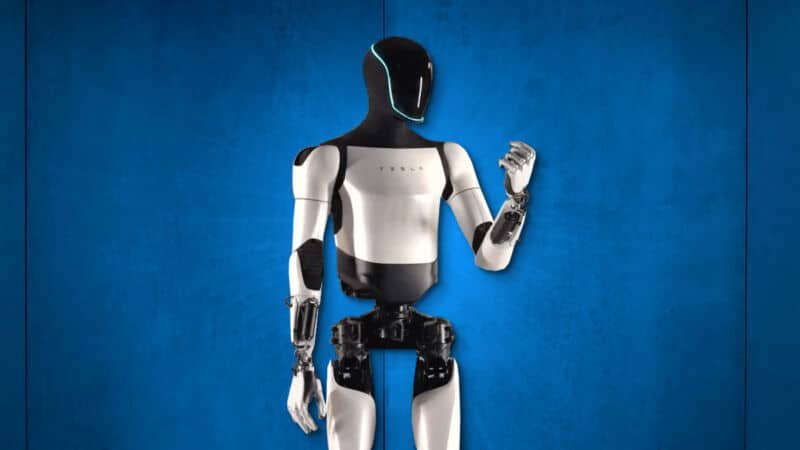
Austin, Texas: A production supervisor in Ohio recently reviewed labor shortages across three shifts. Even after raising wages, 22% of positions stayed vacant. The problem was not pay, but simply finding enough workers. Tesla Optimus aims to close this gap, not just in a demonstration, but on real factory floors, where downtime has real financial costs.
Moving from prototype to actual use is a major step for humanoid manufacturing. Automation is starting to look more like human flexibility instead of just machines built for one task.
From Showcase to Throughput: The Real Test for Tesla Optimus
Early Tesla Optimus demos showed off balance, object handling, and basic movement. These were important steps, but they did not answer the main question: can a humanoid robot manage repetitive, precise tasks in real factory conditions?
Gen-2 starts to answer this question. With FSD hardware 5.0, the robot can process information in real time and understand changing environments, not just follow set paths in a factory. This means it can adapt to small changes in part replacement, people moving, or workflow interruptions.
This has immediate effects for humanoid manufacturing. Companies no longer need to redesign factories for robots. Instead, they can add robots to layouts built for people.
The Engineering Layer: Why Hardware Now Matters More Than Hype
Exactness Through Actuator Patent Innovation
Tesla Optimus features a new motion system based on a unique actuator pattern. This is a major change, not just a small improvement. It directly determines torque control, energy use, and the robot’s reliability in repeating tasks.
For example, a robot installing fasteners on a car assembly line needs to use the same force every time, thousands of times in a row. If the value stretches or the force varies, defects can occur. The new actuator design helps reduce these differences, making the robot’s precision more like a human’s while keeping the consistency of a machine.
This change moves industrial robots beyond simple, rigid automation. Now, machines can handle more complex tasks without needing to be reprogrammed constantly.
The Role of Tactile Sensing
Vision by itself is not enough for complex tasks. This is why tactile sensing is so important. Tesla Optimus uses advanced feedback systems to sense pressure, texture, and resistance in real time.
Take electronics assembly as an example. A human worker naturally changes their grip when handling fragile parts. With tactile sensing, the robot can do the same, helping reduce breakage and increase output.
For humanoid manufacturing, this skill helps close the gap between automated work and proficient craftsmanship.
Energy Economics and the 4680 Battery Advantage
Power efficiency often determines whether robotics can grow. The 4680 battery lets Tesla Optimus run longer and recharge faster.
In a mixed factory, cutting downtime by just 10% can save millions each year. The 4680 battery helps robots work longer shifts with fewer stops, enabling non-stop operation.
This also changes how factories plan their energy use. Instead of charging robots at random times, they can fit charging into bigger energy plans using renewable energy or charging during off-peak hours.
Redefining Industrial Robotics Economics
Traditional industrial robots are set up for a single task and remain in place. They are efficient but not flexible. Changing them usually means long downtime and significant expenses.
Tesla Optimus changes the cost model. One robot can do different jobs throughout the day, like moving materials in the morning, helping with assembly in the afternoon, and checking quality at night.
This multi-functionality alters ROI calculations. Instead of evaluating robots per task, executives assess them per operational hour. The result is a more energetic, potentially higher-return investment.
Scaling the Model: A Closer Look at Becoming Realities.
Scalability of Tesla Model Optimus for US-based micro-factories.
The real challenge is not in big factories, but in smaller, spread-out sites. Micro factories, small production units, have become popular in the US due to supply chain issues and efforts to bring manufacturing back home.
This is where Tesla Optimus stands out. Smaller factories often lack enough work to justify traditional automation. But a flexible human-like robot can adjust to different production needs without major changes.
Picture a small group of micro-factories making custom parts. The demand goes up and down each week. It is hard for human workers to scale quickly. Using Tesla Optimus lets these factories change their output as needed, matching production to demand.
This is where Tesla Optimus’s scalability for US-based micro-factories becomes a tactical benefit rather than an abstract notion.
Risk and Operational Friction
There are challenges to deploying Tesla Optimus. Adding it to current workflows means retraining staff, uploading a scratch pad, updating safety rules, and making sure it works with legacy systems. Reliability is another concern. If the robot fails during a key part of production, everything can stop. Even with improvements in SSD hardware 5.0 and the actuator’s patent, companies will want proof of uniform performance before using many robots at once.
Cybersecurity is also a worry. As robots get more connected, they could become targets for cyberattacks. This risk needs to be managed along with the physical rollout.
Strategic Consequences For Executives
Moving from demos to real use means companies must rethink their workforce plans. Humanoid manufacturing does not remove human jobs; it changes them. Workers shift from doing tasks by hand to overseeing, maintaining, and improving processes.
For leaders, the question is not whether to use Tesla Optimus, but how to fit it into their overall strategy. Early users might get efficiency gains, but they also take more risk.
Timing is important. Adopting too soon means using technology that is not fully tested. Waiting too long could mean falling behind rivals who are already more productive.
The Shift from Experimentation to Standardization
What sets this stage apart is the purpose. Tesla Optimus is not only an idea meant to impress. It is now being used in places where results are measured by hourly output and defect rates.
As industrial robots become more flexible, the distinction between what humans and machines can do is becoming less clear. With tactile sensing, advanced actuators, and built-in computing, these robots can handle many tasks without needing people to step in every time.
Factories built over many years for people may not need to be completely rebuilt. Instead, they can gradually introduce humanoid robots that work alongside current processes.
The bigger picture is clear. Automation is moving from efficiency to greater flexibility and collaboration. As Tesla Optimus grows and humanoid manufacturing becomes more stable, factories will find a new balance where flexibility, not just speed, sets them apart.
Source: Tesla Blog








