
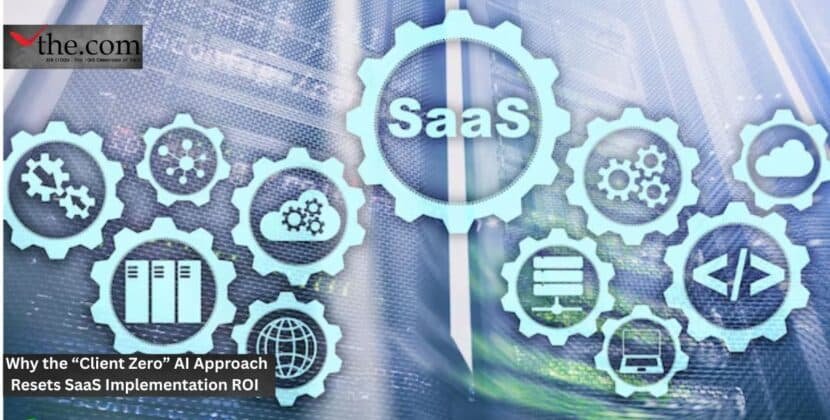




EPAM and ServiceNow have launched a new enterprise development trend with their Client Zero concept, which uses AI systems such as Anthropic Claude Code to instantly optimize the production environment.The emergence of the Client Zero AI SaaS implementation 2026 model represents a major transformation in enterprise software deployment and consulting economics. . Previously, large enterprise software deployments involved months of manual engineering to customize workflows. Firms used to charge enterprises per hour for the implementation work.
The current shift is completely disrupting the process by adopting AI systems that can automate much of the engineering effort involved in implementing, optimizing, and managing the software.
This transition is quickly speeding up the development of AI Implementation in the enterprise space.
The Client Zero Strategy Concept
In essence, the Client Zero Strategy entails a process in which organizations conduct internal trial runs of an automated deployment system powered by AI before delivering it to enterprise clients.
Unlike the experimental nature of AI technologies introduced for testing, the Client Zero Strategy calls for deploying AI technologies autonomously within the production engineering setup.
Benefits of the Client Zero Strategy include:
- Rapid validation
- Efficient automation
- Low risk of failure
- Scalability testing
- Optimization
Furthermore, it enables organizations to gauge their performance before mass implementation.
AI Impact on Software Engineering
The development of AI-based tools is revolutionizing contemporary approaches to Software Engineering. Traditionally, engineering teams spent a lot of time configuring enterprise systems and debugging deployment processes.
Today, however, AI-based systems have started to perform the following functions efficiently:
- Code refactoring
- Workflow configuration
- Efficiency detection within deployments
- Process optimization
- Software personalization
The rise of EPAM ServiceNow Claude Code refactoring capabilities is accelerating the adoption of AI-assisted deployment systems capable of automating engineering-intensive SaaS implementations.
Manual Configuration Implementation Models Becoming Obsolete
Among the more revolutionary consequences is the obsolescence of manual implementation pricing models. Traditionally, a majority of consulting firms have generated significant revenue through implementations that relied heavily on engineering.
With the advent of autonomous deployment platforms, there will likely be less demand for manual configurations.
These developments lead to several important implications:
- Less dependence on manual deployment teams
- Accelerated SaaS onboarding experience
- Lower cost of enterprise deployments
- More importance is placed on result-driven pricing.
- Growing interest in automation technology
The transition toward outcome-based AI delivery consulting models may fundamentally reshape how consulting firms monetize enterprise software deployments in the coming years. It is predicted that implementation economics may evolve from hourly consulting models into performance-based implementation models.
Importance of Instance Configuration Automation
The development of ServiceNow AI configuration automation is increasingly important within the context of enterprise SaaS ecosystems. Manual configuration of enterprise-scale systems often led to delays and inefficiencies.
AI-driven configuration enables businesses to automate most of the process, ensuring governance and control over operations.
Benefits of the transition include:
- Quick enterprise system deployment
- Less complex operations
- Better consistency during deployment
- Simplified scalability management
- Decreased risk of implementation
The growing use of Anthropic Claude Code enterprise refactoring systems demonstrates how AI-powered engineering tools are increasingly becoming core infrastructure components in enterprise software development. This transition could prove especially useful to companies dealing with multi-regional software environments.
Increasing Adoption of Anthropic Claude Code
The inclusion of Anthropic Claude Code into enterprise engineering processes signals the overall growth in AI-assisted development toolsets.
Modern AI coding tools are becoming increasingly able to:
- Optimize production environments
- Implement software refactoring
- Troubleshoot infrastructure
- Improve workflow performance
- Accelerate enterprise deployments
With such improvements, engineering professionals might eventually shift their attention away from tedious configuration activities and move towards developing higher-level strategies and governance frameworks.
This would drastically change the workforce composition in both consulting and enterprise software industries.
Strategic Implications for Enterprise SaaS Markets
The increasing attention to the EPAM ServiceNow AI-powered development Knowledge 2026 trend reveals how quickly enterprise deployment priorities are changing.
Firms are no longer assessing SaaS solutions based on application functionality; they now prioritize deployment velocity, automation efficiency, orchestration quality, and scalability during procurement.
The emerging popularity of AI Implementation frameworks is also indicative of an enterprise trend toward developing autonomous operational frameworks that can optimize workflow performance without constant human involvement.
Conversely, the Client Zero Strategy might be implemented by more vendors as a prelude to commercializing new AI-driven enterprise deployment solutions.
Growing Adoption of Anthropic Claude Code
The adoption of Anthropic Claude Code in engineering enterprises’ processes reflects the overall tendency in the development of AI-aided engineering tools.
Presently, AI-aided tools in software development are becoming increasingly capable of:
- Enhancing production environments
- Enabling software refactoring
- Debugging infrastructure
- Improving workflow performance
- Fastening enterprise deployments
Thanks to these advances, engineers can stop focusing on mundane configuration tasks and start working on strategic planning and governance.
Such a drastic shift in employees’ activities will significantly reshape labor markets in both the consulting and enterprise software sectors.
Strategic Relevance for the Enterprise SaaS Segment
The increasing focus on the EPAM ServiceNow AI development Knowledge 2026 trend demonstrates a rapid shift in priorities regarding enterprise deployment.
Companies are no longer evaluating SaaS products based on application capabilities; instead, they prefer fast deployment and efficient automation, orchestration, and scalability in procurement activities.
Industry analysts are increasingly asking how does EPAM and ServiceNow Client Zero approach using Claude Code triple delivery speed while cutting consulting margins by 20%, especially as AI-powered implementation systems begin replacing traditional engineering-heavy consulting models.
The growing popularity of AI Implementation frameworks testifies to enterprises actively developing autonomous operation systems that will enable autonomous optimization of workflow performance without manual assistance. On the other hand, the Client Zero Strategy is likely to be used as a precursor to further marketing of AI-aided enterprise deployment products.
Conclusion
The launch of Client Zero by EPAM and ServiceNow marks a major shift in the implementation approach for enterprise SaaS. The integration of AI technologies into the very core of implementation and engineering processes helps to rethink the configuration, optimization, and scaling of enterprise software.
With the rise of automation technologies, the deployment of AI could completely change the economic logic behind consulting, software engineering practices, and enterprise procurement strategies. Automation, faster deployment, and scalable orchestration are the key features of AI-based deployment frameworks that will define the future of enterprise software infrastructure.
Source- Epam Newsroom