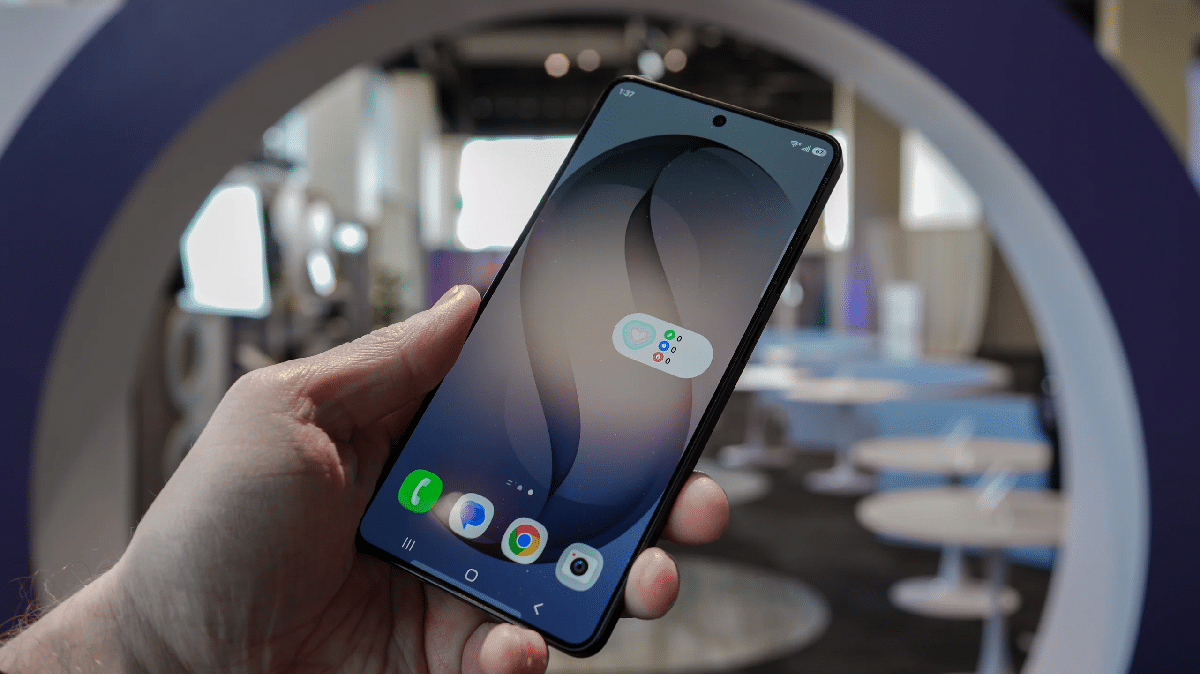





The Vivo Y500 Pro is prioritized as a mid-end smartphone, firstly the photography enthusiasts get fascinated with its impressive feature 200MP camera sensor. This smart phone runs on the latest Android 16 with Vivo’s custom Origin OS 6, enables a smooth user experience for the ongoing software support. The phone’s IP68 and IP69 are dust and water resistance, which shows how Vivo’s committed to durability, while the massive 7000mAh battery with 90W fast charging guarantees extended usage. the Vivo Y500 Pro could easily end up being a great all-rounder smartphone for 2025. 

This article takes you through the Vivo Y500 Pro Specifications in detail 

Vivo Y500 Pro Specifications 

  •  Processor: MediaTek Immensity 7400  
  •  RAM & Storage: Up to 12GB LPDDR4X RAM, up to 512GB UFS2.2 storage 
  •  Display: 6.67-inch AMOLED, 1260×2800 pixels (1.5K), 120Hz, peak brightness up to 1600 nits, HDR10+ 
  •  Operating System: Android 16 with Origin OS 6 
  •  Battery: 7,000mAh with support for fast charging 
  •  Build: IP68+IP69 rating for dust and water resistance 
  •  Connectivity: Wi-Fi 6, Bluetooth 5.4, NFC, IR blaster, USB-C 
  •  Security In-display fingerprint sensor 
  •  Weight & Dimensions: 7.81mm thickness and approximately 198 grams 

Vivo Y500 Pro Camera Features 

The dual rear camera setup highlighted by a lagship-level 200MP Samsung HP5 sensor with OIS and an f/1.88 aperture lens is the Vivo Y500 Pro’s standout feature. The usage of advanced Ai algorithm and pixel binning technology ensures crystal clear, detail photography even in the dim light, because it has MP depth sensor, f/2.4, to help click better portrait shots. The rear cameras can do 4K video recordings with gyro-EIS for stable video. This phone provides numerous ways for shooting and includes night mode, pro Mode, potrait, and AI scene recognization, for versatile options when we talk about photography. 

Vivo Y500 Pro Features in India 

In India, the Vivo Y500 Pro is appreciated for delivering flagship-grade camera capabilities at mid-range amount, this device is a combination of durability and user friendly.  The AMOLED display with HDR10+ makes it unique for media consumption, while the powerful 7,000mAh battery enables long usage times with quick recharge thanks to 90W charging. Performance, the MediaTek Dimensity 7400 chipset paired with ample RAM and storage options makes it a great option for multitasking as well as for gaming. 

Price is starting around ₹29,990, the Vivo Y500 Pro is highly recommended on mid-tier smartphone market in india, offers a compelling camera with strong specifications across board. 

Conclusion:   

To conclude, the Vivo Y500 Pro specifications portray it as a altogether mid-range smartphone with a standout 200MP camera system, a high-quality AMOLED display, long battery life, and trendy hardware, makes it a perfect choice for buyers looking for high level photography and reliable performance in 2025. 

In 2026 home security technology continues to evolve, there will be huge demand for smart home security camera systems. Nowadays it’s not necessary that there should be a security person looking over the home. There are intelligent home monitoring solutions integrated into a digital lifestyle. 

This article dwells on the top picks for the best smart home security cameras in 2026, provides a glance at top indoor and outdoor models designed for reliable, user-friendly, and high-tech protection. 

Why Choose the Best Smart Home Security Camera?  

It’s beyond a typical camera through AI- powered motion detection, Two-way audio, options for cloud, local storage and compatibility with leading smart home systems like Alexa, Google home, Apple home kit. These features grant the ability to view properties from anywhere, alerts. 

Top Features in Smart Cameras for Home Monitoring 

The best home monitoring cameras of 2026 include: 

  • The resolution of video ranges between 2K and 4K for clear images. 
  •  Night vision technology ensures round-the-clock surveillance, including color night vision on some models. 
  •  AI-powered motion and person detection to reduce false alarms. 
  • Wireless and wire-free options for diverse home setups. 
  • including smart home platforms for voice control and automation. 
  •  Different choices in memory options: from local microSD cards to cloud subscriptions. 

Best Indoor Security Cameras 2026 

Indoor security requires compact, discreet cameras to capture sharp video to provide easy installation. The best indoor models include: 

Eufy Indoor Cam S350: It comes equipped with 4K clarity, Ai detection of humans, animals, color night vision, local storage include with no subscription fee.it ensures two-way audio and quick setup, makes it perfect to use for indoor.  

Best Outdoor Cam 2026 

Here are some best outdoor cameras: 

  • TP-Link Tapo C500: Excellent outdoor security Wi-Fi camera featuring 4MP resolution with 360 coverage, smart alerts of detected motions, easy to install. 
  • Ring Alarm Pro w/ Wi-Fi 6 🔗: Featuring high-level protection, this system includes high-resolution cameras, robust AI alerts, integrated eero router functionality, and works well with Alexa. 
  • Arlo Pro 5 🔗: Offers 2K or 4K video quality, weather resistance, long battery life, and smart detection capabilities, including vehicle alerts, this enhances outdoor security. 

Innovations in Home Security Cameras for 2026 

The latest smart cameras feature Ai which recognizes people and pets ,vehciles,greatly which sideways all the othere nuisance notifications. So here comes with a professional way of monitoring plans and has local storage options, 

 Night vision has been processed to include color night vision and spotlight functions for enhanced clarity and deterrence when the lights are low. Dual-band Wi-Fi support enables connectivity even in homes with crowded networks, while compatibility with Matter, Thread, and Zigbee protocols enables integration into the broader smart home ecosystem. 

Choosing the Right Smart Home Security Camera 

 While choosing the best smart home security camera 2026, you must consider the following: 

  • Purpose: is it for indoors like living spaces or for outdoors which ensures security for the entrance. 
  • Resolution: Higher resolution offers more critical detail but probably requires more storage. 
  • Storage: Local storage saves subscription costs, while cloud storage offers greater convenience and backup. 
  • Integration: Compatibility with your smart home system can extend its functionality. 
  • Budget: Balance features, subscription fees, and overall cost to find the best value.  

Conclusion  

Finally, the best smart home security camera in 2026 should integrate well into your routine lifestyle. But leading models, such as the Eufy Indoor Cam S350, TP-Link Tapo C500, and Google Nest Cam, offer robust, versatile, and affordable choices, whether indoors for indoor security cameras 2026 or outdoors with the best outdoor cams 2026.  

You must finance the right camera according to the purpose, to ensure your home is monitored 24/7. 

Best Sleep Tracker 2026:  

Sleep plays a prominent role in one’s life. Sleep is a proper foundation for good health and long life. Thankful to the evolution of sleep technology, it helps to monitor, analyze, and improve your night rest more than ever. In 2026 you would be able to see sleeping wearables coming as rings, hand bands, watches, and non-wearables like mats.the best tracker will be that to calculate your sleep score, and a “sleep tracker without subscription” are worth it. 

This article provides a glance at what a sleep tracker is, best sleep trackers are ring vs watch, best sleep trackers without subscription. 

Why Use a Sleep Tracker?  

Sleep trackers provide actionable insights into your sleep cycles, including restfulness, heart rate, and breathing. Advanced sensors do the analysis and write an algorithm which goes further in picture of the quality of your sleep-not just how much you sleep. Most of them present a summary of sleep scores on healthy data that’s like a quick review. With recent studies, science has proven everything in its way better. 

The Best Sleep Tracking Wearables 2026 

Tracker Form Factor Sleep score Subscription needed Key health features Battery life 
Samsung Galaxy Ring Ring Yes No AI sleep insights, HR, temp Up to 7 days   
Oura Ring Gen 4 Ring yes yes Heart rate, temp, sleep stages Up to 7 days   
Ultrahuman Ring AIR Ring yes No HRV, skin temp, stress 6 days 
Google Pixel Watch 3 Watch Yes No Sleep stages, O2 saturation 24 hours 
Garmin Venu 3 Watch Yes No Nap detection, sleep score 10-14 days 
Apple Watch Series 10 Watch Yes No Sleep apnea risk screening 18 days 

Rings vs Watches: Which Is Right for You? 

Despite all of these developments, the emergence of ring-based sleep trackers such as the Galaxy Ring and Oura Ring presents an alternative way to monitor one’s activities. These rings are lightweight and inconspicuous, like many traditional devices worn on the wrist. There is great comfort for women to be worn as rings, moreover for the people who do not feel comfortable wearing watches or if they fell disturbing wearing it while sleeping Watches are a bit heavier, but may also feature real-time notifications, activity tracking, and more comprehensive app integrations. 

Sleep Ring vs. Watch: 

  • Most of the people prefer lighter, less invasive and preferred when tracking sleep only. 
  • Watches offer superior multipurpose tracking and more substantial health analysis, but it creates discomfort to wear overnight by sensitive sleepers. 

The Best Sleep Trackers Without Subscription 

Subscription fees still feel like a nightmare to many users. Luckily, most of the models have moved to full sleep feature tracking without monthly prices. 

  •  Samsung Galaxy Ring: All sleep tracking features are included with no ongoing fees. 
  •  Ultrahuman Ring AIR: Advanced health metrics; no subscription required.  
  •  Garmin Venu Series & Pixel Watch 3: Most sleep features are free with device purchase.  
  •  Sleep Analyzer Mat: Non-wearable solution without subscription, perfect for those who do not want to wear devices.  

While the Oura Ring sets the gold standard in terms of both accuracy and insight, its premium app subscription is a dealbreaker for some. 

Understanding Sleep Score and Health Tracking 

Generally, “sleep score” metric that most Sleep wearables over represents your Overall sleep quality based on parameters such as time asleep, stages (light, deep, REM), interruptions, heart rate variability, and breathing patterns. Algorithms differ from one brand to another; most brands would give any overnight restfulness a number out of 100. 

FAQ’s 

1. How does sleep score get calculated? 

A. Sleep score is calculated in different sleep stages like [REM,deep,light], sleep duration, interruptions/awakenings, Heart rate, daily breathing patterns. 

2. Do you think the ring is better than a watch for sleep tracking? 

A. Yes, Ring seems better than watch because most of the women prefer wear ring and sleep rather than watches 

The best student laptop in 2026 doesn’t need to break your pocket. Even budget-friendly models offer great performance, battery life, and portability according to the student’s allowance. Incase if you’re moving into college or a school than laptop options under $600 is better than ever.  

This article will guide you through selecting the best laptops for students: those that balance cost, features, and reliability 

Which is ideal for projects, online classes, or pure entertainment. 

Why Budget Laptops Are Ideal for Students 

For the students who are into gaming rigs workstations are hardly ever a necessity.Rather,what they do need is an efficient machine that ensures multitasking, productivity around different applications, web research, and streaming without lag. Budget laptops under $600 offer precisely that.  

Generally speaking, this price point also makes sense for college students who will always choose affordability over aesthetic luxury.  

Since laptops can get damaged, stolen, or become rapidly outdated, a mid-range investment means strong performance without any risk. 

Most budget laptops now come with: 

  • Solid-state drives and loading applications. 
  •  Intel, AMD, or Apple processors that are energy efficient. 
  •  Lightweight designs flexible for long campus hours. 
  •  Battery life stays beyond 8-10 hours. 

What to Look for in the Best Student Laptops 2026 

Instead of looking at othere options, here are key features students should look in a below-$600 laptop: 

  •  Performance: Look for 11th-, 12th-, or newer-generation Intel Core i3/i5 or AMD Ryzen 3/5 chips: these provide smooth multitasking, fast startup times, and flexible performance for everyday educational tasks. 
  •  Storage and Memory: 8GB of RAM and 256GB of SSD storage. Try to avoid models with traditional HDDs; SSDs make a huge difference in responsiveness. 
  •  Display and Portability: A display size ranging from 13 to 15 inches is the perfect blend of visibility and portability. If else you are going to sit in a library for hours, consider an anti-glare, Full HD panel.  
  •  Battery Life: opting for laptops that lasts at least 8 hours of battery power, which is useful for students when they are away from a power outlet.  
  •  Build Quality and Keyboard: Good build and a comfortable keyboard matter more than flashy aesthetics 
  •  Connectivity: Modern USB-C ports, HDMI, and Wi-Fi 6 ensure future-proof compatibility with accessories and even faster connectivity. 

The Top 10 Best Student Laptops Under $600 (2026 Edition) 

  • HP Pavilion x360 

Back-to-School Tips: Getting the Most Value in 2026 

If you are buying for the best student laptops 2026, Here’s how you can manage with a $600 budget: 

  • Student Discounts: Most of the brands have educational pricing available for .edu or verified student accounts. 
  • Check Refurbished Units: Certified refurbished devices usually have warranties and large amounts of savings. 
  • Accessories: A good laptop sleeve, wireless mouse, and external storage ensure workflow. 
  • Cloud Backups: With limited onboard storage, integrating OneDrive or Google Drive enables data safety. 
  • Prioritize Longevity: Go for a laptop that will last all four years of college. 

Conclusion 

To conclude, the evolving tech market has made it easier than ever to find good quality laptops under $600, without compromising on crucial performance. Furthermore, engineering students need a laptop with different specifications, and an art student requires another one for writing and presentations. There’s a perfect laptop waiting for you in this budget bracket.  

As you move up for another academic year, go through these budget laptops to make your semesters productive, efficient, and tech-savvy in the year 2026. 

Its eye catching that in 2025 and coming year 2026, women smartwatch’s market will be booming around. Nowadays best smartwatches for women come with great features like style,health-concious,fitness tracking, and wellness. 

This article will take you through the best smartwatches options for women focusing on main features like cycle tracking and trendy designs, featuring stylish smartwatches in 2026. 

Best Smartwatch for Women 

In different options regarded, the Apple Watch Series 11 stands out as the best smartwatch for women. With fabulous performance, which creates balance among all the features such as FDA- approved fibrillation detection, sleep monitoring, cycle tracking designed particularly for the women. It is available in two sizes, 42mm and 46mm, with customizable bands, marrying elegance with powerful smart features for iPhone users. 

Secondly, for all the Android users Samsung Galaxy Watch 8 is a only top choice that combines a sleek round design with seamless integration into Samsung Health. It provides next level fitness tracking capabilities and support for cycle tracking apps, making it an overall excellent choice. 

Women’s Fitness Trackers: Best Choices for 2025–2026 

Garmin’s Venu 3 and Lily 2 Active are two excellent fitness trackers for women. Garmin Venu 3, with 30 preloaded sports apps, provides high level health analytics, and sleep coaching, is awesome for smart fitness devices for those looking into minute details about their workouts.  

 The Lily 2 Active is lightweight and fashionable compact, featuring accurate heart rate monitoring, menstrual health tracking, and pregnancy guides within an elegant design. Those on a budget can look at other options, like the Apple Watch SE 3, that still offer reliable health monitoring and fitness tracking but with less cost they will naturally have to make some feature sacrifices compared to flagship versions. 

Smartwatch with Cycle Tracking 

These days cycle tracking has become a standard feature for many top smart watches. Starting from Series 6, Apple Watches have integrated seamless cycle tracking within the health ecosystem by which users log symptoms and receive predictions about fertility cycles and periods. Garmin also supports it, although in general, most require manual data input into the app. 

Cycle tracking empowers women with best insights into their fertility health. Promotes overall wellness. These are predominant features for choosing this smartwatch for women in the year 2025 and beyond. 

Stylish Smartwatches 2026:  

In 2026, the trendy design for smartwatches makes devices thinner and lightweight with changeable straps and vibrant colours also with polished build materials like titanium, stainless steel and premium ceramics. Colour scheme plays a key role for women, consider shades like rose gold,soft pastels and different watch dial shapes. 

Models like the Garmin Lily 2 Classic and Fitbit Luxe set up this trend by incorporating specific features for health tracking into a fashion-oriented look that is suitable for everyday wear and special occasions.  

Smartwatches for women stop being just technology devices but rather one of the main fashion accessories. 

Key Features  

  • Health & Fitness: Heart rate monitoring, sleep tracking and stress management features are crucial, along with menstrual cycle tracking for women. 
  •  Battery Life: Most high-end options currently last anywhere from 1 to 5 days. 
  •  Compatibility: Most of the time, iOS users benefit mostly by using Apple Watch models, while Android users should go for Samsung or Garmin devices. 
  •  Personalization: Interchangeable straps and watch shapes provides choice in personal style. 
  •  Intelligent Features: GPS, music controls, voice assistants, and contactless payments further add to convenience.  

Conclusion: 

Finally, the best smartwatch for women in 2025-2026 will be the Apple Watch Series 11 among iPhone users, with Samsung Galaxy Watch 8 and Garmin’s fitness focused as great alternatives for Android users. As 2026 blooms in stylish smartwatches in and around, blending the latest health features with elegant aesthetics to acquire preference. 

Samsung’s forthcoming Galaxy S26 Ultra is poised to be an intriguing addition to the brand’s lineup. With enhancements to specifications and alterations to the design, the smartphone is generating considerable buzz in the rumor mill. Recently, a new leak of a Samsung S26 Ultra dummy unit has given us our first unofficial glimpse of the upcoming flagship. And it’s purported color options.  

Summary 

Dummy units of the Samsung Galaxy S26 in various colors have emerged online, with the Ultra model showcasing three new color options.  

The leaked dummy units display the flagship S26 Ultra in silver, gold, and an orange-blue hue. This combination is similar to the colors seen on the iPhone 17 Pro.  

The Galaxy S26 Ultra is reported to feature the Snapdragon 8 Elite Gen 5 processor, a 5000mAh battery, and an 800-200 MP primary camera.  

There is a new, not-so-subtle choice available for fans.  

The image shared by Reddit user r/samsunggalaxy showcases the Samsung Galaxy S26 Ultra in three new color variants. One can observe a silver variant that closely resembles the Titanium Silver option available with the Samsung Galaxy S25 Edge. Additionally, another variant appears golden at certain angles in the image.  

Despite the many new features, the most prominent is the newly introduced dark orange option in the center. It is evident where this new color choice has drawn its inspiration from.  

Just last month, Apple unveiled the iPhone 17 Pro and the iPhone 17 Pro Max in a cosmic orange variant. The shade of the Galaxy S25 Ultra is nearly an exact match.  

Although the Galaxy S26 Ultra leak may face copycat accusations, if this color is indeed authentic, it is not the first time the brand has attempted to produce an orange phone. The Samsung Galaxy S24 offers a Titanium Orange variant, available exclusively to customers who purchase the smartphone directly from Samsung. This option remains available for purchase on the Samsung website worldwide.  

Therefore, the concern is not that Samsung is once again producing an orange smartphone. The real issue lies in the timing of this release and, frankly, its appearance. We reviewed the comments on Reddit about this post, and fans are clearly displeased with the Galaxy S26’s 2025 color palette. It is crucial for brands to uphold their distinct identity rather than merely presenting inspirations year after year.  

The Galaxy S26 Ultra is expected to feature the Snapdragon 8 Elite Gen 5 processor.  

Regarding the smartphone’s features, it is highly likely to use the Snapdragon 8 Elite Gen 5 processor. Anticipate it being combined with 12 GB of LPDDR5X RAM and 256 GB of UFS 4.1 storage.  

In addition, a 5000 mAh battery is likely to be included, with charging speeds up to 60W. It may also incorporate the 25W Qi 2.2 charging protocol.  

In terms of camera specifications, fans can look forward to a 200MP main camera, the same 50MP 5x periscope, and 50MP ultra-wide cameras, along with a 10MP downgraded 3x telephoto sensor.  

Samsung Galaxy S26: A Potential New Design 

The Galaxy S26 leak indicates Samsung has not significantly altered the design this year, as the S25 and the S25+ remain identical to their predecessors. This was anticipated, given the minimal design changes in the S24 series, making the third consecutive year of the same aesthetic.  

The S25 Ultra stands out as the only model that exhibits noticeable differences from last year’s version. Samsung has opted for flatter sides and rounded edges this time around, resulting in a device that is both thinner and lighter than the S24 Ultra. Which is a significant improvement. I appreciate that it is narrower than its predecessor. This was an issue with the S24 Ultra, so it is reassuring to see Samsung addressing the concern.  

S26 Wallpaper indicates that Samsung plans to completely revamp the design. While the specifics of the new design remain unknown, it is unlikely that Samsung will make drastic changes to the overall look. M- The Minimalist Design, featuring individual rings around the cameras, is a hallmark of Galaxy devices, and the brand is unlikely to stray too far from this established style. However, I would welcome enhancements in color options and materials, along with a touch of design elegance on the Ultra model.  

Rumors indicate that Samsung intends to adopt a slimmer design across all Galaxy S26 models, mirroring the approach taken with the Galaxy Z Fold 7. This is expected to be accomplished by incorporating thinner camera modules that protrude less, and the frame is likely to present a slimmer profile than the S25 models. Additionally, we may see rounded designs that could enhance the comfort and usability of these phones, but we will have to wait to see if Samsung truly commits to altering the overall aesthetic. The Samsung Galaxy S26 color leak discussed in this article is currently a rumor, and we must wait until Samsung officially releases these models before commenting further.  

In the near future, users of ChatGPT will start receiving sponsored recommendations and advertisements while interacting with the widely used AI assistant, according to recent leaks and industry analysis.  

The reports suggest that OpenAI is preparing to introduce ChatGPT ads on its platform, though nothing has been confirmed at this stage. What initially appeared as isolated code mentions in a beta application version has evolved into a more extensive discussion regarding OpenAI’s strategy to generate revenue from its premier product.  

What Insights Were Revealed By The Leaked Version Of the Android App 

According to the information security and technology news outlet Bleeping Computer, a recent beta version of ChatGPT for Android includes explicit references to an ad’s infrastructure embedded in its code.  

The publication notes that phrases such as “search ad,” “carousel,” and “bazaar content” appear in the bundle, suggesting that the OpenAI update is developing systems to showcase sponsored and promoted content during conversations.  

The industry trends repository also found articles reporting similar observations, noting that the leaked codes imply initial testing of search-based responses rather than general dialogue.  

What Could Be the Reason for OpenAI’s Potential Shift Towards Advertisements 

As Blipping Computer points out, the OpenAI hidden ads feature appears to be exploring new revenue streams to offset the substantial computational costs of operating its increasingly advanced models. The company currently offers both free and paid tires, but advertisements could serve as an additional source of revenue.  

Additionally, the digital media platform The Keyword has shared remarks from OpenAI CEO Sam Altman, who acknowledged that advertisements may be considered at some point, while stressing that the company has not yet committed to any specific model.  

According to the report on the keyword, Altman stated that ChatGPT’s value lies in the trust users to place in its recommendations. If monetization disrupts that trust, the platform risks damaging the strong relationship users have with it. If ChatGPT were to accept payment to prioritize a lesser hotel over a superior one, that would likely be disastrous for your relationship with ChatGPT, he remarked.  

Industry observers have also noted OpenAI’s hiring trends, including positions in advertising and engineering, suggesting a more organized strategy than mere preliminary experimentation.  

How Could Advertisements Be Integrated Within ChatGPT? 

Reports from Gizmo China indicate that these ads may not appear as conventional banners. Rather, they might manifest as contextual recommendations, especially during inquiries related to shopping or product comparisons.  

Certain media reports suggest that personalization features, such as ChatGPT’s memory function, could affect the relevance of advertisements, prompting new suggestions for the use of user data.  

When might users begin to encounter advertisements? 

Currently, the timeline is unclear. Industry observers’ monitoring developments have noted that no public rollout has commenced, and no users have reported seeing ads in ChatGPT. What is available at this point includes internal code, hiring indicators, and executive hints.  

Some reports have speculated that 2026 could be a potential time frame for a wider rollout, although this remains unverified.  

What implications could this have for users? 

Should advertisements be introduced, the significant change will not be solely visual; it will also affect trust. As an AI Assistant relied upon by millions for impartial advice, it may start to intermingle information with commercial signals.  

For the average user, interpreting product and service recommendations is key. For professionals, particularly those in research, education, and journalism, the inclusion of paid suggestions within AI-generated responses may necessitate an additional level of security.  

Privacy will also be a crucial aspect to monitor as ChatGPT implements changes. Advertisements generally involve data tracking, and if AI-driven ads depend on personalized conversion history, issues of transparency and user control will become central topics of discussion.  

And format: OpenAI Update implies a possible structure featuring marketplace product cards with images and calls to action, displayed beneath AI responses, akin to current platform advertisements. Google Search and Microsoft’s Co-Pilot are  

Early testing seems targeted at search-based answers, product exploration, and shopping, aiming to place ads where users show commercial intent.  

Monetization Strategy: The introduction of advertisements would help OpenAI offset substantial operational expenses associated with managing its models and could enhance user features on the free tier while preserving the ad-free environment for paying subscribers. Therefore, paying subscribers can refrain from asking themselves questions: “Will ChatGPT Pro show ads?” OpenAI intends to preserve the ad-free environment for Pro subscribers.  

User reactions: although no official timeline has been established, the announcement has elicited varied responses, with some voicing concerns about a diminished user experience or the implications for data privacy if chat history is used for ad personalization. Thank you for watching!  

OpenAI’s CEO, Sam Altman, has previously characterized advertising as a last resort, yet he has also suggested the company is willing to explore this avenue in the future. The discovered code and several reported instances of actual advertisements indicate that implementation may be imminent.  

As a proud owner of the Pixel 9a, I find myself increasingly tempted by the forthcoming OnePlus 15R, the first phone in quite some time to genuinely pique my interest in upgrading. On paper, it appears to be the sought-after sub-$600 device. However, there are still a few essential factors that prevent me from switching my SIM card from Google’s ecosystem.  

The Allure of the OnePlus 15R’s Battery and Charging Capabilities 

The OnePlus 15R battery life is the focal point. Reports indicate that the OnePlus 15R may feature an 8300 mAh battery, a significant announcement that would position it among the brand’s largest-capacity models. This represents a substantial improvement over the Pixel 9a’s 5100 mAh battery, and if these claims are validated, it could enable two days of use for casual users. Many mid-range smartphones still offer batteries that peak at approximately 5000 mAh, making this a notable exception in the market.  

Recharging is another appealing feature of the OnePlus 15R. The 15R supports 100W wired charging, which typically allows a full recharge (from 0% to 100%) in approximately 40 to 45 minutes. In contrast, my Pixel 9a is limited to 23W charging and takes over an hour and a half to fully charge. Furthermore, OnePlus’s parent company has publicly praised a battery health engine designed to maintain 80% capacity after around 1,600 charging cycles. This is reassuring for those worried about the effects of fast charging on battery longevity.  

Additionally, there is an enhancement in hardware quality. A glass back would be a welcome upgrade from the Pixel 6’s plastic casing, which tends to be smudgy and lacks a premium feel.  

The phone also introduces a customizable side button replacing the previous alert slider, making it easier to quickly toggle modes or activate features like the torch. An IR blaster is included, too, turning the phone into a universal remote for situations like finding a lost TV remote.  

The discussion about the OnePlus 15R specs does not stop here. Rumors suggest it will feature an ultrasound fingerprint reader and an unspecified, but notably high, level of water resistance, potentially reaching IP69K, surpassing the IP68 water resistance standard we have come to expect from flagship devices. Undoubtedly, if the 15R is released with a capable Snapdragon 8 series SoC and a well-optimized version of Oxygen OS, its everyday performance will remain robust for a considerable time.  

The Deal Breakers That Have Cut Me Off on Pixel 

Size is the initial obstacle. There are also rumors suggesting a 6.8-inch display. If a large smartphone has not captured your interest, I can assure you that I have experienced them and have no desire to revert. The Pixel 9a’s 6.3-inch screen is perfectly suited to my needs for one-handed operation and portability. IDC’s trendline data indicates a gradual increase in mobile phone sizes, yet a dedicated group of enthusiasts favors compact, comfortable designs over larger screens.  

Software support is the second consideration. Google is now committing to 7 years of Android OS and security updates for certain recent Pixels, a groundbreaking move in the Android ecosystem. OnePlus has improved its flagship policies, but R-series devices have been slow to meet Google’s commitments. Regardless of whether the OnePlus 15R specs receive four Android OS updates, the immediate availability of Android releases, and the overall longevity advantages, the Pixel will still favor the Pixel. For those who retain a phone for over three years, this is significant.  

The third factor is the camera. OnePlus has made strides with enhanced sensors and refined processing – DXOMARK scores and reviewer evaluations from the last two generations indicate substantial achievements. But Google excels in consistency thanks to its computational photography. Real-tone color accuracy, reliable night-sight performance, and precise tone reproduction contribute to images that are worth keeping, even in challenging lighting conditions. Captured effortlessly when you require a photo to succeed on the first attempt, the Pixel is undoubtedly the more reliable choice.  

What The Specifications May Suggest Regarding Everyday Usage And Practical Scenarios 

If the leaked 8,300mAh battery capacity proves true, the OnePlus 15R could provide enough power for charge-free weekend getaways. This is a major change, especially given the Pixel’s slow charging. The trade-off may be a physically larger phone that’s less convenient on the go.  

An ultrasonic fingerprint scanner could enhance the quality of life.  

  • These are typically quicker and more reliable when your fingers are wet, unlike optical sensors.  
  • If the IP69K rating is accurate, it offers protection against high-pressure, high-temperature water jets, a feature that is quite rare in smartphones.  
  • While it may be excessive, it demonstrates a commitment to long-term durability, which is always appreciated.  

Regarding the software, Oxygen OS continues to run swiftly and offers rich features with ample customization options. However, Google’s update schedule prioritizes Pixel-specific feature releases and the extensive timeline. All security patches help make this a more secure ecosystem for users who intend to keep a device for 5 years or longer. Independent consumer research organizations have consistently indicated that long-term support is a crucial factor for influencing satisfaction and resale value.  

OnePlus is gearing up to launch the OnePlus S60 in China next week, and it’s widely expected to be launched globally as the OnePlus 15R. We already know a few specs about both, and the company has now revealed more details about the Ace 60T.  

Bottom Line for Budget-Constrained Pixel Owners 

For less than $600, the OnePlus 50ner could be a battery-life champ with some premium touches that outclass its peers. For power users, daily commuters, and frequent flyers, that’s compelling. However, for me, the Pixel 9’s winning trifecta of pocket size, peerless update policy, and set-and-forget camera keeps it in my pocket.  

If Google’s next mid-range phones add bigger batteries and faster charging, the decision will become much easier. For now, the 15R is a rare challenger that makes me pause—clear evidence that competition is delivering better value in affordable devices. 

The term “Snapdragon X Elite Notebook Dead in Water” refers to a decision by a prominent Linux PC manufacturer, Tuxedo Computers, to abandon its planned Linux laptop powered by Snapdragon XL8. Owing to considerable technical obstacles and inadequate Linux compatibility. This situation underscores the persistent challenges of running Linux on Qualcomm’s ARM architecture and indicates that widespread, effortless adoption of ARM on Linux in consumer devices remains a distant prospect.  

Reason for Snapdragon X Elite Linux cancellation  

Tuxedo Computers, specializing in Linux laptops, spent 18 months on the project before discontinuing it. The main challenges were:  

Poor battery life: While ARM laptops are typically known for excellent battery performance with Linux, this benefit could not be achieved despite extensive optimization.  

Incomplete essential features: The team struggled to implement critical elements, such as:   

  • Effective methods for BIOS/Firmware updates on Linux  
  • Fan control  
  • Virtualization capabilities using KVM (kernel-based virtual machine)  

Hardware limitations: issues also arose with high-speed USB 4 transfer rates and with hardware video decoding support in most applications.  

Outdated hardware concern: The upcoming release of Qualcomm’s Snapdragon X2 Elite chip suggests that by the time the issues with the X1e model are addressed, the product will already be considered obsolete.  

This setback presents several consequences for ARM on Linux in 2025 within the consumer laptop market:  

Vendor support is essential: this situation highlights that although the Linux kernel provides basic ARM PC support, achieving full functionality requires significant vendor collaboration and the development of specialized drivers and firmware, which is often insufficient on non-Windows platforms.  

Fragmentation issues: Unlike x86, where hardware is standardized, ARM PC hardware can vary significantly, necessitating specialized software configurations (such as device trees) that complicate universal Linux support.  

On-going community initiatives: despite announcing why the Snapdragon X Elite Laptop was canceled, community initiatives, for instance, within the Ubuntu and Fedora communities, to enhance support for the existing Snapdragon X Elite hardware with some fundamental actions, functions like Wi-Fi and Bluetooth are already operational in development versions.  

Optimism for the future: Tuxedo has not entirely dismissed the concept and will assess the forthcoming Snapdragon X2 Elite for Linux compatibility, indicating that a future standardized ARM chips may still present a feasible path forward.  

Summary: Snapdragon X Elite’s compatibility issues have yet to deliver the seamless, high-performance, and power-efficient “Just Works” experience under Linux that many anticipated would rival Apple’s M-series chips. Currently, those seeking a functional ARM laptop running Linux may achieve greater success with platforms such as Asahi Linux or Apple Silicon devices, where dedicated communities have made notable advancements.  

Tuxedo Computers, a manufacturer of Linux PCs, has halted the development of a Linux laptop powered by the Qualcomm Snapdragon X1 Elite after 18 months of effort. In its announcement, the company indicated that the Snapdragon X Elite compatibility issues were higher with Linux than anticipated. Furthermore, the upcoming release of the Snapdragon X2 Elite, announced last September and expected in the first half of 2026, would result in the company launching an outdated last-generation laptop by the time it finalizes the Tuxedo Snapdragon X Elite. The primary challenge Tuxedo Computers faced was replicating the remarkable battery life of ARM laptops running Linux when running Windows. Additionally, the company encountered challenges in providing a viable method for installing BIOS updates on Linux, ensuring fan control support, and enabling high-speed USB transfer rates. There were also complications with video decoding, which, while technically feasible, are often unsupported by most applications.  

The Snapdragon X Elite’s Linux compatibility issues would render the laptop nearly unusable, and the company projected that it would require several additional months to resolve all the challenges. Consequently, the newer X2e. The new X2e would likely be well-established in the market by the time it is prepared to launch, which would not be a sensible move for the company. This does not imply that the company is abandoning the idea of a Lennox Snapdragon laptop entirely. It is pleasing that Tuxedo Computers can persist in its efforts to develop Snapdragon-powered Linux computers and ultimately create a laptop featuring an ARM chip. Although they may not attract as many users as Windows or macOS, this would at least provide consumers with additional choices. If Tuxedo Snapdragon accelerates Linux issues and helps them avoid being restricted to an x86 laptop if they prefer or require Linux on their devices.  

A recent disclosure about Intel’s forthcoming Granite Rapids-WS Zeno processors suggests that the highest-end models will feature up to 86 cores and support up to 2 DDR5 DIMMs per socket on the W893 platform. These specifications enable Intel to directly rival AMD’s Threadripper series in the high-end workstation (HEDT) sector.  

Intel’s most powerful CPU to date may have emerged: the 86-core Granite Rapids-WS reportedly offers a base speed of 4.8 GHz and is designed to directly challenge AMD’s ThreadRipper lineup in the high-end desktop market.  

However, this leak raises more questions than answers to the product’s final details.  

Key insights  

Intel Granite Rapids-WS leak listing spotted online shows 86 cores with 172 threads.  

Benchmark entry hints at 4.8 GHz turbo boost speeds with limited cores.  

Granite Rapids-WS could be a serious challenger to AMD Thread Ripper.  

Intel currently benefits from sizable investments from the US government and Nvidia, with further interest likely from other large technology companies. Now, a new benchmark listing has surfaced, potentially revealing its most ambitious workstation chip yet: the Granite Rapids-WS.  

Hardware Leaker @momomo_US spotted an X entry on openbenchmarking.org listing an Intel 0000 Rapids-WS Processor with 86 cores and 172 threads.  

The benchmark shows clock speeds reaching up to 4.8 GHz. This likely reflects a turbo frequency on a limited number of cores rather than the all-core base frequency.  

Addressing AMD’s ThreadRipper  

Crucial information, such as thermal design power and comprehensive platform specifics, has not been disclosed; therefore, this submission should be regarded as an initial leak rather than a confirmation of the final specifications.  

According to Tech Powerup, Granite Rapids-WS specifications are based on Intel’s XCC server computer tiles. Two compute tiles provide the 86 cores, while two I/O tiles handle PCIe and memory connectivity.  

Scaling to higher core counts would require Intel’s larger UCC to die and a more robust package.  

Details regarding memory support for this workstation SKU remain unknown.  

The XCC family, designed for server use, is compatible with DDR5 6400, and it can achieve even higher speeds with MR DIMMs. Additionally, a workstation variant may implement an 8-channel configuration to optimize capacity while managing board complexity.  

The cooling requirements remained unclear, and no information was provided on the base clock or thermal envelope.  

The testing system, as detailed in the OpenBenchmarking.org entry above, was equipped with 512 GB of memory and a 1 TB Seagate ZP1000GM-3004 SSD. An Nvidia GeForce RTX 3090 GPU operating on Red Hat Enterprise Linux 9.6.  

The Intel 86-core CPU also reported using GCC 11.5.0, GNOME Shell 40.10, and the NX Server display drive.  

Intel has recently scaled back its high-end desktop focus, leaving professionals to choose between older workstation parts or AMD’s offerings.  

If the details are accurate, the Granite Trap is WS2TB. RAM support would provide Intel with a fast route back into the HEDT and workstation segment, where AMD’s Thread ripper has dominated.  

For OEMs and creators, real-world adaptation of the Rapids-WS will hinge on final performance, efficiency, software scalability, and how convincingly the chip challenges AMD’s Thread-Ripper dominance.  

Intel has experienced a considerable decline in the workstation of CPU market. Currently, AMD’s Threadripper CPUs are favored for high-core-count workstation applications. For Intel to reclaim its market position, it must introduce a robust product. The Intel Granite Rapids-WS platform specs, which incorporate the Intel 86-core CPU, could pave the way for Intel’s recovery. Nevertheless, Intel must ensure it offers competitive performance and pricing to succeed in this endeavor.  

The Granite Rapids-WS is closing the gap with AMD’s Threadripper 9000, which has up to 96 cores, but Intel still lags by about 12%. With up to 128 PCIe Gen5 lanes, 384 MB of cache, and a TDP of 350W, the competition will be intense.  

Nevertheless, it is important to highlight a significant distinction that both Intel and AMD categorize their workstation product lines into different tiers. Intel’s latest W890 platform, combined with the Rapids-WS Zion CPU, delivers mainstream configurations with 4-channel DDR5 and 80 PCIe Gen 5 lanes, whereas the premium version accommodates 8-channel DDR5 and 128 PCIe Gen 5 lanes. Additionally, the W890 chipset includes 24 PCIe Gen 4 lanes, of which 8 are dedicated to GMi.  

The test configuration for this processor included 512GB of DDR5 memory.  

  • Network capabilities that are on par with the Arrow Lake S platform  
  • NVIDIA RTX 3090 GPU  
  • 1TB of storage  

The performance level positions the Granite Rapids-WS Xeon in a comparable category to Intel’s Xeon 6700P series, which similarly provides up to 86 cores. The highest SKUs in the 6700P series, including the Xeon 678P and 6788P, are equipped with:   

  • Base clock ranging from 2.1 to 2.1 GHz  
  • TDP of 350W  
  • As much as 336MB of cache  
  • Up to 88 PCIe GN5 lanes  
  • Support for DDR5 speeds reaching 8000 MHz  

Key Specifications Leaked  

Core count: The flagship Granite Rapids WS-CPU is expected to include 86P cores and 172 threads, representing a significant improvement over the prior generation. This is derived from Intel’s dual-tile XCC (extended Core Count) server.  

Memory support: the Intel Workstation CPU 2025 leak indicates the expert workstation platform is set to accommodate 8-channel DDR5 memory with configurations utilizing registered DDR5 (RDIMMs) reaching up to 2TB per CPU socket. The mainstream category is expected to support 4 channels.  

Platform and connectivity: the Intel W890 chipset will utilize the new LGA 4710 socket (Socket E2) and will be compatible with the W890 chipset. This platform delivers extensive I/O capabilities, including up to 112 PCIe lanes (96 PCIe 5.0 and 16 PCIe 4.0 lanes), for the expert categories. For CXL 2.0 (Computer Express Link).  

Clock speeds: official engineering samples have indicated boost clock speeds for the Intel 86-core CPU leak of 4.6-4.8 GHz, although the final base and all-core frequencies remain pending an official announcement.  

Target market: the workstation CPU leak indicates that its processors are designed for high-demand professional applications in high-performance computing (HPC) and AI, positioning them against AMD’s Thread ripper Pro 9000 series.