



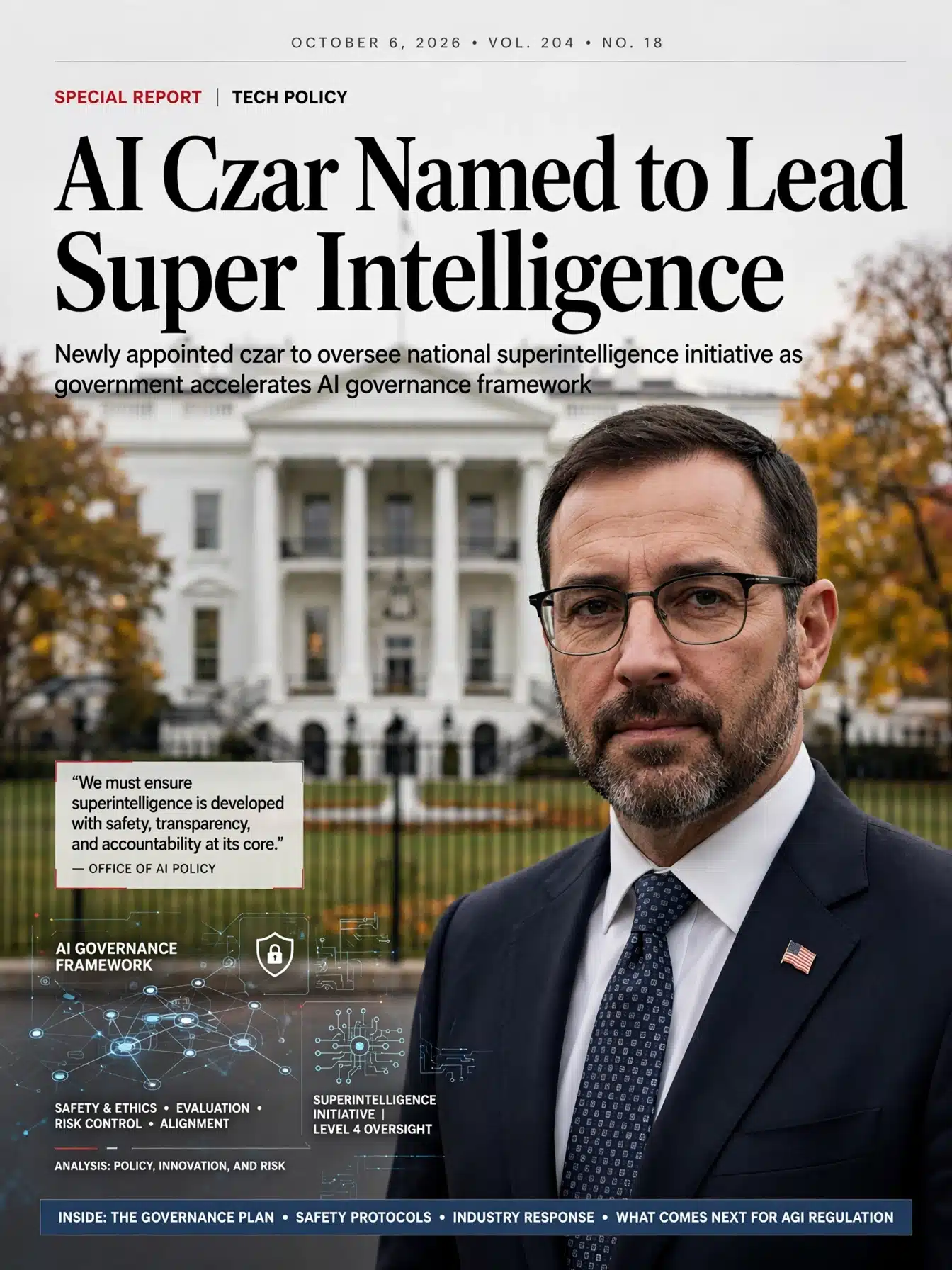
Trump Names Jay Clayton AI Czar to Head New Super Intelligence Force Task Force
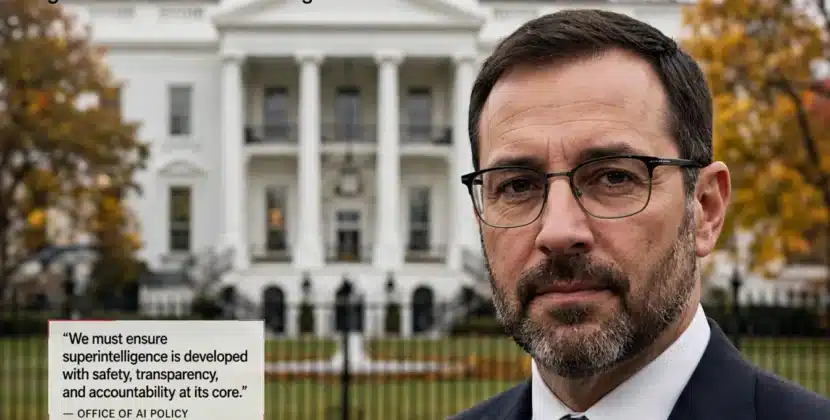
The White House put a name and a face on its artificial intelligence agenda on Sunday, announcing that intelligence chief Jay Clayton will serve as the nation’s AI czar and lead the newly created Super Intelligence Force, a task force charged with steering the government’s push to stay ahead of China in the race for advanced AI. The appointment consolidates a policy drift that began with a presidential executive order last week, one that went so far as to direct agencies to replace the term artificial intelligence with super intelligence in official business.
The announcement lands at a moment when the administration is trying to project both speed and control. In the space of a week, Washington signed a voluntary accord with the leaders of six of the biggest names in technology, launched a new AI-focused government website, and formalized a vocabulary change that critics call marketing and supporters call a realistic acknowledgment of where the technology is heading. Clayton now owns the file, with a mandate that blends national security, industrial policy and the delicate politics of policing companies the government also wants as partners.
Who Is Jay Clayton?
Clayton arrives at the role with a resume built in law and finance rather than in research labs. He previously chaired the Securities and Exchange Commission, where he wrestled with questions about how to treat new financial products and digital assets, and he was later tapped as intelligence chief, giving him standing on the national security side of the AI debate. The administration cast him as a translator between the technical world and the machinery of government, an executive who can read a model card and a classified briefing with equal comfort.
Supporters say the blend matters because the AI czar’s job is less about building systems than about resolving fights between agencies, companies and regulators who disagree on pace and risk. Critics note that Clayton’s background is steeped in Wall Street, and they question whether an enforcement-minded lawyer can grasp the pace of frontier research. The White House argued his dual role is the point: intelligence expertise paired with an operator’s instinct for how markets and governments actually move.
What the Super Intelligence Force Will Do
Officials described the task force as a coordinating body rather than a regulator, a distinction the industry watched closely. Its portfolio includes pushing federal agencies to adopt frontier models faster, aligning national security agencies on how the technology is deployed, and making sure American firms face fewer obstacles when they build data centers and chip plants at home. The force will report to the president and work alongside the AI czar as the central clearinghouse for policy disputes.
The scope reflects lessons from the past two years, when agencies moved at different speeds and companies found themselves navigating overlapping guidance. By concentrating authority, the administration is betting that decisions that once took months will take weeks. The risk, policy analysts said, is concentration itself: a single task force with broad reach and few formal constraints can move fast in one direction, and reversing course later may prove harder than the industry expects.
The Super Intelligence Executive Order
The vocabulary shift began with a presidential action titled Inaugurating the Era of Super Intelligence. The order directed the executive branch to use super intelligence instead of artificial intelligence in official communications, framed as recognition that the systems now in development exceed the narrow assistant software the term was coined for. The same week, the White House rolled out America.gov, a new government website powered by AI, and highlighted the voluntary accord signed by OpenAI, Anthropic, Google, Meta, xAI and NVIDIA.
The accord commits the companies to internal and external reviews of their systems before release, a framework the industry agreed to voluntarily rather than wait for legislation that has stalled in Congress. Critics, including some safety researchers, called the deal toothless because enforcement rests with the signatories themselves. The administration’s answer is that speed matters more than statutory detail in a competition with China, and that voluntary standards backed by presidential attention carry real weight.
Why the US-China Race Drives the Policy
Every element of the announcement is aimed at Beijing. Commentary following last week’s top tech meeting, including analysis from Fareed Zakaria, framed the contest as the defining industrial race of the decade, with the United States holding a lead in chips and frontier models while China presses on deployment at scale. Administration officials argue that regulatory uncertainty, not compute, is the binding constraint on American companies, and that the new force exists to remove it.
The strategic logic runs through supply chains as well as software. Restrictions on advanced chip exports, incentives for domestic fabrication and partnerships with allies in Asia all sit inside the same competition frame. By naming an AI czar, the White House is signaling to companies and foreign governments alike that there is one desk to call when the rules of the road are unclear, a sharp contrast with the patchwork approach of recent years.
What Comes Next
The immediate test is whether the task force can translate visibility into velocity. Companies want clear guidance on model evaluations, security requirements and the approvals needed to build critical infrastructure. Civil society groups want transparency about how decisions are made and who is accountable when systems fail. Clayton will be judged on whether he delivers both, and whether the voluntary accord holds without legislative teeth behind it.
Observers also expect the super intelligence branding to be tested in practice. If agencies adopt the language while policy stays fragmented, the order will read as cosmetic only. If the new force clears bottlenecks on data center permitting, chip exports and federal procurement, the rebrand will look like the opening move of a coherent strategy. Either way, the United States has now centralized its AI policy in a single office, and the world’s biggest technology companies know exactly where the buck stops.
Frequently Asked Questions
Who is the new AI czar?
President Trump named Jay Clayton, the intelligence chief and former Securities and Exchange Commission chairman, as AI czar to lead the new Super Intelligence Force task force.
What is the Super Intelligence Force?
It is a White House task force announced Sunday to coordinate federal AI policy, speed adoption inside agencies and align national security work with the interests of American AI companies.
Why is the government calling AI super intelligence?
A recent executive order directed agencies to use super intelligence instead of artificial intelligence, arguing the term better reflects systems that now exceed narrow assistant software.
Which companies signed the AI accord?
OpenAI, Anthropic, Google, Meta, xAI and NVIDIA signed the voluntary agreement pledging internal and external reviews of systems before they are released.