





FDA Approves Four Updated COVID-19 Vaccines and a New mRNA Flu Shot for the 2026-2027 Season
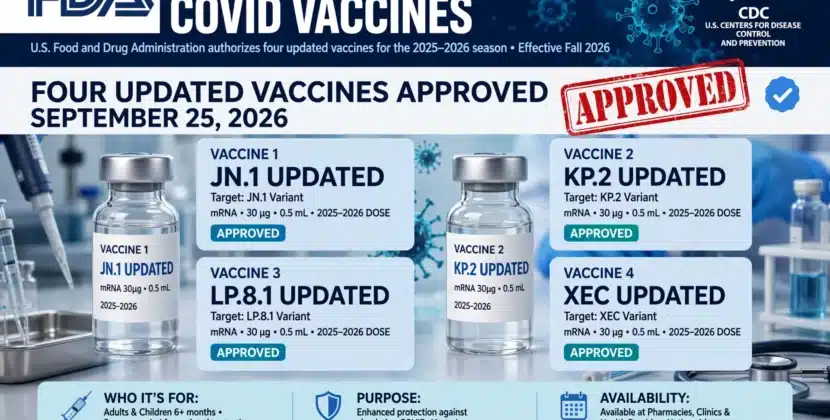
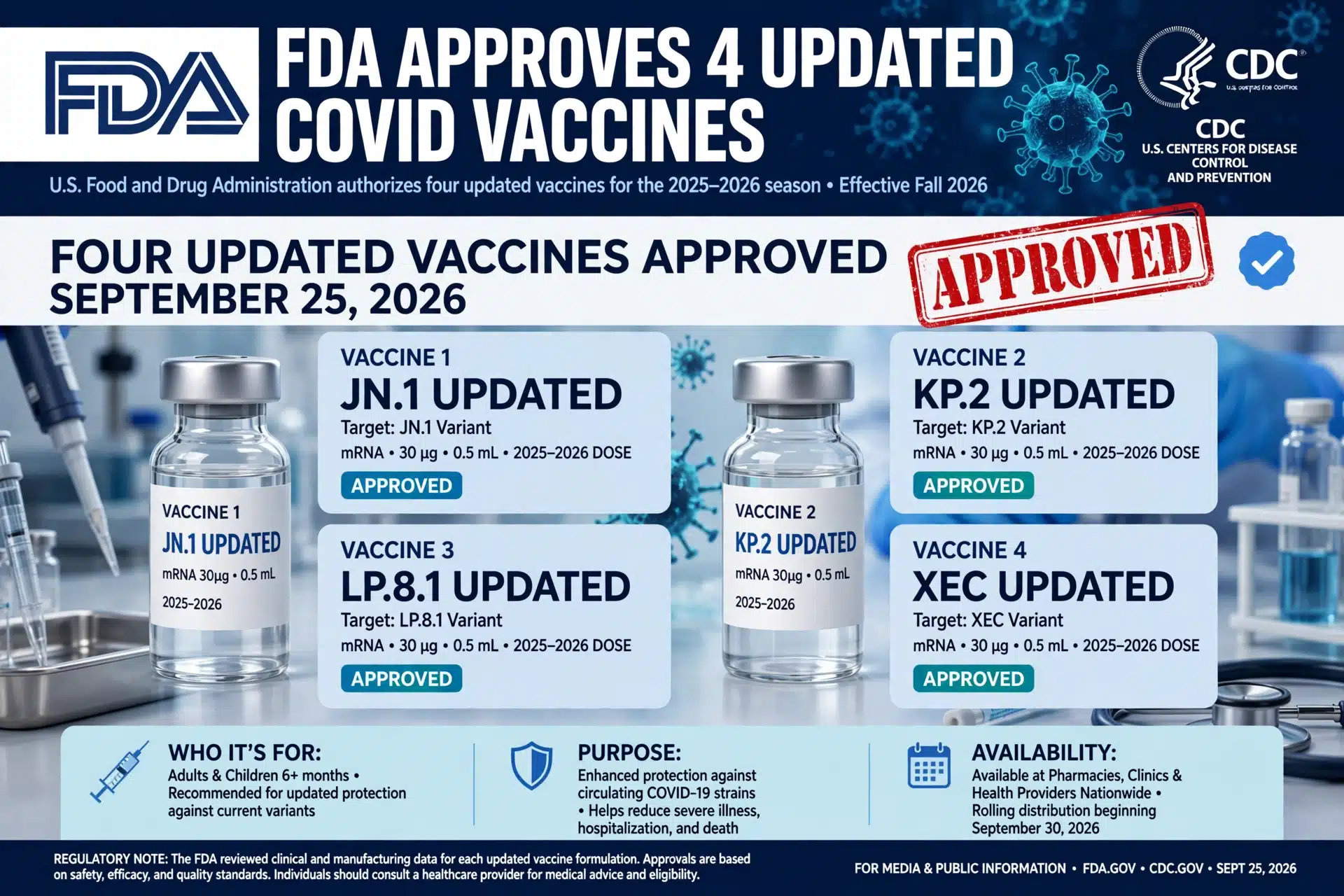
The fall vaccine season is officially underway. The Food and Drug Administration has approved four updated COVID-19 vaccines for the 2026-2027 season, all designed to target the XFG variant now dominant across much of the United States, and has cleared a new mRNA-based influenza vaccine that early data suggest could be roughly 25 percent more effective than conventional flu shots.
The approvals arrive as COVID-19 cases rise in several regions and as vaccination rates in the US remain below public health targets, particularly among older adults and people with chronic conditions. For most Americans, the practical question is simple: which shot, from which manufacturer, and when. Here is what was approved, what the XFG variant is, how the new flu vaccine works and what CDC guidance says about getting both together.
Which COVID-19 Vaccines Were Approved
The FDA signed off on updated formulations from Pfizer-BioNTech, Moderna and Novavax-Sanofi, covering four products in total for the 2026-2027 formula. Pfizer-BioNTech received approval for its XFG-adapted vaccine in late August, with the other authorizations following as manufacturers completed the review process. All are built to match the JN.1-lineage XFG variant, which an FDA advisory committee had recommended earlier this year as the preferred target.
That matching process is the point of the annual update. COVID-19 vaccines are revised the way flu shots are, following circulating strains rather than the virus that existed when the original vaccines were developed. Health officials hope the tighter match restores confidence after several seasons in which updated shots arrived too late or too narrowly to blunt case waves effectively.
What Is the XFG Variant?
XFG, sometimes called the Stratus variant by the public, is a descendant of the JN.1 lineage that has become the dominant form of SARS-CoV-2 circulating in the United States. Viruses mutate continuously, and each new dominant variant carries changes, particularly in the spike protein, that help it evade immunity from prior infection or vaccination. That is precisely why shots formulated against older strains lose effectiveness over time.
Because XFG has been circulating for months, the updated vaccines should provide better neutralizing antibody responses than last year’s formulas against the version of the virus people are actually encountering. Public health specialists stress that no vaccine eliminates risk entirely, but a well-matched shot substantially reduces the odds of severe disease, hospitalization and death, which remains the core goal of the fall campaign.
The New mRNA Flu Vaccine
The second headline approval is Moderna’s mRNA influenza vaccine, the first of its kind cleared for US use after earlier regulatory setbacks. Using the same messenger RNA platform that became familiar during the pandemic, the shot trains cells to produce a flu protein fragment that triggers an immune response. Proponents argue the technology can be designed and manufactured faster than egg-based vaccines and matched more precisely to circulating strains.
Effectiveness estimates discussed around the approval suggest the mRNA flu vaccine may be around 25 percent more effective than standard flu shots in the population studied, though independent experts caution that real-world performance will be measured once the season is underway. Side effects from the trial data were mostly temporary, injection-site pain, fatigue and low-grade fever, similar to other vaccines. The shot adds a new option for people who want the latest platform and for systems that have already built mRNA distribution capacity.
What CDC Guidance Says for This Fall
CDC guidance for the 2026-2027 season continues to recommend that everyone six months and older receive an annual flu shot, with COVID-19 vaccination prioritized for adults 65 and older, pregnant people, children and anyone with weakened immune systems or chronic conditions such as asthma, diabetes and heart disease. Updated guidance has also streamlined earlier restrictions, making it easier for most people to receive COVID-19 and flu shots during the same visit.
Access has improved compared with the early pandemic years: vaccines are available at pharmacies, primary care offices and community clinics, and most insurance plans cover recommended shots without cost-sharing. Health departments have also invested in mobile clinics for rural and underserved areas. Officials are urging people to book appointments now rather than waiting for holiday gatherings, since immunity takes about two weeks to build after injection.
Who Should Get Vaccinated and When
The highest-priority groups are adults 65 and older, infants and young children, pregnant women, immunocompromised people and those with chronic illnesses, because these populations face the greatest risk of severe outcomes. Healthy adults under 50 benefit too, particularly those who live with or care for high-risk individuals. Timing advice is consistent: September through October is the sweet spot, offering protection that lasts through the winter peak.
People who recently had a COVID-19 infection can generally wait a few months before the updated shot, though clinicians say any point in the season is better than skipping it entirely. Pharmacy chains have begun administering the new formulations nationwide, and the FDA approvals clear the way for remaining shipments to reach clinics over the next several weeks.
Frequently Asked Questions
How many COVID-19 vaccines are approved for 2026-2027?
Four updated COVID-19 vaccines from Pfizer-BioNTech, Moderna and Novavax-Sanofi are approved, all targeting the XFG variant that currently dominates US COVID-19 circulation.
Is the new mRNA flu vaccine better than a regular flu shot?
Early estimates suggest the mRNA flu vaccine may be about 25 percent more effective than conventional shots, but real-world data from the 2026-2027 season will confirm actual performance.
Can I get a flu shot and a COVID-19 vaccine at the same time?
Yes. CDC guidance allows co-administration, and most pharmacies can give both during one visit, which is recommended to ensure neither shot is skipped or delayed.
When should I get my fall vaccines?
September and October are ideal, because immunity takes about two weeks to develop and protection is strongest when shots are given before winter respiratory season peaks.