






The Water Crisis Unfolds
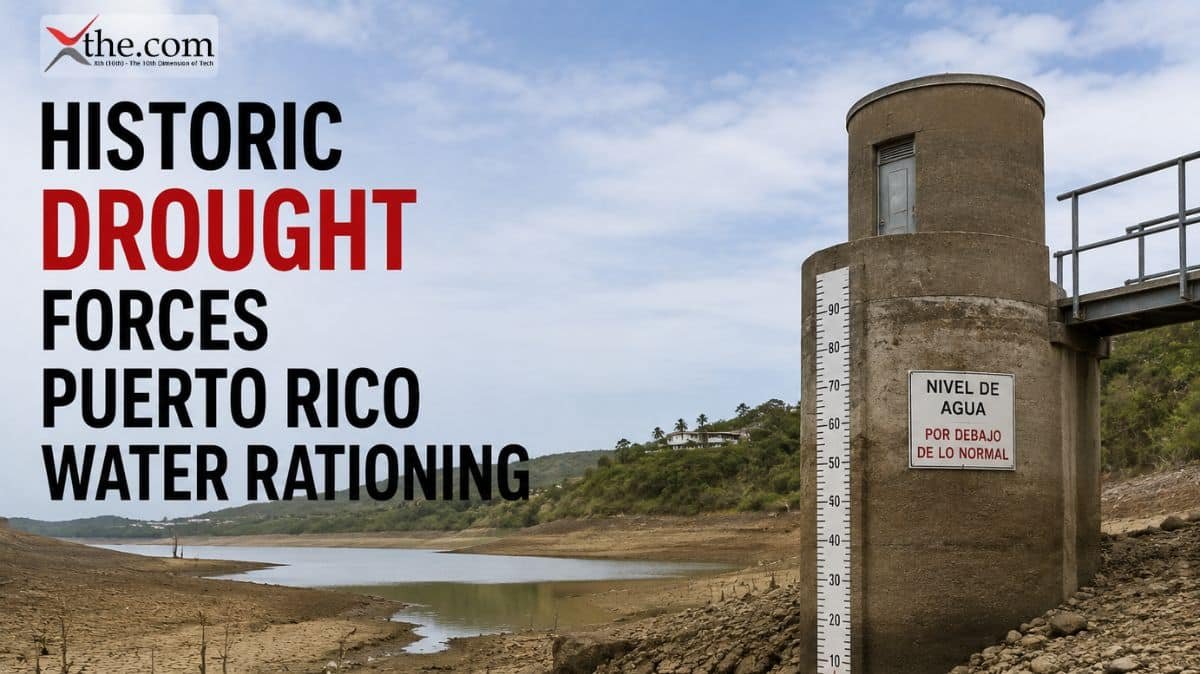
Puerto Rico is facing its worst water crisis in modern history. On August 8, 2026, NBC News reported that residents across the U.S. territory are being forced to ration water as a historic drought pushes reservoirs to critically low levels. Some frustrated islanders had already been without running water for over a week by the time the government announced strict rationing measures — a delay that has sparked anger and protests.
The crisis represents a perfect storm of climate change, aging infrastructure, and governance failures. Puerto Rico’s water authority, already struggling with billions of dollars in debt and decades of underinvestment, has been unable to maintain consistent service even before the drought intensified. Now, with rainfall at historic lows and reservoirs dropping below 30% capacity, the system has reached a breaking point.
How Bad Is the Drought
The drought gripping Puerto Rico is exceptional by any measure. The island has received less than 50% of its normal rainfall over the past six months, and meteorologists see no significant relief in the forecast.
Drought Severity Metrics:
Table
| Metric | Normal Level | Current Level | Status |
| Reservoir Capacity | 75-85% | 22-35% | Critical |
| Rainfall (6-month) | 30-35 inches | 12-16 inches | Severe deficit |
| Stream Flow | Baseline | 25-40% of normal | Exceptional drought |
| Soil Moisture | Adequate | Extreme deficit | Crop failure risk |
The U.S. Drought Monitor has classified most of Puerto Rico under D4 (Exceptional Drought) — the most severe category. This is only the second time in recorded history that the island has reached this classification.
Affected Regions:
- San Juan Metro Area: 40% of residents experiencing service interruptions
- Ponce: Complete water shutoffs in some neighborhoods for 10+ days
- Mayagüez: Rationing schedule of 4 hours on, 20 hours off
- Eastern Municipalities: Agricultural irrigation banned entirely
Government Response and Rationing Plan
The Puerto Rico Aqueduct and Sewer Authority (PRASA) announced a comprehensive rationing plan on August 7, 2026, after weeks of ad-hoc service cuts. The plan divides the island into sectors, with each receiving water on a rotating schedule designed to stretch remaining reserves until rainfall returns.
Rationing Schedule:
Table
| Sector | Water Hours | Population Affected |
| A (San Juan North) | 6 AM – 10 AM | 450,000 |
| B (San Juan South) | 10 AM – 2 PM | 380,000 |
| C (Ponce/Central) | 2 PM – 6 PM | 290,000 |
| D (West Coast) | 6 PM – 10 PM | 210,000 |
| E (East Coast) | 10 PM – 2 AM | 180,000 |
The plan has been met with widespread criticism. Residents argue that 4 hours of water per day is insufficient for basic hygiene, cooking, and sanitation — particularly in tropical heat where dehydration is a constant risk. Critics also note that the schedule fails to account for the 30% of Puerto Rican households that rely on rooftop cisterns, which require consistent pressure to fill.
Residents Go to Extremes
NBC News footage shows Puerto Ricans going to extraordinary lengths to secure water. Residents line up before dawn at natural springs, collect condensation from air conditioning units, and pay premium prices for bottled water that has become scarce as demand surges.
How Residents Are Coping:
- Spring Collection: Lines forming at 4 AM at known freshwater springs
- Rainwater Harvesting: Makeshift tarp systems capturing whatever moisture falls
- Bottled Water Scarcity: Prices surged 300% as supplies ran low
- Neighbor Networks: Communities sharing whatever water they can access
- Migration: Some residents with family on the mainland leaving temporarily
The psychological toll is immense. “We are starting to panic,” one resident told NBC News. “This isn’t just inconvenient — it’s survival.” Elderly residents and those with medical conditions requiring dialysis or oxygen concentrators face particularly acute risks.
Climate Change and Caribbean Drought Patterns
Climate scientists warn that Puerto Rico’s drought is not an anomaly but a harbinger of the new normal for the Caribbean. Rising global temperatures are altering rainfall patterns, increasing evaporation rates, and intensifying the dry season that typically runs from December through April.
Climate Factors:
- Warmer Atlantic: Sea surface temperatures 1.5°C above historical averages increase atmospheric moisture but alter precipitation distribution
- El Niño Influence: The current El Niño pattern suppresses Caribbean rainfall
- Increased Evapotranspiration: Higher temperatures mean soil dries faster even with normal rainfall
- Hurricane Suppression: Paradoxically, fewer hurricanes means less tropical rainfall replenishing reservoirs
The Caribbean Climate Outlook Forum (CariCOF) predicts that drought conditions will persist through at least October 2026, with only a 30% chance of normal rainfall returning before the wet season begins in November.
Infrastructure Failures Exposed
The drought has laid bare the catastrophic state of Puerto Rico’s water infrastructure. PRASA estimates that 60% of treated water is lost to leaks before reaching consumers — one of the highest loss rates in the world.
Infrastructure Problems:
- Aging Pipes: 40% of distribution pipes are 50+ years old, many made of brittle asbestos cement
- Leakage: 150+ million gallons lost daily to leaks
- Treatment Plants: 12 of 34 plants operating below capacity due to maintenance issues
- Power Dependence: Water pumps vulnerable to grid failures; Hurricane Maria demonstrated this vulnerability
Congress allocated $13 billion for Puerto Rico infrastructure recovery after Hurricane Maria in 2017, but much of the water funding remains unspent due to bureaucratic delays, contracting disputes, and PRASA’s bankruptcy proceedings.
Health Risks and Public Health Response
The Department of Health has declared a public health emergency, warning of multiple risks:
Immediate Health Risks:
- Dehydration: Especially dangerous for elderly and infants in tropical heat
- Waterborne Disease: Contaminated sources increasing risk of leptospirosis, hepatitis A, and gastrointestinal illness
- Hygiene Crisis: Inability to bathe or wash hands raising infection risks
- Mental Health: Anxiety, depression, and trauma from prolonged crisis
Public Health Measures:
- Distribution of water purification tablets
- Deployment of mobile hydration stations
- Public health messaging on safe water storage
- Mental health crisis lines activated
The CDC has dispatched an emergency response team to assist with disease surveillance and water quality testing.
Economic Impact on Puerto Rico
The drought is devastating Puerto Rico’s already fragile economy:
Economic Costs:
Table
| Sector | Estimated Impact |
| Agriculture | $180M in crop losses; 40% of plantain, coffee, and vegetable production at risk |
| Tourism | 35% booking cancellations; hotels trucking in water at $5,000/day |
| Manufacturing | Pharmaceutical plants reducing output due to water-intensive processes |
| Small Business | Restaurants, laundromats, car washes closing or operating at reduced capacity |
| Total Economic Impact | Estimated $400-600M through end of 2026 |
The tourism sector is particularly vulnerable. Puerto Rico’s recovery from Hurricane Maria and the pandemic had been driven by visitor spending. Images of water rationing and desperate residents are already appearing in international media, threatening the island’s reputation as a Caribbean destination.
Frequently Asked Questions
Q: Why is Puerto Rico rationing water? A: A historic drought has reduced reservoir levels to 22-35% capacity. The island has received less than 50% of normal rainfall over the past six months, forcing the water authority to implement emergency rationing.
Q: How long will the water rationing last? A: Climate forecasts suggest drought conditions will persist through at least October 2026. Normal rainfall is not expected to return until November at the earliest.
Q: Is Puerto Rico part of the United States? A: Yes. Puerto Rico is a U.S. territory, and its residents are American citizens. However, they cannot vote in presidential elections and have limited congressional representation.
Q: What is the US government doing to help? A: The CDC has deployed an emergency response team. FEMA is coordinating federal assistance. However, much of the allocated infrastructure funding remains tied up in bureaucratic delays.
Q: Can I travel to Puerto Rico right now? A: Travel is still possible, but visitors should expect water restrictions at hotels and restaurants. The tourism industry is operating at reduced capacity.
External Sources:
- NBC News: https://www.nbcnews.com/
- PRASA (Puerto Rico Aqueduct and Sewer Authority): https://www.prasa.com/
- NOAA Climate Prediction Center: https://www.cpc.ncep.noaa.gov/
- CDC Emergency Response: https://emergency.cdc.gov/
- FEMA Puerto Rico: https://www.fema.gov/disaster/puerto-rico








