






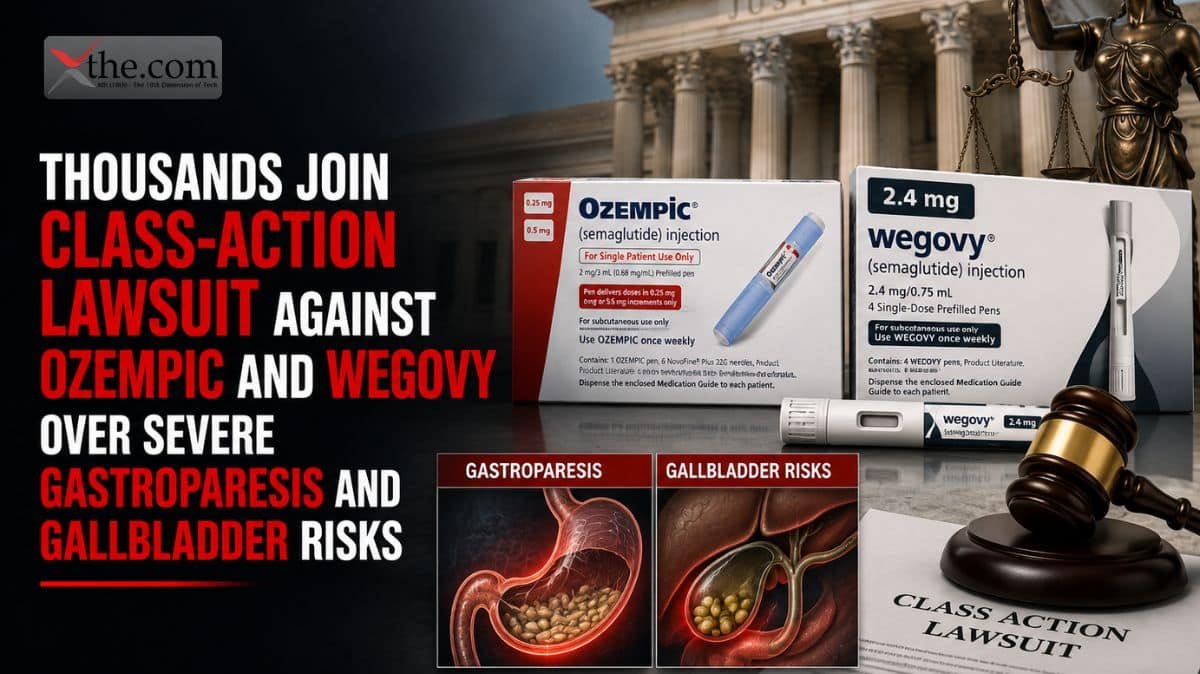
A federal class-action lawsuit filed in the Northern District of Texas is rapidly expanding, with over 12,000 plaintiffs now alleging that Novo Nordisk failed to adequately warn patients and physicians about the risk of severe gastroparesis — stomach paralysis — associated with its blockbuster weight-loss drugs Ozempic and Wegovy. The lawsuit, which could become one of the largest pharmaceutical liability cases in US history, claims the Danish drugmaker prioritized profits over patient safety as GLP-1 medications exploded into a $100 billion global market.
What Is Gastroparesis?
Gastroparesis is a condition where the stomach cannot empty itself properly because the vagus nerve — which controls digestive muscle movement — is damaged. GLP-1 receptor agonists like semaglutide (the active ingredient in Ozempic and Wegovy) slow gastric emptying as part of their mechanism to promote fullness and reduce appetite. For most patients, this effect is mild and reversible. However, plaintiffs allege that in thousands of cases, the slowing became permanent and severe, leading to chronic nausea, vomiting, malnutrition, and hospitalization.
Dr. Andrew Boxer, a gastroenterologist at UCLA Medical Center, has treated over 200 patients with GLP-1-related gastric complications. “What we’re seeing is not the typical mild delayed emptying described in clinical trials,” he testified in a deposition. “These patients have essentially non-functioning stomachs. Some require feeding tubes.”
The Allegations
The lawsuit centers on Novo Nordisk’s prescribing information and direct-to-consumer advertising. While the drug label mentions “delayed gastric emptying” as a side effect, plaintiffs argue it does not adequately describe the risk of permanent gastroparesis requiring surgical intervention. The complaint also highlights that Novo Nordisk’s television and social media advertisements — which feature celebrities and promise dramatic weight loss — never mention gastroparesis, only listing nausea and diarrhea as common side effects.
Additionally, the lawsuit alleges Novo Nordisk knew about these risks from post-marketing surveillance data as early as 2022 but failed to update warnings or notify the FDA of a “signal” requiring label changes.
FDA Response and Investigation
The FDA launched a formal safety review of GLP-1 medications in March 2026 after receiving over 8,500 adverse event reports related to gastroparesis, intestinal obstruction, and aspiration during anesthesia. In June, the agency required Novo Nordisk and Eli Lilly (maker of Mounjaro and Zepbound) to add stronger warnings about ileus — a complete bowel obstruction — to their drug labels.
FDA Commissioner Dr. Robert Califf stated: “We take these reports seriously. While GLP-1 medications have demonstrated significant benefits for diabetes and obesity, we must ensure prescribers and patients understand the full spectrum of risks.”
Plaintiff Stories
Jennifer Martinez, a 38-year-old mother of two from Houston, joined the lawsuit after being hospitalized three times for gastroparesis following 14 months on Wegovy. “I lost 67 pounds, but now I can’t keep water down some days,” she told CNN. “I would never have taken this drug if I knew I could end up with a paralyzed stomach.”
Robert Chen, a 52-year-old software engineer from Seattle, required gastrostomy tube placement after Ozempic caused severe gastric dysmotility. His medical bills have exceeded $340,000, and he has been unable to work for 8 months.
Novo Nordisk’s Defense
Novo Nordisk has vigorously denied the allegations, stating that gastroparesis is listed as a known risk and that the incidence rate in clinical trials was “extremely low.” The company points to the FDA’s approval of the drug based on extensive safety data and notes that obesity itself carries far higher risks of gastroparesis and cardiovascular disease than the medication.
In a statement, Novo Nordisk said: “We stand behind the safety and efficacy of our GLP-1 medications, which have helped millions of patients. We will defend against these claims, which we believe are without merit.”
Market Impact
Novo Nordisk (NVO) stock has fallen 18% since the lawsuit was filed in May, wiping out over $80 billion in market value. Eli Lilly (LLY) has declined 9% on fears of similar litigation. The GLP-1 market, which analysts projected would reach $150 billion by 2028, now faces uncertainty as physicians report patients discontinuing prescriptions out of fear.
What Patients Should Do
If you are currently taking Ozempic, Wegovy, Mounjaro, or Zepbound, do not stop without consulting your physician. However, you should:
- Monitor Symptoms: Persistent vomiting, severe abdominal bloating, inability to eat, or unexplained weight loss after stopping the drug warrant immediate medical attention.
- Document Everything: Keep records of prescriptions, pharmacy receipts, and all medical visits related to digestive symptoms.
- Know Your Rights: The statute of limitations for product liability claims varies by state — typically 2-3 years from injury discovery. Consult a pharmaceutical litigation attorney if you experienced severe gastric complications.








