





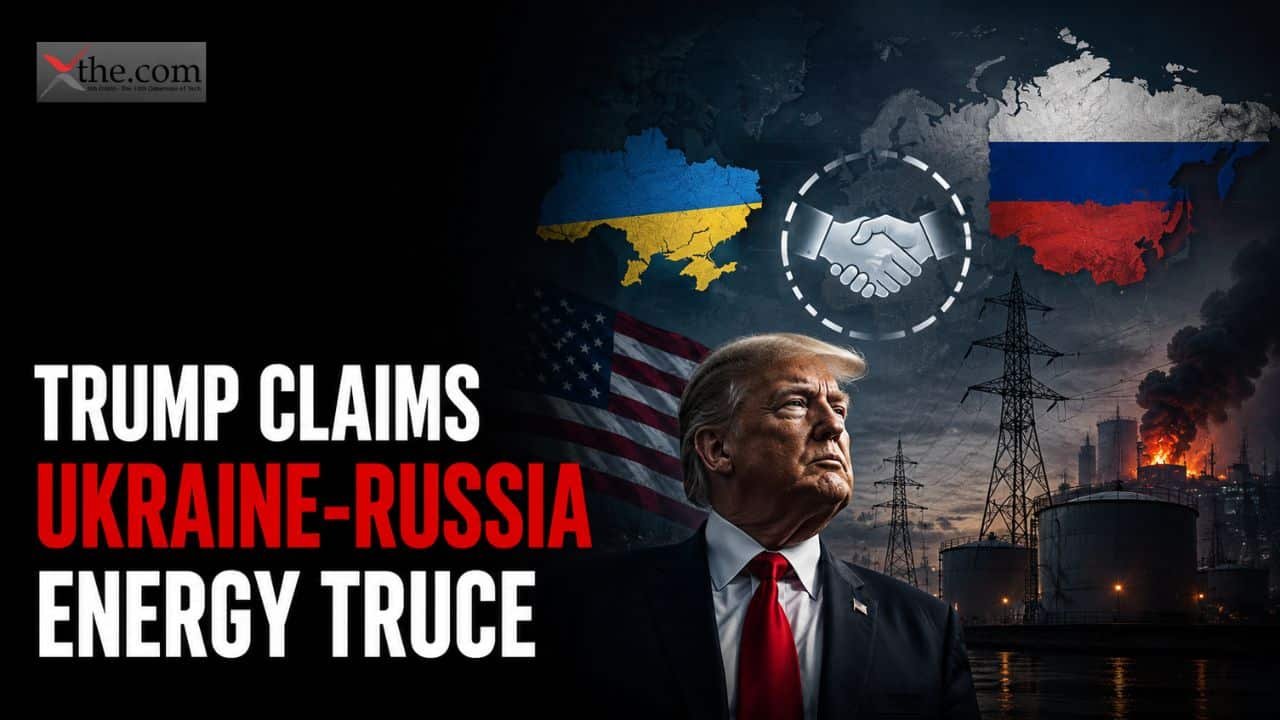
Trump Announces Ukraine-Russia Energy Ceasefire as Attacks on Power Plants Continue
President Donald Trump announced on Sunday, October 11, that Russia and Ukraine had agreed to an energy ceasefire effective immediately, a claim he made without terms or details and one that Moscow had not publicly confirmed even as he spoke. Within hours, Ukrainian officials were reporting exactly the sort of strikes the announcement was supposed to stop, including a hit on a power plant in Kharkiv, and President Volodymyr Zelenskyy’s first public reaction was to say the news had reached him before it reached his government.
The sequence captured in a single day what has become the defining pattern of Trump’s wartime diplomacy on Ukraine: dramatic declarative breakthroughs that outrun the confirmations behind them, followed by a credibility test on the ground that neither Washington nor Kyiv can control. An energy ceasefire, if it holds, would be the most significant de-escalation of the war’s economic front in months. The fact that continued attacks defined the announcement’s first day is precisely why the claim landed the way it did.
What Trump Said and What Zelenskyy Said
Trump framed the agreement as immediate and comprehensive on the energy infrastructure question, but provided no mechanism, no monitoring arrangement and no written terms. Zelenskyy initially described the announcement as news to me, a phrase that circulated globally within minutes and that allies and adversaries alike read as a signal about how the deal was assembled. The Ukrainian president later adjusted his public position, saying Ukraine was prepared to stop striking Russian energy infrastructure if Russia did the same, a conditional acceptance that keeps the ball in Moscow’s court.
The asymmetry matters. Zelenskyy’s readiness to halt Ukrainian strikes on Russian refineries is a real concession, because those strikes have become Ukraine’s most effective lever against the war finance machine that funds the Russian military. Reuters reported earlier this month that Ukraine intended to double down on attacking Russian oil refineries in response to a new Russian airstrike doctrine designed to drive people out of Kyiv and other cities. Offering to suspend that campaign is the price of entry for any truce, and it is not a cheap one.
The Attacks Continued Through the Announcement
Reports through Sunday and into Monday described continued Russian strikes on Ukrainian energy targets. The BBC reported a drone strike on a Kyiv power plant that caused power cuts, followed by strikes on energy facilities in the Kharkiv region, and The Guardian’s war briefing led with the observation that Russia attacked multiple power plants after Trump’s energy ceasefire claim. Ukrainian officials cited a strike on a power plant in Kharkiv specifically.
Casualties continued alongside the infrastructure damage. The BBC reported three deaths in a strike on a Kharkiv grocery store, and coverage across outlets described six people killed in attacks across two Ukrainian cities on Sunday. For Ukrainian communities heading into a fourth winter of war, energy infrastructure attacks are not an abstract bargaining chip. They are the mechanism by which cold, dark apartments and hospital interruptions become seasonal facts of life, which is exactly why both sides treat the energy front as strategically decisive.
Moscow’s Silence Speaks Volumes
As of the reports reviewed on October 12, the Kremlin had not publicly confirmed the agreement Trump described. That silence is itself a data point, because a Russian leadership willing to accept energy ceasefire terms could be expected to claim credit for them domestically. Instead, the strikes continued, and the pattern matches how previous ceasefire phases have played out in this war, with one side announcing terms, the other neither accepting nor formally rejecting them, and the battlefield filling the ambiguity.
Allies moved quickly to support the concept. The Guardian reported that the United Kingdom, France, Canada and the European Commission expressed backing for the energy ceasefire idea, while noting Russia’s agreement remained unconfirmed. The international endorsement gives Trump political cover for the announcement, but it does not substitute for the only verification that matters, which is whether missiles and drones stop flying at Ukrainian substations.
Why Energy Is the Real Battlefield
Both economies have organized their war effort around energy. Russia exports oil and gas to fund its military. Ukraine’s grid powers its defense industrial base, its hospitals and the cities whose morale sustains resistance. Each side’s strikes on the other’s energy system are therefore not spillover damage but the campaign itself, a war of economic attrition conducted with long-range drones.
That context is why the market reaction to ceasefire talk is immediate and measurable. Energy traders watch any signal that Russian supply could flow more freely or that Ukrainian strikes on refining capacity might pause, and each presidential statement on the war moves crude prices within minutes. A genuine energy ceasefire would ripple through gasoline prices and inflation expectations in the United States, a connection that lands squarely in the middle of a week already focused on upcoming inflation data.
The Track Record Behind the Skepticism
Sunday’s announcement is not the first time a Ukraine ceasefire has been declared or discussed at high levels this year. September saw a flurry of diplomatic activity around exactly this concept, with Zelenskyy meeting Trump in New York, European leaders lobbying for an energy-focused truce, and the Kremlin rejecting a pause in fighting at the time. The announced framework has been negotiated in public for weeks, which is part of why the October 11 declaration felt sudden despite being months in the making.
It is also why observers are watching implementation details rather than the headline. An energy ceasefire that holds requires identification of covered facilities, a channel for reporting violations, and restraint by military units and drone crews on both sides who have spent years being told these targets are the enemy. None of that architecture has been publicly described.
What to Watch in the Coming Days
Three things will determine whether the energy ceasefire claim becomes history or footnote. First, whether Moscow says anything at all, because silence combined with continued strikes is functionally a rejection. Second, whether strikes on Ukrainian power infrastructure actually pause beyond the announcement cycle, which gives the claim a track record. Third, whether the arrangement survives contact with the war’s incentives, since each side gains something from the attacks the truce would prohibit.
For now the world has an announcement without a mechanism, an endorsement without a signature and a war that continued firing through the press conference. If Trump’s October 11 claim matures into a real freeze on energy warfare, it will be remembered as the day the economic front of the Ukraine war began to close. If the strikes on power plants continue through the week, it will be remembered as something else entirely, and the parties will have learned once again that in this conflict, ceasefires are built in the details that announcements leave out.
Frequently Asked Questions
What did Trump announce about Russia and Ukraine on October 11?
President Trump said Russia and Ukraine had agreed to an energy ceasefire taking effect immediately, though he provided no terms or details, the claim came without confirmed Russian assent, and attacks on Ukrainian energy targets continued after the announcement.
Did Zelenskyy confirm the energy ceasefire?
His first reaction was to say the announcement was news to him. He later said Ukraine was ready to stop striking Russian energy infrastructure if Russia stopped doing the same, effectively making Ukraine’s participation conditional on Russian reciprocity.
Did Russia agree to the ceasefire?
As of October 12 reporting, Moscow had not publicly confirmed it, and Russian strikes on Ukrainian power plants, including facilities in Kyiv and the Kharkiv region, continued after Trump’s claim.
Why does an energy ceasefire matter beyond the war?
Energy infrastructure is central to both economies financing the conflict, and ceasefire signals move crude oil markets quickly. Any durable pause in strikes on Russian refineries or the Ukrainian grid would affect oil prices and inflation expectations, including in the United States.