





Hospitals Go Back to Court to Stop the 340B Rebate Program From Launching
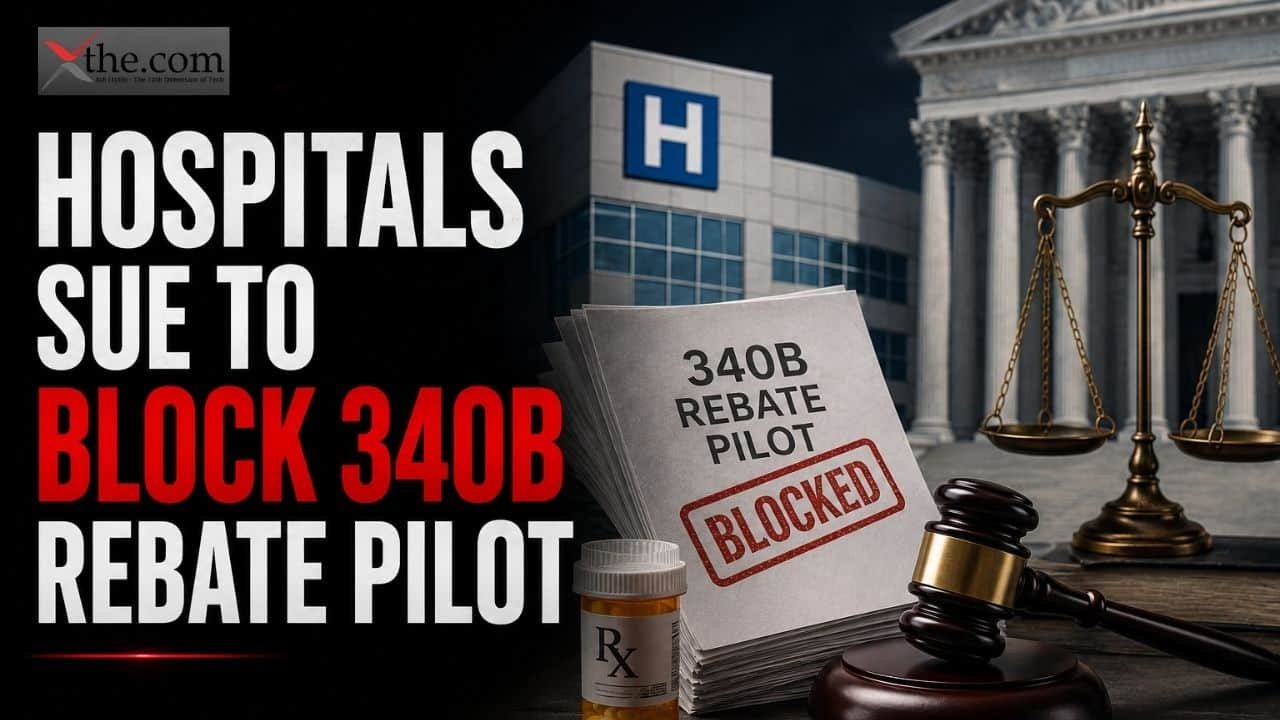
The American Hospital Association, the Maine Hospital Association and hospital providers filed suit against the Department of Health and Human Services and the Health Resources and Services Administration on October 9, asking the U.S. District Court for the District of Maine to block the revived 340B Rebate Model Pilot Program before it launches on January 1, 2027. It is the second round of litigation over the same core idea, and it puts a signature drug pricing experiment of the federal government back in front of a judge with a hard calendar deadline attached.
The dispute is not about whether the 340B program, which since 1992 has let safety-net hospitals and other eligible providers buy outpatient drugs at discounted prices and charge payers full price, with the spread funding patient services, should exist. Both sides say they want it to work. The fight is over a structural change to how money moves inside it, and the hospital industry’s position is that the new model would force providers to function as the federal government’s interest-free lender for the nation’s most expensive drugs.
How the Rebate Model Works
Under the current system, covered entities purchase covered outpatient drugs at or near the discounted 340B price, administer them to eligible patients, and keep the difference between that price and what insurers reimburse. The proposed rebate model inverts the sequence. Hospitals would pay the full list price for certain covered drugs upfront at the pharmacy or wholesaler, then seek a retroactive rebate from the manufacturer after the drug has been administered to an eligible patient.
The revised pilot, according to HRSA’s announcement as reported by Fierce Healthcare, covers 21 drugs across 10 manufacturers. That scope is deliberately limited for a pilot, but the hospital plaintiffs argue the administrative architecture it requires, tracking every administration, filing every rebate claim, reconciling every denial, and carrying the cash-flow gap on drugs whose list prices can run tens of thousands of dollars per dose, would burden the entire provider community far beyond the pilot’s footprint.
Two Very Different Cost Estimates
The two sides are not arguing about the direction of the cost, only about its magnitude, and both numbers are large. The American Hospital Association estimates the administrative burden would exceed $1 billion annually among hospitals. HRSA’s own estimate, as reported in coverage of the rule, is $537.2 million annually across all covered entities, a figure with a different scope that includes pharmacies and other providers beyond hospitals. The gap between the estimates is the gap between a hospital industry reading the rule through its own compliance operations and a federal agency modeling a best-case implementation.
Beyond administration, providers point to working capital. Paying full price on a 21-drug list and waiting for rebates means hospitals carry months of float on high-cost therapies, money that safety-net providers argue belongs in patient care. For critical access hospitals and community providers operating on margins of one or two percent, the finance department problem and the mission problem are the same problem.
This Is the Second Time Around
The legal history is what makes the October 9 filing notable. An earlier version of the 340B rebate model, planned for 2026, was blocked in court, first by a district court and then on appeal, before HRSA withdrew it and undertook a longer public comment process. The agency then returned with the revised pilot now scheduled for January 1, 2027, and the hospital associations’ complaint argues the redo did not actually fix the core defect: that HHS and HRSA failed to adequately address comments about provider costs and alternatives, rendering the model arbitrary and capricious under federal administrative law.
That last phrase is a legal standard, not a rhetorical flourish. The Administrative Procedure Act lets courts set aside agency action that is arbitrary and capricious, including when an agency is shown to have ignored significant comments during rulemaking. Having already won on related grounds once, the plaintiffs are betting that a record of unresolved objections is the fastest path to another injunction before January.
What Is at Stake for Safety-Net Providers
The 340B program is the financial backbone of much of America’s safety-net care. Disproportionate share hospitals, rural critical access hospitals, community health centers and HIV clinics use the savings to fund sliding-scale clinics, transportation programs, pharmacy services and outreach in communities that do not otherwise pay for themselves. Hospital groups have testified for years that any erosion of 340B forces direct cuts to those services.
Pharmaceutical manufacturers have their own grievances with 340B, arguing the program has grown far beyond its safety-net origins and that contract pharmacy arrangements, which let entities use outside pharmacies to dispense discounted drugs, generate profits rather than patient services. The rebate model is the federal government’s attempt to introduce manufacturer rebate obligations into a program built on upfront discounts, and both the design and the litigation track how fundamentally the parties disagree about whose money is whose.
The Litigation and the Calendar
The case was filed in the District of Maine, and the Georgetown Health Care Litigation Tracker lists it as American Hospital Association et al. v. Kennedy et al., with related earlier litigation over the withdrawn version of the model still shaping the docket history. Because the pilot is scheduled to take effect January 1, the timing of any ruling matters as much as the ruling itself. A preliminary injunction request puts the question of irreparable harm in front of the court, and the hospital plaintiffs will argue that rebilling infrastructure built for January cannot be unwound cleanly if they prevail later.
HRSA has defended the revised pilot as the product of an extensive comment process and a targeted test, limited to 21 drugs and 10 manufacturers precisely so its effects can be measured before any expansion. The agency’s 340B program page describes its statutory mission of stretching scarce federal resources as far as possible for vulnerable patients, and the government’s litigation posture will likely emphasize that a pilot, by definition, is not the permanent rule the associations are asking the court to stop.
What Happens Next
The coming weeks will decide whether the January 1 launch survives. Expect an emergency motion for preliminary injunction, briefing on the administrative record from the rulemaking comment period, and a hearing schedule compressed by the calendar rather than by judicial preference. Hospitals participating in the pilot face a planning problem in the meantime: build the rebate infrastructure and risk it being barred weeks later, or wait and risk missing the launch entirely.
For a program now in its fourth decade, the stakes transcend one pilot design. If the rebate model survives this challenge, it establishes that HHS can restructure how 340B money flows without winning over the providers who operate it. If the courts block it again, it reaffirms that agency ambition inside the 340B program still runs into the same administrative law ceiling. Either way, the dispute will be resolved well before January 1, and roughly 1,400 pages of briefing later, hospitals and the government will know which version of the program they are running in the new year.
Frequently Asked Questions
Why are hospitals suing over the 340B rebate model?
The American Hospital Association and other providers argue the revised rebate pilot, scheduled to launch January 1, 2027, would force hospitals to pay full price for 21 covered drugs upfront and chase retroactive rebates, creating more than $1 billion in annual administrative burden by the industry’s estimate and straining cash flow for safety-net providers.
What is the 340B Rebate Model Pilot Program?
It is a federal pilot from HHS and HRSA, covering 21 drugs and 10 manufacturers, that would replace upfront 340B discounts on those drugs with a system where covered entities pay full price and later claim manufacturer rebates after administering the drugs to eligible patients. An earlier version was blocked in court and withdrawn before this revised pilot was developed.
When was the lawsuit filed and where?
The AHA, the Maine Hospital Association and hospital providers filed against HHS and HRSA on October 9, 2026, in the U.S. District Court for the District of Maine, seeking to block the pilot before its January 1, 2027 launch date.
How much does the 340B rebate pilot cost, really?
The estimates differ by scope. The AHA projects more than $1 billion per year in administrative burden among hospitals alone, while HRSA’s estimate is $537.2 million annually across all covered entities, including non-hospital providers. Both figures are contested and were submitted as claims in the rulemaking record now at the center of the lawsuit.