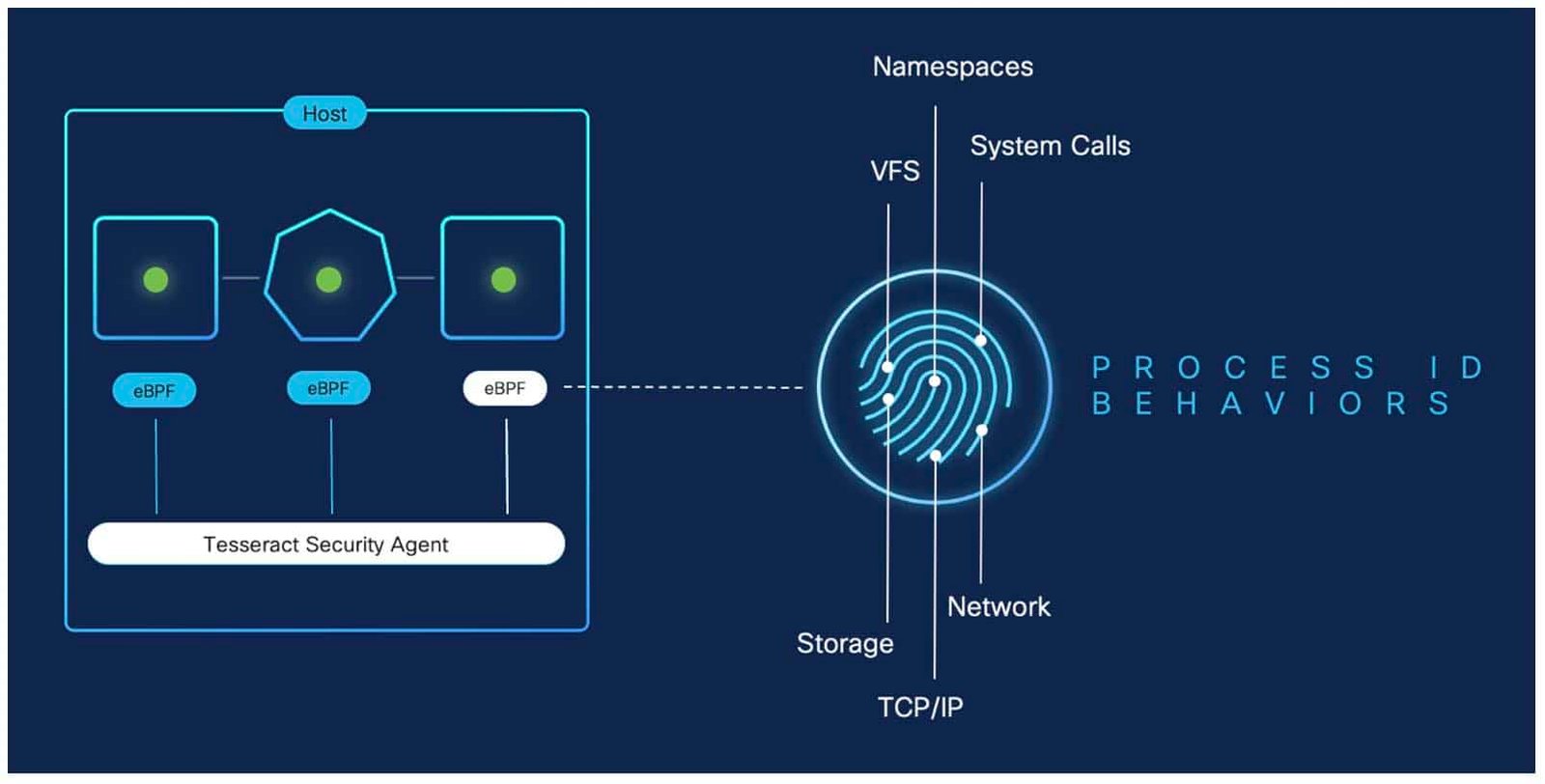
SAN JOSE, Calif. — One such revolutionary innovation from Cisco in the domain of Cloud security is Cisco Hypershield, which is based on eBPF security at the kernel level for AI applications. Not just a step-up from existing solutions, this is a new way of approaching security. Unlike typical security solutions that focus solely on detecting malicious traffic entering the network at the periphery, Cisco Hypershield operates within the AI application itself. By integrating eBPF Security into the kernel, it enables real-time protection without an external firewall, thereby eliminating the possibility of side-channel leakage.
Going Beyond the Perimeter
Traditional enterprise security relied on firewalls and centrally deployed security monitoring systems for networks and applications. However, the evolution towards cloud environments makes such an approach less viable. Attack surfaces have grown significantly, and threats are active within the workloads themselves.
The inclusion of Cisco Hypershield alters this scenario by deploying eBPF Security to protect workloads at their point of execution.
Specifically, the key benefits include:
- Immediate Policy Enforcement: Security enforcement happens directly within the workloads
- Shrunk Attack Surface: No need for additional firewall layers
- Improved Visibility: Deeper application-level telemetry
Overall, such a deployment strategy adheres to the principles of Zero Trust, which assume no implicit trust in entities based on their location.
Kernel-Level Security Intelligence: The Power of eBPF
This capability enables Cisco Hypershield to monitor network activity, system calls, and application execution in real time.
Some of the benefits are:
- Low Latency Filtering: Security analysis done without any context switching overhead
- High Flexibility: Ability to update security rules in real time
- Scalability: Can be used in distributed cloud infrastructures
As seen, Cisco Hypershield creates a Distributed Fabric of security policy enforcement via kernel intelligence.
Microsegmentation and Zero Trust Progression
Among the many benefits offered by Cisco Hypershield, perhaps one of the best is Microsegmentation. Rather than securing whole network environments, this solution allows for securing workloads or even specific processes.
This can be used for:
- Protecting sensitive workloads
- Stopping lateral movements inside the system
- Controlling policy execution
When combined with a Zero Trust security architecture, eBPF Security ensures that all interactions are controlled, monitored, and verified. This makes it much harder for breaches to occur from within the organization.
Closing the Door on Side-Channel Attacks
Side-channel attacks exploit indirect data leakage, such as timing, memory access, or system behavior. This type of threat poses challenges for conventional detection methods.
Using Cisco Hypershield to secure systems and applications means taking advantage of the following possibilities:
- Monitoring system-level side channel signals
- Recognizing abnormal activity immediately
- Stopping side channel attacks automatically
Such a solution is especially necessary to secure AI workloads, as training models and data may be targeted through side channels.
Impact on Industry Ecosystem
Cisco Hypershield is likely to trigger further disruption across the broader cybersecurity landscape, where firms like Check Point, which rely on the conventional firewall approach, may become less relevant as cloud-native approaches emerge.
On the other hand, cloud vendors such as Amazon Web Services and Google Cloud may have no other choice but to:
- Facilitate greater integration with the kernel.
- Enable third-party eBPF Security capabilities.
- Increase the transparency of workload protection.
This change represents a shift from perimeter defense to embedded, intrinsic security within the infrastructure.
Operational Efficiencies and Cost Savings
In addition to improved security features, Cisco Hypershield offers operational efficiencies that reduce the total cost of ownership.
Main efficiencies provided by Cisco Hypershield include:
- Minimal involvement in manual policy rule creation
- Increased speed in deploying security policies
- Ease of complying with regulatory frameworks
The use of telemetry enables timely decisions based on performance metrics and threat data collected.
Moreover, Workload Protection eliminates the need to implement security controls at an additional layer.
Future Strategic Outlook for Enterprises
As enterprises expand and develop their capabilities through AI and cloud-based services, the need for flexible, real-time security solutions will become inevitable. Hypershield by Cisco represents a foundation for developing next-generation infrastructure. The synergies between Distributed Fabric, Telemetry, and Workload Protection result in a coherent system with security embedded in its architecture rather than bolted on.
In the context of the current industry trends, we may highlight the following ones as most relevant to the new solution:
- Growing popularity of cloud-native infrastructures;
- Complexity of AI workload;
- Need for automation of cybersecurity processes.
Early adopters of the new solution may expect an advantage in terms of security and efficiency.
Conclusion
Introducing eBPF Security to Cisco Hypershield can be considered the key step towards a change in the cybersecurity paradigm. The shift in focus to kernel-level security and protection against side-channel attacks has enabled overcoming all constraints associated with traditional perimeters. In addition to higher-level protection, Cisco Hypershield provides organizations with smarter and more efficient security. Now enterprises can feel confident about their workloads because of the protection’s internal nature. Zero Trust architecture and a distributed environment represent the future of infrastructure, but first, one must ensure security and scalability.