



AUSTIN, Texas — However, Tesla has now moved to the next level by launching a new generation of its AI supercomputing infrastructure, Tesla Cortex 2.0. Unlike its predecessor, this new system is more than a powerful supercomputer. It is a breakthrough in terms of training, optimizing, and deploying robots in the real world. Currently, the first stage of Tesla Cortex 2.0 has been launched, enabling the company to train its robots using AI models for Optimus Gen 3 with exceptional computational capacity.
Transition to Production-Level Robot Training
In previous decades, most humanoid robots have remained at the prototype stage due to limitations in computing power and inefficient pipeline training.
Thanks to Tesla Cortex 2.0, however, the company will be able to move to a new phase of robot development by combining efficient compute power with vertical AI solutions.
Benefits of Tesla Cortex 2.0 for Optimus Gen 3
- Faster training processes
- Simulation capability in real time
- Elimination of dependency on external infrastructure
Powering Optimus Gen 3
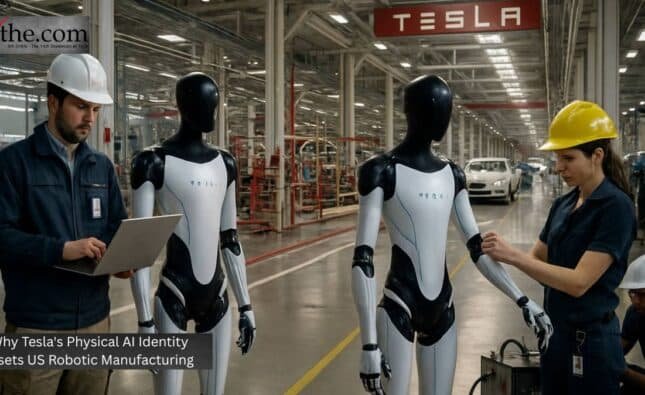
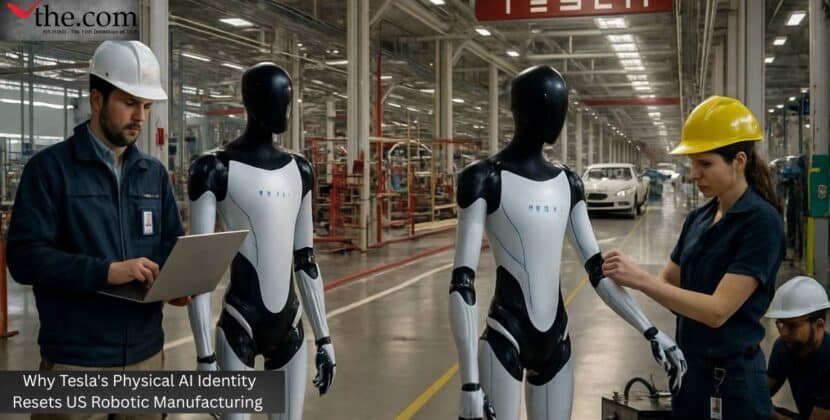
At the core of the transition lies Optimus Gen 3, Tesla’s latest humanoid robot. The machine is designed for real-world applications and features several breakthroughs in locomotion, manipulation, and cognition.
Key features:
- 22 Degrees of Freedom Hand capable of fine motor skills
- Enhanced perception provided by the AI5 Chip
- Mass deployment following the principles of Humanoid Scale production
Tesla Cortex 2.0 guarantees that all of the above capabilities will continually evolve through intensive training and real-world feedback.
Compute at Massive Scale
Massiveness is one of the most distinctive traits of Tesla Cortex 2.0. Tailored to handle extremely large AI workloads, the architecture is built to ensure a gradual transition to a capacity of 500 MW. In the initial phase, the technology already provides enough computing resources to train Tesla’s “General World Model,” which helps robots operate in complex environments.
This is essential for ensuring:
- Autonomous behavior
- Adaptability to varying conditions
- Easy integration into production workflows
The Long Tail Breakthrough
The most crucial aspect of this innovation lies in its potential to ensure how Tesla’s Cortex 2.0 supercomputer drives Optimus Gen 3 production. It closes the gap between AI training and physical implementation, enabling Tesla to shift from isolated experiments to full-scale production runs.
Tesla’s decision is already creating waves in the robotics sector. Competing companies such as Boston Dynamics and Figure AI face a significant weakness: a lack of an integrated computing architecture. Unlike Tesla, which has its own computing architecture, these companies would be forced to work with third-party entities, such as NVIDIA and Microsoft, for training.
It means they will:
- Have higher training latency rates
- Experience higher operational costs
- Lack of control over data optimization and management
Tesla has an advantage due to its tightly integrated system, where hardware and software go hand in hand.
Compute-to-Action Latency Edge
In robotics engineering, compute-to-action latency—the time it takes AI models to convert computations into physical actions—is one of the key performance indicators.
Thanks to Tesla Cortex 2.0, the latency will be shortened because of:
- Integration with Tesla’s proprietary AI architecture
- Fast data-processing pipelines
- Real-world environmental feedback
Compared to competing humanoid robotics systems that use separate compute devices, Tesla gains a significant advantage—a 3X edge in compute-to-action latency.
Implications for Manufacturing
The rollout of Tesla Cortex 2.0 suggests the company’s plans to mass-produce its humanoid robots. Plants like Giga Texas will become the backbone of Optimus Gen 3‘s manufacturing and delivery.
The shift implies:
- Simplification and optimization of the manufacturing process
- Automation of robotics assembly lines
- Coordination with industrial production flows
The transition from prototypes to mass production heralds a crucial turning point in the robotics industry.
Strategic Implications
Tesla’s release of the Tesla Cortex 2.0 represents several emerging industry trends in robotics and artificial intelligence:
- Growth in the demand for humanoid robots as labor substitutes
- Proliferation of advanced infrastructure for AI model training
- Verticalization of technology production and distribution networks
Conclusion
The launch of Tesla Cortex 2.0 marks a watershed moment in the development of humanoid robots. By deploying Optimus Gen 3 on a wide scale, Tesla is basically starting a new race altogether. It’s no longer about who comes up with more prototype designs; it’s about who has the capability to produce at scale. Tesla has placed itself perfectly for this new era of robotics with its unique combination of software and hardware. One thing is certain amid all the developments in this field: the firms that control both AI training and robotics will shape the future.