




Round Rock, Texas
Millions of people hit refresh without realizing how easily internet traffic can break down, bank apps can freeze during payday deposits, ticketing sites can stall just before concert sales start, and retailers can crash during holiday rushes, losing millions in abandoned parts before engineers find the problem.
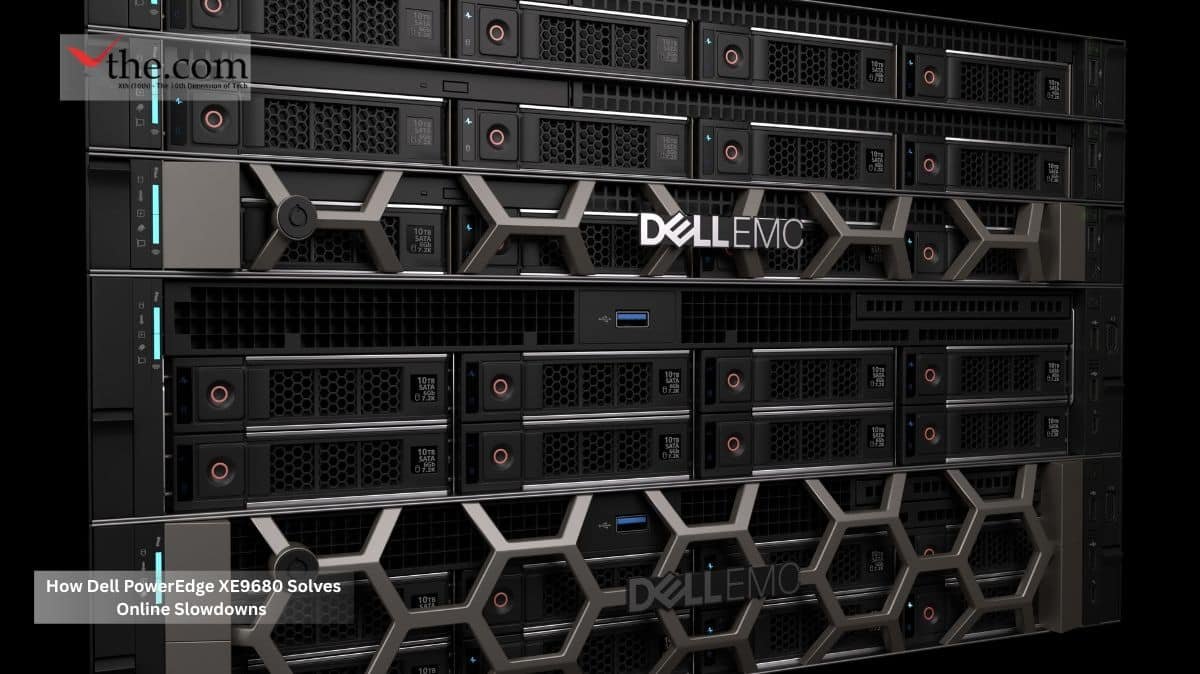
This pressure affects enterprise infrastructure, such as Dell PowerEdge XE9680 devices, top AI, and high‑performance computing servers. Dell recently improved the systems’ internal design to fix a problem that frustrates both customers and IT teams: data congestion within servers.
The problem was not a lack of computing power; modern enterprise servers already have plenty of processing capacity. The real challenge was how quickly graphics processors, memory, and networking components could share information under heavy workloads.
Why Internal Bottlenecks Break Consumer Apps
Most people blame their internet provider when apps are slow. In fact, many slowdowns start deep inside enterprise data centers.
A bank handling millions of mobile banking requests at once cannot afford delays between its internal GPUs and CPUs. Even small interruptions inside the server add up quickly during busy times.
Dell engineers focused on improving the high-speed computer data pipeline in the Dell PowerEdge XE9680 by redesigning circuit layouts and shortening communication paths between graphics accelerators. This change reduces delays when large AI models or busy applications move information between parts.
For consumers, the result is simple. Pages load faster. Apps stop freezing. Login systems stay stable even when traffic spikes.
Behind the scenes, the engineering challenge is like rebuilding a busy highway interchange while keeping the city running.
How The Dell PowerEdge XE9680 Handles Massive Demand
The Dell PowerEdge XE9680 already plays a key role in enterprise AI, as it can support up to 8 high-performance GPUs in a single system. Large banks, healthcare providers, and cloud companies use these servers to run AI, detect fraud, make recommendations, and analyze customer data simultaneously.
The problem emerged when massive AI workloads collided with real-time consumer applications.
AI training clusters move huge amounts of data between GPUs. If the internal communication paths get crowded, the system slows down, a problem called AI app training cluster slowdowns. These delays do not just stay in research labs. They eventually affect customer services that use the same infrastructure.
Dell’s updated architecture addresses that issue by improving signal routing and optimizing internal bandwidth management. Engineers refined board-level layouts and implemented more efficient upgrades to internal network traffic cable upgrades to reduce transmission delays between components.
Think of a crowded airport where baggage carts and passenger shuttles use the same paths. Everyone, everything slows down. Dell made the server’s internal pathways wider, so information can move smoothly without running into other data.
Why Financial Platforms Depend on Faster Internal Communication
Banking is one of the fastest industries to reveal infrastructure problems.
During busy payroll times, digital banking platforms handle millions of balance checks, transfers, and fraud checks in just minutes. Even delays of a few milliseconds matter because modern fraud detection depends on nonstop AI analysis working with transaction databases.
If servers slow down during these times, payments can fail, account updates may be delayed, or customers could get locked out.
This explains why many enterprises continue to invest heavily in on-premises corporate server updates rather than relying exclusively on public cloud providers. Large institutions often want direct control over latency-sensitive infrastructure, especially when regulatory requirements and customer trust remain central concerns.
The Dell PowerEdge XE9680 fits this strategy because it offers strong AI processing and local control. Organizations can run advanced AI in their own data centers and reduce the communication slowdowns that often happen during traffic spikes.
Why Is The Dell XE9680 Server Popular?
The answer to why the Dell XE9680 server is popular comes down to one factor: consolidation.
Companies no longer want separate systems for AI analytics and customer apps. They want fewer machines that can handle all three reliably, even under pressure.
Dell designed the server as a central platform that can handle demanding GPU tasks without losing stability. The new internal pathways make it even more attractive since IT teams now care more about steady performance than just benchmark scores.
A retailer getting ready for Black Friday shows this, this value well. Recommendation engines, payment systems, inventory databases, and customer analytics all run simultaneously. If the server’s internal communication slows down, the entire customer experience can quickly degrade.
The improved high-speed data pipeline in the Dell PowerEdge XE9680 reduces this risk by ensuring GPUs and processors share information almost instantly, even under heavy workloads. It marks a new performance era.
Customer expectations have changed faster than enterprise infrastructure can keep pace. Now, people expect banking apps, streaming services, and online stores to work smoothly at all times, even when millions are online at once.
This expectation is pushing server makers to focus on better hardware design rather than just adding more processors.
Dell’s updates to the Dell PowerEdge XE9680 show where enterprise computing is going. Future performance may depend more on how well internal systems communicate under pressure than on just having more chips. As AI grows in finance, healthcare, and retail, the companies that fix hidden infrastructure slowdowns first will likely set the standard for online reliability in the next decade.
Source: Dell Blog