MOUNTAIN VIEW, Calif. —
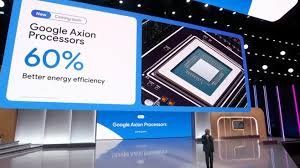
Now, Google has officially moved to disrupt the cloud computing industry by releasing its newly designed and built processor for cloud-based operations, called Google Axion. The new release is set to be a game-changer in cost, performance, and scalability assessments of SaaS providers. Unlike conventional x86 processors, the new chip has been designed to maximize performance when running today’s complex software systems. With claims of having up to 2x better price-performance ratios, the new technology could soon revolutionize cloud computing economics.
Disrupting the x86 Dominance
For many years, cloud computing systems have largely relied on CPUs from vendors such as Intel and AMD. Although these processors have provided computing power for most enterprises, they have become increasingly inadequate for efficient processing.
With the release of Google Axion, we are likely to see an increase in the adoption of CPU processors based on Arm architectures, including:
- Greater efficiency
- Specific optimizations
- Reduced costs
Real Gains In PerformanceReal Gains In Performance
In essence, Google Axion can provide users with better Price-Performance than traditional Virtual Machines. With its focus on scalability, the technology performs exceptionally well for Java Optimization and microservice-oriented applications.
Its benefits include:
- Improved speed for native cloud computing
- Decreased lag during times of high traffic
- Increased efficiency of resource utilization
Google Axion now offers developers the ability to try out C4A Instances, which provide a highly efficient compute environment for their needs.
What makes this product launch revolutionary is its ability to enable Achieving 2x better price-performance with Google Axion custom Arm CPUs. Such an ability affects how SaaS providers approach investments into cloud infrastructure, as they will need fewer resources than before.
One more great thing about Google Axion is that it enables running workloads in Bare-Metal mode. In other words, this allows developers to avoid the overhead associated with virtualization, gaining such benefits as:
- Higher levels of performance consistency
- Ability to run any workload as they see fit
- Eliminating unnecessary overhead
With Google’s full ecosystem, from TPU 8i to everything else, developers will receive a complete platform for any kind of application.
Industry-wide Ripple Effects
The emergence of Google Axion will likely bring profound changes within the technology industry as well. For instance, major SaaS players such as Salesforce and Adobe will have greater bargaining power to negotiate lower infrastructure costs.
However, established semiconductor manufacturers are under intense pressure due to:
- Decreased market demand for x86 processors
- Increased competition in customized silicon solutions
- Innovation in performance per watt ratios
This move represents an ongoing trend towards vertical integration, in which cloud service providers develop customized hardware to maximize performance and reduce costs.
Strategic Advantages for SaaS Companies
For SaaS providers, the potential impact of Google Axion cannot be overstated.
These advantages include:
- Cost savings on infrastructure by optimizing the Price-Performance ratio
- Scalability to cater to expanding customer bases
- Improved performance for critical applications
The use of ARM-based CPU technology enables SaaS organizations to plan long-term infrastructure and develop competitive pricing strategies.
Procurement and Cost Optimization
Among the most vital lessons learned from this development is the importance of CTOs and other decision-makers reassessing infrastructure strategies.
Legacy x86 hardware has become a burden for many enterprises, particularly given Google Axion’s effectiveness.
It is imperative to analyze:
- Compute the cost relative to the dollar
- Scalability of the infrastructure in question
- Ability to support cloud-native applications
Custom silicon has turned out to be more than just an engineering choice; it is also an economical one.
Future OutlookFuture Outlook
Some of the trends that have been witnessed within the industry recently include:
- Increased adoption of Arm-based technologies
- Higher interest in affordable cloud computing options
- Advancement of artificial intelligence and large data workloads
With more innovations emerging from major cloud providers, future developments will increasingly hinge on offering the optimum blend of cost and performance.
Conclusion
Through superior Price-Performance enabled by a customized Arm-based processor, Google has set a new benchmark for the underlying infrastructure of SaaS products. It is a game-changing development that sets a new standard for how computer resources should be engineered, deployed, and priced. SaaS providers need to prepare for a significant shift in how they operate to remain competitive.
Source: Unlock 2x better price-performance with Axion-based N4A VMs, now generally available