





Houston, Texas
On a hot July afternoon, a modern data center can use more electricity than a small town. In places like Texas, Virginia, and Arizona, utilities keep a close eye on large server campuses just as they do with factories. If an AI cluster is poorly managed, it can quickly increase cooling demand and put extra strain on substations during a heat wave.
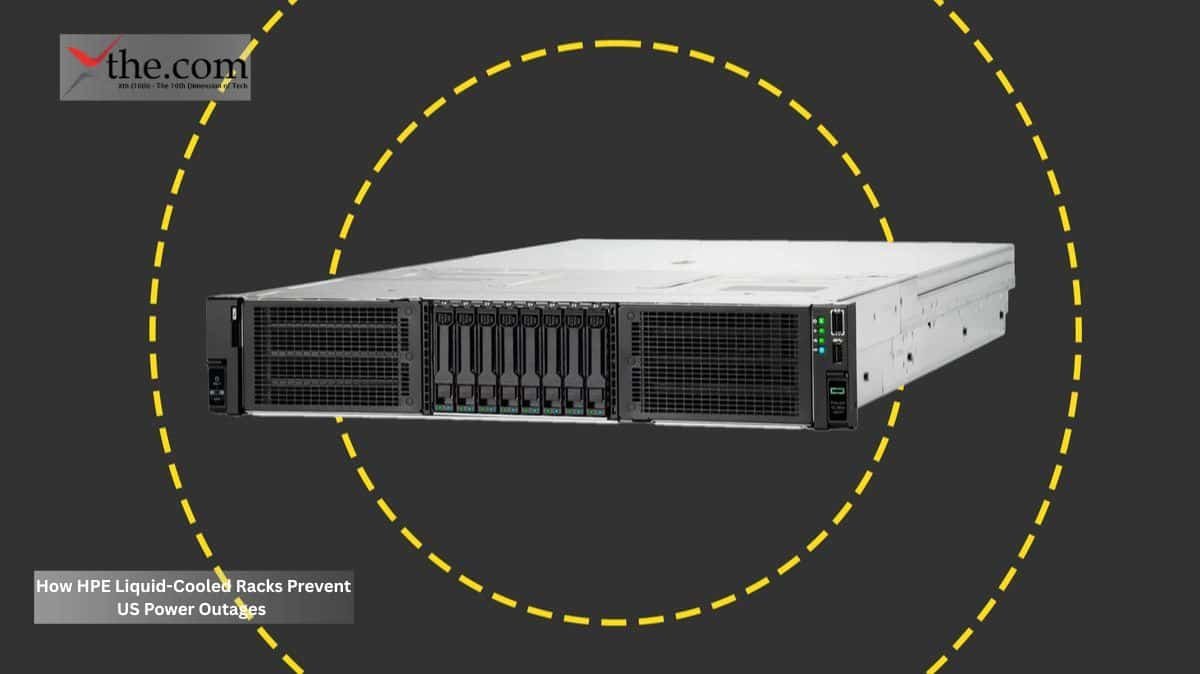
This pressure is why HPE ProLiant Gen12 servers are important for more than just the IT industry.
On Tuesday morning, Hewlett Packard Enterprise launched its first servers focusing on liquid cooling, power savings, and efficient AI infrastructure. While the technology may seem complex, the impact is clear. Every watt saved in a data center helps reduce the load on the electric grid that supports homes, schools, stores, and hospitals.
Why Data Centers Have Become a Utility Problem
The rapid growth of AI has quickly changed how computing works. Training big models and running AI tasks need tightly packed processors that get very hot, making it hard for traditional air cooling to keep up.
This leads to a risky cycle.
Fans have to work harder, chillers run longer, and buildings use more electricity from the grid just to keep processors cool. In some cities, cooling systems now use almost 40% of a data center’s power during the hottest months.
Rather than blowing cold air through server aisles, HPE’s system uses direct-to-chip fluid cooling manifolds that circulate liquid across high-temperature components. Liquid absorbs heat far more efficiently than air. This means fewer chillers, fewer fast-spinning fans, and much less electricity used during heavy computing.
For utility operators, that translates into something tangible: local electrical grid strain reduction.
The Physics Behind Lower Bridge Stress
Most people only notice problems with the grid when lights flicker or blackouts start. Utilities, however, see the warning signs much sooner. If cooling demand suddenly rises, they may have to turn on costly backup generators, especially during extreme weather.
Liquid cooling changes this by removing heat using less energy.
The difference becomes obvious at rack scale. A conventional AI rack cooled primarily by air can require massive airflow volumes to maintain safe operating temperatures. By contrast, liquid-cooled infrastructure can achieve a measurable reduction in high-density computing heat drop while consuming substantially less supporting power infrastructure.
This directly improves data center energy use efficiency level, a metric that large operators monitor obsessively because cooling costs add up across thousands of servers.
Many businesses now ask a simple question: how do liquid-cooled servers save energy?
The answer is about thermodynamics and efficiency. Liquid moves heat around 1,000 times better than air. Thanks to this, facilities rely less on energy-hungry cooling systems that use a lot of electricity during summer.
In practice, a large facility with thousands of HPE ProLiant Gen12 servers might cut cooling costs enough to put off upgrades from your local utilities. This is important in fast-growing areas where power demand is already outpacing grid expansion.
Why Neighborhoods Care About Enterprise Servers
Northern Virginia is a good example. It has the world’s largest group of data centers, and local utilities have often warned about growing pressure on the grid from more AI infrastructure.
People do not worry about the type of hardware in a server rack. They care when their electricity bills go up or when backup generators start during times of high demand.
This is where technologies like direct-to-chip fluid cooling become important for public safety, not just engineering.
Efficient cooling allows operators to fit more computing power into the same electrical system. Instead of building new substations, some facilities can increase AI processing capacity while maintaining tighter power envelopes. That results in measurable local reductions in electrical grid strain, especially during hot months when air conditioning already strains utilities to the limit.
The bigger economic impact could be huge. Industry forecasts say US electricity demand from AI data centers might double by the end of the decade. Without better efficiency, utilities would have to expand their infrastructure quickly just to keep up.
The Competitive Pressure on Enterprise Infrastructure.
HPE is not the only company working on liquid-cooled computing. Other server makers now see advanced cooling as a must-have, not just an experiment.
Still, the launch of HPE ProLiant Gen12 servers shows how fast the market has changed. Five years ago, liquid cooling was mostly used in supercomputing labs. Now, company CIOs discuss cooling systems in regular meetings because energy use is a major financial concern.
This shift also mirrors investor pressure. Large corporations increasingly disclose sustainability metrics tied to IT operations, including data center energy-efficiency targets and carbon-reduction commitments.
Using less energy for cooling helps with both energy efficiency and sustainability.
The next stage of AI infrastructure growth will rely less on just faster processors and more on how well companies handle heat, electricity, and space limits. The companies that solve these challenges could shape the future of computing and strengthen local power grids in America’s fastest-growing digital areas.
Source: The self-driving network