




Austin, Texas
AI has now evolved beyond just chatbots, search engines, and automation software programs. Organizations are using machine learning to train their AI systems to operate in physical settings, where robots can sort packages, inspect machines, and even help manufacture cars.
It has created a strong need for realistic simulation tools.
Organizations wish to train their AI systems in a safe environment before deploying them in actual factories and industries. Training robotic agents in physical spaces can cost companies significant time, money, and effort.
This is the very reason why Nvidia Omniverse is becoming one of the most important platforms in the world of AI used for industry.
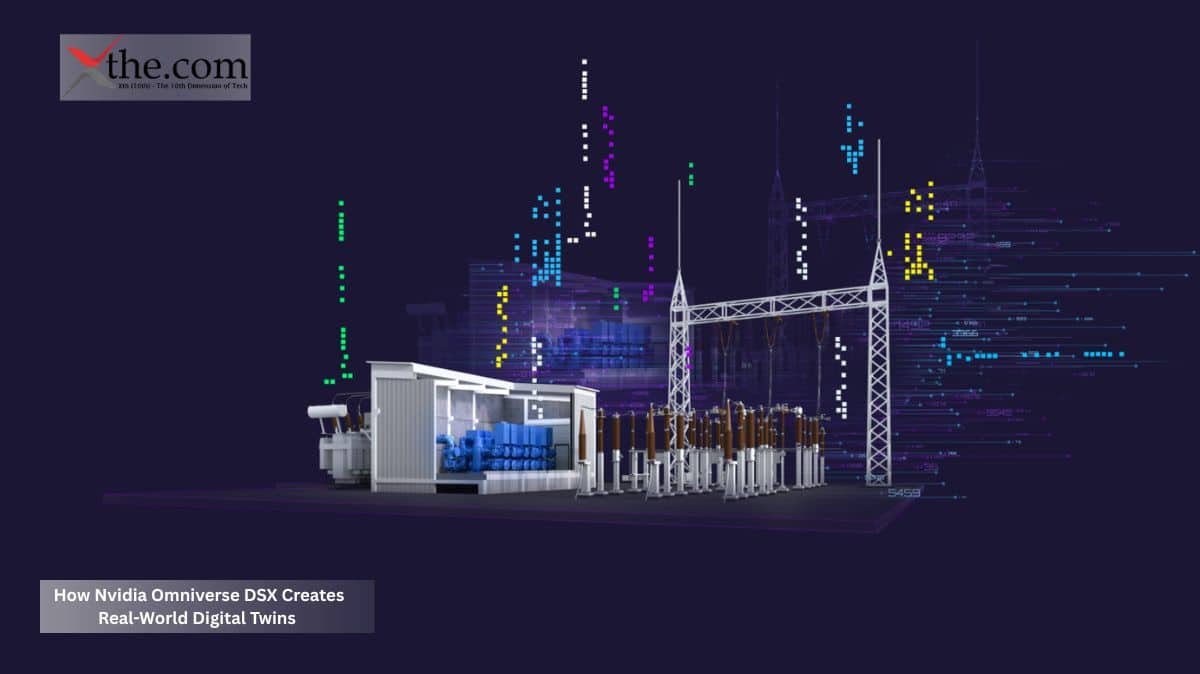
The firm’s platform helps organizations create digital twins of factories and industrial systems, enabling robotic AI systems to learn in a virtual environment.
What Are Digital Twins?
Digital twins are basically virtual representations of real-life environments. They accurately replicate physical entities, plant layout, machinery, lighting, and process flows.
With such an approach, engineers and AI specialists can test processes in a virtual environment without risking expensive equipment or interrupting ongoing operations in the manufacturing facility.
The resemblance of the simulation process is crucial for more effective training of AI algorithms.
What can be replicated using digital twins?
- Process flow inside a warehouse
- Movement of packages in a warehouse
- Manufacturing process on a conveyor belt
- Machinery maintenance
- In-facility robotic mobility
Such technology will soon become critical to industrial automation.
How Does the Nvidia Omniverse DSX Work?
The new generation of the DSX Blueprint technology is designed to build scalable industrial AI environments where robots and automated processes can be tested in real time.
It uses high-end graphics simulation, AI modeling, and industrial data analytics capabilities to create realistic digital environments.
This helps AI-driven machines acquire skills through repeated simulations before deployment in real-world factories.
The benefits are obvious: it lowers the risks and costs of AI adoption.
- Nvidia DSX features
- 3D industrial simulations
- Robotic training systems driven by AI
- Fast processing of factory environments
- Industrial sensor data integration
- Scalable environments for industrial complexes
The company sees the future of the industry in simulation-based AI training technologies.
Why Physical AI is Increasing So Rapidly
While most AI technologies can be discussed in the context of software running online, Physical AI is an entirely different case, where AI interacts with actual machines in the physical world.
Robots and other physical AI systems need much more sophisticated training to cope with movement control, balancing, object recognition, property recognition, adherence to safety protocols, etc.
Training such robots purely physically would be both extremely costly and inefficient.
Virtual environments can help solve the problem and conduct multiple iterations of experimentation without disrupting the real production process.
Why do manufacturers care about smart factory tech?
American manufacturing companies are actively investing in automating production processes to make them more efficient, cut costs, and address labor shortages.
Nowadays, smart factory tech systems include robotization, automated production processes, and even AI-driven analysis.
Why do factories adopt digital twin technology?
- Decreasing risks associated with the testing of costly devices.
- Increasing speed of robotic systems’ creation and adoption.
- Planning and increasing the operational efficiency of manufacturing.
- Predicting potential problems and fixing them.
- Lowering the overall costs of production.
The rapid evolution of Smart Factory Tech is also encouraging companies to modernize older manufacturing facilities with AI-powered automation systems.
Changes in Robotics Design
Conventionally, robotics design entailed engineers having to repeatedly conduct physical tests on hardware. This process took a significant amount of time and money.
Simulation technologies, such as the Omniverse, speed up the design process by enabling engineers to simulate tens of thousands of cases digitally.
Robots can learn to navigate around obstacles, transport objects, analyze machinery, and respond to environmental changes before being implemented in real facilities.
It makes the process both safer and more efficient for businesses implementing robotics solutions.
Training robots is becoming increasingly important as industrial AI technologies advance.
Why Investors Are Interested
The rise of industrial AI has emerged as one of the hottest sectors of the global technology industry.
Automation is considered crucial to increasing manufacturing efficiency, particularly as businesses seek to maximize domestic output while minimizing operating costs.
Industrial AI investing reasons
- Rising demand for manufacturing automation
- Cost reduction via robotics technologies
- Increased productivity in smart factories
- Acceleration of innovations through digital twin
- Profitable markets for AI infrastructure
The use of factory automation is becoming increasingly relevant amid economic competitiveness.
The Development of Autonomous Systems
Autonomous Systems mean that devices can make decisions on their own in real-world environments.
Robotic sorting in warehouses, automated inspections in factories, and autonomous transports for logistics firms are becoming more popular.
Such systems require thorough training before they can operate successfully.
This is why the term “Nvidia Omniverse DSX digital twin training” has gained significance in the field of industrial AI.
Manufacturers want devices that can train safely to perform complex operations without human assistance or risk of equipment or products.
Conclusion
It is clear from the discussion of Nvidia’s Omniverse DSX that the application of AI technology goes well beyond software engineering. With simulation modeling, robotic training, and digital twins, this company helps manufacturers develop efficient automation strategies. Given these industry trends, simulation platforms may become essential for manufacturing and industrial innovation.
Source- GTC 2026 News