






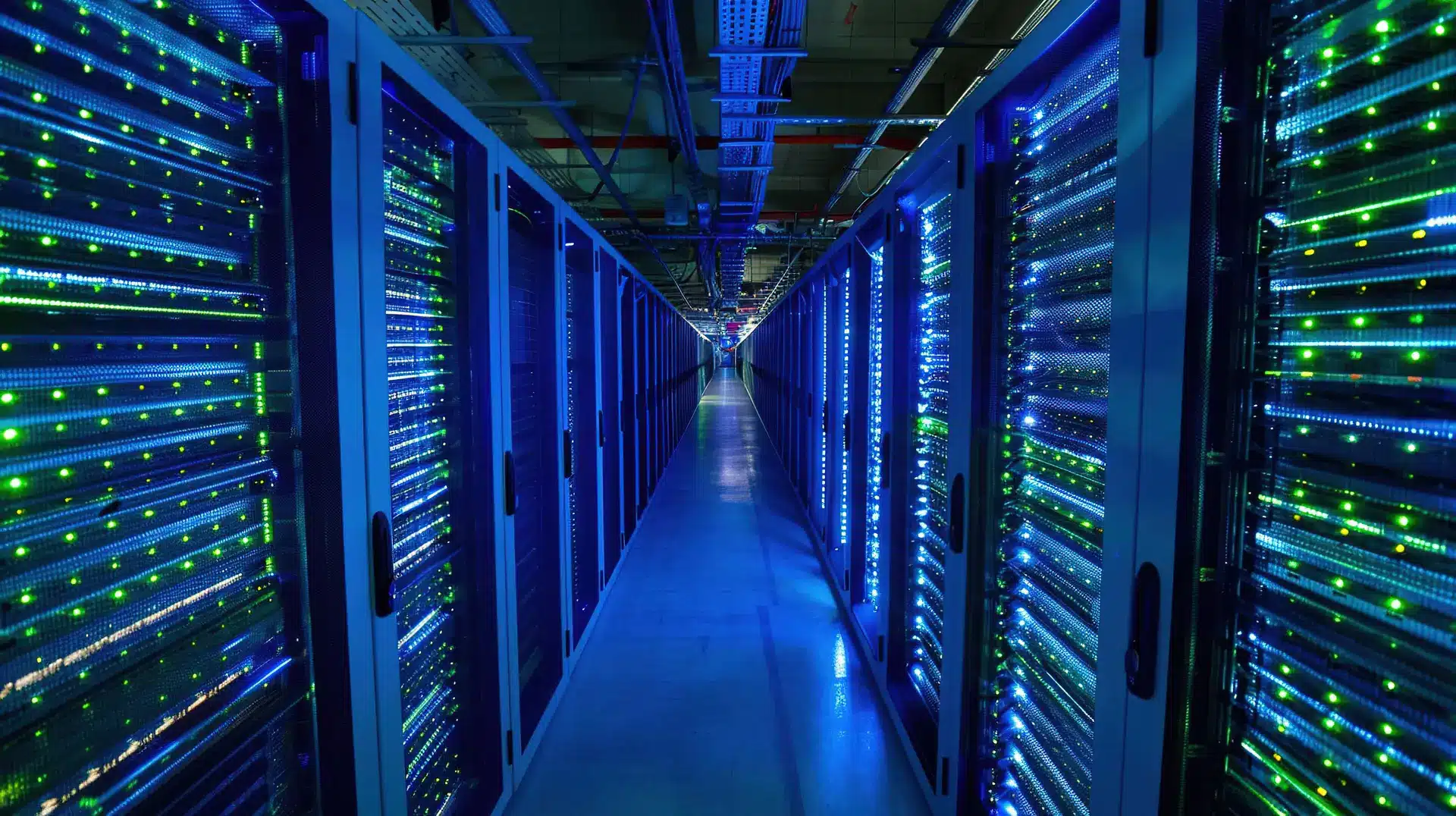
Cooling systems that used to manage steady enterprise workloads are now struggling to handle the heat generated by today’s powerful computers. In Phoenix, a major data center operator recently saw rack densities exceed 80 kW, pushing traditional air systems to the limit and requiring urgent upgrades. This challenge is no longer just a possibility. It’s real, costly, and happening across the industry.
Within the first wave of upgrades, one pattern stands out: a decisive shift toward data center cooling strategies that rely less on air and more on direct heat removal.
The Pressure Breaking Legacy Systems
For years, raised floors and chilled air were enough, but high-performance computing clusters, especially those used for large-scale AI training, create heat in new ways. Air struggles to absorb and move this heat, especially when racks are close together.
Operators now face three immediate constraints. They are thermal-density ceilings that limit compute expansion, power inefficiencies driven by overworked HVAC systems, and space limitations in legacy facilities not designed for modern loads.
A co-location provider in Chicago shows how quickly things can change. After bringing on a new client, their cooling system reached its limit in just six months. Upgrading the air systems wasn’t practical, so they switched to liquid cooling. This move eased heat problems and freed up more rack space.
Why Liquid Cooling Is Gaining Ground
Liquid cooling has been around forever, but more data centers are using it as AI workloads grow. Liquid moves heat much more efficiently than air, so operators can handle higher densities without using a lot more energy.
The rise in liquid cooling AI deployments reflects this shift. These systems circulate coolant directly to heat-generating components, CPUs, GPUs, and memory modules, removing heat at the source rather than dispersing it into the room.
The key advantages driving liquid cooling adoption are higher rack density support, where facilities can exceed 100 kW per rack without thermal instability, energy efficiency gains delivering reduced reliance on large-scale air movement to lower power usage effectiveness, and operational predictability, where more consistent thermal control improves hardware longevity.
In Northern Virginia, the largest data center market in the US, several operators have begun standardizing liquid-ready infrastructure in new builds. Retrofitting remains complex, but new facilities increasingly treat liquid cooling as a baseline requirement.
The Economics of Cooling Upgrades
Transitioning to liquid systems incurs upfront costs, such as plumbing, containment, and specialized hardware, which add complexity. Yet the financial calculus is shifting.
Take a mid-sized data center running at 20 MW. Air cooling can use up to 40% of its total energy. By adding liquid cooling, operators can reduce those numbers significantly and the computing power that brings in revenue.
This is where data center cooling becomes less of a maintenance concern and more of a strategic lever. Lower operating costs combined with the ability to host high-density workloads translate into stronger margins over time.
A Hypothetical Cost Scenario
- Air cooling system upgrade: lower upfront cost, limited scalability.
- Liquid cooling retrofit: higher initial investment, but enables 2-3X compute density.
- ROI horizon: typically 3 to 5 years, depending on workload density
For AI-driven talents, the choice is straightforward. They can prioritize performance per watt, not just capital expenditure.
AI Workloads Are Reshaping Infrastructure Design
The rapid growth of generative AI and machine learning has changed how data centers are designed. Facilities are now built for peak performance, not just average use.
This is where liquid cooling AI systems play a defining role. They allow operators to deploy GPU-heavy clusters without thermal throttling, maintain consistent performance during prolonged training cycles, and reduce downtime linked to overheating risks.
A large data center operator in Texas recently rebuilt an entire campus to use liquid cooling loops at both the rack and facility levels. This led to a clear boost in computing power without needing more space.
Challenges That Still Slow Adoption
Despite clear advantages, liquid cooling is not a universal solution yet.
Persistent Barriers:
- Retrofitting complexity: older facilities require significant structural changes. New line.
- Skill gaps: maintenance teams must adapt to fluid-based systems.
- Vendor fragmentation: lack of standardization complicates procurement and integration.
These challenges are why some operators continue to use air-based systems even as it becomes harder to meet performance needs.
Still, the direction is clear. As AI workloads increase, waiting to upgrade becomes more expensive than making the switch.
A Structural Shift, Not a Passing Trend
The expansion of data center cooling technologies built around liquid systems signals more than a tactical upgrade cycle. It reflects a deeper transformation in how compute infrastructure is designed, financed, and operated.
Data centers that adapt early get a head start. They attract valuable clients, support new workloads, and run more efficiently. Those who wait risk lower profits and more technical problems.
Cooling used to be a minor concern, but now it’s central to infrastructure planning. As demand for computing grows, the ability to manage heat will decide which operators stay ahead and which fall behind.
Source: Advancing Energy Tech








