






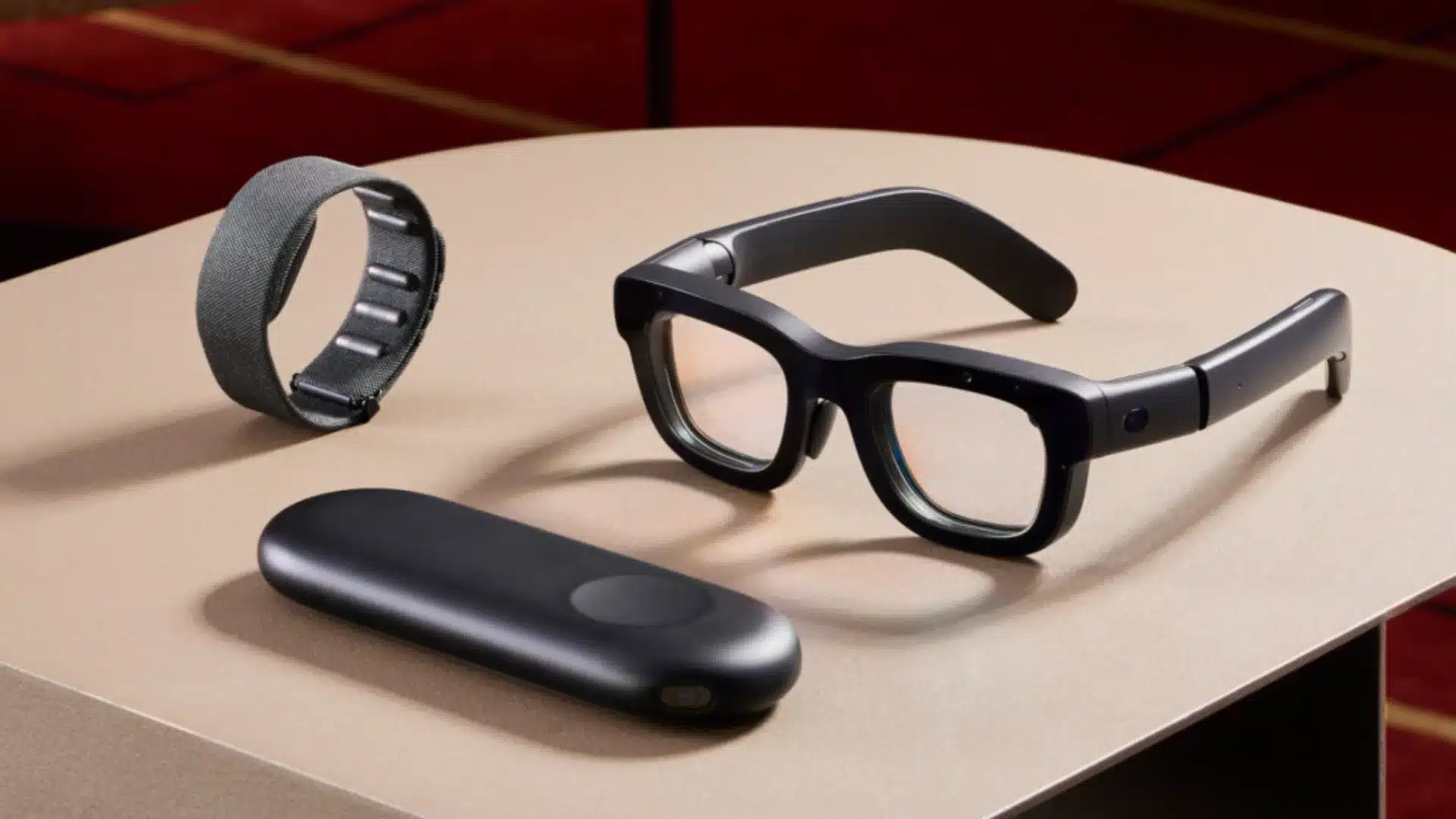
Most people check their phones more than 80 times a day, often just to get information that could be delivered instantly without a screen. This constant switching between the physical and digital worlds has shaped how we use technology for years. Samsung’s latest prototype, built around Samsung AR AI and wearable AI devices, points to a new direction: computing that appears right in front of you, so you don’t have to pick up a device at all.
From Screens to Sightlines: A New Interface
The prototype signals a broader shift in wearable computing, with interfaces moving away from handheld devices toward ambient experiences. Instead of tapping or typing, users interact through gestures, voice, and contextual awareness. The lens acts as both display and sensor, merging digital overlays with real-world perception.
This direction aligns closely with the emerging vision of AR smart glasses’ future systems. Imagine walking into a meeting and seeing participant profiles, recent communications, and agenda notes projected subtly in your view. The interaction feels continuous rather than interruptive. That continuity is what makes the concept compelling.
Samsung AR AI Wearable AI Devices At The Core
The heart of the prototype is the integration of Samsung AR AI with wearable AI devices, which brings together real-time processing and smart context awareness. The system does more than just show information. It understands what’s around you and adjusts what it displays. For instance, if you look at a product in a store, you could instantly see price comparisons, reviews, and availability without having to search.
This feature relies a lot on AI hardware built into the device. By processing data locally, the system responds faster and relies less on the cloud. It can also work in places where the internet connection isn’t reliable. Most importantly, keeping data on the device helps protect user privacy.
The Hardware Challenge Beneath the Lens
Miniaturization remains one of the toughest hurdles in AI wearables technology. Packaging, packing sensors, processors, and battery systems into a lightweight lens or glasses frame requires careful engineering. Heat management, power efficiency, and durability all become critical factors.
Samsung seems to rely on advances in on-device AI hardware, especially low-power chips that run continuously. These parts enable the device to analyze data in real time without draining the battery too quickly. Still, finding the right balance between performance and comfort will determine whether the prototype becomes a real product.
Mixed Reality Moves Toward Practical Use.
This prototype also helps advance mixed-reality AI devices, enabling digital and real-world elements to work together smoothly. Unlike earlier AR versions that seemed experimental, this one aims for really useful applications. Features like navigation, translation, and helpful prompts become part of daily life.
In factories, mixed-reality AI devices help technicians by displaying instructions right on the machines. This can reduce mistakes and speed up training. In healthcare, surgeons could see patient data during operations without looking away. These examples show the technology’s promise beyond just consumer products.
Privacy: The Unresolved Question
Even with all these benefits, privacy remains a major concern. Devices that are always recording and analyzing what’s around them raise questions about who owns the data and who gives permission. Users might get helpful information, but people nearby may not know they are being watched.
The rise of wearable computing trends amplifies these concerns. Unlike smartphones, which are visibly in use, AR lenses operate more discreetly. This creates ambiguity about whether the data is being collected. Addressing this issue will require clear policies, transparent indicators, and, if necessary, new regulatory frameworks.
Designing For Trust And Adoption
Adoption will depend not only on functionality, but also on trust. Users need to understand how data is processed and stored. This is where AI wearables technology must evolve beyond technical performance to include ethical design.
Companies might have to add clear signals, such as night lights or notifications, to indicate when data is being collected. They should also give users detailed control over what the device can access. Without these steps, even the best features could be rejected.
Competitive Landscape and Strategic Positioning
Samsung is not alone in pursuing this vision. Several technology firms are investing heavily in future platforms for AR smart glasses. The competition is not just about hardware, but about ecosystems. Integration with existing services, applications, and developer tools will play a decisive role.
By pushing forward with Samsung AR, AI, and wearable AI devices, Samsung is joining the bigger race to shape the next way we interact with computers. Success will depend on how well the company merges hardware advances with great software and user experience.
What This Means for the Next Decade
Moving towards screenless computing affects much more than just personal gadgets. It changes how we get information, how we do tasks, and how we experience our surroundings. As mixed reality, AI devices, and smart systems come together, they could transform industries like retail and logistics.
At the same time, the trajectory of wearable computing trends suggests that devices will become more integrated into daily life. The boundary between technology and the environment will continue to blur. This raises both opportunities for efficiency and challenges around control and oversight.
A Glimpse Into Ambient Computing
Samsung’s prototype gives us a look at a future where technology brands blend into the background. The lens doesn’t distract you; it helps your focus. Information appears when you need it and disappears when you don’t. This subtle approach could change how we use technology.
Whether this vision becomes common will depend on how well it’s made. The hardware needs to be lighter, the software easier to use, and privacy protections stronger. If these things happen, we could move from screens to sight lines sooner than we think, changing how people and machines connect so it feels more natural.
Source: Samsung Newsroom