




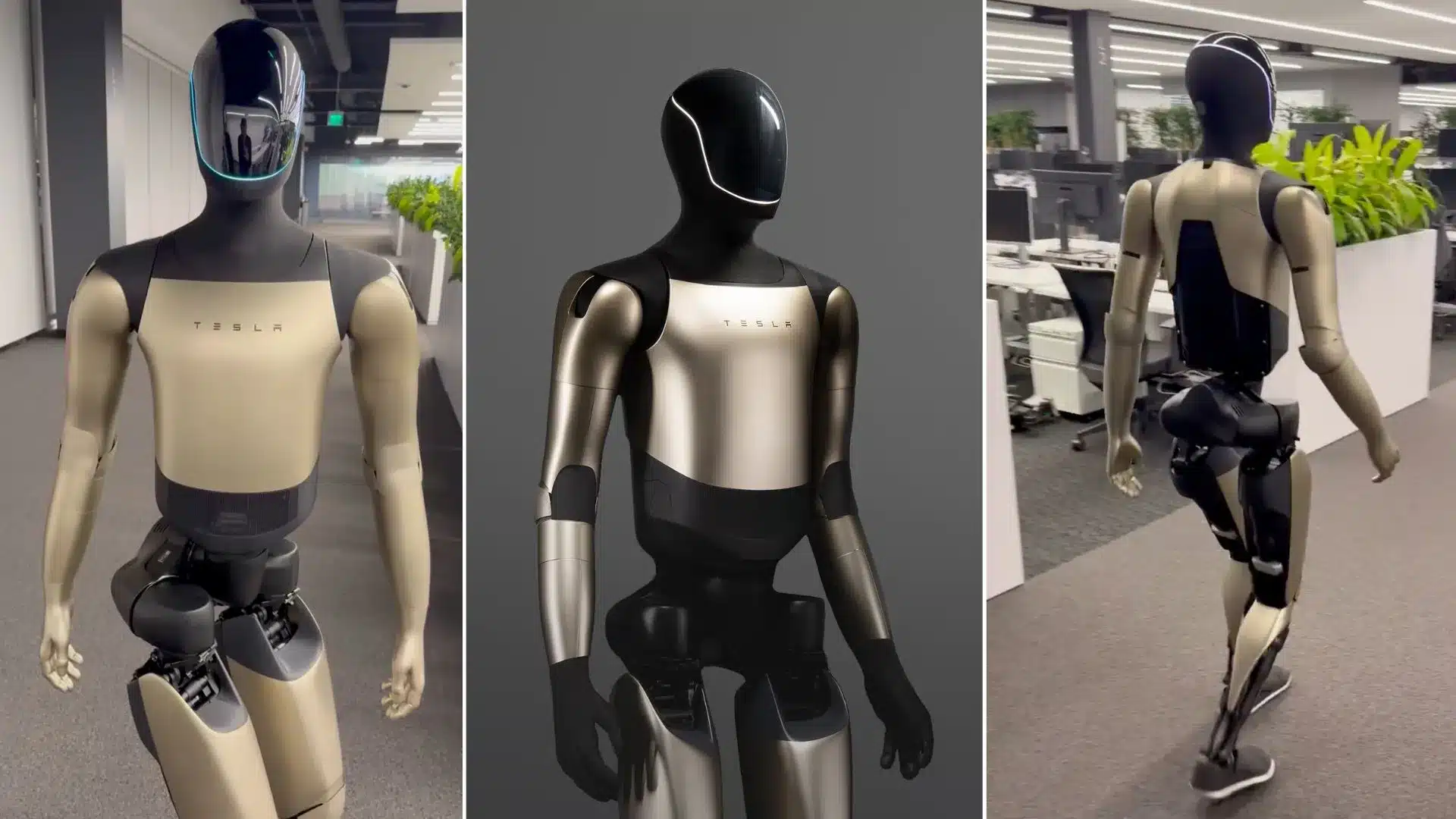
The latest demonstration from Tesla shows how quickly humanoid robotics technology has developed since its first presentation. The current demonstration showcases the advanced development of Tesla Optimus robot technology, enabling the creation of more capable robots that can operate in real-world conditions.
The update demonstrates how humanoid AI robots have made significant progress, with companies using them to develop machines that can work with humans to complete difficult mental and physical challenges.
Advancing the Tesla Optimus Robot
Tesla is developing the Optimus as a versatile humanoid robot designed to work in environments that require repetitive tasks and hazardous work. The most recent demonstration showed better robotic capabilities for moving objects and executing tasks.
The recent technological upgrades show that Tesla robotics demonstration systems are approaching operational readiness for use in controlled factory and warehouse environments.
The current project aims to create a humanoid AI robot system that will develop its skills through environmental learning and task-based training.
From Concept to Functional Humanoid Systems
The early versions of Optimus evolved into their current state through basic movement and object-handling development work. The latest version of the system shows improved coordination and stability, which demonstrates its advancement toward practical real-world applications.
The creation of AI-automated robots through the development of Optimus Automated robots marks a transition from permanent factory equipment to adaptive, multi-functional systems.
The robotics industry requires this transformation because current market demands robotics systems that can adapt and learn rather than perform a single task.
How Humanoid AI Robots Are Evolving
Contemporary humanoid artificial intelligence robots depend on machine learning, sensor fusion, and sophisticated control systems to navigate intricate environments.
The Tesla Optimus robot uses artificial intelligence models to understand visual information while maintaining coordination of its body movements and executing multiple tasks. The robots use this capability to adapt their operations based on evolving environmental factors.
The Tesla robotics demonstration shows that their systems are advancing toward greater independence, as they can function without human assistance.
Applications in Workforce Automation
Humanoid robotics research aims to develop robots capable of performing repetitive, dangerous, and physically demanding work to enable the automated operation of AI systems.
The Tesla Optimus robot exists to perform tasks in manufacturing, logistics, and material handling.
The increasing capabilities of AI automation robots will transform labor-intensive industries by enhancing productivity and decreasing operational demands on human operators.
Impact on the Robotics Industry
Humanoid AI robot development is driving advancements across the robotics industry, as organizations now allocate more funds to develop AI-powered physical systems.
Businesses investigate ways to incorporate robots, such as Optimus, into their current operations without replacing their entire system.
The Tesla robotics demonstration highlights the growing competition in humanoid robot development, as various organizations pursue the same goal of creating multifunctional robotic workers.
Technical Challenges in Humanoid Robotics
Humanoid system development has advanced, yet it remains extremely difficult to construct operational humanoid systems. The system faces multiple challenges, which include maintaining balance, consuming power efficiently, performing precise movements, and interacting safely with people.
The Tesla Optimus robot needs to develop stable operation capabilities that work across different environments to achieve actual deployment.
The development of dependable AI automation robots requires ongoing hardware and software updates to improve system performance and operational flexibility.
Safety and Human Interaction Considerations
The design of these systems requires safe operation in environments shared by humans and robots.
Humanoid AI robots advance through development as engineers create cutting-edge sensing and control systems that prevent accidents and enable them to behave as expected.
Widespread adoption of AI workforce automation requires organizations to build trust and safety measures that establish a secure environment.
Economic and Industrial Implications
The development of humanoid robots will have economic effects across multiple industries. The introduction of automated systems will enable businesses to achieve higher productivity while reducing workforce management costs in industries that rely on manual labor.
The Tesla Optimus robot marks progress toward building artificial intelligence automation systems that businesses can use to efficiently deploy multiple robots for various operational tasks.
The robotics industry will provide early adopters with operational efficiency benefits and improvements in production capacity as its trends continue to evolve.
The Future of Humanoid AI Systems
With the rise of autonomous capabilities, humanoid robotics will become increasingly capable as developments advance and humanoid robots are used in diverse settings. Artificial intelligence technology continually evolves to improve systems’ ability to interact and perform tasks. As a result, humanoid robotics will continue to evolve through advancements to enhance their ability to perceive the world around them, make decisions, and manipulate physical objects.
The Tesla robotics demonstration proves that Optimus systems will advance beyond their current experimental stage to become operational workforce tools.
Humanoid AI robots will become essential components of workforce automation systems, transforming the basic structure of various industries.
Conclusion: A Step Toward Intelligent Physical Labor
Tesla’s most recent demonstration showcases substantial advancements in humanoid robotics development. The Tesla Optimus robot demonstrates progress in its development through improved mobility, enhanced coordination, and its ability to perform various tasks.
The industrial sector will see increased use of AI-automated robots as the robotics industry advances towards the development of intelligent, adaptable systems.
The ongoing development of humanoid AI robots faces several obstacles, yet this field of research will lead to a future in which humans and machines work together in new ways, transforming traditional work methods through AI-based workforce automation.
Source: Tesla Blog