



Santa Clara, California.
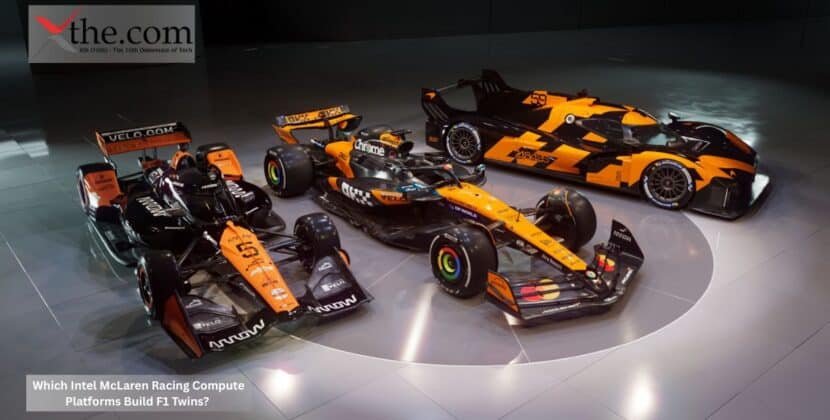
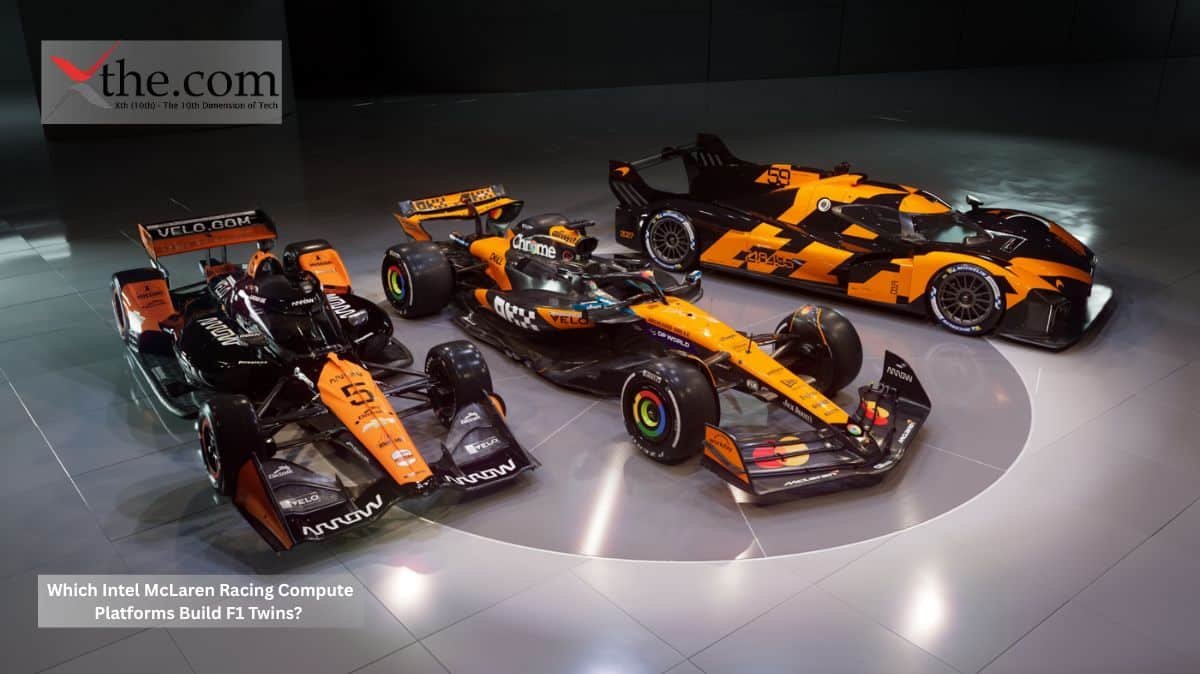
During a race week, a modern Formula 1 car produces over 1.5 terabytes of telemetry data. Engineers have under two seconds to analyze parts of this data before the next corner changes tire temperatures, aerodynamics, and brakes. This constant pressure is why the Intel McLaren Racing Partnership Compute Initiative has become one of the most technically significant collaborations in motorsport computing.
For McLaren Racing, every millisecond can decide the outcome of a race. For Intel, Formula 1 is a tough test for edge infrastructure, AI, and simulation systems that are later used in factories, logistics, and industrial plants.
How the Intel McLaren Racing Partnership Computes Strategy Powers F1 Digital Twins
Today’s Formula 1 garage looks more like a mobile data center than a typical race setup. Each lap sends thousands of sensor readings into simulations for aerodynamics, tire wear, and engine performance.
At the heart of this system are Intel Xeon AI workloads designed for fast, low-latency parallel processing. McLaren engineers use Intel Xeon processors to handle real-time telemetry and run predictive simulations during the race.
In Formula 1, a digital twin is a constantly updated software copy of the car. If a driver hits a curb too hard at Monza or the rear tires overheat at Bahrain, engineers can quickly model the effects. This relies on synchronized computers and processes telemetry without stopping.
Intel’s computing platforms help reduce the time lag between collecting sensor data and running simulations. The goal is to make the gap between gathering data and taking action as short as possible.
Why Edge Compute Matters More Than Cloud Latency
Cloud systems remain useful for analyzing large amounts of historical data, but Formula 1 teams cannot afford network delays during races. They need local systems at the track to analyze data in real time.
This need has led to more investment in trackside edge computing and real-time analytics. McLaren’s engineers use small, powerful computers at the track to analyze telemetry, weather, and aerodynamics in just milliseconds.
Take a late‑race safety car situation in Singapore as an example. When the cars slow down, brake temperatures drop quickly, which can affect tire pressure. When racing resumes, engineers have to quickly recalibrate energy use and balance the car for corners. If analytics are delayed, the team could lose positions in just one sector.
Intel Core Ultra and Xeon systems handle these fast tasks by spreading simulation work across computers near the garage. This way, engineers get useful results before the driver finishes another lap.
The same edge computing setup now appeals to manufacturers with robotics and chip‑making plants. Factory managers also need fast sensor analysis, as delays can disrupt entire production lines.
The Growing Importance of CFD Simulation Scaling
Aerodynamics remains a key part of Formula 1 engineering. Teams use massive computing power to study airflow around the front wings, underfloor areas, and cooling ducts.
The main challenge is scale. High-resolution computational fluid dynamics simulations require significant computing power. Even small aerodynamic changes can require running thousands of virtual tests under different wind and speed conditions.
This is where computational fluid dynamics simulator scaling becomes a competitive edge.
Intel’s powerful computing platforms enable McLaren to run more CFD simulations efficiently while still complying with Formula 1’s cost cap rules. Engineers can test several aerodynamic setups simultaneously, reducing development time between races.
The numbers are tight. Refining airflow efficiency by just 1% can save several tenths of a second per lap over a twenty‑four‑race season. These small gains quickly add up.
Industrial enterprises increasingly reflect this behavior. Automotive manufacturers now use CFD environments to model electric‑vehicle battery cooling systems, autonomous vehicle aerodynamics, and factory airflow management. Many of these organizations rely on high‑performance computing solutions for automotive engineering derived from technologies first refined within motorsport.
Intel Silicon and Predictive Manufacturing Systems
What Formula One teaches extends far beyond the track.
Factories now deploy machine learning predictive maintenance systems that resemble trackside telemetry operations. Turbine vibration sensors, robotic arm movement patterns, and thermal imaging streams require continuous interpretation. The computation demands closely parallel motorsport environments.
This similarity is why there’s greater demand for predictive modeling hardware, INTC infrastructure that balances speed and power use. Intel’s hybrid approach, combining both Xeon and Core Ultra systems, aligns well with industry needs.
Picture a big car factory spotting tiny flaws in robotic welding. If analysis is slow, thousands of faulty parts could pass through before anyone notices. Real-time predictive modeling stops this by catching problems early, right at the edge.
Formula 1 just speeds up the process. What takes hours in a factory happens in seconds on the track.
Motorsport as a Blueprint for Industrial Compute
The real value of the Intel McLaren Racing Compute partnership is how its solutions can be used elsewhere. Formula number one is one of the toughest places for edge analytics, AI, and simulations. If a system works here, it’s likely strong enough for industry use.
Manufacturing’s future will rely more on split-second decisions, local AI, and digital twins working together. Motorsport is already doing this today.
Intel and McLaren are doing more than just making racing strategies faster. They are shaping the computing systems that industries may rely on in the coming years.
Source: Intel Named Official Compute Partner of McLaren Racing