





New USCIS Asylum Office Takes Over North and South Carolina Cases Oct. 13
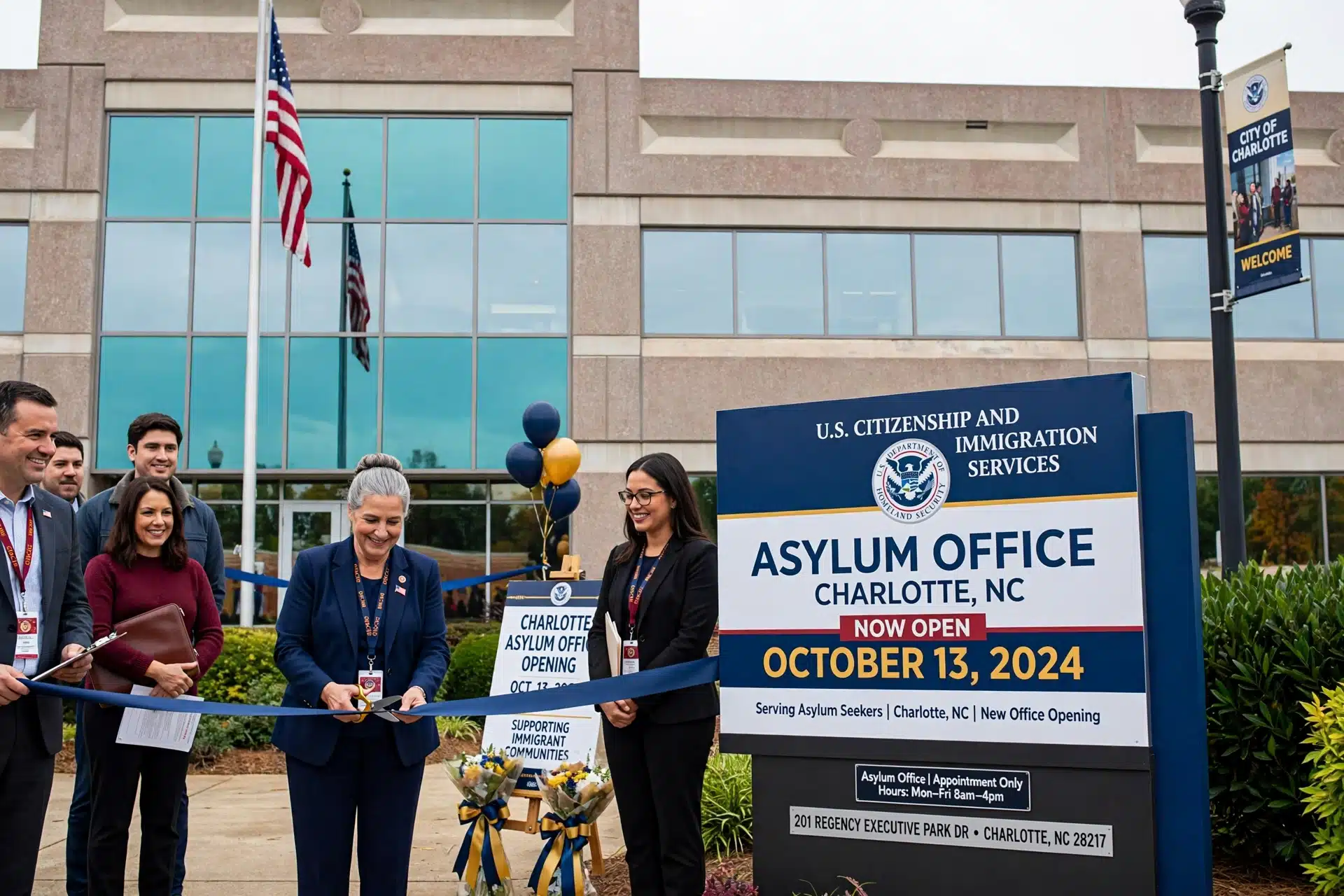
USCIS is opening a new asylum office in Charlotte, North Carolina, and beginning October 13, 2026, asylum applicants residing in North Carolina or South Carolina will fall under its jurisdiction and may be scheduled to appear for interviews at the new location. The agency announced the opening on October 9, and immigration practitioners across both states have been briefing clients all week on what the change means for cases already in the pipeline.
The Charlotte Asylum Office will be located at 128 South Tryon Street, Suite 600, in downtown Charlotte, ZIP code 28202, serving as both the physical and mailing address. USCIS emphasized in its alert that interviews and other services at the office are by appointment only, that asylum offices do not accept walk-ins, and that applicants should carefully review their interview notice for important information about where to appear, since notices issued before the change may still carry older instructions.
Who Is Affected Starting October 13
The jurisdictional shift applies to people who have filed or who are filing for asylum while residing in North or South Carolina. Under the asylum office system, affirmative asylum applicants, meaning people who proactively file their own claims with USCIS rather than having their cases placed into immigration court by the Department of Homeland Security, are assigned to the asylum office that covers their place of residence. For residents of the two Carolinas, that assignment now points to Charlotte.
USCIS stated that affected applicants may be scheduled to appear for interview at the Charlotte location. Agency materials did not announce a case count, a backlog figure or any guarantee of faster interviews, and legal analysts caution that jurisdictional reassignment is an administrative reorganization rather than a promise of accelerated outcomes. What it does guarantee is proximity. Asylum interviews are stressful, high-stakes events that can determine whether a person is allowed to remain in the United States, and requiring families to travel hundreds of miles to another state’s office adds a burden that falls hardest on low-income applicants.
How the Asylum Office System Works
Asylum offices are a branch of USCIS staffed by asylum officers with training in refugee law and trauma-informed interviewing. Their job in an affirmative case is to conduct a non-adversarial interview, take testimony under oath, collect identity and country-conditions evidence, and prepare a recommendation. Affirmative asylum applicants who pass a credible screening at interview stage may be granted asylum administratively. Those who do not are typically referred to immigration court, where the process becomes adversarial before an immigration judge.
That referral point is why interview preparation carries such weight, and why the location of the interview matters. Applicants are told to bring identification, any passports or prior immigration filings, evidence supporting the claim such as police reports, medical records or membership documents, and interpreters where needed. USCIS maintains a public page on preparing for the affirmative asylum interview, and the agency’s alert directs applicants to its asylum office locator for information about office locations.
Practical Details Applicants Need
Several operational details in the announcement matter for anyone with a pending case. There are no walk-ins under any circumstances. Rescheduling is handled through the USCIS Contact Center at 1-800-375-5283, and USCIS asks applicants to call before their appointment date rather than simply failing to appear, since a missed interview can have serious consequences for a pending claim. The agency also directs accommodation requests for people with disabilities through its published disability accommodations process.
Practitioners in the Carolinas are advising clients to confirm the interview location on the notice itself, keep addresses updated with USCIS so that notices reach the right place, and contact counsel well in advance if the notice and the new jurisdiction appear to conflict. Because the change is driven by residence rather than by filing date, it reaches both new applicants filing after October 13 and people whose cases were already pending.
Part of a Wider Expansion
Charlotte is not an isolated experiment. USCIS alerts show the agency opened a new asylum office in Atlanta earlier this year, with that jurisdiction taking effect in early July, part of a pattern of adding and reorganizing asylum office coverage across the southeastern United States. The Carolinas and Georgia have seen substantial growth in immigrant populations over the past decade, and the asylum office map, which in many places still reflects caseload patterns from an earlier era, has been strained to keep up.
Backlogs in the asylum system have been a recurring subject of congressional scrutiny, with wait times for affirmative interviews stretching months or longer in many jurisdictions. A new office does not automatically shrink a backlog, since staff hiring determines capacity, but it redistributes where that backlog is processed and shortens the travel distance for a large population of applicants who previously received notices pointing them to offices in other states.
Why the Carolinas Got Their Own Office
North Carolina and South Carolina host long-established immigrant communities, including large Central American, Mexican and African diaspora populations concentrated around Charlotte, Raleigh, Greensboro, Charleston and the agricultural regions between them. Charlotte itself is one of the fastest-growing metros in the country and a major banking center with an international profile, making it a natural administrative hub for a federal immigration office in the region.
For the legal services community, the office is also a matter of logistics. Nonprofit immigration programs and pro bono attorneys plan their volunteer calendars around interview locations, and an office within driving distance of upstate South Carolina and western North Carolina means more opportunities for applicants to be accompanied by counsel and interpreters, which in turn affects the quality of testimony USCIS officers receive.
What Applicants Should Do Now
Anyone with a pending affirmative asylum claim in the two states should take three steps. First, read the interview notice carefully and confirm the location listed. Second, make sure USCIS has the current mailing address on file, since jurisdiction notices and interview scheduling letters travel by mail. Third, prepare for the interview itself, which means organizing corroborating evidence, confirming interpreter arrangements and reviewing the claim with counsel ahead of the appointment.
USCIS reviewed and updated its alert on October 9, and the jurisdiction change takes effect October 13. For thousands of applicants across the Carolinas, the next asylum interview letter they receive may now name a Charlotte address, and the practical effect is simple: the federal government is building the capacity to hear their claims closer to home.
Frequently Asked Questions
When does the Charlotte asylum office start handling cases?
USCIS announced the opening on October 9, 2026, and beginning October 13, asylum applicants residing in North Carolina or South Carolina fall under the jurisdiction of the new Charlotte Asylum Office and may be scheduled to appear for interviews there.
Where is the Charlotte asylum office located?
The office is at 128 South Tryon Street, Suite 600, Charlotte, North Carolina 28202, which serves as both its physical and mailing address. Interviews and other services are by appointment only, and the office does not accept walk-ins.
Will my pending asylum case move faster now?
USCIS did not announce case counts, backlog figures or faster interview timelines with the opening. The change reassigns jurisdiction so interviews happen closer to where applicants live, and applicants should review their interview notice carefully for the correct location.
How do I reschedule an asylum interview?
Applicants needing to reschedule before their appointment date should call the USCIS Contact Center at 1-800-375-5283, and should review the interview notice for details on where to appear under the new jurisdiction.