





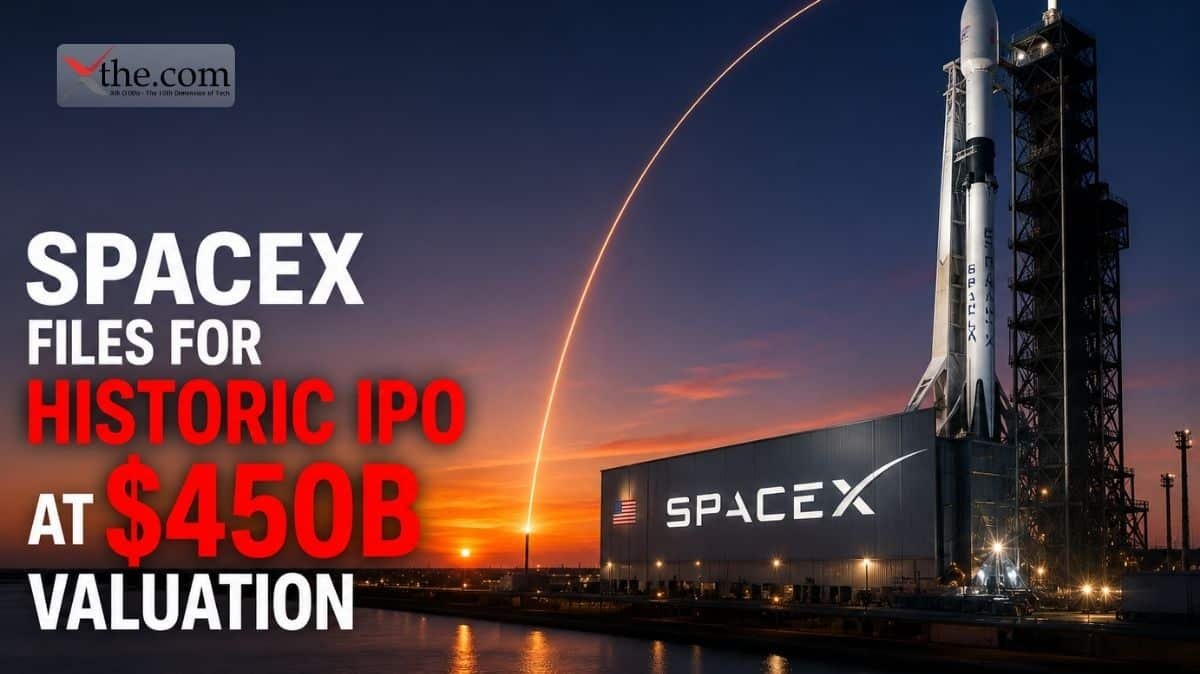
SpaceX has officially filed for an initial public offering (IPO), confirming months of speculation that Elon Musk’s rocket company will finally open its books to public investors. The filing, submitted to the Securities and Exchange Commission on August 25, 2026, could make SpaceX the most valuable company to go public since Saudi Aramco’s 2019 debut.
The prospectus reveals SpaceX generated 8.2 billion in revenue in the first half of 2026, up 67% from the same period last year. Net income reached .1 billion, a remarkable turnaround from the company’s historically reinvestment-heavy financial model. The company’s Starlink satellite internet division, which now serves over 8 million subscribers across 72 countries, accounted for approximately 58% of total revenue.
Why Now?
The timing of the IPO appears driven by several factors. First, SpaceX’s financial performance has reached a scale where public market investors can accurately value the company. Second, the IPO provides liquidity for early employees and investors who have been locked up for over two decades. Third, the capital raised could fund SpaceX’s most ambitious projects, including the Mars colonization program and the Starship orbital refueling system needed for deep space missions.
Elon Musk, who owns approximately 42% of SpaceX, said in the filing that going public will not change our mission or our approach to achieving it. He noted that the company will maintain its dual-class share structure, giving him continued voting control even as new shares are issued to public investors.
Starlink: The Growth Engine
The prospectus provides the most detailed public look yet at Starlink’s financial performance. The satellite internet division is now profitable on an operating basis, generating 0.6 billion in revenue with a 41% operating margin. Subscriber growth has accelerated as the service expands into underserved rural and developing markets.
Starlink’s competitive position has strengthened significantly. The service now offers download speeds averaging 200 Mbps with latency under 30 milliseconds, making it competitive with terrestrial broadband in many markets. The company operates over 6,500 satellites in low Earth orbit, with plans to expand the constellation to 12,000 satellites by 2028.
However, Starlink faces growing competition. Amazon’s Project Kuiper has begun limited commercial service, and OneWeb (now Eutelsat OneWeb) operates a competing constellation. Chinese companies are also developing satellite internet services, creating potential market fragmentation in international markets.
Starship Progress
The prospectus details significant progress on Starship, SpaceX’s next-generation launch vehicle designed for missions to the Moon and Mars. The company has completed 14 successful orbital test flights, with the most recent achieving full orbital insertion and controlled atmospheric reentry. SpaceX plans to begin commercial Starship operations in the first quarter of 2027.
The Starship program has attracted significant government contracts. NASA selected SpaceX for a .2 billion lunar lander contract to deliver astronauts to the Moon’s surface as part of the Artemis program. The U.S. Space Force has also awarded SpaceX a .8 billion contract for national security launches using Starship.
Valuation and Market Impact
The IPO prospectus indicates SpaceX is seeking a valuation of approximately 50 billion, which would make it the most valuable private company to go public in history. At that valuation, SpaceX would rank among the top 15 publicly traded companies by market capitalization, surpassing companies like Johnson and Johnson, Walmart, and Samsung.
Investment banks Goldman Sachs, Morgan Stanley, and JPMorgan Chase are leading the offering. The IPO is expected to raise approximately 5 billion, with shares priced between 5 and 5 each. The offering is scheduled for the week of September 15, 2026.
Market analysts are divided on the valuation. Bulls argue that SpaceX’s combination of launch services, Starlink, and government contracts creates a diversified revenue stream that justifies premium pricing. Bears point to the capital-intensive nature of space operations and the regulatory risks associated with Musk’s other ventures, particularly Tesla and his social media platform X.
Risk Factors
The prospectus identifies several key risk factors. Regulatory risk is prominent, as SpaceX must maintain licenses from the Federal Aviation Administration, the Federal Communications Commission, and international space agencies. Any regulatory setbacks could delay launches or limit Starlink’s expansion.
Competition is another concern. Blue Origin, Rocket Lab, and United Launch Alliance are all developing new launch vehicles that could compete with SpaceX on price and performance. In the satellite internet market, Amazon’s Project Kuiper has the resources to be a formidable competitor.
The Musk factor itself represents a risk. His involvement in multiple high-profile companies and his outspoken social media presence have occasionally created controversy that affects SpaceX’s relationships with government agencies and customers. ## What Investors Should Watch
Retail investors should pay close attention to several metrics as the IPO approaches. Starlink’s subscriber growth rate is the most important indicator of the company’s long-term value. If subscriber growth continues at its current trajectory of 15-20% annually, the satellite internet division alone could be worth more than the entire current valuation.
The Starship program’s timeline is another critical factor. If SpaceX achieves its goal of commercial Starship operations by early 2027, it will dramatically expand the company’s addressable market by enabling heavier payloads, orbital manufacturing, and deep space missions. Delays could impact investor confidence and reduce the stock’s post-IPO performance.
Investors should also monitor SpaceX’s relationship with government agencies. The company’s revenue is heavily dependent on government contracts, and any political changes that affect space spending could impact the bottom line. The bipartisan nature of space exploration support in Congress provides some insulation, but budget pressures could still affect contract values.
For individual investors looking to participate in the IPO, the recommended approach is to wait for the stock to trade publicly for several weeks before making investment decisions. IPOs are notoriously volatile in their early days, and the initial pricing may not reflect the company’s long-term intrinsic value. Patient investors who wait for a pullback may find better entry points than those who chase the initial offering.
The SpaceX IPO represents a generational investment opportunity in the space economy, which analysts project will grow from 00 billion today to over trillion by 2030. As the dominant player in both launch services and satellite internet, SpaceX is uniquely positioned to capture a disproportionate share of this growth.
Sources:
https://www.sec.gov/
https://www.reuters.com/technology/
https://techcrunch.com/