






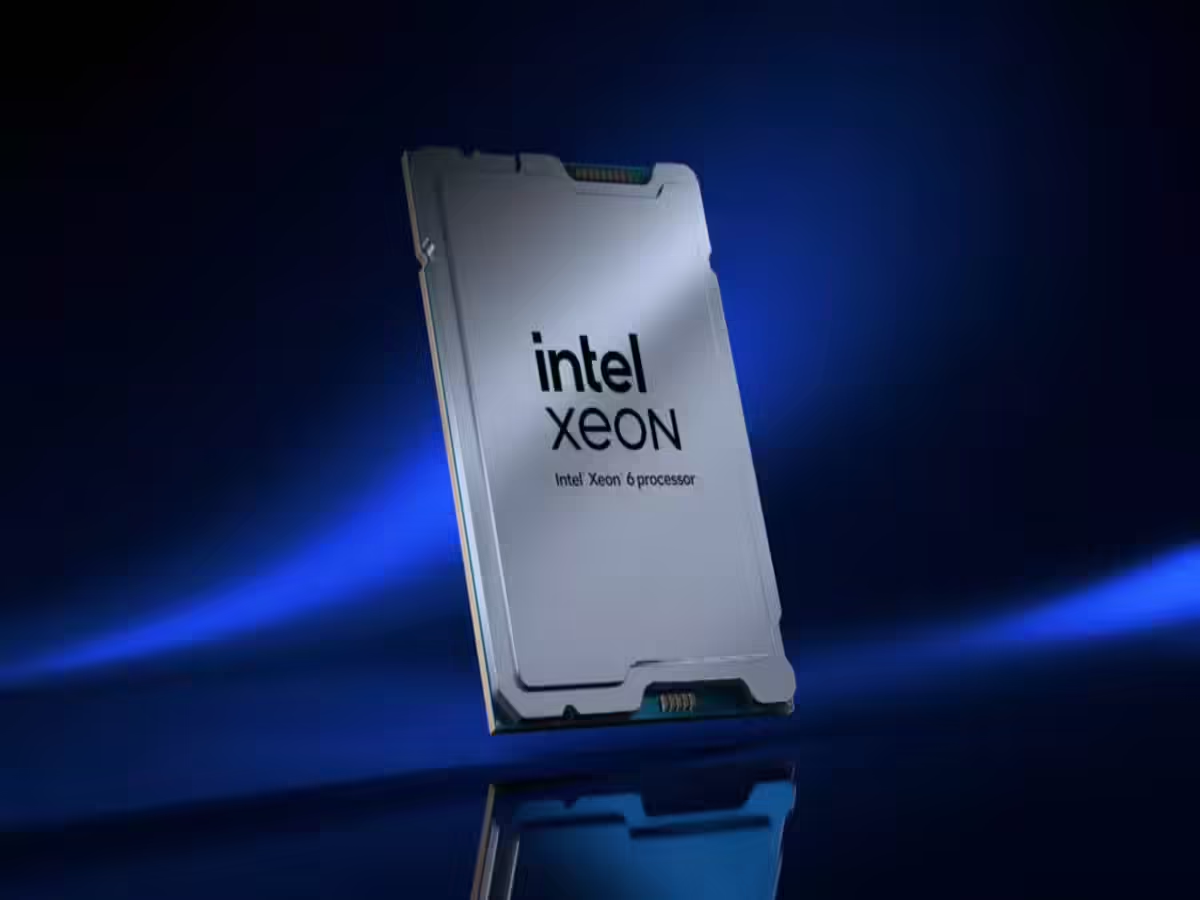
Santa Clara, Calif. More than 85% of modern edge computing nodes fail to execute real-time analytical tasks without sending data back to the central cloud. This fundamental flaw slows down autonomous systems. It creates bottlenecks within environments that entail immediate localized protection. How Intel Xeon 6 SoCs eliminate latency in distributed 5G AI agents. It tackles this problem directly. The new silicon design embeds artificial intelligence acceleration directly into the host CPU. It eliminates the requirement for separate energy-draining co-processors.
The Computing Shift at the Network Edge
Edge environments need high processing power, low latency, and energy efficiency. Traditional servers often can’t keep up with these needs when operating complex software. The new edge-first architecture solves this by moving computing closer to users, helping reduce network traffic and the need to send data back to the main data center.
Running analytics in the 5G core is challenging for engineers due to strict power and cooling constraints. Intel Xeon 6 helps by including built-in accelerators that handle heavy jobs without extra hardware. This lets telecom companies process data locally, reducing network delays.
Reclaiming Performance in the Network
In the past, analytical data was sent to remote cloud servers, resulting in excessive latency for latency-critical tasks. To solve this, operators are now moving to an edge-first architecture.
This change requires strong hardware capable of running network functions and machine learning together. In a typical UPF deployment, engineers manage heavy data traffic and complex tasks. The processors use efficient cores to handle these workloads without requiring extra hardware.
Optimizing Enterprise Infrastructure
Enterprise data centers need scalable platforms to keep growing. To keep up with growing processing needs, the new Intel Xeon 6 delivers enough power to support multi-tenant setups, running hundreds of virtual machines on just one socket.
Hardware vendors have created new systems to handle higher density. For example, enterprises using the latest Dell PowerEdge servers see big improvements in throughput. These servers support DDR5-8000 memory and twelve memory channels, helping organizations process data-heavy workloads faster.
Telecom operators are also adding this processing power to their networks. Companies like Nokia use these processors to lower power use in their packet core networks. With Nokia edge platforms, operators can cut power consumption by up to 60%, reducing operating costs.
Improving The Packet Core
Managing data flow in a 5G core requires many processing cores and low power consumption. Virtualizing network functions makes system architecture more complex.
When planning a UPF, development engineers need to keep critical data separate to ensure zero-trust security. The system-on-chip uses built-in security features, such as Intel Trust Domain Extensions, to protect data during use. This lets the hardware run analytics securely without slowing down network functions.
Processing performance is much better than before. With Dell PowerEdge server modules, telecom operators can process video and analytics in real time. This helps multi-tenant environments function properly without interference from other workloads.
Hardware Integration and Energy Efficiency
The new Clearwater Forest processors use a multi-chiplet design, fitting up to 288 efficiency cores into one package. This high density shrinks the footprint of edge servers, making it easier to add computing power in constrained spaces.
Intel makes these chiplets with the 1.8-nanometer 18A process. The design links multiple tiles using high-bandwidth EMIB packaging. Each dual-socket setup can support up to 576 cores, along with 96 PCIe Gen 5 lanes and 64 CXL 2.0 lanes. This setup lets data move directly between the processor and external accelerators, cutting system latency.
The chip also includes built-in accelerators, such as the Intel Data Streaming Accelerator and the Intel Dynamic Load Balancer. These parts take on from the CPUs, freeing up space for local AI inference. This helps programs run smoothly without slowdowns.
When these processors are used with Nokia edge architecture, organizations get better insight into network traffic. The built-in accelerators can analyze peer-to-peer traffic, identify issues, and reroute traffic for subscribers in real time. This automation means less need for human intervention, keeping services running and costs lower.
Virtualization enables organizations to run multiple workloads on a single server. Enterprises no longer need separate servers for relational and non-relational databases. One system can handle both data processing and analytics.
The New Standard for Intelligent Networks
Combining the processing unit with the packet core makes digital infrastructure more responsive. Running AI inference at the edge lowers tail latency and makes the network more predictable.
Organizations that wait to upgrade their infrastructure risk falling behind competitors who use real-time computing. Modern, efficient systems help companies handle more traffic without needing new buildings.
As networking and AI come together, enterprise infrastructure needs are changing. Operators who use these processors get an edge in speed and energy efficiency. Future networks will depend on built-in autonomous intelligence, which lowers costs, enhances security, and prepares networks for new digital services.
Source: Intel Newsroom








